Acting
German soap opera about the staff of the fictional hospital "Sachsenklinik" in the city of Leipzig.
Polizeiruf 110 is a long-running German language detective television series. The first episode was broadcast 27 June 1971 in the German Democratic Republic, and after the dissolution of Fernsehen der DDR the series was picked up by ARD. It was originally created as a counterpart to the West German series Tatort, and quickly became a public favorite.
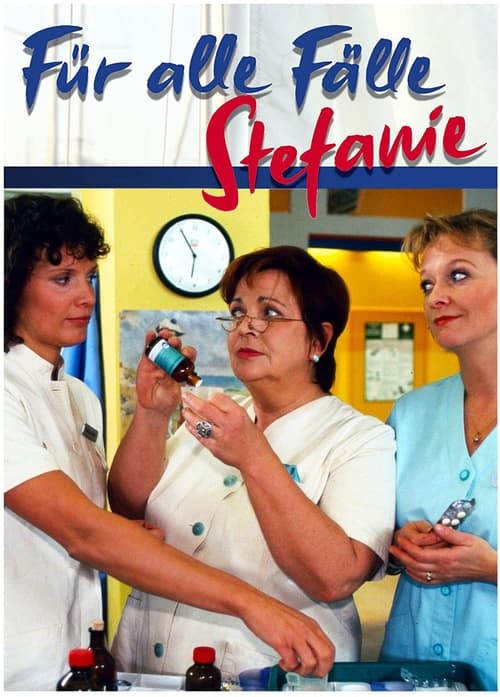
Für alle Fälle Stefanie is an German medical drama television series created by Werner Krämer that aired on Sat.1 from May 15, 2005 to August 29, 2005. It was produced by Novafilm Fernsehproduktion. Für alle Fälle Stefanie follows the professional and personal life of nurse Stefanie Engel, then Stephanie Wilde and for a short time Fanny 'Stephanie' Stephan. The show was a giant success for the network and had around seven, in later years, five million viewers on a weekly basis. It won the Goldene Kamera award in 1997 and the Bavarian TV Award in 1996.
Der Staatsanwalt hat das Wort was an East German television series.
Stubbe – Von Fall zu Fall is a German crime detective television series starring Wolfgang Stumph as detective Stubbe. It is being broadcast on ZDF, the second German public television channel since 1995.
No description available.
St. Angela is a German television series.
A musician seeks a peaceful vacation in a Vogtland village but is soon overwhelmed by requests for a symphonic composition and a pop song for a local dance band, leaving him with no time to relax.
When Prince Vain got his shirt fixed, he proclaims that he had slain two lizards in front of the tailor's house - "two in one strike". When the tailor swats seven flies at once, he sows himself a banner saying "seven in one strike", and together with his bird he starts a journey into the world to pronounce his deed.
This series is about the "adventures" and problems of the crew of the East German cargo ship "MS-Fichte" at sea. In the first part, the main engine had a piston jam during a storm at sea, so that the piston had to be removed. Mutual recriminations ensue between the captain, who ordered a higher speed, and the chief, who is against it out of concern for the high fuel consumption and is also said not to have bothered to maintain the engine...
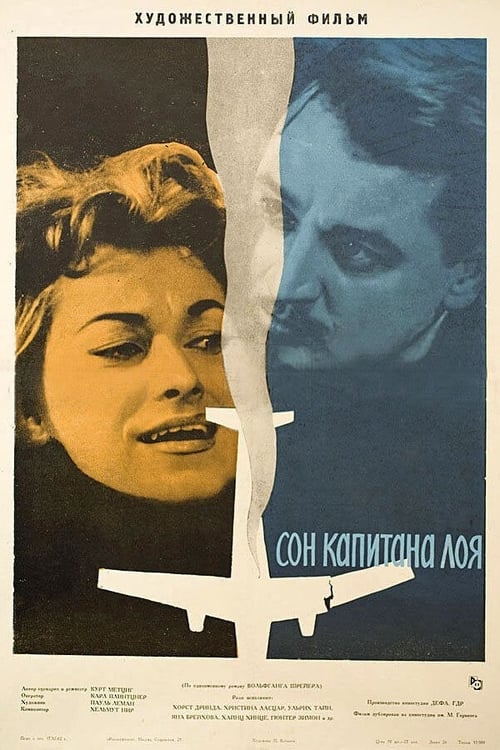
An American military plane takes six people, who have taken part in a NATO maneuver, from Tripoli to Oslo. Among them are the British Captain Loy and the United States Air Force Corporal Doris Graves. During the flight, the two become closer, and they regret that the trip will end that evening. But everything turns out differently. The flight captain has received orders to pick up an agent at a German NATO airport, who is to be dropped off again on a Soviet island …
The love story of Emma and Johannes begins during the hard years of the Great Depression. Emma repeatedly tries to encourage her husband, who is suffering terribly from unemployment. However, the crisis continues to intensify and social disintegration affects millions.
Two men and two women in a hotel.
A pianist from Poland visits a town in West Germany and starts to remember details about her life during the war.
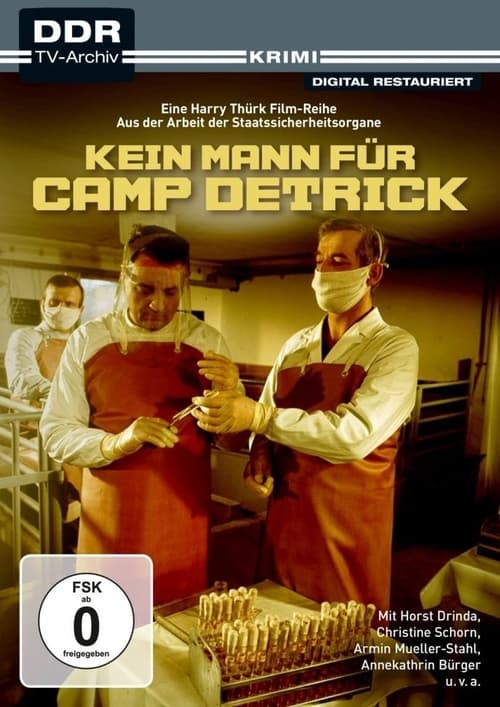
Who doesn't know the dream of an unexpected million-dollar inheritance? For microbiologist Dr. Wolf, it seems to come true when an American lawyer visits him to tell him about the death of his distant uncle in the USA. Wolf is to receive an inheritance worth millions, but on one condition: He must continue to run his uncle's factory in the USA. The natural scientist is also offered the prospect of a research position at Camp Detrick. But after the memorable visit, Wolf discovers a listening device in his apartment. When he informs the People's Police, more and more inconsistencies come to light.