Directing
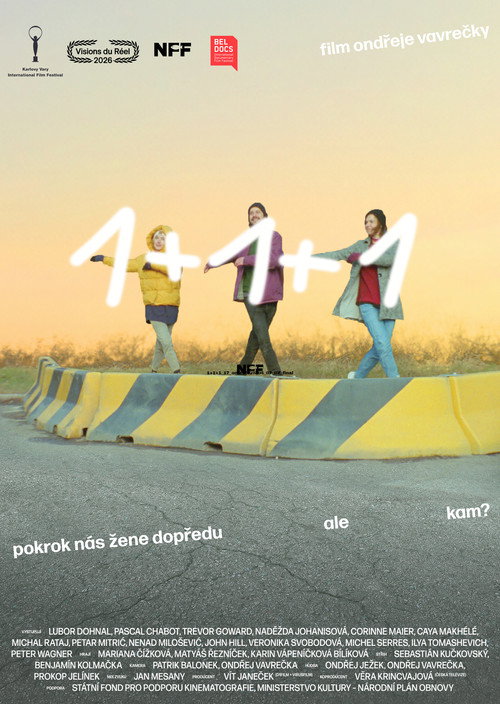
A film about the end of the world and the end of a roll of toilet paper. In his deftly playful work shot on 16mm, filmmaker (and musician) Ondřej Vavrečka reminisces, says his farewells and also reflects on the limits of progress. Via three fictional characters, each of whom responds differently to the impulses of their surroundings, he simultaneously enhances the sensitivity of the film audience. Will a pain we experience leave a scar or merely a colourless memory? And will someone remember the old Vysočany station a hundred years from now? In its poetic charm this cinematic piece is almost tactile in nature; it awakens all the senses and, in places, bears the hallmark of Jan Švankmajer, if the latter had been born an essential optimist, that is. Film as a whisper emanating from smiling lips. (Viktor Palák, KVIFF)
Tůma's film is a sovereign cinematographic space, which, broken up into many chapters, takes an unconventional look at contemporary Czech society. The opening political grotesque on the election of the President is drowned out by the ecstatic ramblings of philosophising (and chattering) fragments turning on the sought-out axis of life and the world, and especially the inward-looking images full of colourful objectivity and charming humour that is elevated to the level of pure poetry.
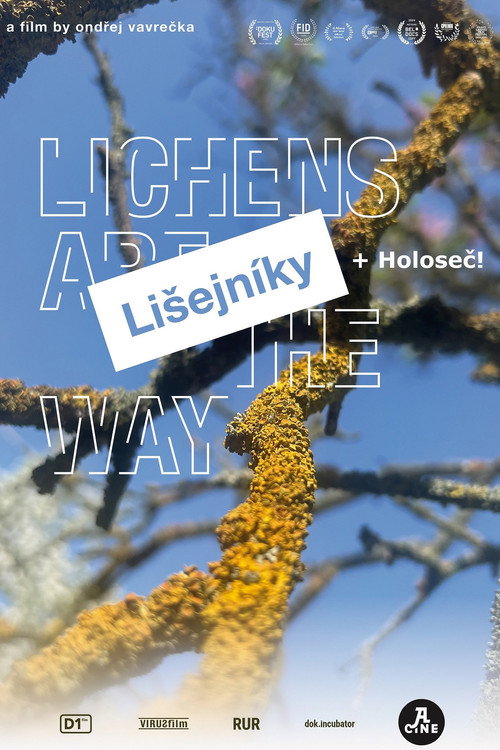
There are nearly twenty thousand species of them, they have been on Earth for hundreds of millions of years, and they play an indispensable role in many ecosystems. Yet lichens are usually overlooked. Ondřej Vavrečka decided to take a closer look at these fascinating organisms. His view, like the accompanying dialogue between experts Trevor Goward and Curtis Randall Björk, is both scientific and contemplative. For him, lichens represent not only a form but also a way of life. They show that an alternative to the constant expansion and reshaping of the environment can be the establishment of symbiotic communities in which every life has equal weight.
Kazimir Malevich wanted to burn all the pieces of art. And to create black squares from the ashes. The black square (Everything of art) did not appear here by an accident. Where are its roots? Is not the square in its core a circle, the return of Everything? And are we to speak on fundamental matters? Here we enter the quest of spies. The agents want to keep silence. The informaticians prefer the total openness, proximity, disposition. Distance or proximity?
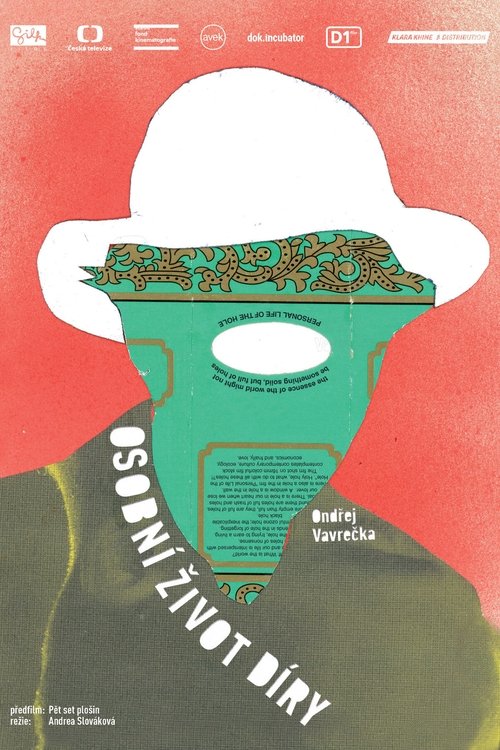
A hole gapes in a house wall. A small flaw, something imperfect that we seldom consciously direct our attention to. Filmmaker Ondřej Vavrečka finds holes in every corner. His focus is on the imperfections of human existence. A hole can also mean an uncertain future, or an empty stomach. The gap that partners leave behind after a breakup. Ondřej Vavrečka does not only deal with visible holes. He looks at the incomplete from a philosophical perspective. He also lets a nuclear physicist, a theologian and an ethnologist have their say. He underscores their thoughts and theses with absurd everyday scenes: a woman with a chair on her head or an invisible skier. These scenes combine with interviews, sounds and stop-motion sequences to create a playful collage.