Acting
Tatort is a long-running German/Austrian/Swiss crime television series set in various parts of these countries. The show is broadcast on the channels of ARD in Germany, ORF in Austria and SF1 in Switzerland.
A police department, lead by an older, experienced detective solve crimes together.
A long-running German television series about a two-man team of highway police, originally set in Berlin and later in North Rhine-Westphalia.
Derrick was a German TV series produced by Telenova Film und Fernsehproduktion in association with ZDF, ORF and SRG between 1974 and 1998 about Detective Chief Inspector Stephan Derrick and his loyal assistant Inspector Harry Klein, who solve murder cases in Munich and surroundings.
No description available.
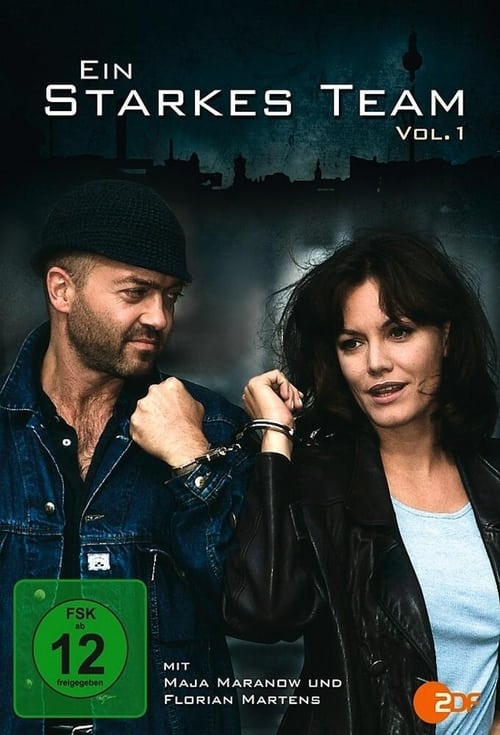
The unlikely police pair Verena Berthold and Otto Garber are part of a special task force investigating organized crime in Berlin. He comes from the east, she from the west of Berlin. He's a redneck, she's from a better background. This causes conflict. Over time, things start to sizzle between the two. Their team includes the agile German-Turkish Yücsel and the sluggish Georg, who, like Verena and Otto, are constantly bickering. The department manager is Lothar Reddemann. Sputnik is a former colleague of Otto's from the People's Police and is constantly coming up with new business ideas for stores and pubs where the team meets.
Annual awarding of the Grimme Awards.
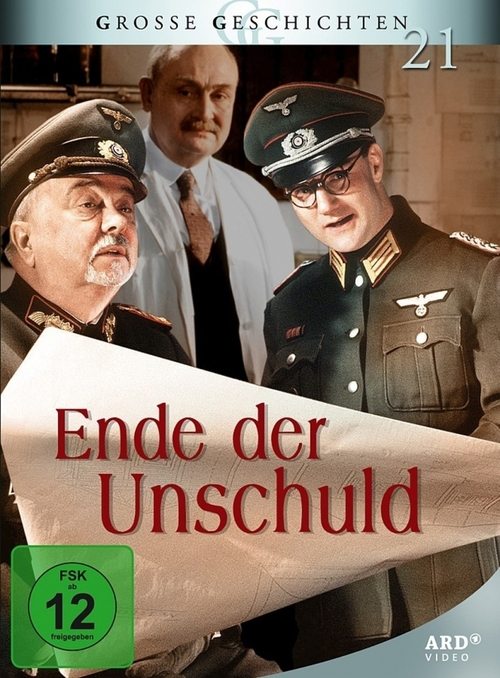
End of Innocence is a two-part television film that focuses on the work of the German Uranium Association during World War II. At Farm Hall in England, the ten German nuclear scientists interned there as part of Operation Epsilon learn of the dropping of the first atomic bomb on Hiroshima in August 1945. In flashbacks, the development of the German uranium project is recapitulated chronologically from the discovery of nuclear fission by Otto Hahn to the work of Kurt Diebner at the Heereswaffenamt to the experiments of the Kaiser Wilhelm Institute for Physics under Werner Heisenberg and Carl Friedrich von Weizsäcker at the Haigerloch research reactor in spring 1945.
Fritz Haarmann, who has killed at least 27 boys, is questioned by a psychology professor in order to find out whether he is sane and can be held responsible for his crimes. During this interrogation Haarmann reveals his motives and his killing methods.
Günter Walcher, 40-years-old, is a hardworking, apolitical West German businessman caught in a moral conflict. He is offered a promotion to become the head of a division—on the condition that he find a reason to fire Zacharias, a communist and the work council chairman.
The film concentrates on the last days of the German navy during World War II.
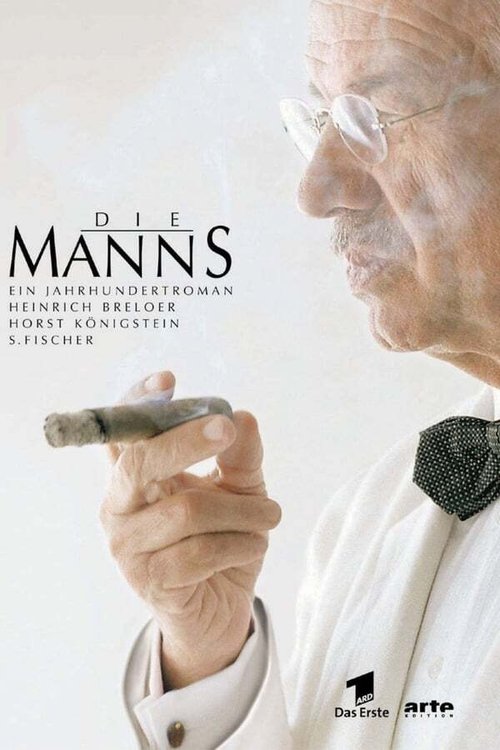
Much has been said and written about the Mann family. However, there has never been a film that brings this remarkable family to life in such a playful way. Through the docudrama format developed by Heinrich Breloer, we become direct witnesses to moving stories that no one has heard before. Stories of passion, love, and hate, of war and emigration, of tragic intertwining of personal and world historical events. The Mann family shows itself as it has never been seen before. They all appear: the brothers Thomas and Heinrich with their lifelong sibling rivalry, the extroverted siblings Erika and Klaus, the quiet Golo, and also the only child of Thomas Mann still alive today: Elisabeth.