Acting
Polizeiruf 110 is a long-running German language detective television series. The first episode was broadcast 27 June 1971 in the German Democratic Republic, and after the dissolution of Fernsehen der DDR the series was picked up by ARD. It was originally created as a counterpart to the West German series Tatort, and quickly became a public favorite.
Der Staatsanwalt hat das Wort was an East German television series.
No description available.
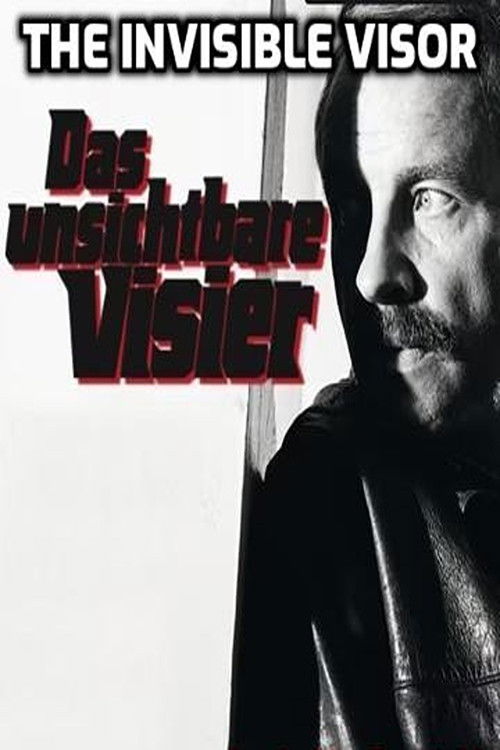
The Invisible Visor (Das unsichtbare Visier) was an East German television series, broadcast with long intervals between 1973 and 1979. In its first and longest season it starred Armin Mueller-Stahl in the role of Werner Bredebusch, a Stasi agent active abroad under the alias Achim Detjen.
A man who has just become unemployed kills his closest relatives before he judges himself. Commissioner Schimanski determined.
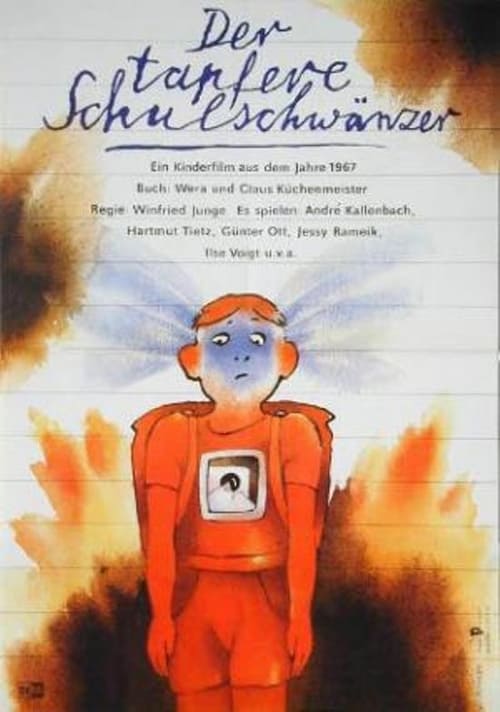
On one very fine sunny day, a fourth-grader Thomas, as always, is out of the house in the morning to get to school by subway. But on this day he has a too good mood and that, along with the good weather, prevents him get to the lessons. He decides to skip his station, and take a walk through Berlin.
Colonel Maratka and Major Kalasz, employees of the Czechoslovakian defense forces, are facing a difficult task. They must complete a mission that is important for the security of their country. The Prague headquarters of the state security service had previously received information from the GDR that West German military intelligence had apparently succeeded in deciphering the secret code B/13 used in the field of missile armament.
The November Revolution of 1918 in Germany, famine and social upheaval evoke a response from the young Soviet government in Russia. To provide food assistance, trains with bread are being formed. One of them, on the personal instructions of V.I. Lenin is accompanied by the young revolutionary Tatyana . On the way, she meets a former German prisoner of war, Kurt . A romantic relationship arises between them. The train with bread, despite all the difficulties, was delivered. In a clash with a detachment of counter-revolutionary German troops, Tatyana was wounded. She returns to Moscow, and Kurt goes to Berlin to continue the revolutionary struggle.
When Angelika moves to Leipzig, she is forced to rent a room at Mrs. Häublein’s for a start, since her parents will not follow until a few months later. Fellow tenant Thomas, a philosophy student, is not at all enthused about his new, pretty housemate. Because of Angelika he has to move into a smaller room. Furthermore, he is annoyed at her many male acquaintances, without sensing that his aggression might be prompted by jealousy. When Angelika’s father comes for a visit, he asks Thomas to keep an eye on his daughter. Thomas takes this assignment very seriously and finally realizes that he has fallen in love with Angelika.
The starting point of the story is a scandalous affair that took place in West Germany at the end of the 1950s. It began with the unexpected death of a member of the Bundestag who was known to the public as a well-paid lawyer and influential man in politics. What was not known, however, was that he mysteriously died of poisoning in a foreign hospital for the poor. It was concealed that the deceased, as a contact person for a Swiss arms company, represented a West German arms contract worth 2.5 billion marks. The Military Counterintelligence Service tried everything to conceal the explosive events...
Berlin landlady Mrs. Klucke looks after the residents of Florentiner Strasse 73 like a mother, who could do with her help. When pregnant Brigitte is looking for a furnished room, she ends up with Mrs. Klucke. However, she has to make do with a spare room. At first Brigitte is quite disappointed that all sorts of residents and their guests regularly pass through the room, but over time she gets used to this situation. She soon comes to love the idiosyncrasies of the other residents of Florentine 73 and the motherly care of her landlady.
A flamboyant comedy about love, work and money—revealing that the "planned" economy produced some unconventional entrepreneurial methods.
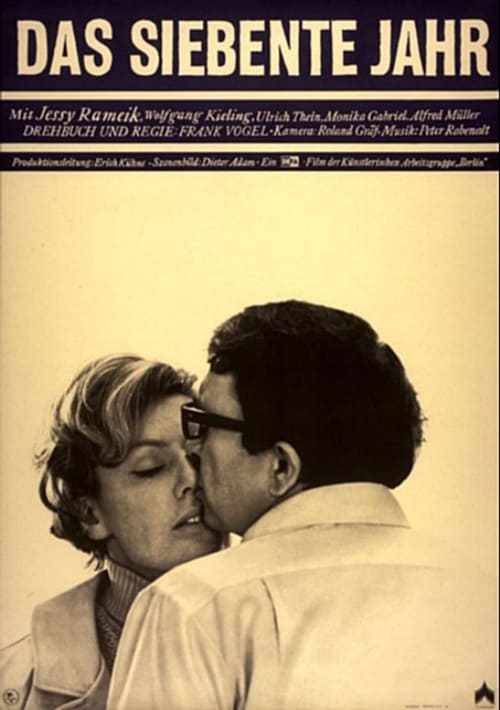
Dr. Barbara Heim, a heart surgeon, and Gunter Heim, a well-known actor, have been married for seven years. They have a six-year-old daughter. Both partners are totally taken up by their work which is physically and mentally demanding. So there is little time left for family life and the strained relations worsen and finally plunge Barbara into a crisis - shortly before their seventh wedding anniversary. At this very point a child dies in hospital, prompting Barbara to ask herself in desperation if - and for how long she can put up with the double burden of career and family. On top of this, she notices that Gunter is starting to compare her to other women.
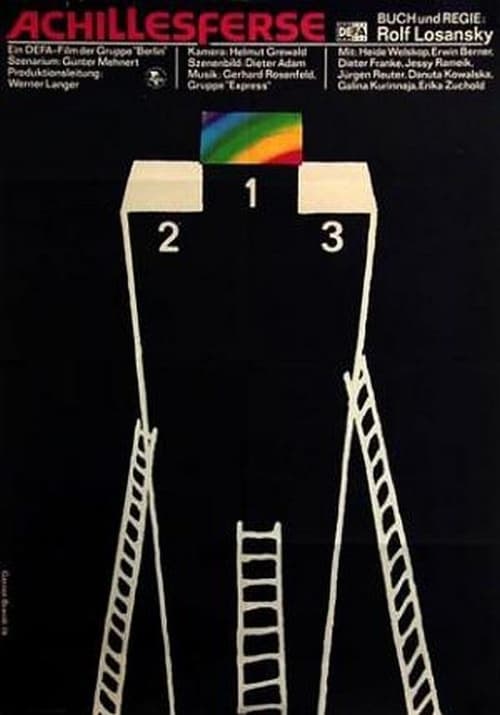
17-year-old Susanne is a gymnast and has a chance to join the national team. But now, of all times, she is having problems in training. She can't manage the new dismount from the uneven bars. At the same time, she gets into other conflict situations: her performance at school is getting worse. Her ambitious mother, accustomed to her daughter's successes, does not show the necessary understanding. Her father, divorced from Susanne's mother and constantly traveling, is rarely there for her. Her boyfriend Michael, with whom she experiences her first love, soon has to join the army and feels neglected because Susanne has too little time for him. Her coach, however, shows understanding and stands by her side in conflict situations, which she eventually overcomes - and so her success in sport returns.
In spring 1946, Warsaw historian Wojtek arrives in a Polish provincial town to study the Renaissance. He soon becomes entangled in the fierce postwar power struggle between the Soviet-backed People’s Government—nationalizing industry and land—and reactionary exiled forces waging “bandit terror,” from train robberies to political assassinations. As violence escalates, Wojtek shifts from observer to active defender of the new “people’s power.”
1929: Marie Lehning, a farm worker from Warmsdorf on the Baltic Sea, falls in love with the fisherman's son Mingo. Both complete an apprenticeship in Lübeck. Marie wants to become a seamstress, Mingo a carpenter. After their first night of love, they swear eternal fidelity. But Marie has to return to the village, her mother is ill and her siblings are unprovided for. She starts working as a maid on a farm. Unexpectedly, she meets the young Kurt Meier from Berlin, whom she knows from before.
East German film about the history of Red Orchestra, a real life German pro-Soviet spy ring created after the rise of Hitler that turned into a resistance movement led by a leftist Nazi officer, Harro Schulze-Boysen, and Arvid Harnack.