FEEL IT.STREAM
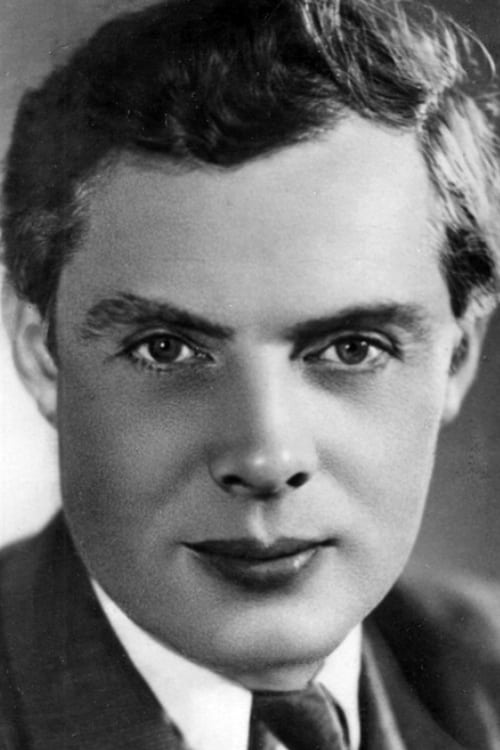
Pavel Kadochnikov

Pavel Kadochnikov

Acting

Biography

Pavel Petrovich Kadochnikov (Russian: Павел Петрович Кадочников) (16 July [O.S. 29 July] 1915 – 2 May 1988) was a Soviet actor, film director and screenwriter. Among other notable roles he played in the film Ivan the Terrible, directed by Sergei Eisenstein. He received the Stalin Prize three times (1948, 1949, 1951), was named a People's Artist of the USSR (1979) and a Hero of Socialist Labour (1985).
Known For

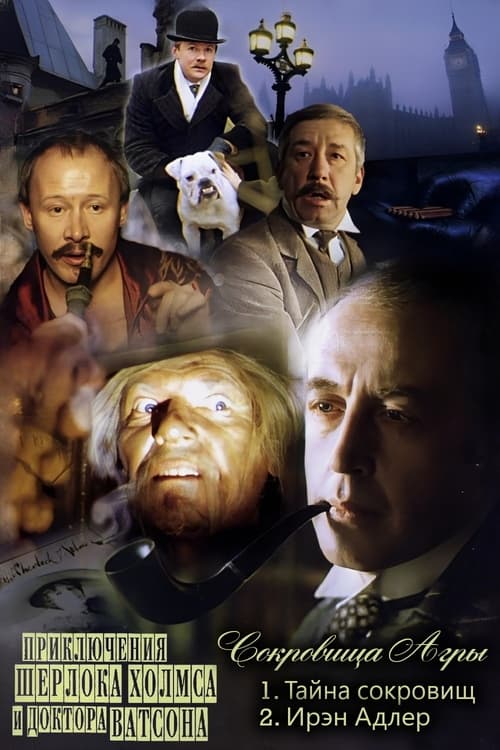
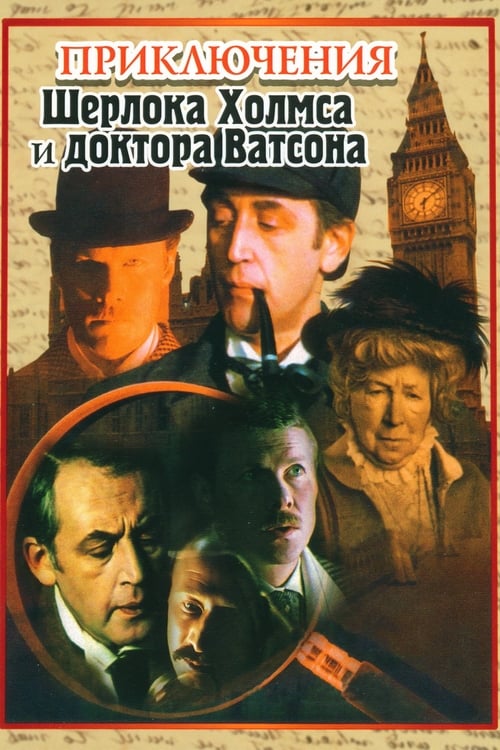
The Adventures of Sherlock Holmes and Dr. Watson
7.8

The Adventures of Sherlock Holmes and Dr. Watson is a series of five films produced by Lenfilm for the Soviet Central Television, split into eleven episodes, starring Vasily Livanov as Sherlock Holmes and Vitaly Solomin as Dr. Watson. They were directed by Igor Maslennikov and filmed in Russia (the then Soviet Union) between 1979 and 1986, and the series was one of the most successful in the history of Russian television.

The Adventures of Sherlock Holmes and Dr. Watson

1980
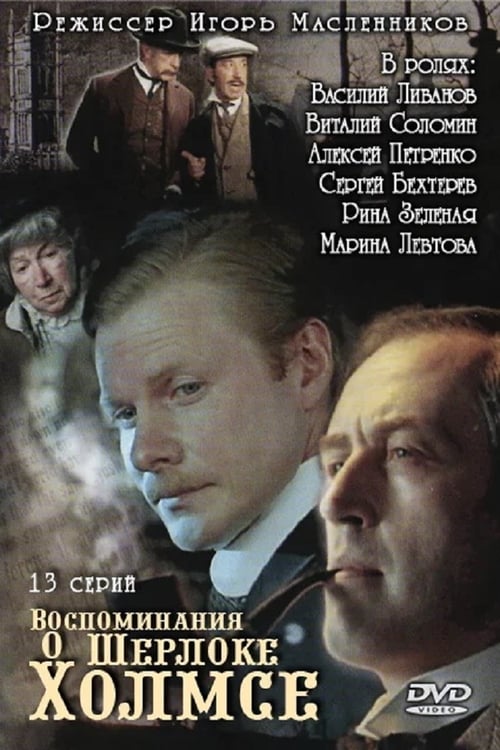
Memories of Sherlock Holmes
7.2

Detective television series based on the works of Arthur Conan Doyle. Five films about Sherlock Holmes, shot by Igor Maslennikov earlier, were remounted in 2000, a connecting story about Conan Doyle's literary secretary, Mr. Wood, who is preparing an anniversary collection of stories about Holmes for the beginning of the coming XX century. Sir Arthur receives huge mail every day, addressed not to him, but to Sherlock Holmes. And then one day a letter arrives with a plea for help, and Doyle begins an investigation...

Memories of Sherlock Holmes

2000
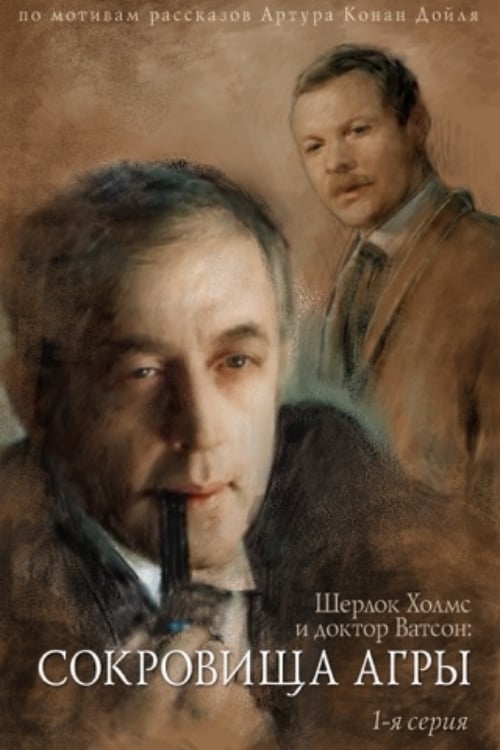
The Adventures of Sherlock Holmes and Dr. Watson: The Treasures of Agra - Part 1
7.8

A girl named Mary Morsten comes to Sherlock Holmes, who asks him and the doctor to help solve the annual receipt of one pearl by her parcel and in the search for her father, who disappeared many years ago. Holmes and Watson do not refuse her help and find out that Miss Mary is the heiress of a huge fortune — the treasures of Agra, which are also claimed by the sons of Major Sholto and Jonathan Small — an escaped convict with a wooden prosthesis instead of a leg, whom the elder Morsten and Sholto deceived (while Sholto also deceived Morsten).

The Adventures of Sherlock Holmes and Dr. Watson: The Treasures of Agra - Part 1

1983
The Adventures of Sherlock Holmes and Dr. Watson: The Treasures of Agra
7.8

The fourth part of the Soviet TV series based on Arthur Conan Doyle's stories about Sherlock Holmes. The film was shot based on the story "The Sign of Four" and the story "A Scandal in Bohemia".

The Adventures of Sherlock Holmes and Dr. Watson: The Treasures of Agra

1983
Ivan the Terrible, Part I
7.3

Set during the early part of his reign, Ivan faces betrayal from the aristocracy and even his closest friends as he seeks to unite the Russian people. Sergei Eisenstein's final film, this is the first part of a three-part biopic of Tsar Ivan IV of Russia, which was never completed due to the producer's dissatisfaction with Eisenstein's attempts to use forbidden experimental filming techniques and excessive cost overruns. The second part was completed but not released for a decade after Eisenstein's death and a change of heart in the USSR government toward his work; the third part was only in its earliest stage of filming when shooting was stopped altogether.

Ivan the Terrible, Part I

1944
The Adventures of Sherlock Holmes and Dr. Watson: The Treasures of Agra
7.6

Holmes and Dr. Watson help a young lady who is receiving anonymous letters 10 years after her father passed away under shady circumstances. They find themselves in an enigma involving a treasure, murder and a love interest for Watson.

The Adventures of Sherlock Holmes and Dr. Watson: The Treasures of Agra

1983
Ivan the Terrible, Part II: The Boyars' Plot
7.3

This is the second part of a projected three-part epic biopic of Russian Czar Ivan Grozny, undertaken by Soviet film-maker Sergei Eisenstein at the behest of Josef Stalin. Production of the epic was stopped before the third part could be filmed, due to producer dissatisfaction with Eisenstein's introducing forbidden experimental filming techniques into the material, more evident in this part than the first part. As it was, this second part was banned from showings until after the deaths of both Eisenstein and Stalin, and a change of attitude by the subsequent heads of the Soviet government. In this part, as Ivan the Terrible attempts to consolidate his power by establishing a personal army, his political rivals, the Russian boyars, plot to assassinate him.

Ivan the Terrible, Part II: The Boyars' Plot

1958
Siberiade
7.1

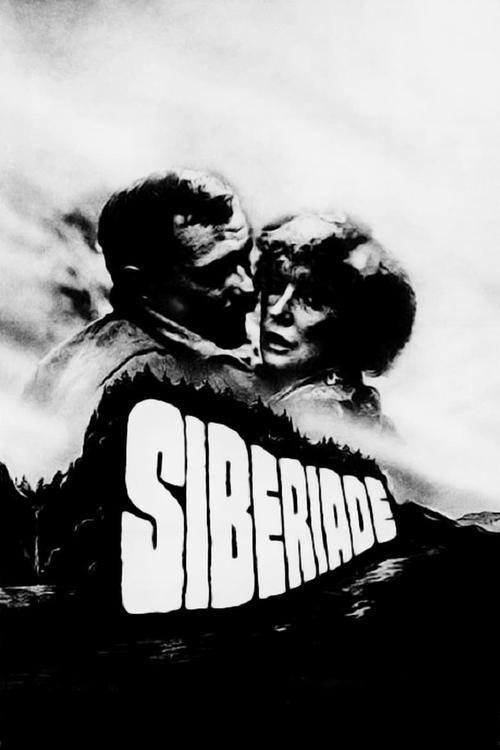
The story about a very small god-forgotten village in Siberia reflects the history of Russia from the beginning of the century till the early 1980s. Three generations try to find the land of happiness and to give it to the people. One builds the road through taiga to the star over horizon, the second 'build communism' and the third searches for oil.

Siberiade

1979
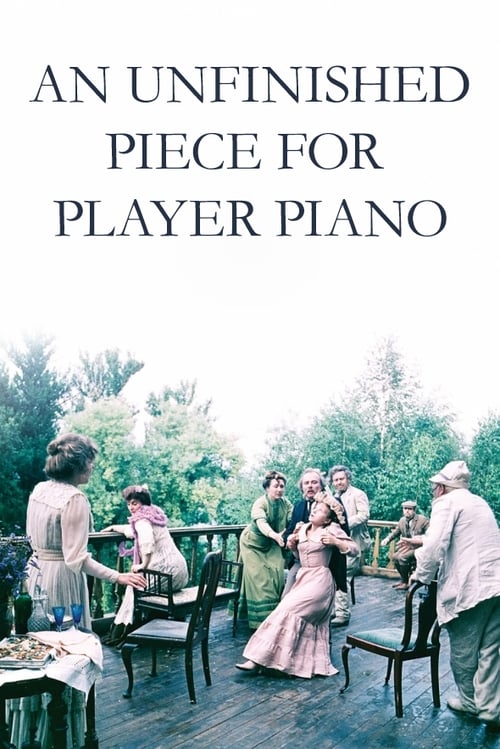
An Unfinished Piece for Player Piano
7.1

On a summer day in late 19th century Russia, a group of bourgeois friends and acquaintances gather at a dilapidated country estate.

An Unfinished Piece for Player Piano

1977
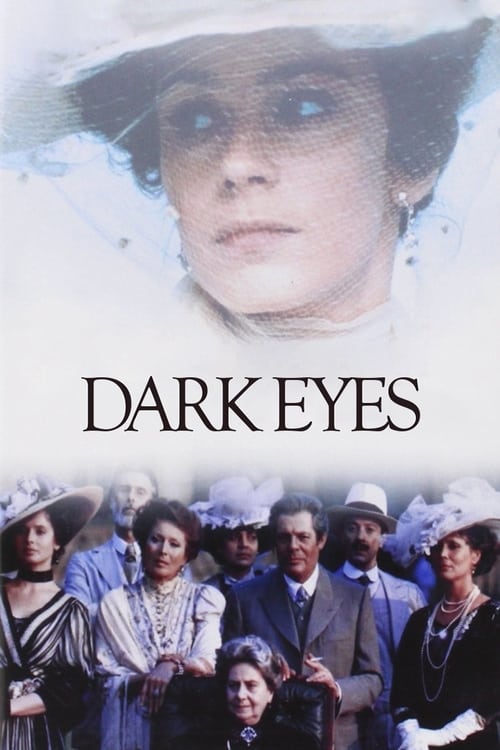
Dark Eyes
6.6

Aboard a ship early in the 20th-century, a middle-aged Italian tells his story of love to a Russian.

Dark Eyes

1987
Picture
N/A

No description available.

Picture

1985
Oblomov
6.3

St. Petersburg, mid 19th century: the indolent, middle-aged Oblomov lives in a flat with his older servant, Zakhar. He sleeps much of the day, dreaming of his childhood on his parents' estate. His boyhood companion, Stoltz, now an energetic and successful businessman, adds Oblomov to his circle whenever he's in the city, and Oblomov's life changes when Stoltz introduces him to Olga, lovely and cultured. When Stoltz leaves for several months, Oblomov takes a country house near Olga's, and she determines to change him: to turn him into a man of society, action, and culture. Soon, Olga and Oblomov are in love; but where, in the triangle, does that leave Stoltz?

Oblomov

1980
Eleven Hopes
6.2

The basis of the film story is the creation of a talented football team by a coach, its participation in a qualifying match, and preparation for the World Cup.

Eleven Hopes

1976
Sold Laughter
5.4

Young boy Timm sells his laughter to Baron Lefuet for the ability to win every wager. Based on the famous book "Timm Thaler" by James Krüss.

Sold Laughter

1981
Russian Souvenir
4.6

The end of the 1950s. The Chinese passenger plane, following the Beijing-Moscow flight, enters a thunderstorm and makes an emergency landing in the Baikal region. In addition to the Soviet citizen Varvara Komarova, all other passengers are foreigners. Using a stop, they explore new cities and get acquainted with the life, work and rest of Soviet people.

Russian Souvenir

1960
Secret Agent
5.6

Soviet agent Fedotov is air-dropped into Nazi occupied land. He changes over into Mr. Ekhert, a German entrepreneur wishing to take advantage of eastern worker slave labor in occupied Ukraine. Ekhert (Fedotov) enters into a partnership with a German entrepreneur who's son, Willie, is a high ranking Nazi. Together they go to Vinnitsa, Ukraine and start a factory. Fedotov begins seeking contacts with headquarters, but faces problems when a Ukrainian Nazi collaborator manages to infiltrate the Soviet partisans.

Secret Agent

1947
They Have a Motherland
10.0

The Great Patriotic War is over, but Major Sorokin and Colonel Dobrygin still have a lot to do for their homeland. They must go to West Germany in order to find and return the children who were taken out of the Soviet Union by the Nazis and are now kept in atrocious conditions under the supervision of British intelligence. Former allies want to grow real spies out of their children.

They Have a Motherland

1949
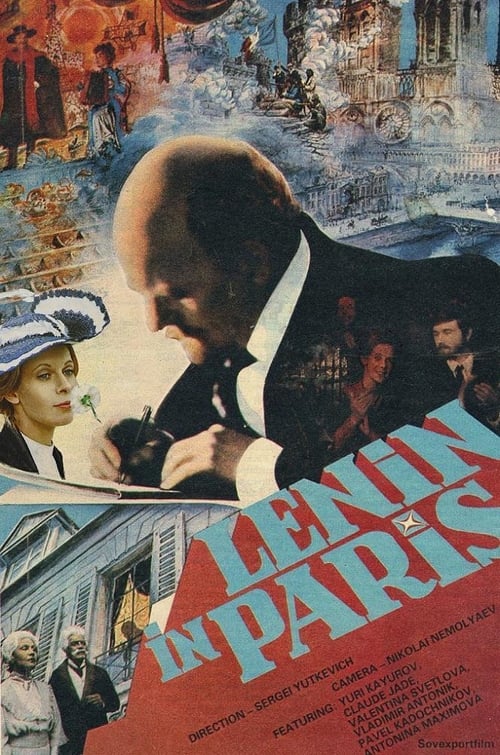
Lenin in Paris
4.3

1911. Lenin organizes the first Bolshevik party school near Paris, in the small town of Longjumeau. Through a chain of historical parallels and associations, this time is intertwined with the events of the Paris Commune, the October Revolution and the political struggles of the post-revolutionary years.

Lenin in Paris

1981
Царицын. Поход Ворошилова
N/A

The film takes us back to the summer of 1918 and tells the story of how Voroshilov, under the noses of a 300,000-strong German corps, pulled 80 trains loaded with valuable cargo, materials, ammunition, and equipment out of Donbass. With a 15,000-strong army and 50,000 refugees from Ukraine, occupied by Germany, in Tsaritsyn. It was an unprecedented campaign, unparalleled in world military history, because it involved marching 500 km through territory occupied by the White Cossacks, under the command of some of the most capable tsarist cavalry generals, Mamontov and Fitzhelaurov.

Царицын. Поход Ворошилова

1942
Crazy Money
5.3

Moscow mid-XIX century. Middle-aged provincial businessman Savva Gennadievich Vasilkov falls in love with local beauty Lidiya Yuryevna Cheboksarova. Wanting to meet her, he asks his new acquaintance Telyatev to introduce himself as Cheboksarov. Telyatev and his friend Glumov decide to play the mother of Lidiya, Nadezhda Antonovna, who wants to get a rich son-in-law, and recommend Vasilkov as a gold mining millionaire from Siberia. Savva Gennadievich begins to visit the Cheboksarovs house, but his provincialism and Lydiya’s intention to create a brilliant party due to their beauty prevent them from finding a common language.

Crazy Money

1981