
Jean-Louis Étienne
Acting
Biography
Jean-Louis Étienne (born 9 December 1946) is a French doctor, explorer and scientist. He is well known for his Arctic explorations, where he was the first man to reach the North pole alone in 1986, and his Antarctic explorations, including the famous 1990 International Trans-Antarctica Expedition. Jean-Louis Étienne was born in Vielmur-sur-Agout in the department of Tarn. He studied at the technical high school of Mazamet where he graduated with a CAP (Certificat d'Aptitude Professionnelle) in machining, then his technical high school graduation in Castres, and at the Faculté de Médecine of the Paul Sabatier University of Toulouse. He obtained a doctorate in general medicine graduated with a DESS (Diplôme d'Études Supérieures Spécialisées) in Dietetics and food, as well as a diploma in biology and sports medicine. Jean-Louis Étienne is also a licensed doctor of the Merchant navy. Jean-Louis Étienne got interested in medical matters and human psychology in extreme conditions. In order to further his research, he participated in several expeditions in Himalaya (Broad Peak and North of Mount Everest), Greenland and Patagonia. He was a teammate on the Pen Duick VI under Éric Tabarly for its race around the world in 1977–78. He is well known for his expeditions in the Arctic and Antarctica, with scientific as well as pedagogical goals, which attracted media coverage, disseminating knowledge and research, and promoting protection of the environment. He became famous with the feat of the 1990 International Trans-Antarctica Expedition, a 6,300 km crossing on foot, with dogs, of the Austral continent. In 2007 and 2008, Jean-Louis Étienne was the general director of the Institut océanographique de Paris and the Oceanographic Museum of Monaco. Source: Article "Jean-Louis Étienne" from Wikipedia in English, licensed under CC-BY-SA 3.0.
Known For

No description available.
Sacrée soirée

Télématin is a French breakfast television news show, broadcast on France 2 since January 7, 1985. It is broadcast in Metropolitan France weekdays from 6:30 to 9:00 am CET. TV5 broadcast the show in Canada in its entirety until September 2011: it now shows a 90 minute version between 6:30 and 8:00 am Eastern Time, when the French original version is now 2h30 long. Télématin is hosted by William Leymergie. The show is daily seen by around 40% of the French morning audience, a very high percentage for French TV. In Metropolitan France, the newscasts are presented at 7:00, 7:30 and 8:00, with newsflashes at 6:30 and 8:50, and two press reviews at 7:20 and 8:30. The 6:30, 7:30 and 8:50 newscasts are usually presented by a female reader and the hourly newscasts by a male. The usual readers are Nathanaël de Rinquesen, Sophie Le Saint, Julien Benedetto, Sophie Gastrain, Patrice Romedenne and Frédéric Vion.
Télématin

No description available.
Un monde, un regard
No description available.
Una belleza nueva
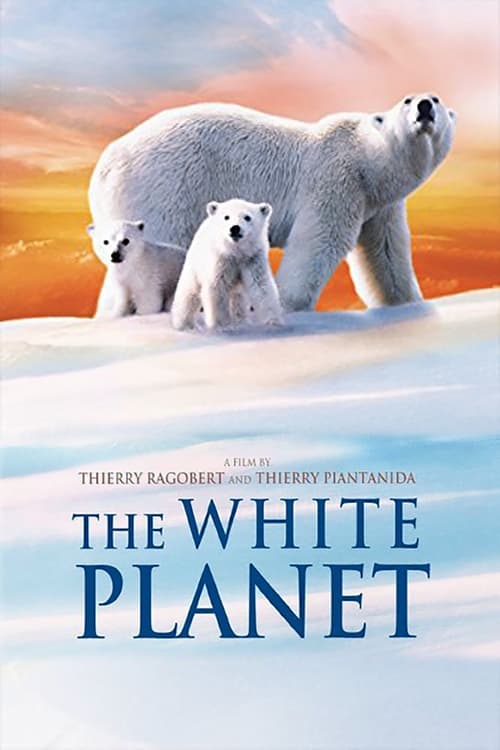
The White Planet or in French, La Planète Blanche, is a 2006 documentary about the wildlife of the Arctic. It shows interactions between marine animals, birds and land animals, especially the polar bear, over a one year period. The fragility of the Arctic is hinted at as a reason to prevent climate change. It was nominated for the Documentary category in the 27th Genie Awards in 2007.
The White Planet
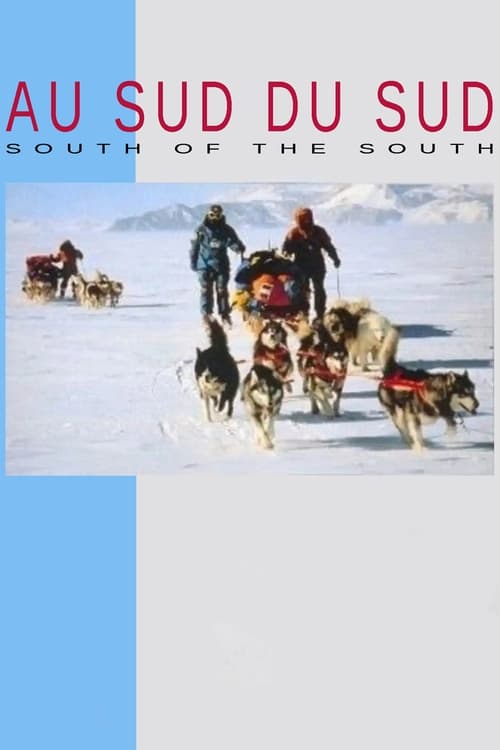
The Transantarctic expedition led by the American Will Steger and the Frenchman Dr. Jean-Louis Étienne took place between July 1989 and March 1990. It was the first successful attempt to cross the entire extent of Antarctica without the use of motor power. Six men of various nationalities, including Viktor Boyarksy (Soviet Union), Geoff Somers (Great Britain), Qin Dahe (China) and Keizo Funatsu (Japan), crossed Antarctica from east to west for seven months on dog sleds pulled by 63 sled dogs, covering a total distance of 6,048 kilometers, with temperatures as low as minus 45 degrees Celsius and long-lasting storms. Their aim was to draw global attention to the continent's endangered future and the early signs of climate change. The documentary relives this great human adventure, which took more than three years from the first meeting of the participants to the final success.
Au Sud du Sud
1947. The rush to the poles marked the beginning of an incredible human adventure to discover the last-remaining unknown lands. In France, Paul-E?mile Victor persuaded the government to finance expeditions to explore the Arctic and Antarctic. For the pioneers the conditions were Dantean, all in the name of science.
Odyssées blanches
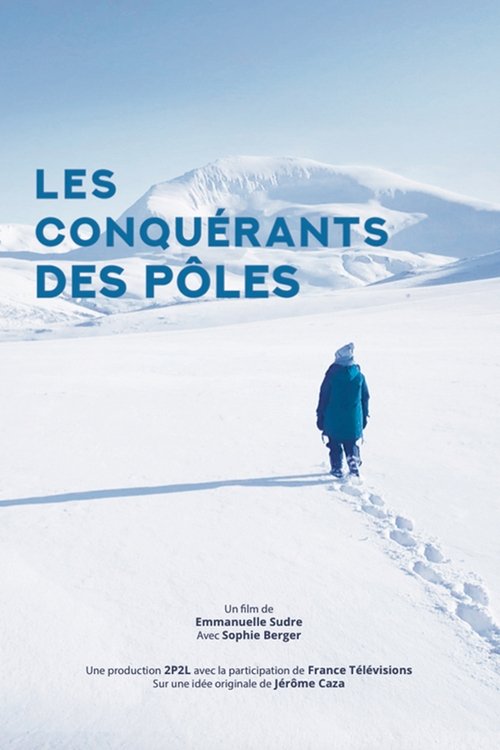
Witnesses and sentinels of the upheavals occurring on a global scale, the poles have become major natural laboratories for researchers studying climate change. But these icy extremities have always been as fascinating as they are inhospitable. The conquest of the Arctic and Antarctic was long and perilous. Many advances were made only thanks to the tenacity of the first adventurers. This journey to the ends of the earth offers a scientific investigation in the footsteps of the conquerors of these icy poles, with insights from Sophie Berger, glaciologist, Jean-Louis Etienne, adventurer, and Jérôme Chappellaz, director of the French Polar Institute Paul-Emile Victor.
Conquerors of the Poles

A team of 12 men, 5 sailors, a doctor, a writer, a film crew, and 3 mountaineers, Jean-Marc Boivin, Thierry Leroy, and Dominique Marchal, set off by sailboat from Mar del Plata in Argentina to reach Riso Patron in Chile, via the Strait of Magellan, the Patagonian Channels, and Falcon Fjord. Their goal is to climb Riso Patron and then make the first crossing of the Campo de Hielo Sur glacier, or Hielo Continental Patagónico, to meet up with the sailors in Puerto Williams on Navarino Island in Chile, a village at the end of the world. After three attempts and an accident for Leroy, who was repatriated, they gave up, crossed the glacier and rejoined the boat, to set off for Cape Horn to climb the South face, knowing that the weather was good one day a month... On January 20, 1983, Jean-Marc Boivin and Dominique Marchal succeeded in making the first ascent of the South face of Cape Horn.