Acting
Polizeiruf 110 is a long-running German language detective television series. The first episode was broadcast 27 June 1971 in the German Democratic Republic, and after the dissolution of Fernsehen der DDR the series was picked up by ARD. It was originally created as a counterpart to the West German series Tatort, and quickly became a public favorite.
Der Staatsanwalt hat das Wort was an East German television series.
No description available.
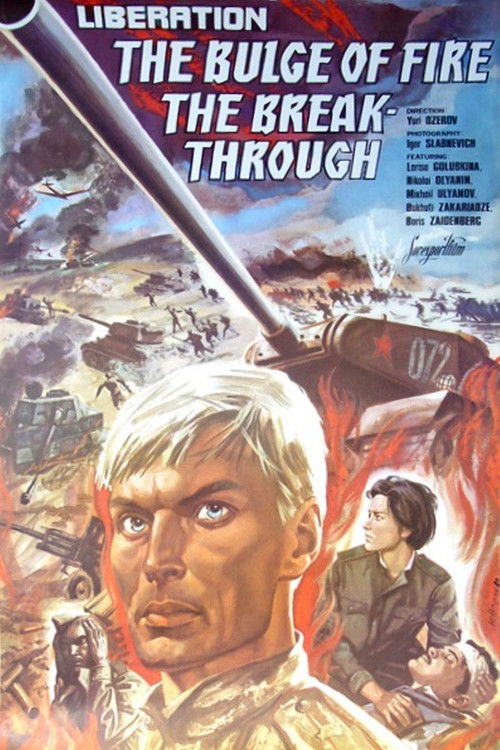
The "Fiery Arc" tells of a grandiose battle on the Kursk Bulge in the summer of 1943. Here was the largest tank battle in the history of World War II. Along with the personal fate of the heroes, the film shows battle scenes, the activities of headquarters and intelligence, those who worked at the front and in the rear.
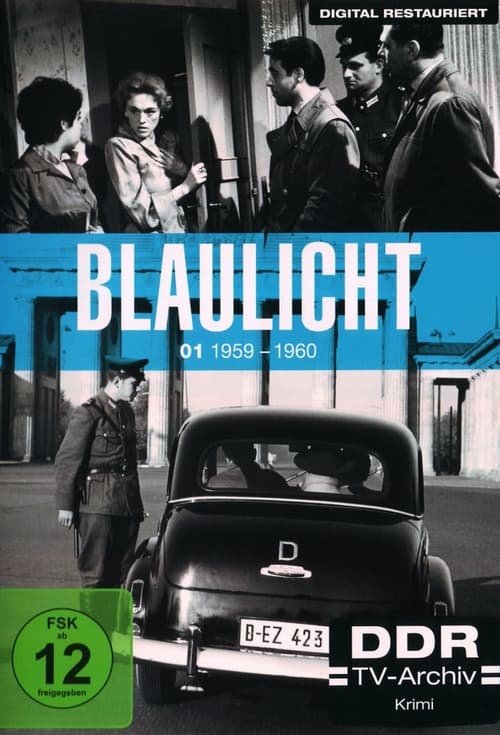
Blaulicht is a German crime television drama series, whose 29 episodes were based on crime case files.
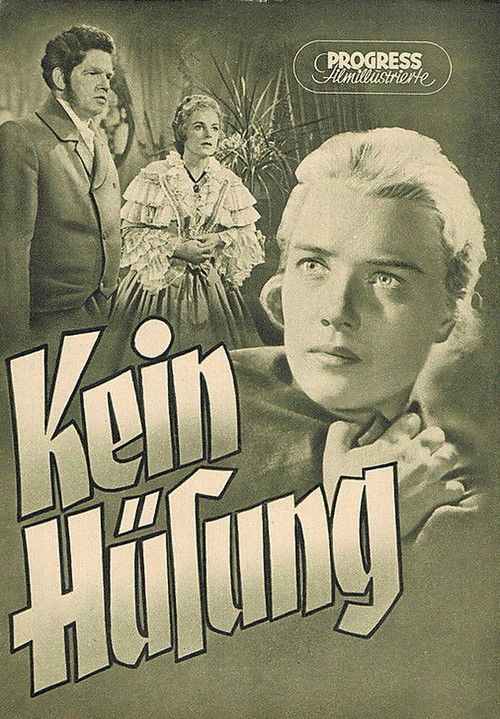
Mecklenburg, 19th century. For generations, the Brand family of farmers has worked a piece of land as tenants of the baron, who owns almost all of the village's land. The baron himself comes from a family of farmers who became rich through corruption and were ennobled. He is the absolute potentate, no one dares to contradict him, he takes what he wants and stops at nothing in his excesses. At the same time, he is the center of petty bourgeois, bigoted social life. Johann, the stable boy, wants to marry Mariken Brand and asks the baron for a piece of land so that he can build a life of his own. But the lord is harsh, not only refusing him the land, but also increasing the rent. Johann rebels, trying to rouse the farmers in the village from their lethargy—in vain. Only when Mariken dies does the mood change. A peasant uprising breaks out, and Johann kills the baron.
Using the example of three generations of a Hamburg working class family, the rise of the working class from the founding of the Wilhelmin Empire to the First World War, over the time of the Weimar Republic and National Socialism to the destruction of the Third Reich.
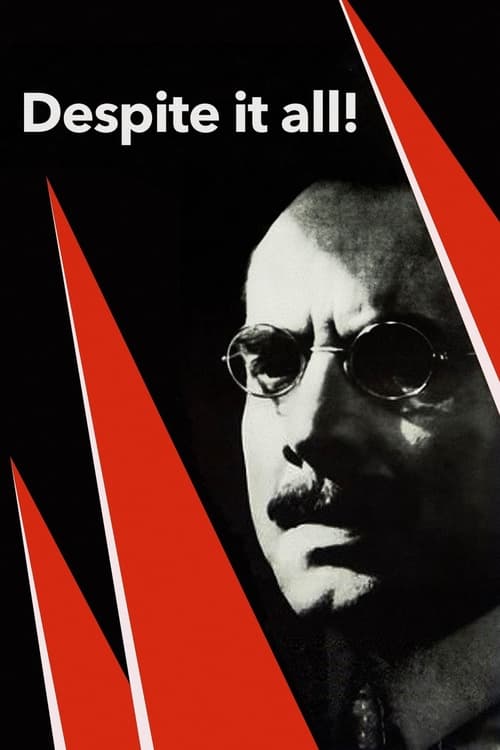
October 1918: Karl Liebknecht is released from prison and Berlin workers celebrate his release. Although WWI is almost over, the German Kaiserreich in vain sends its last reserves to the slaughter. The working class is in a rebellious mood; the uprising of Kiel’s sailors against war and militarism sets off a call for revolution led by Liebknecht. On November 9, Liebknecht declares the Free Socialist Republic of Germany. But pro-Kaiser military and right wing Social Democrats oppose him.
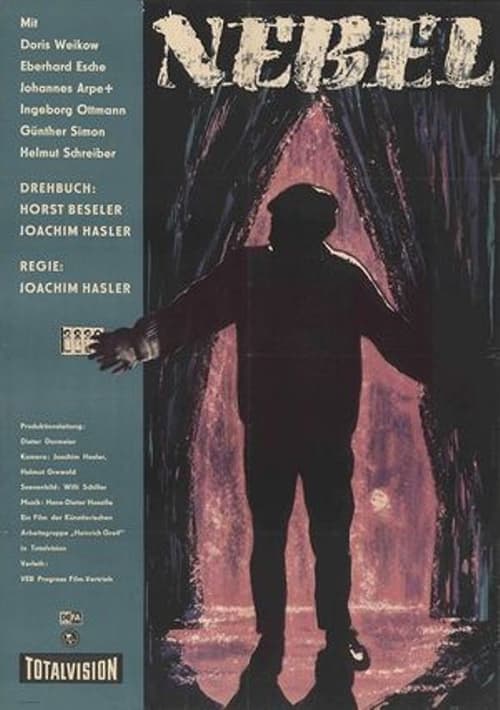
At the beginning of the 1960s, a German turns up on behalf of the NATO in the British village of Rocksmouth. NATO wants to establish a naval base in Rocksmouth, but first, the German envoy has to salvage an old ship wreck. In 1942, the "Princess of India" was supposed to bring children to safety in Canada but was sunk by a German submarine at departure. 58 people were killed, most of them children.
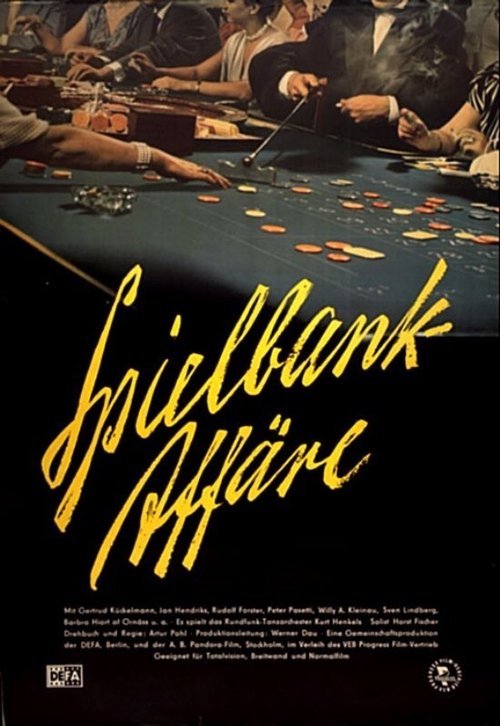
In a casino in a We'5t German health resort, one often sees Sybille - an attractive young student actress. With her winnings from the roulette table, she attempts to finance her studies. Despite a rather lucky streak, her winnings are a little on the lean side. She doesn't, however, gamble with her own money but with that of Dr. Busch, a lawyer, who likes to stay in the background with the argument that gambling houses are not the proper turf for a serious lawyer. From him, Sybille receives only a small share of her winnings later, and only through the intervention of Gerhard Fischer, a journalist, does Sybille come to realize her role in Dr. Busch's fraudulent scheme.
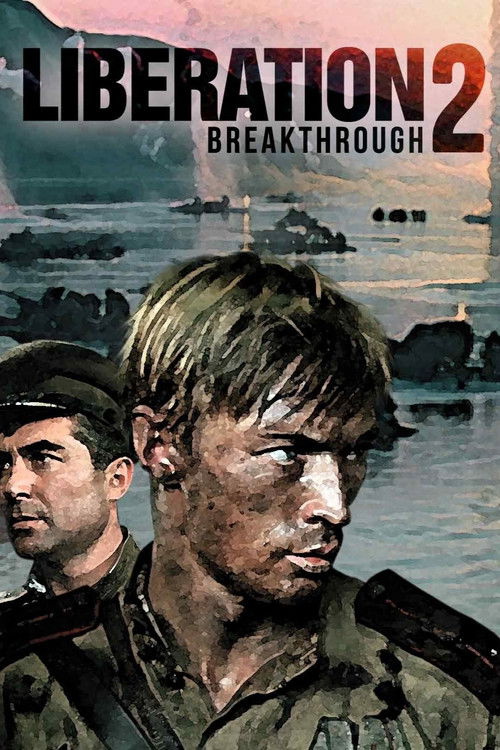
Fascist Italy's prime-minister Mussolini is arrested following the Allies landing in Sicily. Meanwhile, Soviet troops plan their offense towards Kyiv. Lt. Col. Lukin's regiment crosses the Dnieper river as the division's vanguard. Unbeknownst to them, they're merely a ploy to mislead the Germans so the rest of the army can catch them off guard.
A film about the historical uprising of the seamen in Kiel: During the Russian October Revolution of 1917, German and Russian soldiers start to solidarize with each other. By disarming the officers, machinist Henne Lonke and stoker Jens Kasten prevent the attack on a Russian freighter. When German admiralty gives out orders for operation "Nibelungen", which would lead the German fleet into a suicidal attack against England and quell the revolutionary spirit, seamen and soldiers from different political backgrounds unite in protest.
Germany in 1943. The Berlin worker Klaus Hartung is deployed as a soldier to the Eastern front during World War II. During a tour, he is captured by a Russian patrol. While in captivity, Hartung comes to the conclusion that he has to come through and actively take part in the effort to end the war. He consents to abduct a German officer together with two Russian soldiers. During their adventurous mission, the men who at first had been enemies, become sincere friends.
Two boys from West Berlin, Klaus and Max, live in poverty. They dream of a career in boxing and save every penny in order to buy boxing gloves for training. Nevertheless, they cannot seem to save enough and so they let themselves be hired by the bartender Klott for a twisted scheme. However, Klaus overhears one of Klott's conversations and learns that Klott intends for the boys to steal horses from the East Berlin Barlay Circus, where Klaus recently made some good friends. Indignant, he sets out to stop the robbery—and an adventurous action story results.
This is part one of a two-part biopic about Karl Liebknecht. In 1914, Germany is arming itself for war. Karl Liebknecht, left-wing revolutionary Social Democrat, workers’ leader and a virulent antimilitarist, is one among 110 SPD members of Parliament who vote against approving war loans. From then on, he is considered un-German and a traitor to the fatherland, and his own party’s leadership turns against him. Despite threats, Liebknecht speaks up against the war and writes the manifesto “The Main Enemy Is at Home.” Even when he is arrested and charged with treason, he does not surrender.
Victory and demise of the first proletarian dictatorship in the history of mankind, about the struggling, bleeding workers of Paris who enthusiastically defend their historical initiative. The little Cabet family from Rue Pigalle and their friends let the spectator participate in the action.
Galileo Galilei seeks evidence to support the Copernican model of the universe, but the new theory contradicts Church dogma. Based on the design of a telescope sold in Holland, he constructs a telescope for astronomers, which he uses to substantiate his hypotheses..
In the mid-1950s, mayor Zwischenzahl is killed on the day of his inauguration in a West German town. The killer is Ruth Bodenheim, a Jewish woman, who wanted to avenge the death of her parents. Zwischenzahl, a former SA member, was apparently involved in the deportation of her parents to a concentration camp during the war. Ruth cannot bear the horrible events and the death of her parents and wants to open the eyes of the town′s residents.
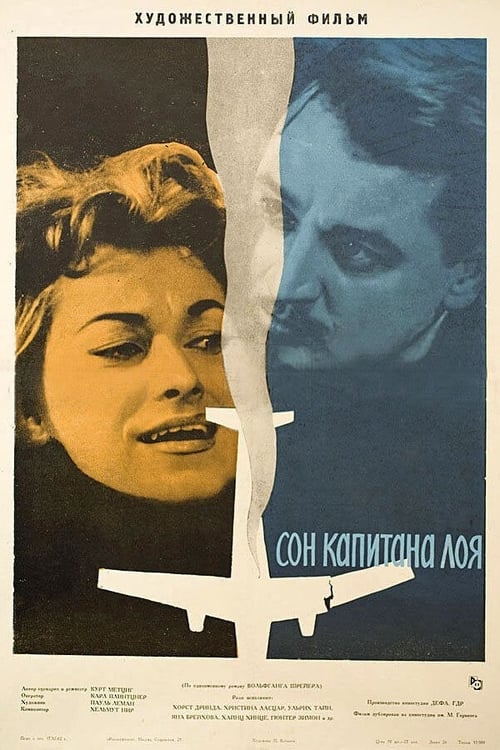
An American military plane takes six people, who have taken part in a NATO maneuver, from Tripoli to Oslo. Among them are the British Captain Loy and the United States Air Force Corporal Doris Graves. During the flight, the two become closer, and they regret that the trip will end that evening. But everything turns out differently. The flight captain has received orders to pick up an agent at a German NATO airport, who is to be dropped off again on a Soviet island …