Marcel Camus
Directing
Biography
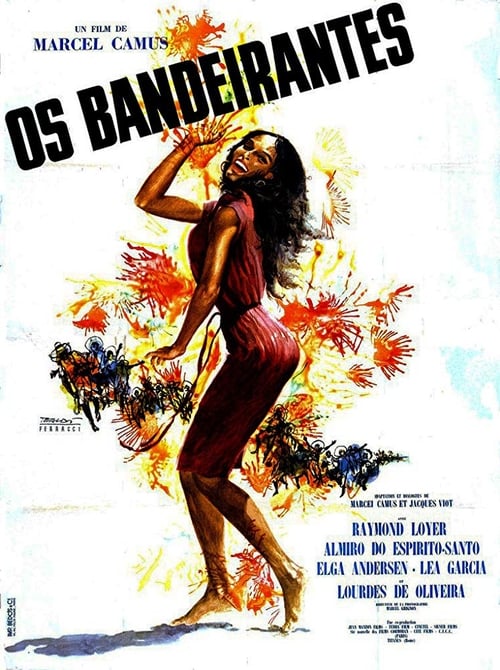
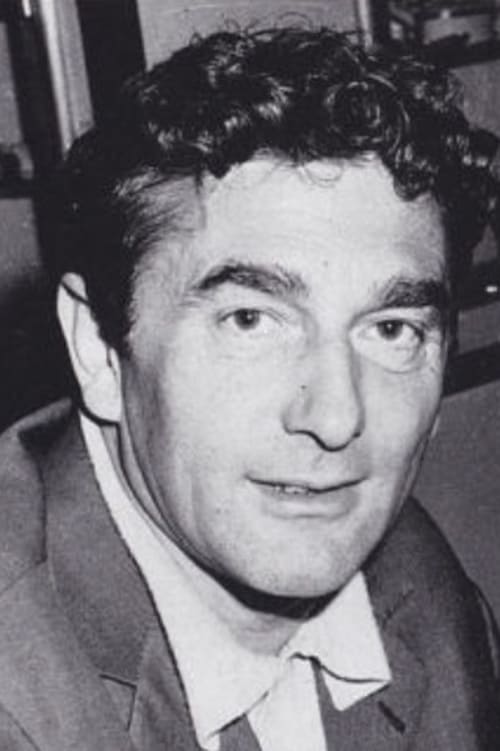
Marcel Camus (21 April 1912 – 13 January 1982) was a French film director. He is best known for Orfeu Negro (Black Orpheus), which won the Palme d'Or at the 1959 Cannes Film Festival and the 1960 Oscar for Best Foreign Language Film. Camus was born in Chappes, in the Ardennes département of France. He studied art and intended to become an art teacher. However, World War II interrupted his plans. He spent part of the war in a German prisoner-of-war camp. On his return from captivity, his uncle, famous novelist, Roland Dorgelès introduced him to several film-makers. Camus assisted filmmakers in France, including Jacques Feyder, Luis Buñuel, and Jacques Becker. In a famous photo of the French New Wave filmmakers, taken on the steps of the Palais des Festivals in Cannes in 1959, Marcel Camus appears alongside François Truffaut, François Reichenbach, Claude Chabrol, Jacques Doniol-Valcroze, Jean-Luc Godard, Roger Vadim, Jean-Daniel Pollet, Jacques Rozier, Jacques Baratier, Jean Valère, Édouard Molinaro and Robert Hossein. In 1958, at the suggestion of producer Sacha Gordine, he travelled to Brazil to adapt for the screen, with the help of Jacques Viot, a play by famous poet and diplomat Vinícius de Moraes, Orfeu da Conceição, which became Orfeu Negro. It was a transposition of the love story of Orpheus and Eurydice to the favelas of Rio de Janeiro during Carnival. The film won over both the general public and a large proportion of the critics. The film was a worldwide success, winning several awards including the Palme d'Or at the 1959 Cannes Film Festival and the Academy Award for Best International Feature Film in 1960. It introduced Europeans and Americans to Rio, Carnival and bossa nova, with unknown black actors and a tender view of Brazil. American-French actress Marpessa Dawn, who played Eurydice in the film, became the director's wife. In 1960, Camus made a second Brazilian-themed film, Os Bandeirantes. This adventure film follows a French diamond miner in Brazil who, after being betrayed and left for dead by a friend, embarks on a quest for vengeance but finds himself falling in love with a Brazilian woman along the way. Twenty years after Orfeu Negro, Camus returned to Brazilian themes for what would prove to be his last film, Bahia (also known as Otalia da Bahia and Os pastores da noite), based on a novel by Brazilian novelist Jorge Amado. These films, however, failed to recapture the success of Orfeu Negro. In 1976, he returned to the country that fascinated him and his wife, Brazil, to direct Otalia de Bahia, adapted from Jorge Amado's novel Os pastores da noite (Shepherds of the Night). In 1970, Camus had a last great success with a World War II comedy, Atlantic Wall, starring the well-known French comedian Bourvil. It was the second most popular film in France in 1970, attracting 4 770 962 viewers. Camus ended his career working primarily in television. Camus married one of the stars of Orfeu Negro, Marpessa Dawn, but they divorced shortly thereafter. He then married another actress from Orfeu Negro, Lourdes de Oliveira. Camus and de Oliveira have two children, including the writer Jean-Christophe Camus. Camus died in Paris and is buried there in Père Lachaise Cemetery. Source: Article "Marcel Camus" from Wikipedia in English, licensed under CC-BY-SA.
Known For

No description available.
Discorama

No description available.
Cinépanorama

Young lovers Orfeu and Eurydice run through the favelas of Rio during Carnaval, on the lam from a hitman dressed like Death and Orfeu's vengeful fiancée Mira and passing between moments of fantasy and stark reality. This impressionistic retelling of the Greek legend of Orpheus and Eurydice introduced bossa nova to the world with its soundtrack by young Brazilian composers Luiz Bonfá and Antonio Carlos Jobim.
Black Orpheus

No description available.
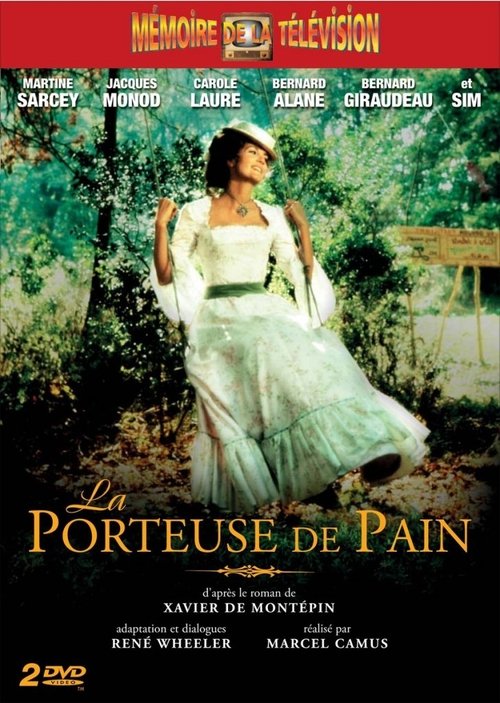
La Porteuse de pain

No description available.
Molière pour rire et pour pleurer

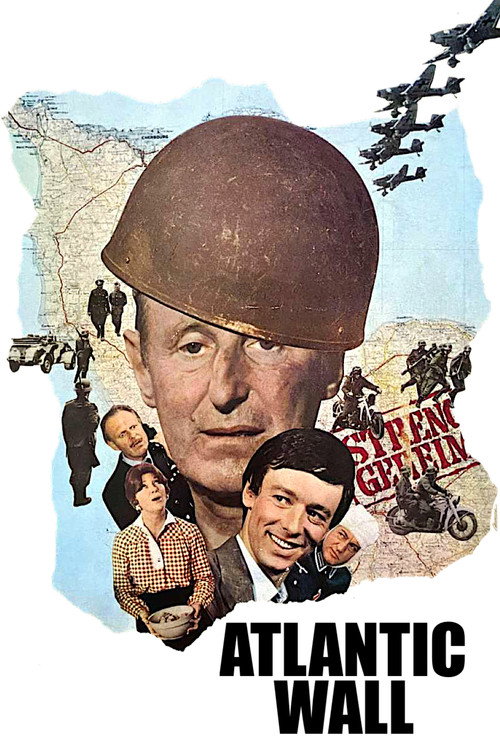
1944. Léon Duchemin owns a restaurant with his sister. His clients are Germans, Résistance et black marketeers. Léon unwillingly joins the Résistance when a British pilot is shot down and hides in his attic and, through a series of mishaps, he accidentally steals the plans for Hitler's V1 missiles.
Atlantic Wall

This devil of a man plunges the viewer into the very heart of the Voltaire whirlwind, that incandescent mind who shook his century. The series follows his meteoric rise, his exiles, his battles and flashes of genius, in a Europe still tightly bound by absolutism. We discover an unbowed, charming, formidable man whose pen makes ministers, kings and fanatics tremble. Between glittering salons, damp prisons and passionate loves, Voltaire crosses the Age of Enlightenment like a meteor. Each episode reveals a confrontation, a flight, a victory wrested through the sheer force of intellect. Carried by elegant direction and a sweeping, novelistic energy, the series paints a vibrant portrait of a fighter for freedom. A journey into the life of a man who never stopped thinking, loving and provoking.
Ce diable d'homme

At the end of the 19th century, during a ball in Joinville, on the outskirts of Paris, Georges, a former delinquent working as a carpenter, meets Marie, a young woman connected to a criminal gang.
Casque d'Or

Les Faucheurs de marguerites is a French-Canadian-German television series.
Les Faucheurs de marguerites

My Friend Winnetou is a German television series.
My Friend Winnetou

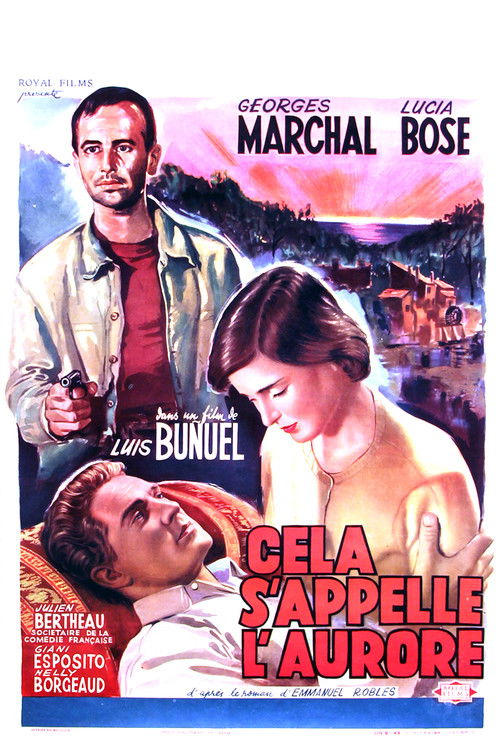
A generous doctor is aghast that the population of a small island is being oppressed and mistreated, but is seemingly unable to do anything about it, until the arrival of a young woman and the death of one of his friends prompts him into action.
That Is the Dawn

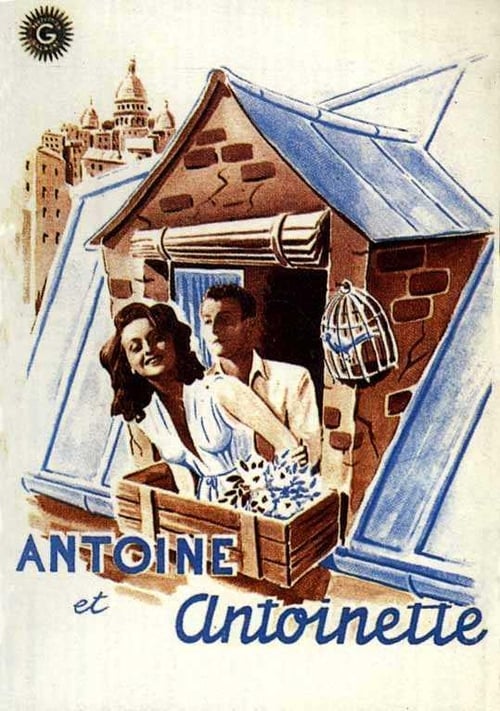
1947, in France, Antoine and Antoinette, a young couple living in Paris, lead a monotonous existence: he works in a print shop while she is a shop assistant. But one evening, they regain hope: Antoine finds a winning lottery ticket in his girlfriend's handbag. He decides to cash it in, but loses his wallet. What follows is a series of twists and turns that redefine the couple's priorities while forcing them to remain optimistic.
Antoine & Antoinette

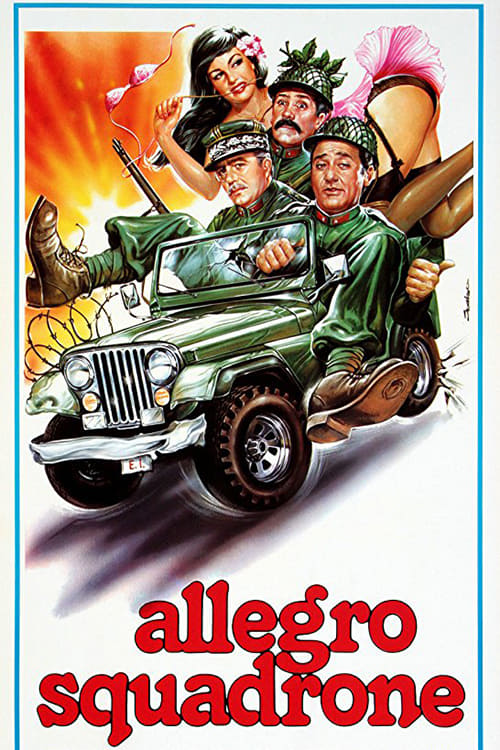
The Cheerful Squadron is a 1954 Italian war-comedy film directed by Paolo Moffa and Interpreted by movie stars like Paolo Stoppa, Vittorio De Sica, Alberto Sordi and Silvana Pampanini. Based on the military environment novel The Allegro Squadron by Georges Courteline (1886), this film presents a series of sketches on military life in the late nineteenth century.
The Cheerful Squadron

A beautiful dancer has two admirers -- one is a young worker whom she has only met by accident, and the other is an unscrupulous businessman. The worker had been training as a Buddhist monk and as his interest in the dancer and the businessman's pursuit of the woman develop, the dancer and the former monk end up at the archaeological site of Angkor.
Bird of Paradise

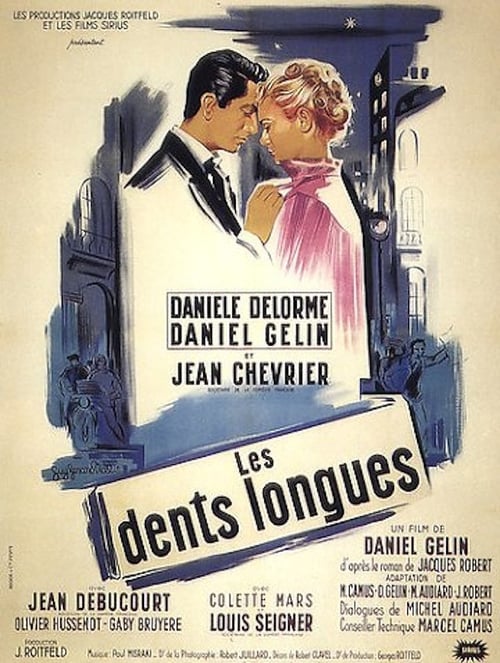
A young, talented and ambitious journalist, Louis heads off to try his luck in Paris. He's spotted by Walter, editor-in-chief for a major daily newspaper, who takes to him and furthers his career. What he doesn't realise is that Louis is ready to betray anyone to achieve his ends...
Les Dents longues

The adventures of Otalia, a strangely innocent young Brazilian prostitute who has just arrived in Salvador, Bahia. Though her belongings are stolen from her shortly after arrival, Otalia swiftly meets up with a group of charming and helpful friends.
Bahia

Rosette is young and charming but she is crippled so she cannot make the most of her life. Which upsets Jules Petitpas, a single inventor, her eccentric but kind-hearted neighbor. Jules pledges to help her by creating a potion that will cure her. Unfortunately he dies before being able to achieve his aim. But a promise is a promise, and the good man comes back to the land of the living as an ... ectoplasm! And he manages to involve a whole tribe of ghosts to assist him in the noble task of saving the young lady. All is well that ends well.
La demoiselle et son revenant

A terminally ill Mr. Bard, a casino bus driver forced to quit his job, miraculously wins a fortune playing roulette. Instantly becoming a millionaire, he wants to fulfill his life's dream: to become a father. This plan is opposed by his greedy relatives who would go any low to take this money away from him. They are being led by a small-time crook. Mr. Bard's natural shyness and good heart lead him to the journey of self-exploration and finding his true love.
Strange Desire of Mr. Bard

In Juan-les-Pins, Serge drops off a hitchhiker, Sylvie, who joins "Théo's gang", a group of students and workers, all young, all broke, improvising their vacations from day to day. Among them, Serge meets Helle, a discreet young girl with whom he quickly falls in love, but whom he can only win over once he's sorted out his many problems with the wrong people.
A Savage Summer

In 1950 Saigon Paul Horcier, a young Frenchman is on the run for currency trafficking. A Eurasian woman he meets takes him to shelter in a village in No man's land between the French forces and the Viet Minh. He grows to have enormous empathy with the locals and their poor living conditions. He ultimately lays down his life on their behalf.