Curt Bois
Acting
Biography
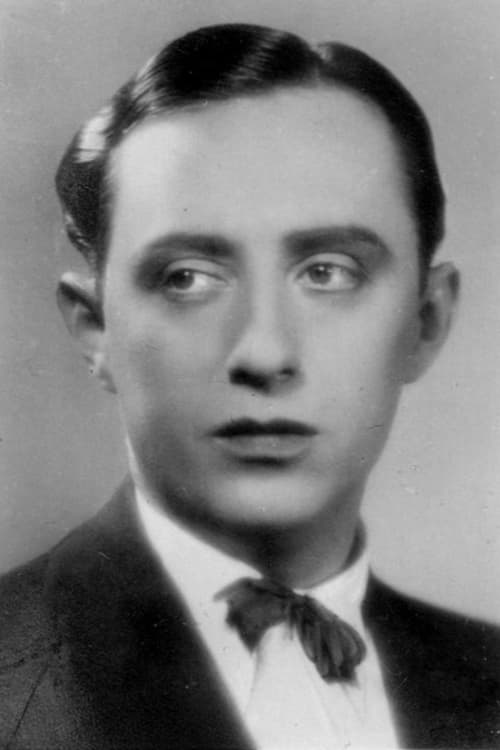
From Wikipedia, the free encyclopedia. Curt Bois (April 5, 1901 – December 25, 1991) was a German actor. He is best remembered for his performance as the Pickpocket in Casablanca (1942). Bois was born in Berlin and began acting in 1907, becoming one of the film world's first child actors, with a role in the silent movie Bauernhaus und Grafenschloß. In 1909, he played the title role in Der Kleine Detektiv ('The Little Detective'). Bois' acting career spanned eighty years, a span reached by few other actors. His final performance was in 1987's Der Himmel über Berlin (Wings of Desire). Bois performed in theatre, cabaret, musicals, silent film and "talkies" over his career as an actor. In 1934, Bois was forced to leave his home for the United States, where he found work on stage on Broadway. By 1937, he had found his way to Hollywood, and began acting in American pictures, the best-known of which was Casablanca (1942), with a single speech warning about pickpockets as "vultures everywhere". After World War II Bois decided it was safe to return to Germany, which he did in 1950. He finished his life and career in Germany, first in the East, and finally in the West. Bois died in Berlin, the city of his birth, at the age of ninety. Description above from the Wikipedia article Curt Bois, licensed under CC-BY-SA, full list of contributors on Wikipedia.

Known For

A police department, lead by an older, experienced detective solve crimes together.
The Old Fox

No description available.
NDR Talk Show
No description available.
German Film Award

Der Kommissar is a German television series about a group of detectives of the Munich homicide squad. All 97 episodes, which were shot in black-and-white and first broadcast between 1969 and 1976, were written by Herbert Reinecker and starred Erik Ode as Kommissar Herbert Keller. Keller's assistants were Walter Grabert, Robert Heines, and Harry Klein who, in 1974, was replaced by his younger brother Erwin Klein.
The Commissioner

In Casablanca, Morocco in December 1941, a cynical American expatriate meets a former lover, with unforeseen complications.
Casablanca

No description available.
Aktuelle Schaubude

Two angels, Damiel and Cassiel, glide through the streets of Berlin, observing the bustling population, providing invisible rays of hope to the distressed but never interacting with them. When Damiel falls in love with lonely trapeze artist Marion, the angel longs to experience life in the physical world, and finds — with some words of wisdom from actor Peter Falk — that it might be possible for him to take human form.
Wings of Desire

Paris, France, 1482. Frollo, Chief Justice of benevolent King Louis XI, gets infatuated by the beauty of Esmeralda, a young Romani girl. The hunchback Quasimodo, Frollo's protege and bell-ringer of Notre Dame, lives in peace among the bells in the heights of the immense cathedral until he is involved by the twisted magistrate in his malicious plans to free himself from Esmeralda's alleged spell, which he believes to be the devil's work.
The Hunchback of Notre Dame

Based on extensive interviews, shot on 16mm in a series of static long takes, Filmemigration aus Nazideutschland, is one of the most fascinating examples of "Film history on film" ever produced. Straschek devoted years to researching the topic and accumulating both film and non-film materials. Apart from some radio features and articles, however, this 290-minute TV programme remains the only published trace of Straschek's lifelong work on the emigration of film personnel. He had intended to publish a three-volume book, encompassing all available data about 3,000 emigrants originating from the centre and peripheries of film production, but the book never materialised.
Film Emigration from Nazi Germany
Detektivbüro Roth is a German television series.
Detektivbüro Roth

A six-part television series, a parody of the Munich newspaper, its gossip reporter Michael Graeter, and its publisher Anneliese Friedmann. The series centres around the tabloid reporter Baby Schimmerlos, who plays in the Munich "Schicki-Micki" scene of the 1980s.
Kir Royal

A group of angels look longingly upon the life of humans. Berlin now is a very different place: unified in name but overrun with crime, corruption, and—in what turns out to be a key theme here—Americans.
Faraway, So Close!

A nightclub dancer makes it big in modeling, leaving her dancer boyfriend behind.
Cover Girl

A wealthy society doctor decides to research the medical aspects of criminal behaviour by becoming one himself. He joins a gang of thieves and proceeds to wrest leadership of the gang away from its extremely resentful leader.
The Amazing Dr. Clitterhouse

A Nazi propaganda film made to promote anti-Semitism among the German people. Newly-shot footage of Jewish neighborhoods in recently-conquered Poland is combined with preexisting film clips and stills to defame the religion and advance Hitler's slurs that its adherents were plotting to undermine European civilization.
The Eternal Jew

Wide-eyed and poor young Leonora weds an obsessive millionaire named Ohlrig, but the marriage is loveless. Even worse, Ohlrig seems to have manic, violent tendencies. Eventually, young Leonora escapes her unhappy life and begins working with New York City doctor Larry Quinada, who she soon falls for. Unfortunately, Ohlrig refuses to grant his wife a divorce, and things get even darker for Leonora when she realizes she's pregnant with his child.
Caught

Flagwaving story of a new American destroyer, the JOHN PAUL JONES, from the day her keel is laid, to what was very nearly her last voyage. Among the crew, is Steve Boleslavski, a shipyard welder that helped build her, who reenlists, with his old rank of Chief bosuns mate. After failing her sea trials, she is assigned to the mail run, until caught up in a disparate battle with a Japanese sub. After getting torpedoed, and on the verge of sinking, the Captain, and crew hatch a plan to try and save the ship, and destroy the sub.
Destroyer

Two buddies who rise from fly-by-night wildcatters to oil tycoons over a twenty year period both love the same woman. McMasters and Sand come to oil towns to get rich. Betsy comes West intending to marry Sand but marries McMasters instead. Getting rich and losing it all teaches McMasters and Sand the value of personal ties.
Boom Town

Laurent van Horn is the leader of a band of Dutch refugees on a ship seeking freedom in the Carolinas, when the ship is wrecked on the coast of Cartagene, governed by Don Juan Alvardo, a Spanish ruler. Alvarado has Laurent thrown in prison, but the latter escapes, and five-years later is a pirate leader. He poses as the navigator on a ship in which Contessa Francesca, daughter of a Mexican noble, is traveling on her way to marry Alvarado, whom she has never seen. Laurent's pirates capture the ship and Francesca, in order to save another ship, gives her hand-in-marriage to Laurent, who sails her to the pirate hideout. This irks his jealous pirate comrades Anne Bonney and Captain Benjamin Black. They overpower Laurent and send Francesca to Alvarado, and then Mario du Billar, a trusted right-hand man, makes a deal to deliver Laurent to Alvarado.
The Spanish Main

In the winter of 1938, Paris is crowded with refugees from the Nazis, who live in the black shadows of night, trying to evade deportation. One such is Dr. Ravic, who practices medicine illegally and stalks his old Nazi enemy Haake with murder in mind. One rainy night, Ravic meets Joan Madou, a kept woman cast adrift by her lover's sudden death. Against Ravic's better judgment, they become involved in a doomed affair.