Acting
Polizeiruf 110 is a long-running German language detective television series. The first episode was broadcast 27 June 1971 in the German Democratic Republic, and after the dissolution of Fernsehen der DDR the series was picked up by ARD. It was originally created as a counterpart to the West German series Tatort, and quickly became a public favorite.
Der Staatsanwalt hat das Wort was an East German television series.
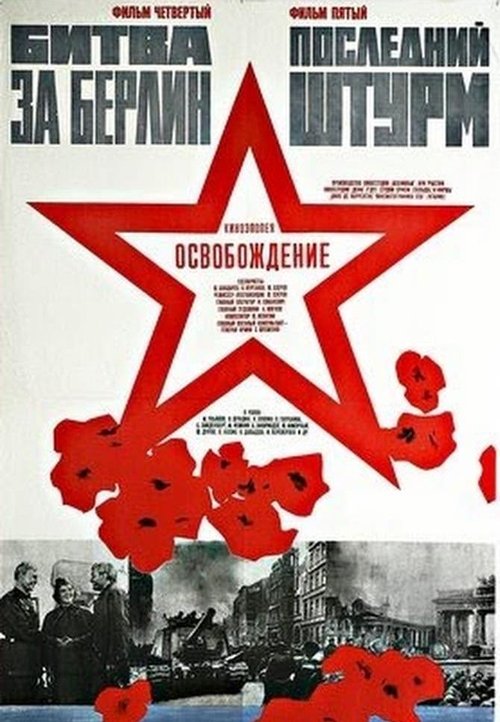
In this the fourth episode, “Battle of Berlin,” the Soviets start their assault on Berlin, and Stalin negotiates with the other Allies.
No description available.
The series begins with a story from 1717: At the court of Augustus the Strong in Dresden, the French organ virtuoso Louis Marchand was said to have passed away. Convinced of his “unique” abilities, he announced a music competition. Bach was the only competitor to enter.
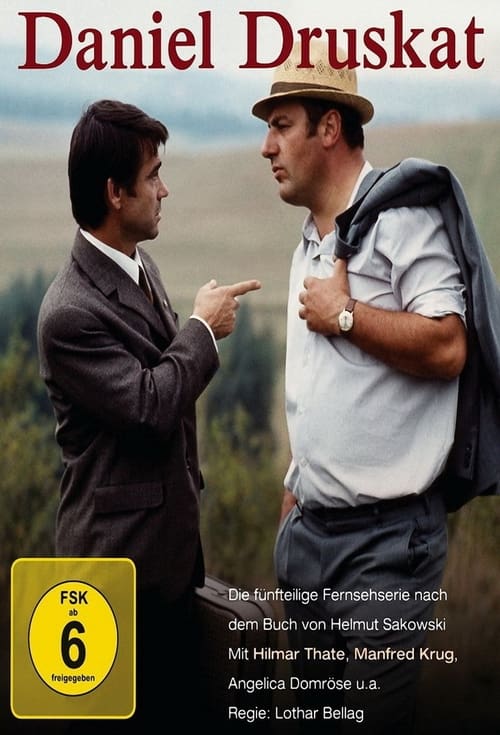
Large-scale, five-part film about the relationship between two men caught between friendship, rivalry and hatred during the first decades of GDR in the countryside.
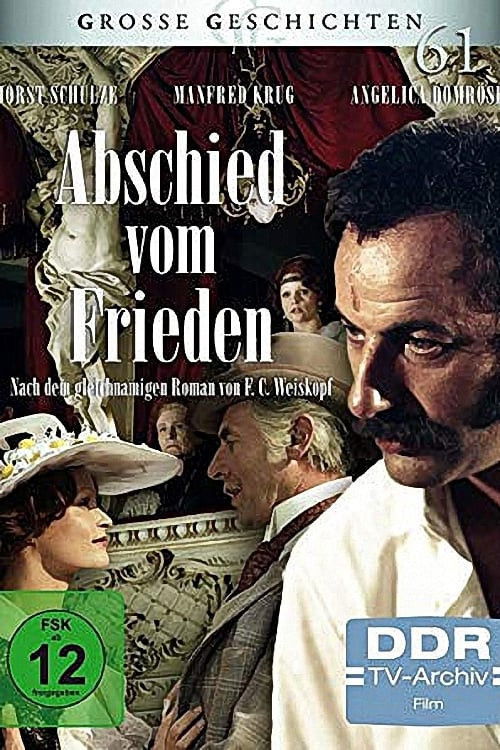
Prague 1913: The family of newspaper publisher Alexander Reither, traditionally reunited for a New Year’s dinner, moves along convoluted and secretive paths in everyday life. Granddaughter Wally is impressed by the opaque businessman Marko Gelusich. Her cousin Adrienne meets the young socialist Joseph Prokop at an illegal anarchist meeting. On a business trip to Vienna, Alexander Reither falls in love with Irene v. Claudi. Adrienne wants to move completely into Joseph Prokop’s proletarian world, but her mother Kalivoda makes her a painful announcement. Joseph already has a girl. Alexander finds Irene v. Claudi in Budapest. They spend happy days in Vienna. In Prague, the printing workers go on strike. Adrienne fights alongside the workers and Robert Kalivoda. She experiences class struggle with her cousin Guido Frank. Alexander tries to introduce Irene to the family.
The chronicle of a farming family from the village of Barnekow in the Mark Brandenburg region spanning three generations: After repeatedly failing to make their farm on marshy land a success, the Wardins finally find professional and personal happiness after World War II thanks to the 1945 land reform in the Soviet occupation zone during the GDR era of "developed socialism."
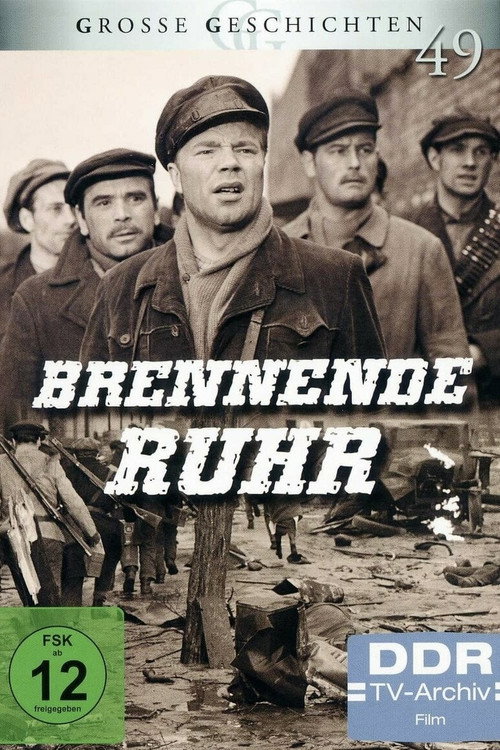
The events during the Kapp-Putsch 1920 in a small German town in the Ruhr district. The main protagonist is Ernst Sukrow, a student who sympathises first with the bourgeois forces but finally decided to join the communists in their fight.
Micha does the same. He falls in love with Claudia, whom he hardly knew until then, and he falls in love with the role of being a father. Friends and acquaintances bring their children to him and Micha becomes a babysitter, initially against his will. Everything could go on like this, if it weren't for one thing that Micha doesn't know: Claudia's child is not his. Claudia herself has made a compromise in her ideas about life and love that she is now unable to cope with.
In Berlin, Lieutenant Yartsev's infantry and Tzvetaev's battery fight their way in the U-Bahn. Captain Neustroev's company is selected to hoist the Victory Banner atop the Reichstag.
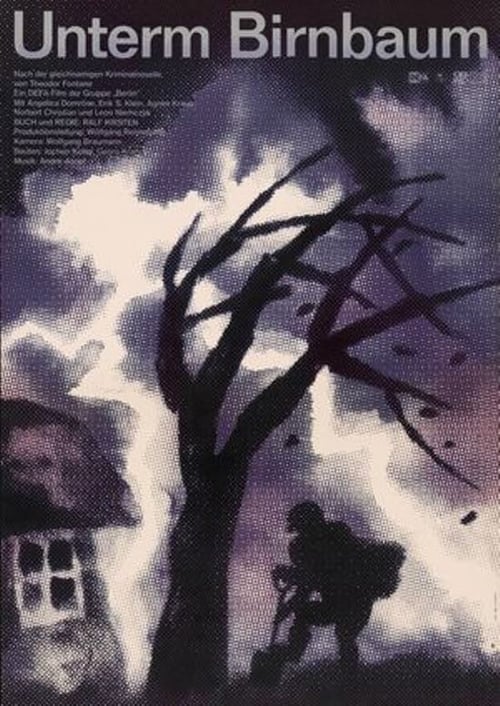
Abel Hradscheck, the owner of an inn in the Oderbruch country, faces financial ruin. For this state of affairs, Ursula, his wife and former actress, is by no means free of blame. She is a "newcomer" to the area and even after eleven years in the area, still a "stranger". A Cracow company announces that a money-collector is on his way to the innkeeper. Mr. Szulski arrives and the debts are settled - with money supposedly stemming from an inheritance. The next day, Szulski departs but according to the maid and the stable-boy, behaves in a very strange manner. Soon afterwards, his carriage is discovered in the Oder River, but there is no trace of the drowned man. Hradscheck's neighbor starts casting suspicion on the innkeeper. The Counselor of Justice, who heads the investigations has the spot under the pear tree dug out. A dead body is exhumed...
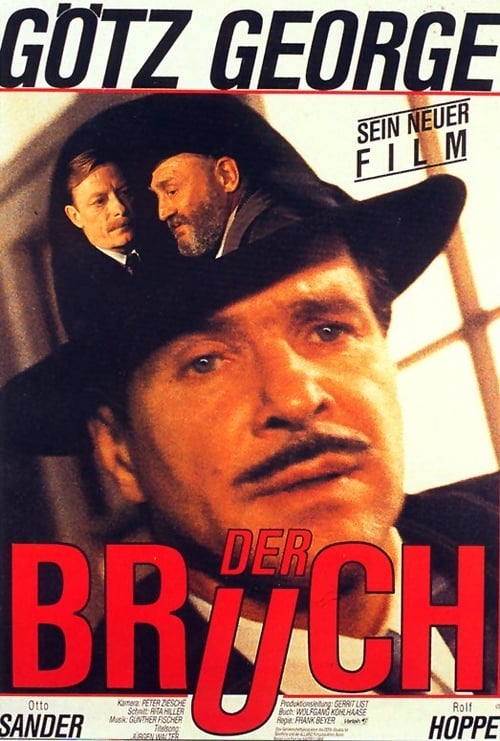
A story about massive robbery from the safe of German railways set in 1946.
Young Berlin schoolteacher Charlie no longer wants to continue as usual on her chosen path and asks herself what she really wants and needs.
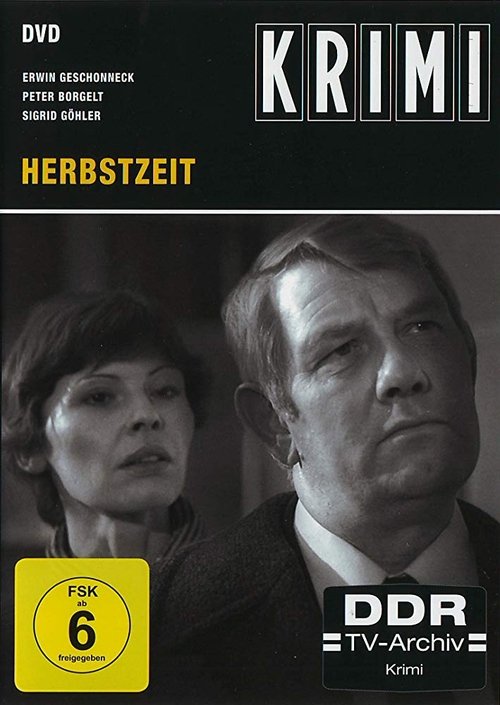
A retired head cashier, lonely after the death of his wife, lives in the hope of being able to move in with his son and his family after the latter builds a house. The son does not want to destroy his father's dream and conceals the fact that the family will not have enough money to build a house in the foreseeable future. When the father realizes this, he reaches into the cash register of his former company in desperation.
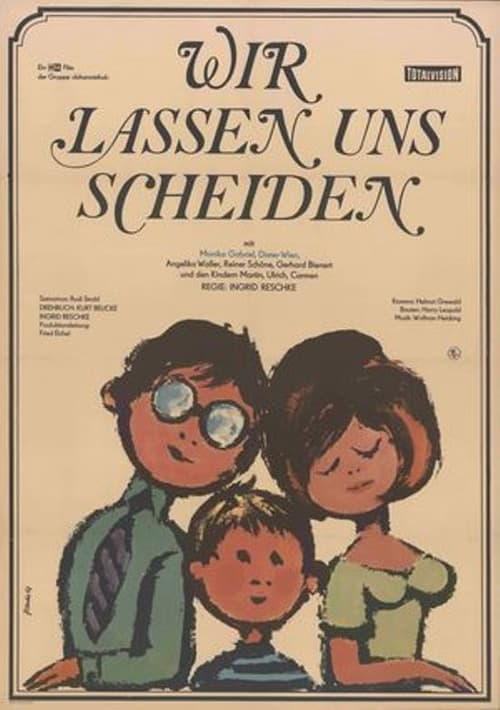
Monika and Johannes are married. With increasing frequency, their son Manni becomes the focus of their arguments. Since the two cannot agree to a compromise, they decide to break up. The ten-year-old Manni is supposed to spend four weeks with Monika followed by four weeks with Johannes on an alternating basis. They want to prove to each other who has the better parenting skills. The plan fails, however, because Manni is very good at playing his parents off against each other. When Monika and Johannes finally see through their son’s game, they realize that their way of life does not lead to better parenting and they conclude that good parenting can only be achieved if they work together.
A dead body is found in a burning car on the Berlin-Leipzig highway. The police investigate: Murder. Objects found in the car point to gold smuggling. At the funeral of the murdered man, his circle of acquaintances is scrutinized. They are all suspects. The trail leads detective Lindner to a bar.
Letter carrier Eva is in her late twenties, unmarried and the mother of a twelve-year-old son. She falls in love with Jon, a bargeman who is unfortunately already engaged. This spurs Eva on to turn her life around. She changes jobs and changes her appearance. Her happiness seems perfect when Eva becomes pregnant...
A family comedy about thirteen years old Bernd and the problems he faces after his family moving to Rostock.
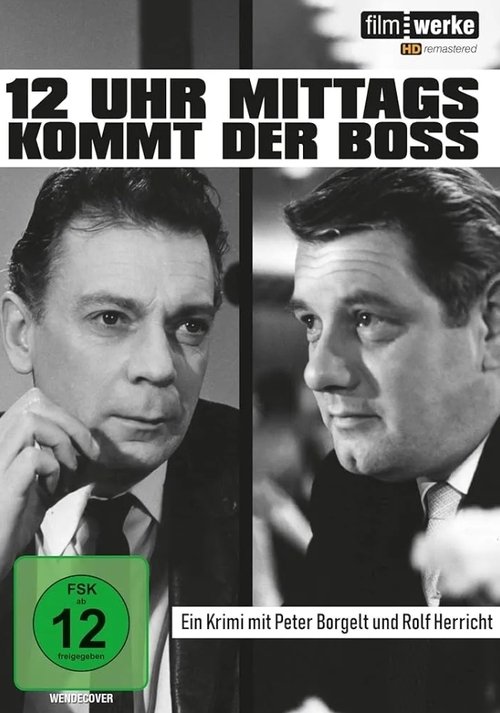
Photo model Monika Stange is found murdered in her apartment in a major West German city. Detectives Bentheim and Laube find rough diamonds hidden in the apartment. The trail leads to a racketeering ring and the influential industrialist Dr. Vogelsang. The latter is not prepared to get involved in the murder case under any circumstances and refuses to testify. Inspector Laube tries to solve the case without his colleague.