Acting
Der Staatsanwalt hat das Wort was an East German television series.
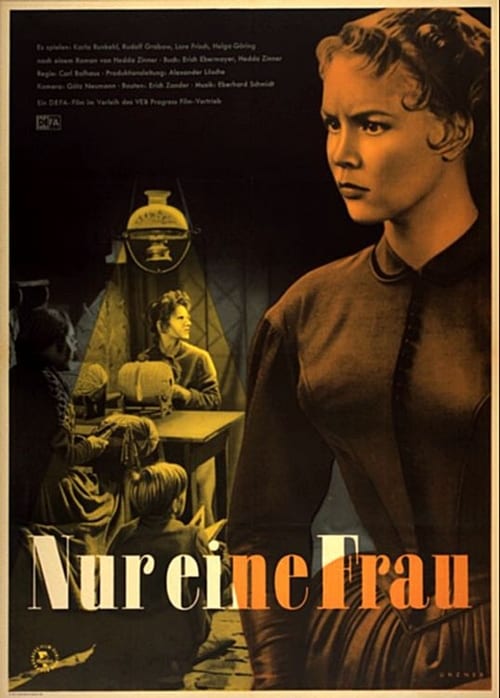
The film tells the life story of Louise Otto Peters, who in the middle of the XIX century in Germany for the first time raised a voice of protest against the unfair treatment of women and their labor. She created the first "women's newspaper" in Germany. The daughter of a famous lawyer, Louise could have easily arranged her life by marrying the wealthy Baron Rodern. But she chose a different purpose in life - to fight for equal rights for women. Through her articles and public speeches, she won the authority and respect of ordinary people.
A young woman from a progressive middle-class family moves to Shanghai with her husband Rolf in the mid-1930s. Although she has a child, she is not prepared to retreat into private life. She meets Dr. Richard Sorge and decides to become a scout. After training near Moscow - she is given the cover name Sonja - she is sent to Manchuria on her first assignment with her comrade Ernst. She has an affair with Ernst and has a child with him. A new assignment that takes her to Poland separates her from Ernst. She is awarded the Order of the Red Banner in Moscow for her work. She then goes to Switzerland and radios information about the impending war to the Soviet Union. She meets Rolf and Ernst, who are on an assignment in the Far East. Sonja marries an Englishman to avoid being extradited to Germany.
South America at the beginning of the 1980s. A man is on the run from a group of armed pursuers. He does not manage to escape and is shot down mercilessly. Young Maria witnesses the cruel event and asks her friend, the journalist Oswaldo, to find out about the backgrounds of this case. The police also start to investigate the case and find out that a mysterious German farm is involved in the shooting. But the farm lies in an exterritorial area, thus the police officers cannot investigate any further.
No description available.
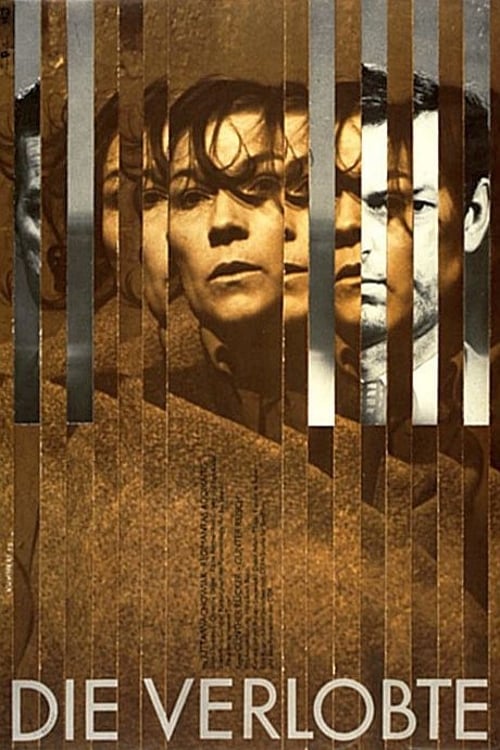
The wrenching story of a woman sentenced in 1934 to ten years in prison for antifascist activities. The love between her and her fiancée enables her to survive the tribulations of her time in prison, where she is one of few political prisoners.
It’s the spring of 1945 in a small resort town on the Baltic. Günter is 16 and firmly believes that the Germans will win the war. During the hunt for a forced labourer who is on the run, Günter catches him and watches as he is shot to death. He proudly accepts the award of an Iron Cross before being shipped to the nearby front as part of the last contingent of troops. He is quickly captured by Soviet soldiers, but manages to escape and return home. When the town is occupied by the Red Army, Günter is arrested for the murder of the forced labourer. The film was banned in 1968 before it was completed, and a large portion of the negative was later destroyed.
The authorities expect the case of Friedel Walter, alias "Dr. Mueller," to be a straightforward one: he was working as a doctor without proper credentials under a false name. But Mehlin, the man in charge of his case, knows that there is more to the story. When he was injured fleeing from a concentration camp, resistance worker Irene asked her medical student boyfriend Walter to give him medical care.
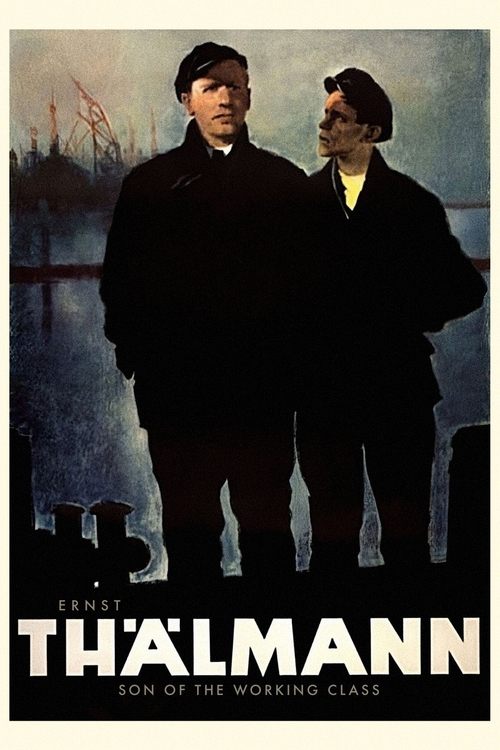
This film is the first of a two-part historical and biographical portrait of the communist politician and anti-fascist Ernst Thälmann. In early November 1918, Ernst Thälmann is an unwilling soldier serving on the western front. As the revolutionary movement at home is threatened by the betrayal of the Social Democrats and fissures in the working class, Thälmann calls on his fellow soldiers to put down their weapons and unite with the workers in the communist struggle at home. Thälmann’s qualms about which side he is fighting on continue, but when the local police attempt to prevent a shipment of provisions and supplies from reaching the people in Petrograd, he intervenes and the ship is unloaded. With this moment of clarity, Thälmann continues to follow his political convictions and joins the workers at the Hamburg uprising in October 1923.
Lifelong hard work for the count makes the servant Anton a cripple. Everybody calls him Crooked Anton. When, after the end of the war, the land of the count gets divided amongst the farmers, Anton receives a piece and hopes to be able to work freely. But an old debt and intrigue keep Anton and his family from finding peace. The farmers of the village begin to discover their own power when Annegret, Anton's daughter, leaves. Is a new beginning possible for Anton? This film paints an impressive panorama of the development of a minor village in Mecklenburg from the end of the war to the uprising of 17 June 1953.
The time is World War II, and Juergen Siebusch and his mother are retreating along with the German army, just ahead of the invading Russian forces. Both mother and son hole up in the town of Hohengoerse, where Juergen finds some work watching over sheep - and learns a bit about the facts of sheep life that he extrapolates to some advantage when he meets the appealing Amelie, daughter of the landowner. He first helps Amelie out and later applies his new-found knowledge in a barn, appropriately enough. As the Red Army draws near, Juergen deserts a hastily put-together "people's force," as he prefers the barn to the gun. Russian soldiers are shown sleeping and snoring next to their tanks, and the local fascist executed - the war is over. When the new Communist government sets up a land reform package, Amelie's mother's land gets divided up into small plots for small farmers.
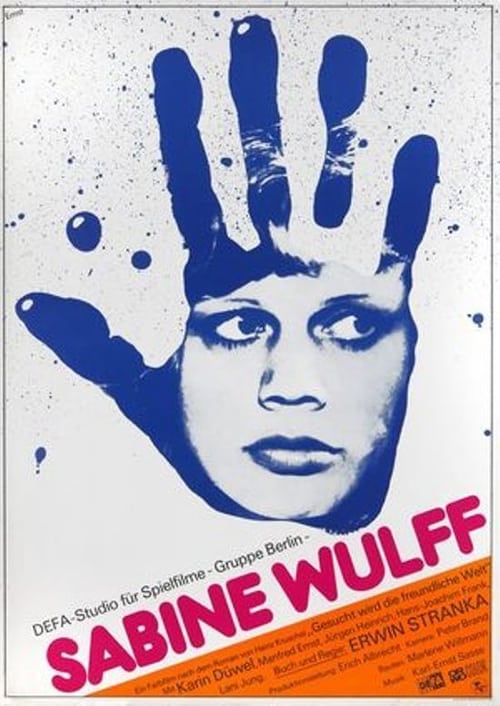
Sabine Wulff is almost 18 when she is released from the juvenile detention center. She doesn't want to return to her unsupportive parents or to her former boyfriend Jimmy, who got her into trouble by persuading her to steal cigarettes. She instead chooses to begin an honest life by getting a job and renting her own room.
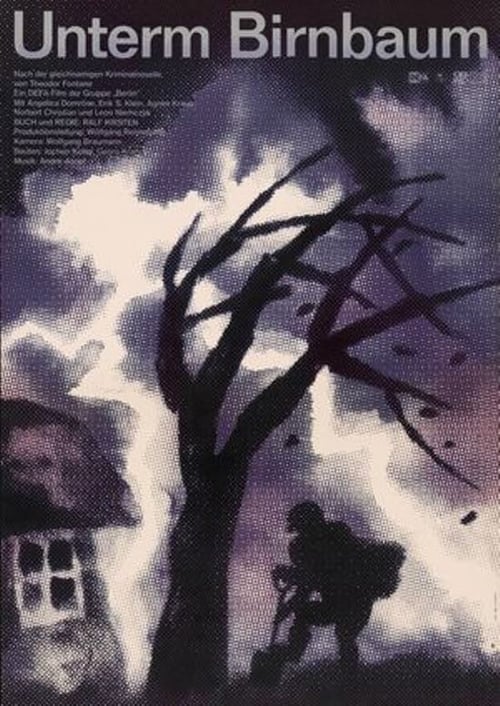
Abel Hradscheck, the owner of an inn in the Oderbruch country, faces financial ruin. For this state of affairs, Ursula, his wife and former actress, is by no means free of blame. She is a "newcomer" to the area and even after eleven years in the area, still a "stranger". A Cracow company announces that a money-collector is on his way to the innkeeper. Mr. Szulski arrives and the debts are settled - with money supposedly stemming from an inheritance. The next day, Szulski departs but according to the maid and the stable-boy, behaves in a very strange manner. Soon afterwards, his carriage is discovered in the Oder River, but there is no trace of the drowned man. Hradscheck's neighbor starts casting suspicion on the innkeeper. The Counselor of Justice, who heads the investigations has the spot under the pear tree dug out. A dead body is exhumed...
Paul Pospischiel loses his job in the great colliery collapse in the Ruhr, retrains and builds a new life for himself. One day, he receives a letter from his mother, which tears him from his comfort zone and triggers a serious conflict. She has discovered the man who sent his father to a concentration camp decades ago and is therefore responsible for his death. The mother demands accountability from this man. Paul decides to confront the suspected informer and murderer...
It was supposed to be a cozy Christmas evening with the family. Labor Director Walter Lörke was particularly looking forward to it. But then his daughter Anne surprised him with her future son-in-law Thomas Ostermann. And that's not all: Lörke is to become a grandfather. This doesn't suit him at all, especially as the young man clearly shows his critical attitude towards the state whose ideals Lörke has fought for all his life. An argument ensues - on Christmas Eve. Lörke leaves the apartment in a rage. But he is driven by unrest: He wants to know what kind of person his future son-in-law is and why he has such a negative attitude towards the state. It turns out that Thomas has had bitter experiences with the opportunistic attitudes of many adults and that, although he was the best student in his class, he was not admitted to university because of his critical opinions.
Professor Heger's son was shot by the Gestapo during the war. Dr. Bram was also responsible for his death. After the war, working in Heger's clinic, Bram tells the professor about his guilt. Considering Bram a traitor, Heger refuses to work with him. Bram flees to West Germany. Soon the professor, who has decided in his heart to stay in the FRG forever, leaves for Munich for the congress. But his meeting with Bram in Munich and the reality surrounding them dispelled his illusions, and they both return to their homeland.
World War II is over and Heinrich, a young German boy, influenced by the Russians, starts to act according to Communist principles in a small German village.
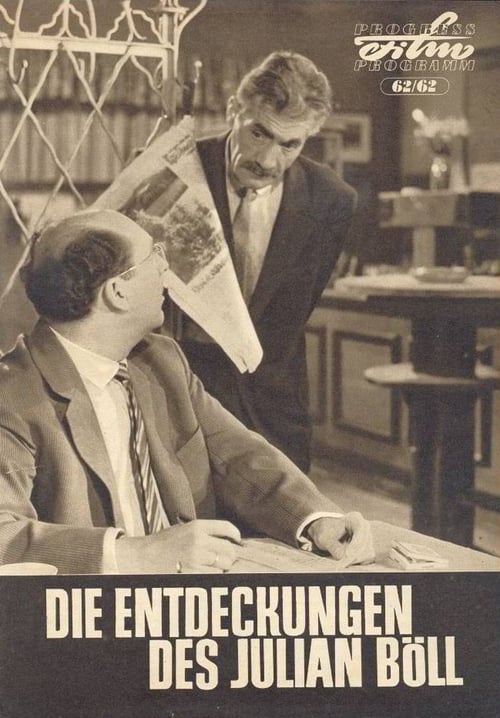
The six members of the Julian Böll brigade have been working well together for years. One day, the brigadier is missing a 100-mark bill from his pay box. Ashamed of his own doubts about his colleagues, he remains silent. Böll investigates the question of why his colleagues in the brigade have not been able to get to know each other personally despite working well together, and why he does not have the confidence to resolve the matter collectively. He recognizes omissions and decides to have a clarifying discussion. It turns out that the money was not stolen.
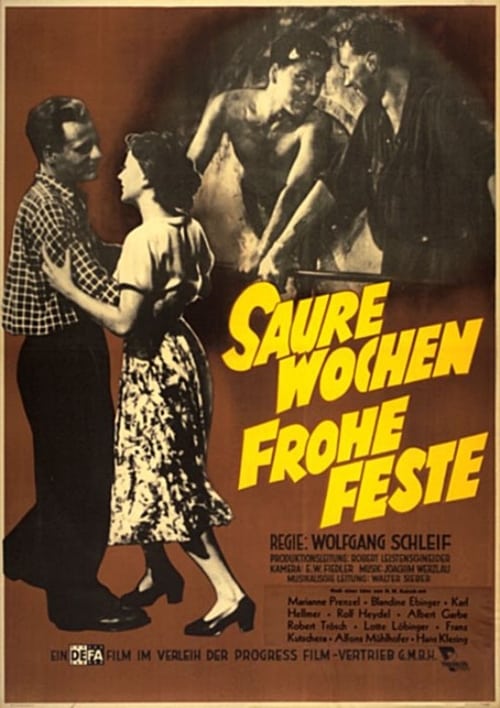
A theater competition breaks out on the occasion of the four-year anniversary celebrations at the Hennigsberg power plant. The old hands want to perform the kitschy musical comedy "Gärtnerliesl". The youngsters are against it and are planning their own program with which they want to skewer events from the plant in a cabaret style. But first, everyone has to work together on a turbine breakdown. On the day of the festival, the "Gärtnerliesl" fails with timpani and trumpets, while the youth's program is met with great applause, which the rivals join in with.
A cheerfully turbulent GDR TV comedy about a group of elderly people who organize their lives with courage and cheerfulness. Trude and her male senior citizens want to redesign a dilapidated old construction trailer in their new residential area to create a nostalgic arbor. Inspired by the term "construction-related art", they also gave their house on wheels a highly artistic exterior façade. And should any problems arise during the realization of the project: "Don't despair, ask Trudchen"! After all, the whole project is just the prequel to a "wedding in old age" that the aforementioned Trude and her groom Heinz want to celebrate.