Acting
Polizeiruf 110 is a long-running German language detective television series. The first episode was broadcast 27 June 1971 in the German Democratic Republic, and after the dissolution of Fernsehen der DDR the series was picked up by ARD. It was originally created as a counterpart to the West German series Tatort, and quickly became a public favorite.
Der Staatsanwalt hat das Wort was an East German television series.
18-year old Georg and 13-year old Barbara have been playing together as children. Play becomes love later, which leads to a catastrophe , as their parents are hostile leading to file a report to the court, as Barbara is still under age.
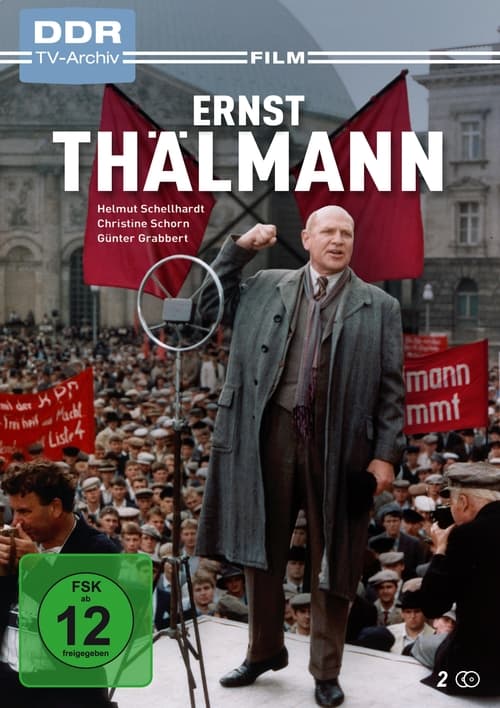
This elaborate two-part television film features a section from the life of communist worker leader Ernst Thälmann. It begins with the bloody riots on May 1, 1929 in Berlin, in which police officers shot at demonstrating workers, and ends with February 7, 1933, when Thälmann appeared as a speaker at the illegal meeting of the Central Committee of the Communist Party of Germany in goat neck. This period was marked by the struggle of the Communists against the ever stronger National Socialists and the rise of Adolf Hitler.
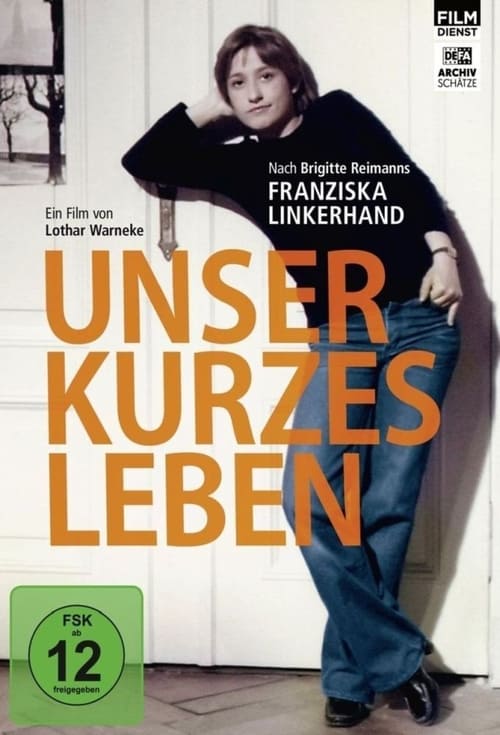
The fun-loving, 26-year-old architect Franziska Linkerhand (Simone Frost) works for a famous professor. Yet, she feels restrained by her dependence on him and longs to take risks. When her marriage falls apart, she moves to a small town for a fresh start. Franziska approaches her new life with vigor and idealism. Many of her colleagues have given in to the dictates of economic restrictions and prefabricated apartment blocks; but Franziska hangs onto her ideals and, as in her private life, is not willing to compromise…
Dr. Grunert, electronics specialist from the GDR, gets a visit from an old acquaintance from war times. Both worked back then on navy torpedoes. His former colleague wants to poach Grunert – to Schenectady, the headquarters of the largest American electronics company. With alleged war crimes, he tries to blackmail Grunert, but quickly it becomes clear where the true criminals are sitting: In influential positions of the American industry. Grunert underestimates the scrupulousness of his opponent and invites him to a remotely located country home to clarify things. The Ministry for State Security is already on the trail of the matter and saves the engineer from a dangerous solo action.
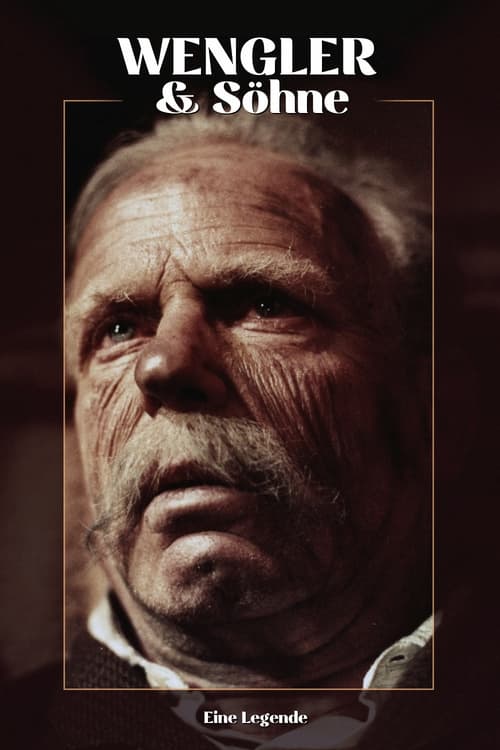
A story spanning three generations, from 1871 to 1945. When Gustav Wengler, a farmer’s son, returns from the Franco-German war in 1871, he goes to work for a precision mechanics and optical company, where he soon becomes a master craftsman. Wengler loyally promises the owner on his deathbed that his sons and grandsons will also stand by the company.
Fifteen-year-old Heinz Stielke is a Hitler Youth fanatic who is devastated to learn a hidden truth about his respected father who was a German officer in WWII: He was Jewish. Pushed out of his community after the discovery, young Heinz falls into a tailspin of alienation and anger. He is subsequently thrust into a series of social collisions across the war-torn German fatherland.
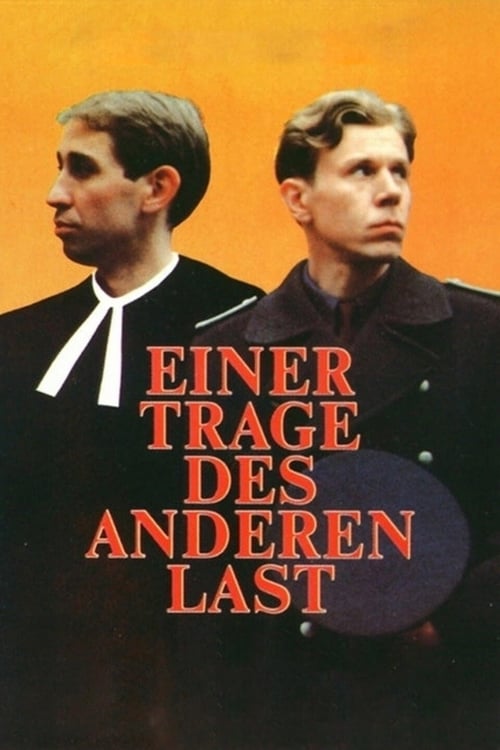
At the beginning of the 50s, two extremely disparate men meet in a private sanatorium for consumptives: an officer in the People's Police, Josef Heiliger; and a young Protestant curate, Hubertus Koschenz. On account of their consumption, they have to share a room. Initially, this is the only thing they have in common. The film explores Hubertus's struggle with his sexuality within the context of both the church and the socialist state.
Episodes from the life of German poet and communist Erich Weiner: his stay in Paris, participation in the Spanish Civil War, years of exile in Russia. Moscow, May 1941. Children play in the sun, young people fall in love, make plans for their future. German emigrants, including 50-year-old Erich, are concerned about events in their homeland and sense impending disaster...
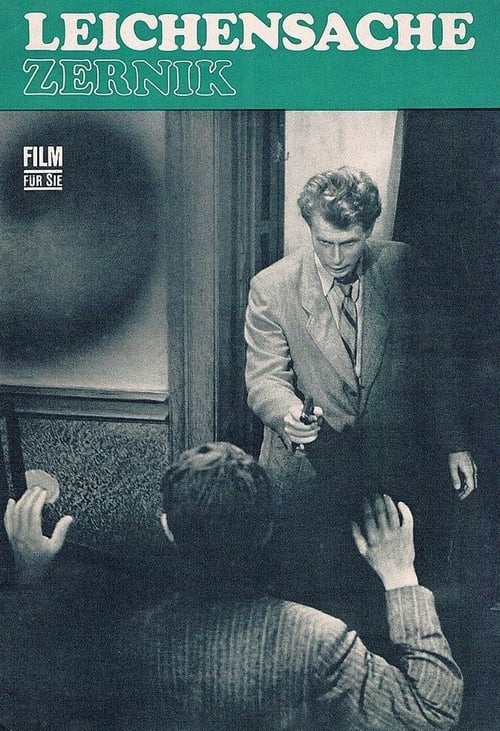
After meeting the woman on the train Erwin Retzmann kills her in the forest.
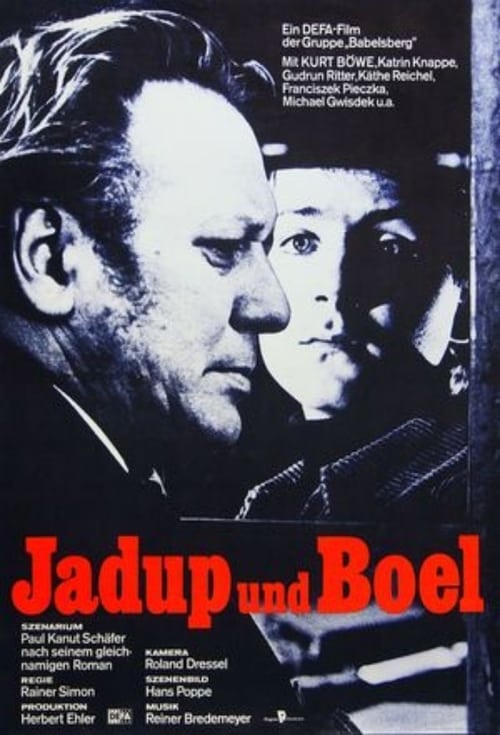
In a small town, everyone has tried to forget what happened shortly after WWII. That is, until a stranger finds a book that Jadup (Kurt Böwe) gave to the young refugee Boel (Katrin Knappe), who resettled in the town over 30 years ago. Painful memories about Boel and the post-war period begin to surface and shake up the whole town. Boel vanished back then and nobody knew why. Word spread about a rape and some tried to blame a Russian soldier. Jadup, the town's respected and popular mayor, remembers, though, how he mistrusted Boel and did not help her through this difficult time; HE didn't even notice THAT Boel loved him. Jadup's confrontation with the past gives him a new, critical view of his current situation and surroundings.
No description available.
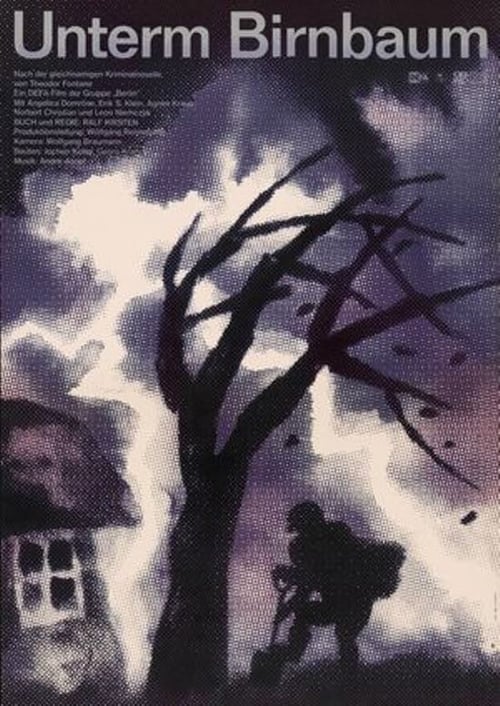
Abel Hradscheck, the owner of an inn in the Oderbruch country, faces financial ruin. For this state of affairs, Ursula, his wife and former actress, is by no means free of blame. She is a "newcomer" to the area and even after eleven years in the area, still a "stranger". A Cracow company announces that a money-collector is on his way to the innkeeper. Mr. Szulski arrives and the debts are settled - with money supposedly stemming from an inheritance. The next day, Szulski departs but according to the maid and the stable-boy, behaves in a very strange manner. Soon afterwards, his carriage is discovered in the Oder River, but there is no trace of the drowned man. Hradscheck's neighbor starts casting suspicion on the innkeeper. The Counselor of Justice, who heads the investigations has the spot under the pear tree dug out. A dead body is exhumed...
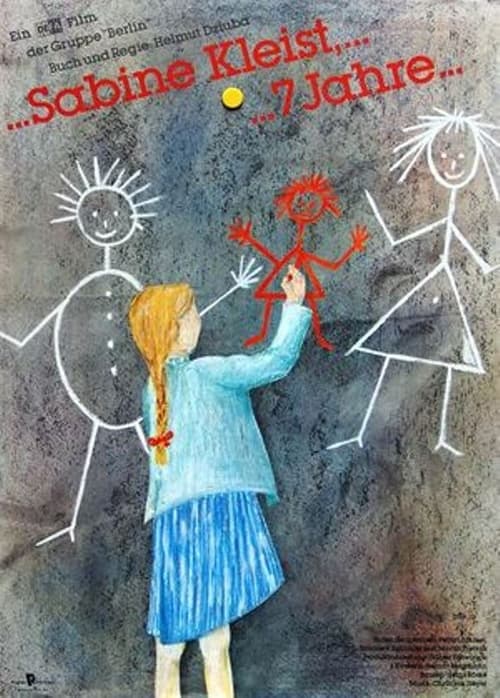
Little Sabine has spent her childhood in an orphanage after her parents died in a car accident. When one of the women in charge at the orphanage, Edith, leaves to have a baby, Sabine runs away, because Edith was the only adult there she could trust. She then wanders through the city to find someone to take her in. She meets a lot of people on her journey, but she seems out of place everywhere she goes until, at last, she realizes that there is a special place where she belongs.
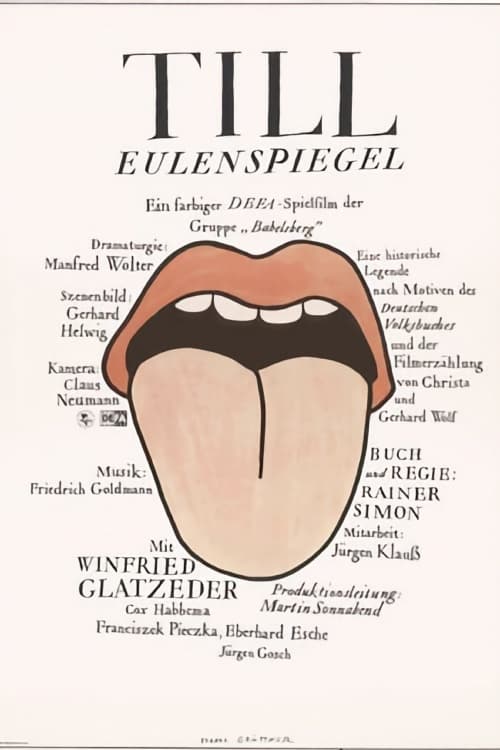
In medieval Germany, poor and witty Till Eulenspiegel fools and cheats citizens, churchmen, and landlords. Although in most cases he uses his wit for personal well-being, he often helps the poor and weak. Eventually, he gains an influential but also dangerous position as royal fool at the court of the emperor.
Last years in the Life of german Dramatican Georg Büchner. Around the year 1830 he and his fellow students try to initiate a revolution in Germany, but they are not successful. Büchner has to leave the country and seeks exile in France and Switzerland, where he falls ill with typhus.
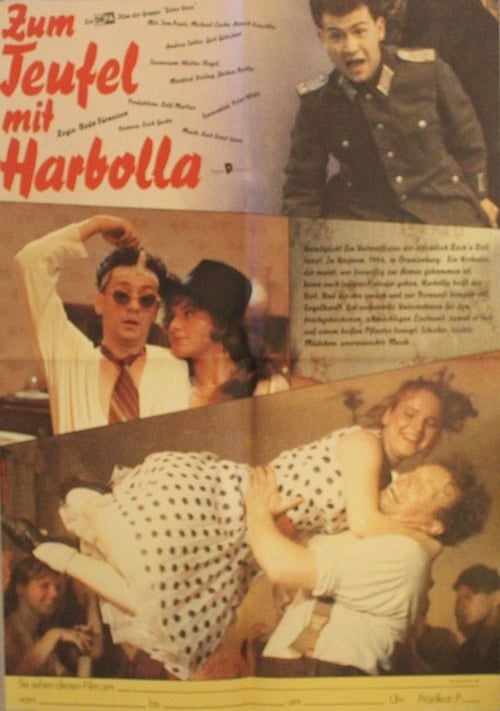
Even the military academy can't stop kind-hearted officer Gottfried Engelhardt from seeing the world through rose-colored glasses. Everything in the young GDR is blooming: Engelhardt's career, the socialist state, the black market, and maybe even a chance at love.
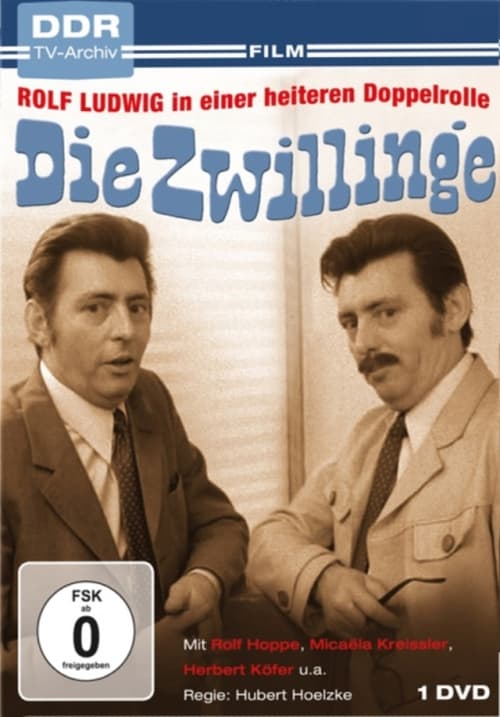
When twin brothers Georg and Steffen look a little too deeply into their glasses one day, they decide to swap roles for 14 days. Georg is the manager of a large department store and Steffen is a writer. The two experience bizarre situations: The department store director is adored by a saleswoman with a passion for literature and has to report on his literary work as the guest of honor at a brigade meeting. He is also short of ideas for the lively stories he is supposed to write. The writer, on the other hand, is not very familiar with the bureaucratic customs of running a department store. He allows all the sales assistants to take their housekeeping day at once, approves 3,000 marks for decoration purposes and approves of all departments of the department store being open until 8pm.
Europe, 1620: The well-known astronomer and mathematician Johannes Kepler, who teaches as a professor in Linz, receives the message that his mother is prosecuted as a witch in Württemberg. The truth behind the allegations is rather simple: His mother has been denunciated by a former friend after an argument with the authorities. Kepler tries desperately to convince the prosecutors of the absurdity of their allegations with rational arguments.