FEEL IT.STREAM
Harry Hindemith

Harry Hindemith

Acting

Biography

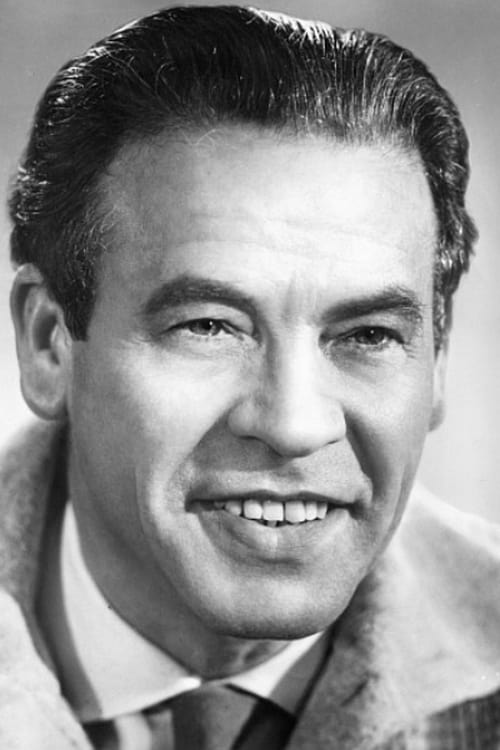
Harry Hindemith (16 June 1906 – 21 January 1973) was a German actor. He appeared in more than eighty films from 1944 to 1973. Source: Article "Harry Hindemith" from Wikipedia in English, licensed under CC-BY-SA.
Known For

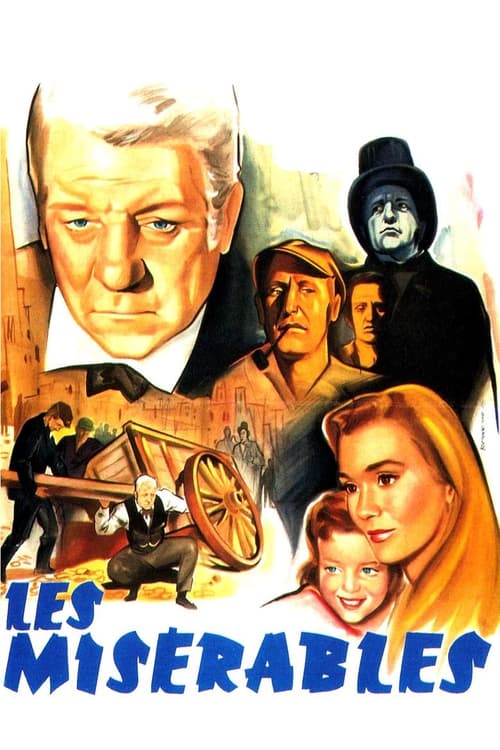
Les Misérables
7.2

In 19th century France, Jean Valjean, a man imprisoned for stealing bread, must flee a relentless policeman named Javert. The pursuit consumes both men's lives, and soon Valjean finds himself in the midst of the student revolutions in France.

Les Misérables

1958
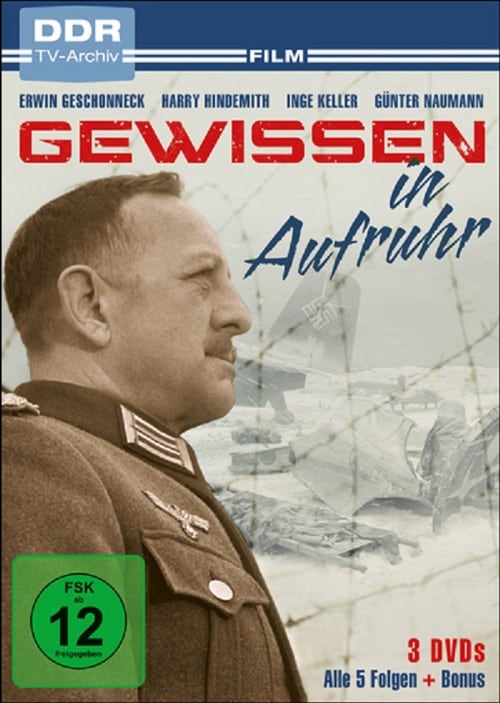
Gewissen in Aufruhr
8.0

As a German soldier in the 6th Army, Colonel Joachim Ebershagen is trapped in the Stalingrad cauldron. His experiences cause him to begin to doubt the meaning of the war. He is flown out as a wounded soldier on one of the last planes. Back home, he becomes commander of Greifswald. Towards the end of the war, he surrendered the city to the Soviet army without a fight on April 30, 1945. The death sentence pronounced by a court martial is not carried out.

Gewissen in Aufruhr

1961
Rendezvous mit unbekannt
9.0

No description available.

Rendezvous mit unbekannt

1969
Krupp und Krause
9.0

No description available.

Krupp und Krause

1969
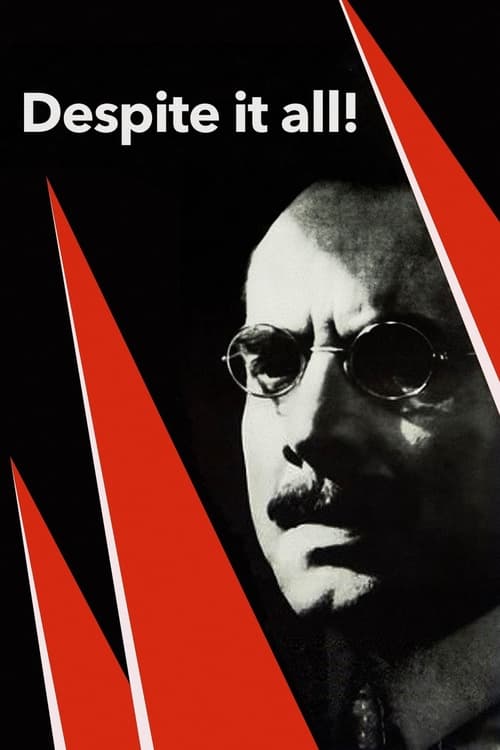
Despite It All!
7.2

October 1918: Karl Liebknecht is released from prison and Berlin workers celebrate his release. Although WWI is almost over, the German Kaiserreich in vain sends its last reserves to the slaughter. The working class is in a rebellious mood; the uprising of Kiel’s sailors against war and militarism sets off a call for revolution led by Liebknecht. On November 9, Liebknecht declares the Free Socialist Republic of Germany. But pro-Kaiser military and right wing Social Democrats oppose him.

Despite It All!

1972
No image
8.0

No description available.

Sankt Urban

1969
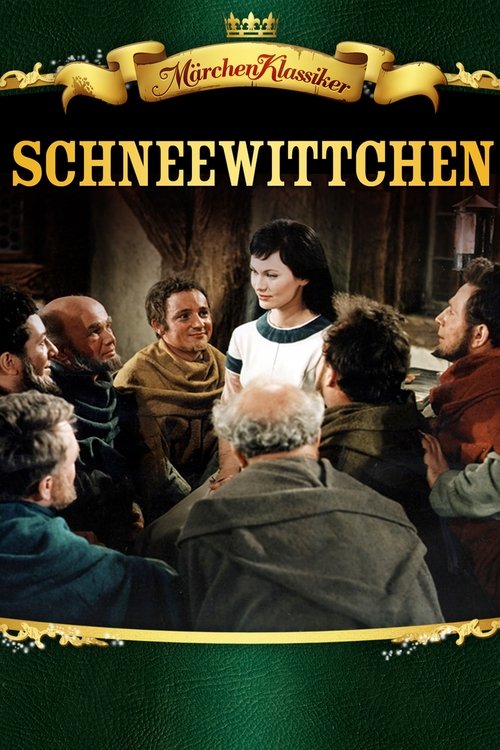
Snow White
6.2

Hated by her jealous and bloodthirsty stepmother, Snow White flees a murder attempt and seeks shelter in the woods with seven kindly dwarfs. Feeling she is safe from harm, Snow White welcomes the disguised queen into her home...with fatal consequences.

Snow White

1961
No image
N/A

No description available.

Kriminalfälle ohne Beispiel

1967
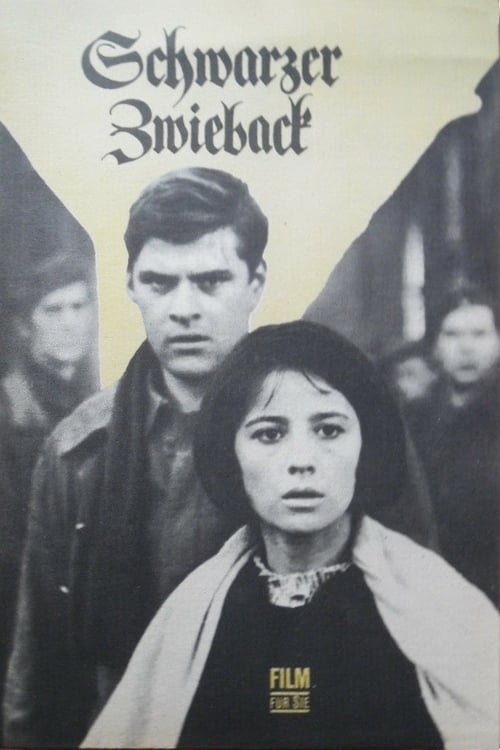
Black Rusks
8.0

The November Revolution of 1918 in Germany, famine and social upheaval evoke a response from the young Soviet government in Russia. To provide food assistance, trains with bread are being formed. One of them, on the personal instructions of V.I. Lenin is accompanied by the young revolutionary Tatyana . On the way, she meets a former German prisoner of war, Kurt . A romantic relationship arises between them. The train with bread, despite all the difficulties, was delivered. In a clash with a detachment of counter-revolutionary German troops, Tatyana was wounded. She returns to Moscow, and Kurt goes to Berlin to continue the revolutionary struggle.

Black Rusks

1972
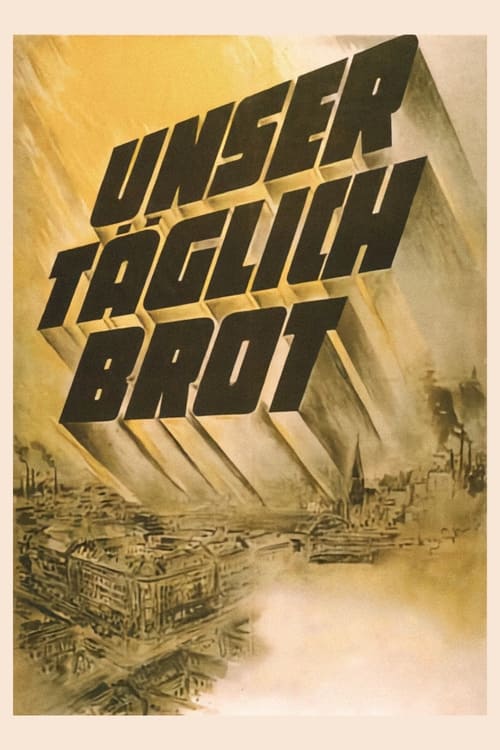
Our Daily Bread
6.0

A story about a family after the Second World War. The petty bourgeois cashier Karl Weber of Berlin observes from a distance how his son Ernst participates in the building of a new socialist society. Karl does not understand Ernst's visions, instead he confides in his other son Harry. However, Harry becomes involved in illicit business and Karl quickly realizes that it would be best to join his son Ernst in the citizen-owned factory.

Our Daily Bread

1949
As Long as There’s Life in Me
10.0

This is part one of a two-part biopic about Karl Liebknecht. In 1914, Germany is arming itself for war. Karl Liebknecht, left-wing revolutionary Social Democrat, workers’ leader and a virulent antimilitarist, is one among 110 SPD members of Parliament who vote against approving war loans. From then on, he is considered un-German and a traitor to the fatherland, and his own party’s leadership turns against him. Despite threats, Liebknecht speaks up against the war and writes the manifesto “The Main Enemy Is at Home.” Even when he is arrested and charged with treason, he does not surrender.

As Long as There’s Life in Me

1965
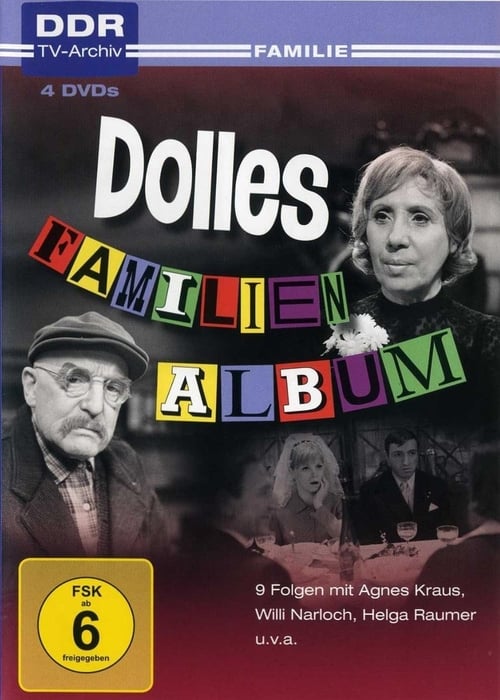
Dolles Familienalbum
10.0

No description available.

Dolles Familienalbum

1969
Somewhere in Berlin
6.0

After WWII, Berlin lies in ruins. For Gustav, Willi and their friends the rubble provides an adventurous, dangerous playground. Especially for Gustav, it helps pass the time, as he longs for his father's return from a POW camp. One day a stranger arrives, looking helpless and hopeless.

Somewhere in Berlin

1946
Die Liebe und der Co-Pilot
7.0

Co-pilot Horst Schubert is a braggart and a true Don Juan. Thus, he tells young Ilse that he is in fact an "aircraft commander". This assertion brings about an embarrassing situation, for he suddenly meets her onboard his new work place, an IL-14 charter plane where Ilse acts as a stewardess. It gets worse, however: During a stop in Varna the police appear because Horst’s former lover Madelon has vanished. At home, meanwhile, his landlady has her hands full with her lodger’s current and former playmates. Ilse decides to put an end to this mixup and since the dull captain of the plane, Richard, makes no move to confront his co-pilot about his unstable private life, the smart stewardess appeals to the rest of the crew to help her teach Horst a few lessons in love.

Die Liebe und der Co-Pilot

1961
The Banner of Kryvyi Rih
7.5

In an act of friendship and solidarity between two mining towns in 1929, the locals of Kryvyi Rih, Ukraine, give their flag as a gift to the locals of Bergstedt, Germany in this GDR propaganda film. This quickly takes on a symbolic meaning for the miners in Bergstedt as the Nazi party demands that this Soviet gesture be erased and the flag be replaced with their own. The miner and communist party functionary Otto Brosowski publicly declares it his duty to defend this flag against every danger, and he keeps his promise despite his family being threatened by torment and torture.

The Banner of Kryvyi Rih

1967
The Benthin Family
6.1

The brothers Theo and Gustav Benthin pull profits through smuggling in divided Germany: Theo in the West and Gustav in the East. The East German police catch on quickly, however, and Gustav is arrested. The small band of smugglers disperses, with Gustav’s chauffer Peter Naumann fleeing to the West and his sister choosing the East after struggling to find work and lodging in the West.

The Benthin Family

1950
Zu jeder Stunde
9.0

The soldier Martin has been relocated to a small border village in Thuringia. During a storm, he comes to the rescue of Renate, a farmer′s daughter. The two young people fall in love, thereby upsetting Renate′s father who has already promised his daughter to the son of the big farmer Grabow. Henceforth, he does his utmost to tear Martin and Renate apart. Meanwhile, Grabow prepares to flee the GDR with the help of the lance-corporal Zimmer who is indebted to him.

Zu jeder Stunde

1960
Brot und Rosen
10.0

At the VII Party Congress of the SED, a delegate tells a reporter his life story: 18-year-old returning soldier Georg Lendau ends up in a small village in 1945. He is starving and sick. Mayor Kallam helps. Later, they meet again; Kallam is now the director of a heavy engineering company. He gives Georg, who is a lathe operator, work. But Kallam has more plans for him and wants to send him to university. Georg refuses. An extra shift, which he only did so that he could buy his future wife wedding shoes, brings him into conflict with backward colleagues - and the realization that you first have to work better if you want to live better. He followed this insight with action, becoming a master craftsman, comrade and student.

Brot und Rosen

1967
Just Don't Think I'll Cry
7.4

High-school senior Peter considers the adults around him to be hypocritical, self-congratulatory, and immersed in the past. He gets suspended for writing an essay that his teachers consider to be a challenge to the state. Just Don't Think I'll Cry became one of twelve films and film projects-almost an entire year's production-that were banned in 1965-1966 due to their alleged anti-socialist aspects. Although scenes and dialogs were altered and the end was reshot twice, officials condemned this title as "particularly harmful." In 1989, cinematographer Ost restored the original version, and this and most of the other banned films were finally screened in January 1990. Belatedly, they were acclaimed as masterpieces of critical realism.

Just Don't Think I'll Cry

1965
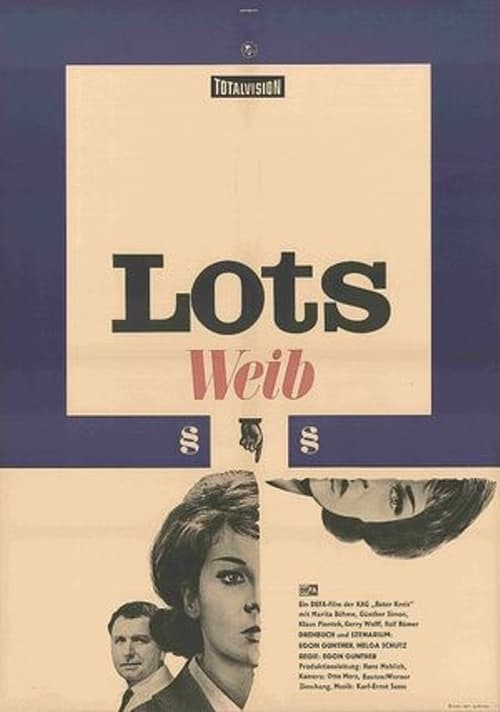
Lot's Wife
10.0

The marriage of Katrin and Richard Lot has become a routine. She has a career and he, as a Marine officer, comes home only once every fourteen days. The children greet him with joy, but she greets him only with anxiety because their marriage is missing its key ingredient: love. She wants a divorce, but he refuses mainly out of comfort as well as due to pressure from the party. Katrin finds a strange solution: she shoplifts and is put on probation for three months. This is enough to force Richard into a divorce because he is concerned about the "moral liability" of his wife.

Lot's Wife

1965