Directing
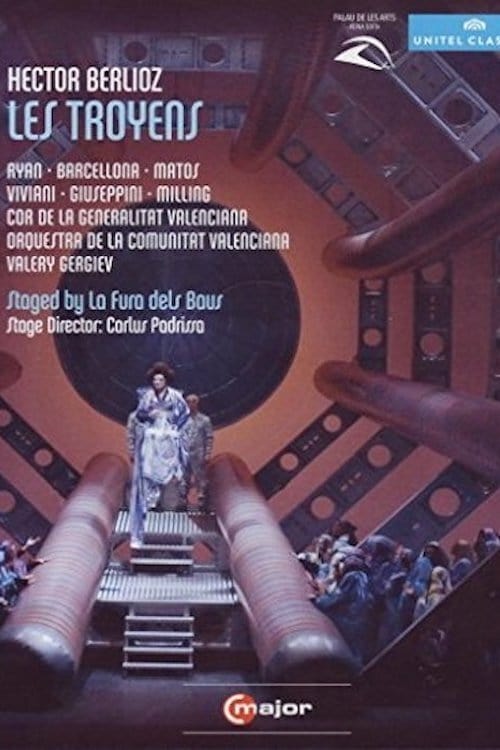
This grand opera, complete with ensembles and ballets, large choruses and orchestral set pieces, is given an appropriately grand treatment in this production by the renowned Catalan theater group "La Fura dels Baus" recorded at Valencia's Palau de les Arts. In the first part of the work, Padrissa plays with the present-day meaning of "Trojans" as computer viruses: his Trojan horse carries within it the infection that will cause system failures and, ultimately, destruction. In the second part, Carthage is presented as the mysterious seat of a future civilization, where human life is heading towards self-destruction through environmental disasters.
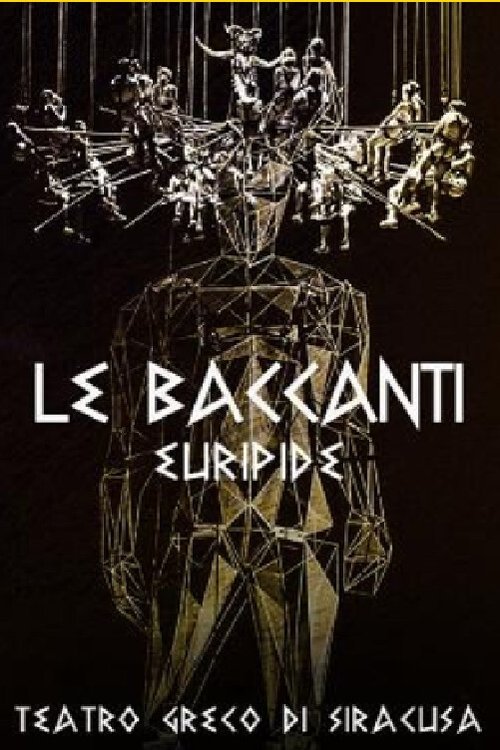
Euripides' “The Bacchae,” directed by Catalan Carlus Padrissa, one of the founders of La Fura dels Baus, a company celebrated worldwide for its ability to rewrite the language of contemporary theater, opens the 56th edition of the Greek Theater Festival in Syracuse.
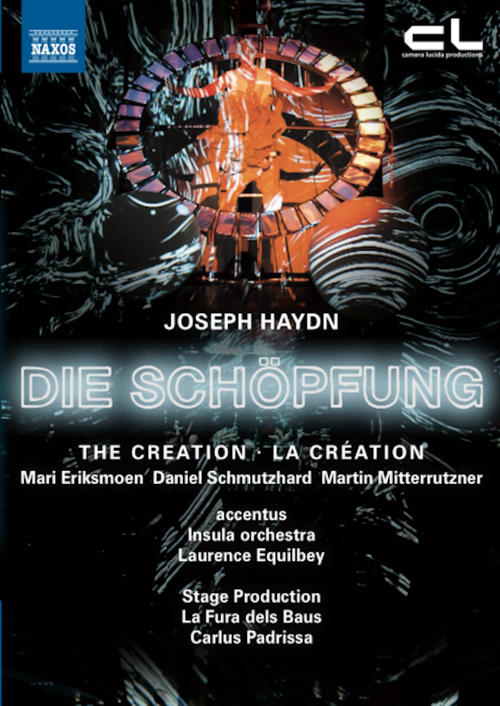
Haydn's oratario "The Creation", by La Fura dels Baus company. Recorded at the Seine Musicale.
La Fura dels Baus and Norrlands Operan present a monumental outdoor performance of Richard Strauss’ one- act opera Elektra, staged 2014 at Umeå, Sweden.
Janáček's song cycle staged by La Fura dels Baus at Palais Garnier. Conducted by Gustav Kuhn.
No description available.
The first ever staging of Jörg Widmann's opera Babylon. Presented by the Bavarian State Opera in Munich, directed by Carlus Padrissa (La Fura dels Baus).
The staging of Béla Bartók's opera Bluebeard's Castle at Opera national de Paris, a collaboration of La Fura dels Baus and Jaume Plensa.
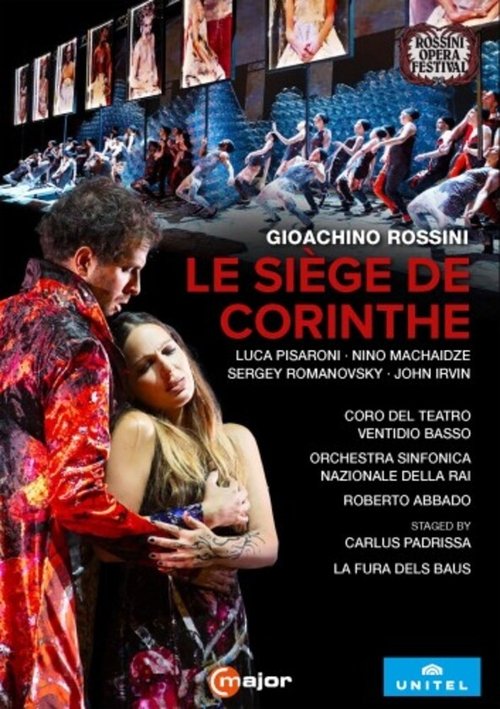
When Rossini’s opera Le Siège de Corinthe was premiered in 1826 in Paris it became a huge success all over Europe. The Rossini Opera Festival presents the opera in a new production from Carlus Padrissa of the Barcelona collective La Fura dels Baus, “which here has one of its most interesting shows” (connessiallopera.it). Artistically “Roberto Abbado holds the ranks excellently and supports a well-cohesive and balanced cast” (L’ape musicale) “where bass-baritone Luca Pisaroni growled fearsomely as Sultan Mahomet, tenor Sergey Romanovsky as Néoclès matched a warm tone with pinging top notes, and tenor John Irvin was self-assured as Cléomène, but soprano Nino Machaidze as Pamyra thrilled most of all, as she purred effortlessly through pyrotechnic coloratura” (Financial Times).
Melodramma in four acts, recorded at 4th of June at Teatro del Maggio Musicale Fiorentino. Staged by La Fura del Baus, conducted by Zubin Mehta.
This unique production of Carl Maria von Weber’s ‘Der Freischütz’ was created to celebrate both the piece’s 200th premiere anniversary at Konzerthaus Berlin and the 200th anniversary of the famed concert hall itself. For this production, Catalan theatre group La Fura dels Baus – internationally acclaimed for its avant-garde opera – created a virtual forest in the Konzerthaus’ Great Hall.
To celebrate the 100 years of the festival Arena di Verona and the 200th birthday of Giuseppe Verdi, two separate productions of Aida were staged. This modern version was staged by La Fura dels Baus.
Opera in three acts, composed by José Luis Turina for the inauguration of Gran Teatre del Liceu, after a scenic conception by La Fura dels Baus.
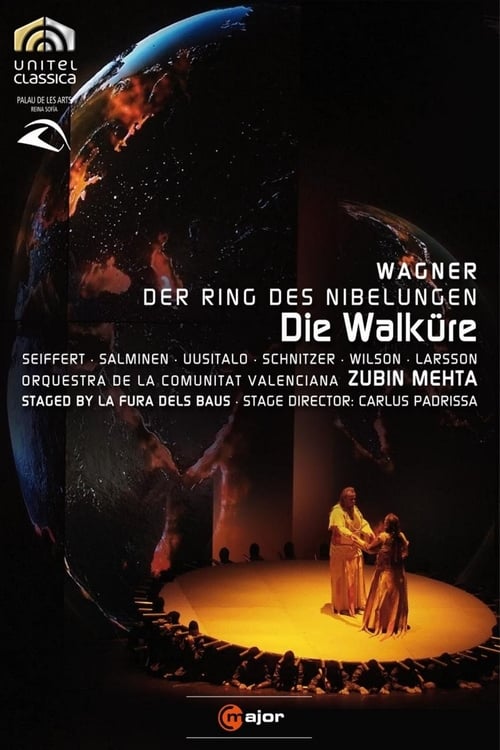
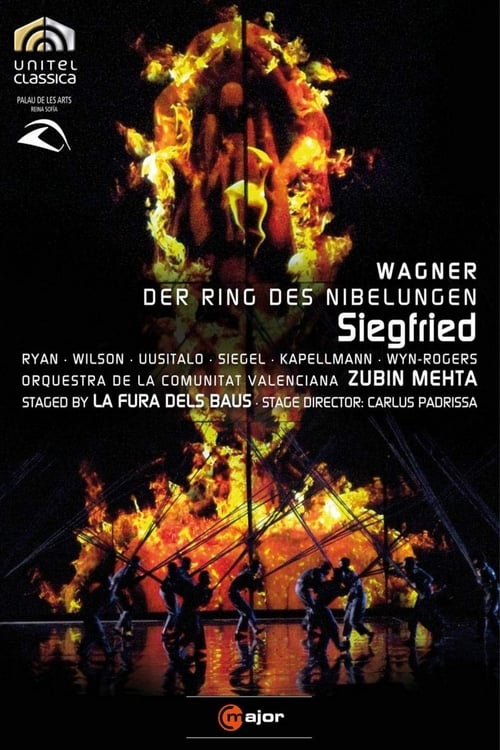
It has been a long time since the events of Das Rheingold. Wotan has fathered nine Valkyries, warrior women who bring dead heroes to Valhalla (the castle of the Gods). Richard Wagner's dream of a Gesamkuntswerk becomes reality through La Fura dels Baus' visual fantasy and blending of video technology, lighting and props (often formed of human beings): Their 30 computer projections and organic structures built of athletic performers that recall Cirque du Soleil are predestined for Wagner's visionary expressive world.
Mozart's The Magic Flute, staged by La Fura dels Baus for the Ruhtriennale Bochum 2023
Ernst Krenek's theatrical piece Karl V. consisting completely of twelve-tone series should have premiered at the Vienna State Opera. The political situation in the Vienna of 1933 and the fact that Krenek was despised by the Nazis because of this Jazz opera Jonny spielt auf, prevented the première. It only took place five years later in Prague, however Krenek had already emigrated to the USA. Karl V was the last emperor to hold to the idea of a Christian empire in which the sun never set, although its downfall was always inevitable, for numerous reasons. For the second production of Karl V. in the Nationaltheater, Carlus Padrissa in particular seeks out political power systems that are highly topical, and so very precisely analyses the treatment in the theatrical piece. At the core of the intellectually and linguistically highly qualified libretto, written by the composer himself, Karl V. reflects on his life and makes his confession to a young monk below Titian's La Gloria.
Richard Wagner's dream of a Gesamkuntswerk becomes reality through La Fura dels Baus' visual fantasy and blending of video technology, lighting and props (often formed of human beings): Their 30 computer projections and organic structures built of athletic performers that recall Cirque du Soleil are predestined for Wagner's visionary expressive world.
Thamos has succeeded his father, Ramesses, as king of Egypt, but Ramesses had usurped the throne from the rightful king, Menes, who is now disguised as the high priest, Sethos. Thamos loves Sais, a priestess, but she is really Menes' daughter Tharsis, for whom the high priestess Mirza is plotting marriage to Pheron, a treacherous general.
To celebrate the 25th anniversary of the small but ambitious Castell de Peralada Festival, the famous Catalan theatre collective La Fura dels Baus and its director Carlus Padrissa staged Christoph Willibald Gluck's opera Orfeo ed Euridice. A splendid cast as well as an avant-garde production that makes extensive use of large projection screens and includes the members of the orchestra as actors onstage result in one of the most exciting opera performances in recent years. La Fura's concept is surprising and its originality demands our attention ... it gives rise to moments of great beauty and evocative power (El País).