Dora Baret
Acting
Biography
Dora Baret is a first Argentine actress with a great career in film and television.
Known For

No description available.
Alta comedia

Anthology series, in which every episode introduces fictionalized versions of real cases about women who, for different reasons, ended up committing murder.
Killer Women

No description available.
Atreverse

The life of the Fierro family, of their members and their friends.
Son de Fierro

No description available.
Celeste
No description available.
Amor latino

No description available.
El árbol azul

A snake charmer's assistant (who later becomes a trapeze artist) brings bad luck in the circus to those who fall in love with her. Her decision to become a trapeze artist comes after the accident that the main character has during a presentation.
La venenosa

"Celeste, siempre Celeste" is the sequel of "Celeste". It begins with Franco, Celeste and their baby son Lucas finally together and happily preparing their wedding. They marry and leave for a honeymoon. Meanwhile, Franco's mother, Teresa, who hates everyone, especially Celeste (who Teresa still thinks of as a servant although Celeste inherited half of what Teresa considers her fortune), plans Celeste's kidnapping and murder. Celeste is kidnapped but escapes. During
Celeste, siempre Celeste

Pilar is autistic since she was four years old, now she is 26. The father wants to send her to an Institution , but the mother refuses, this creates a rift in the couple. The family is breaking up: Alejo, the youngest son, has conflicts at school and with his friends. Pilar suffers from increasingly frequent attacks that makes their living really impossible. Finally, they put her in an Institution. She will find another way to live, but something will happen that will change the course of the family.
El pozo

The relationship between a doctor and a depressed young patient in a public hospital.
Darse cuenta

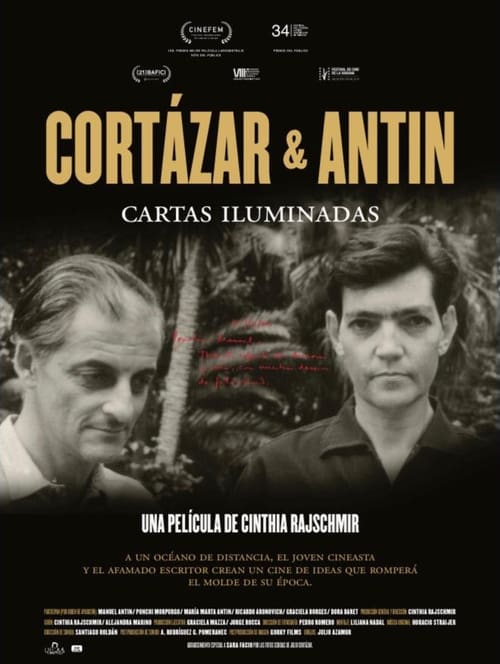
In the 60s and thanks to the epistolary exchange, the young filmmaker Manuel AntĂn and the famous writer Julio Cortázar devised four films. An ocean away, a fruitful collaboration and genuine friendship are born.
Cortázar y AntĂn: cartas iluminadas

Set amidst a backdrop of political unrest and oppression in Argentina following the coup of the late 1980s, this impressive drama dwells upon a May-December love affair between a boy and a woman suspected of political subversion. When seventeen-year-old Pedro defiantly befriends political fugitive Sofia and provides her shelter, he creates a deep rift between himself, his family and his friends. Sofia is hunted because she was at one time in love with a Communist sympathizer. At first the relationship is purely platonic as Pedro helps her recover from a 23-day long flight that has left Sofia weak and starving for sleep. But as time passes, Pedro becomes increasingly involved with her and his schoolwork begins to suffer. Gradually he falls in love with her and she with him. But as the political situation grows more oppressive and the government steps up its search for subversives, the two begin making desperate plans to flee the country.
SofĂa

During the yellow fever epidemic of 1870, a fugitive enters the mansion where three women had locked themselves in.
Fiebre amarilla

The film recreates the arrival of a group of Jewish immigrants fleeing persecution in Czarist Russia, establishing the first Hebrew colonies in the province of Entre Rios, Argentina.
Jewish Gauchos

Two men and a beautiful woman are involved in a three-way relationship during a trip to Machu Picchu.
Intimidad de los parques

A group of young aristocrats lock themselves up, for fun, on a terrace in a wealthy building in Buenos Aires. Their parents try to get them out, but they threaten to jump down if any adults enter the terrace.
The Terrace

A group of musicians, prostitutes, gamblers, and laborers, react to the arrival of a tango pianist at a saloon.
Funes, a Great Love

An innocent teenager, the son of dysfunctional parents, descends into the abyss of drug addiction.
Sobredosis

Three boys from very different backgrounds who have just finished their military service must face the complex social reality of Argentina.