Directing
Annual awarding of the Grimme Awards.
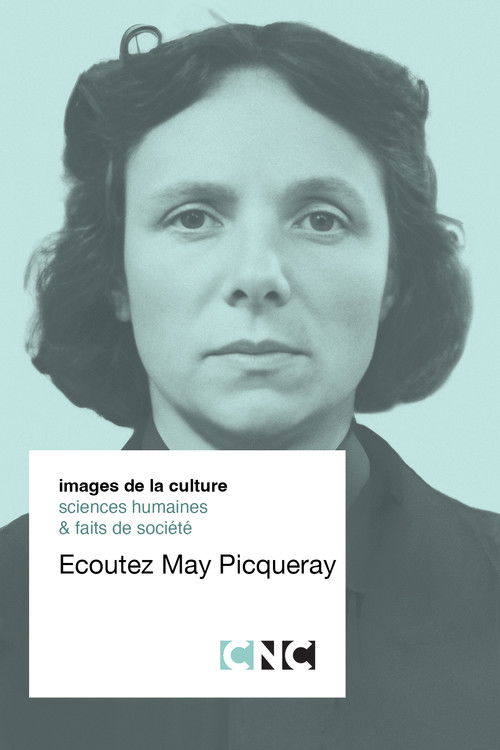
"Well, I believe in anarchy! And I believe it will come true one day." That's what "May the Rebel," a union activist, anti-militarist, and anarchist, always ready to denounce oppression and defend victims, affirms at 85. Born in Brittany, she earned her living at age 10 delivering butter. In Paris, at 20, she became involved with the Anarchist Union. Sébastien Faure became her mentor. She used a grenade to trigger the Sacco-Vanzetti affair. A union delegate in Moscow in 1922, she sang "Hymn to Anarchy" before Trotsky. Children during the Spanish Civil War, Jews during the Second World War, conscientious objectors alongside Louis Lecoin during the Algerian War, and later, through her newspaper Le Réfractaire, the Larzac, Plogoff, and Creys-Malville protests—all these were battlegrounds for May Picqueray. To the very end, she remained true to her commitment to defending peace and individual liberties.
Troeller/Deffarge once asked a cabinet minister in South Yemen, why socialistic ideas were so readily acceptable in that part of the Arab world. He replied: “Because we have been communists for a thousand years! My mother was a Karmatian.” The Qaramitah, as the Karmatians are also known, had fascinated the reporter-team ever since their stay in Persia in 1950s.
On independence, Algeria had it written into its Constitution that all revolutionary and national freedom movements could claim political asylum. lt says: “The development of Algeria’s socialism is closely connected to the freedom struggle of people in other parts of the world. lt is imperative for any revolutionary movement to support this struggle and it should never become an object of manipulation or blackmail”.
During the liberation struggle two organisations, the FLOSSY and the NLF, were fighting against the British occupation troops. Mainly the petit bourgeoisie and trade unionists from the Crown Colony of Aden supported the FLOSSY. The leadership of the NLF came from the rural areas and had the support of the peasants and the tribes. Although the NLF had liberated large tracts of the country, it did not seem to stand a chance in the decisive battle for Aden. However, the NLF won and took over the administration in the areas that had been formerly occupied by England. The film is about this revolution. lt shows how land reforms were implemented and describes the effort to find an economically self-supporting and politically independent system. Later, South Yemen came totally under the control of the Soviet Union. The German Democratic Republic was in charge of the political police and the dream of an independent revolution evaporated – as it did in Cuba.
While Marxist guerrillas were dreaming of scientific socialism in the south of the country, untrammelled capitalism was being unleashed on a highly complex tribal society in the north
Short documentary
No description available.