Ian Cheney
Directing
Biography
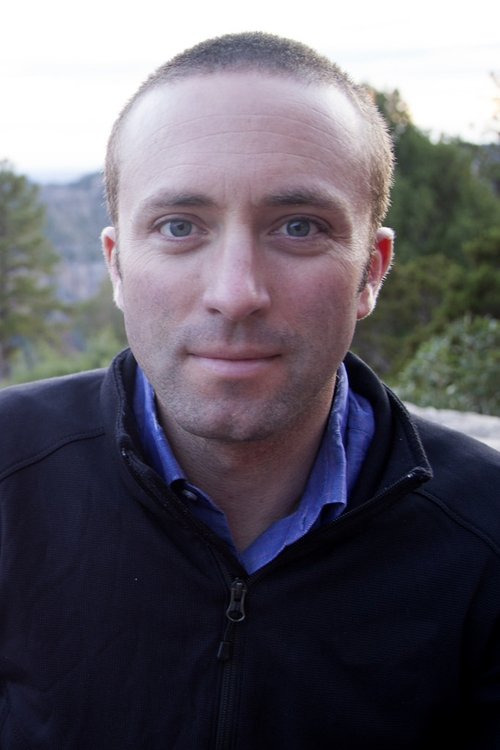
Ian Cheney is an Emmy-nominated and Peabody Award-winning documentary filmmaker. He has completed ten feature documentaries, including King Corn (2007), The Greening of Southie (2008), The City Dark (2011), The Search for General Tso (2014), Bluespace (2015), The Most Unknown (2018), The Emoji Story (2019), Thirteen Ways (2019), Picture a Scientist (2020) and The Long Coast (2020). His short films include Two Buckets (2006), Truck Farm (2010), The Melungeons (2013), The Smog of the Sea (2016) and The Measure of a Fog (2017). He received bachelor’s & master’s degrees from Yale University, and an MFA in Film from the Vermont College of Fine Arts. A former MacDowell Fellow & Knight Science Journalism Fellow at MIT, he lives in midcoast Maine. For more information about Ian’s films, visit www.wickedelicate.com.
Known For

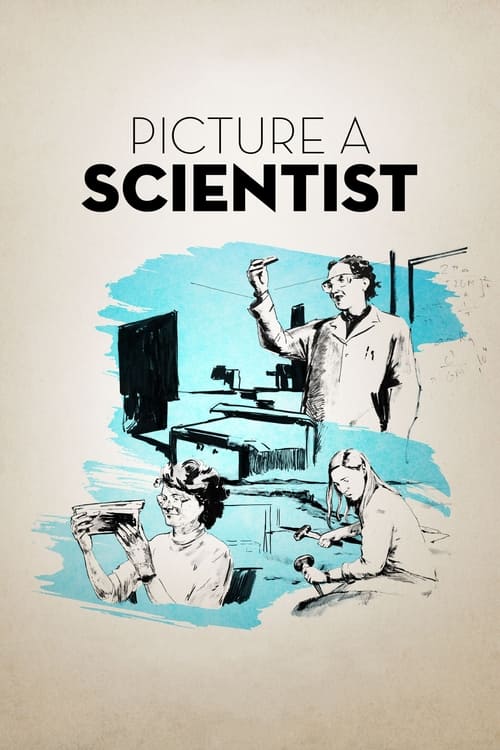
A documentary that looks at systemic sexism faced by women scientists in STEM fields.
Picture a Scientist

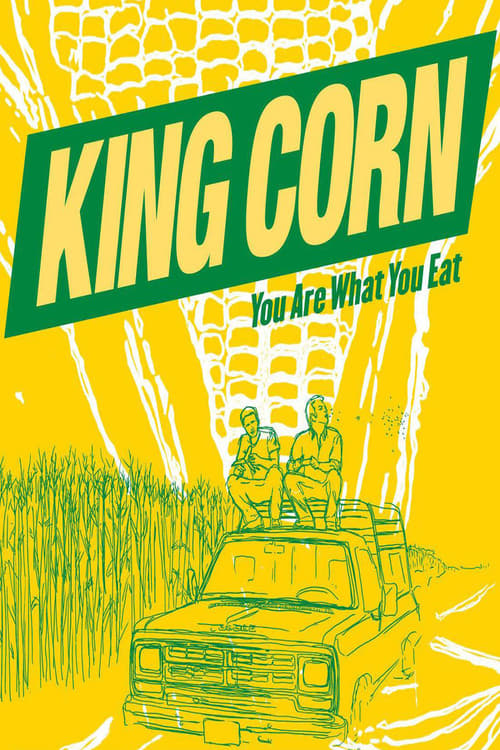
King Corn is a fun and crusading journey into the digestive tract of our fast food nation where one ultra-industrial, pesticide-laden, heavily-subsidized commodity dominates the food pyramid from top to bottom – corn. Fueled by curiosity and a dash of naiveté, two college buddies return to their ancestral home of Greene, Iowa to figure out how a modest kernel conquered America. With the help of some real farmers, oodles of fertilizer and government aide, and some genetically modified seeds, the friends manage to grow one acre of corn. Along the way, they unlock the hilarious absurdities and scary but hidden truths about America’s modern food system in this engrossing and eye-opening documentary.
King Corn

Quirky and contemplative, this delectable documentary takes us on a surprising global odyssey into the world of cheese, drawing unexpected parallels between the aging of cheese and the human experience of growing old.
Shelf Life

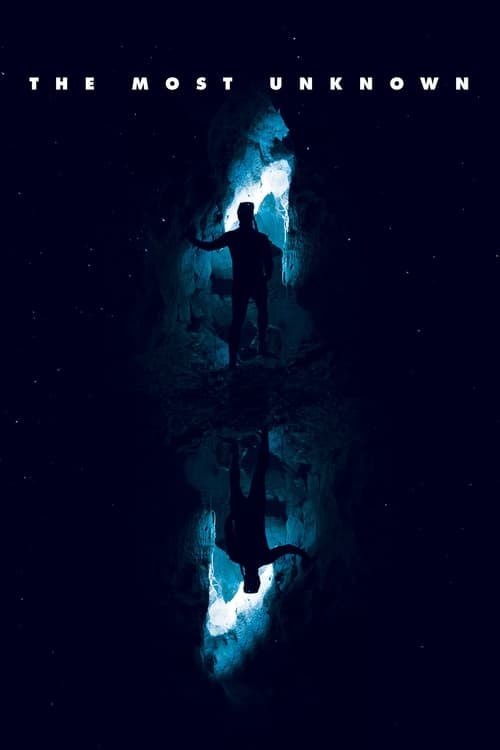
An epic documentary film that sends nine scientists to extraordinary parts of the world to uncover unexpected answers to some of humanity’s biggest questions. How did life begin? What is time? What is consciousness? How much do we really know? By introducing researchers from diverse backgrounds for the first time, then dropping them into new, immersive field work they previously hadn’t tackled, the film pushes the boundaries of how science storytelling is approached. What emerges is a deeply human trip to the foundations of discovery and a powerful reminder that the unanswered questions are the most crucial ones to pose. Directed by Emmy-nominated and Peabody Award-winning filmmaker Ian Cheney and advised by world-renowned filmmaker Werner Herzog, The Most Unknown is an ambitious look at a side of science never before shown on screen.
The Most Unknown

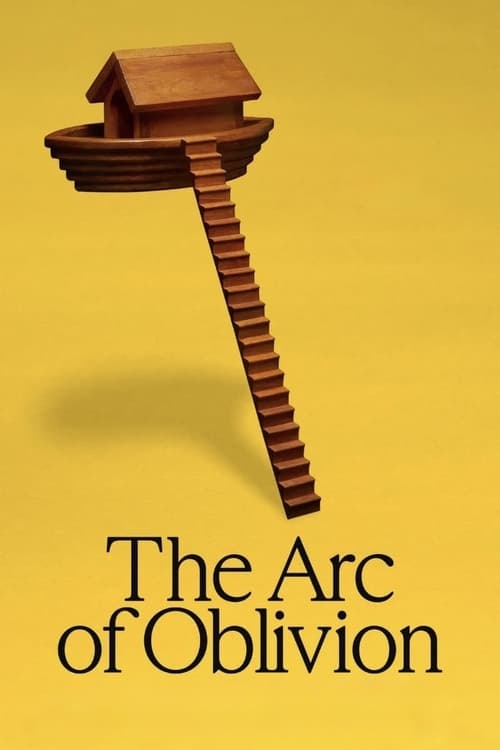
"The Arc of Oblivion" explores a quirk of humankind: in a universe that erases its tracks, we humans are hellbent on leaving a trace. Set against the backdrop of the filmmaker's quixotic quest to build an ark in a field in Maine, the film heads far afield - to salt mines in the Alps, fjords in the Arctic, and ancient libraries in the Sahara - to illuminate the strange world of archives, record-keeping, and memory.
The Arc of Oblivion

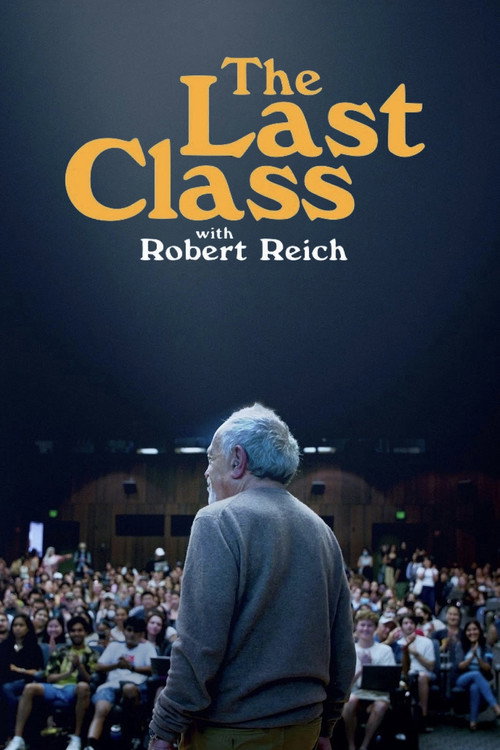
American political economist, professor, author, and social media sensation Robert Reich teaches his final "Wealth and Poverty" class to 1,000 students at UC Berkeley, ending a 40-year career that reached 40,000 students. One thousand fill the biggest lecture hall on the UC Berkeley campus, the last class to receive Reich's wisdom and exhortations not to accept that the world has to stay the way it is. His belief in the next generation's ability to take on the fight is inspiring.
The Last Class

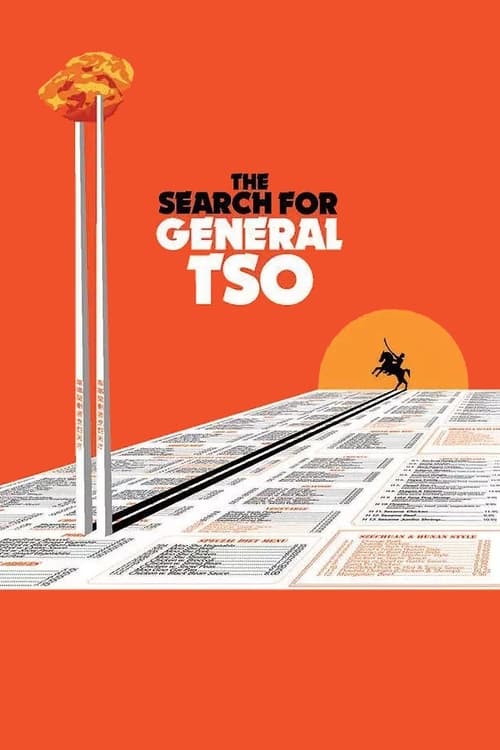
From New York City to the farmlands of the Midwest, there are 50,000 Chinese restaurants in the U.S., yet one dish in particular has conquered the American culinary landscape with a force befitting its military moniker—“General Tso’s Chicken.” But who was General Tso and how did this dish become so ubiquitous? Ian Cheney’s delightfully insightful documentary charts the history of Chinese Americans through the surprising origins of this sticky, sweet, just-spicy-enough dish that we’ve adopted as our own.
The Search for General Tso

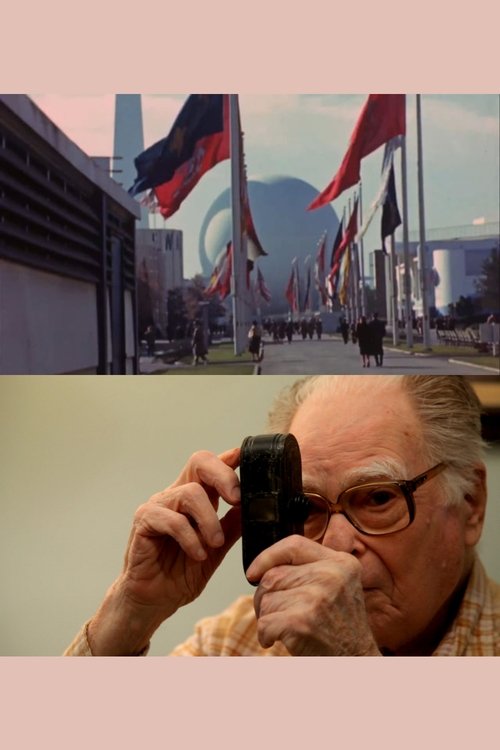
The future was now at the 1939 World’s Fair – and it is still awesome. From the perspective of the 21st century, it’s hard to imagine what a marvel the 1939-1940 New York World’s Fair would have been to its visitors. Still living in the heavy shadow of the stock market crash of 1929, the many people who flocked to the big exhibition found not only bounteous luxuries such as free Coca-Cola, but the unveiling of unthinkable new technologies that promised that a better world lay ahead. Using sparkling, rare, colour film footage – itself a brand-new technology at the time – the US director Amanda Murray mines the memories of several people who attended the New York World’s Fair in 1939.
World Fair

Emojis are a worldwide phenomenon, with some arguing that these smiling poops and heart-eyed faces are on the verge of actually becoming their own language. Who, if anyone, is in charge of this new global digital language?
The Emoji Story

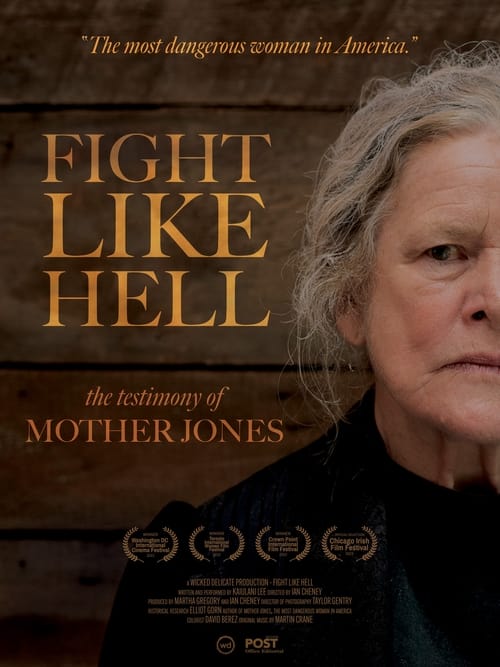
We were never supposed to know her name. She was a poor Irish immigrant who survived famine and war, fire and plague. Unable to save her husband or their four small children, she dedicated her life to saving working families everywhere. The robber barons called her “the most dangerous woman in America,” but workers called her “Mother Jones.” Upton Sinclair said of her, “she had force, she had wit, she had the fire of indignation; she was the walking wrath of god.” Mother Jones said of herself “I’m not a humanitarian, I’m a hellraiser.” Most famously, she told her followers to, “pray for the Dead and fight like hell for the living.” She educated, agitated, and organized the dispossessed and showed America what it could be.
Fight Like Hell: The Testimony of Mother Jones

When filmmaker Ian Cheney moves to New York City and discovers skies almost completely devoid of stars, a simple question – what do we lose, when we lose the night? – spawns a journey to America's brightest and darkest corners. Astronomers, cancer researchers, ecologists and philosophers provide glimpses of what is lost in the glare of city lights. Blending a humorous, searching tone with poetic footage of the night sky, what unravels is an introduction to the science of the dark, and an exploration of the human relationship to the stars.
The City Dark

Deep in the hills of Appalachia live a mysterious tri-racial people known as Melungeons. For years, the community around Vardy Valley in northeastern Tennessee suffered discrimination and marginalization because of their mixed-race heritage; many left the steep ridges vowing never to return. But in the past several years, Melungeon pride has surged, and the valley is calling many of its children home to to reclaim their roots and explore their murky past: are Melungeons somehow descended from shipwrecked Portuguese sailors, or the lost colony of Roanoke? This short film chronicles a community's attempts to tell a story that some would rather leave untold.
The Melungeons

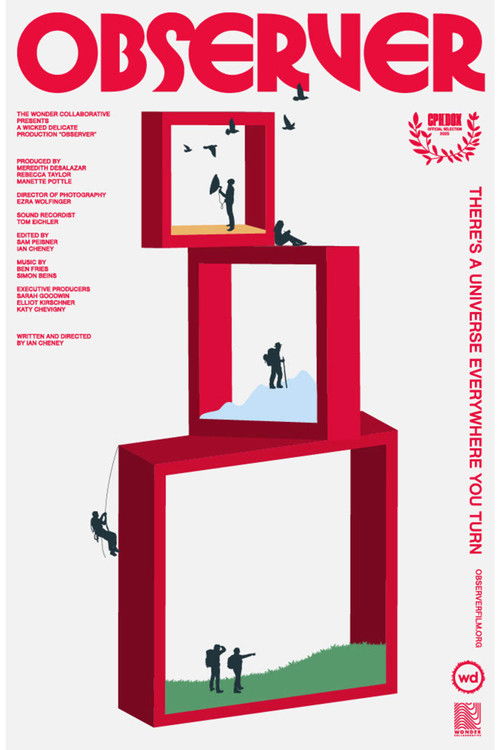
Can we observe the world without affecting it? An adventure in eight chapters from around the world where a group of professional scientists taking part in a playful, philosophical experiment.
Observer
The Smog of the Sea chronicles a 1-week journey through the remote waters of the Sargasso Sea. Marine scientist Marcus Eriksen invited onboard an unusual crew to help him study the sea: renowned surfers Keith & Dan Malloy, musician Jack Johnson, spearfisher woman Kimi Werner, and bodysurfer Mark Cunningham become citizen scientists on a mission to assess the fate of plastics in the world’s oceans. After years of hearing about the famous “garbage patches” in the ocean’s gyres, the crew is stunned to learn that the patches are a myth: the waters stretching to the horizon are clear blue, with no islands of trash in sight. But as the crew sieves the water and sorts through their haul, a more disturbing reality sets in: a fog of microplastics permeates the world’s oceans, trillions of nearly invisible plastic shards making their way up the marine food chain. You can clean up a garbage patch, but how do you stop a fog?
The Smog of the Sea

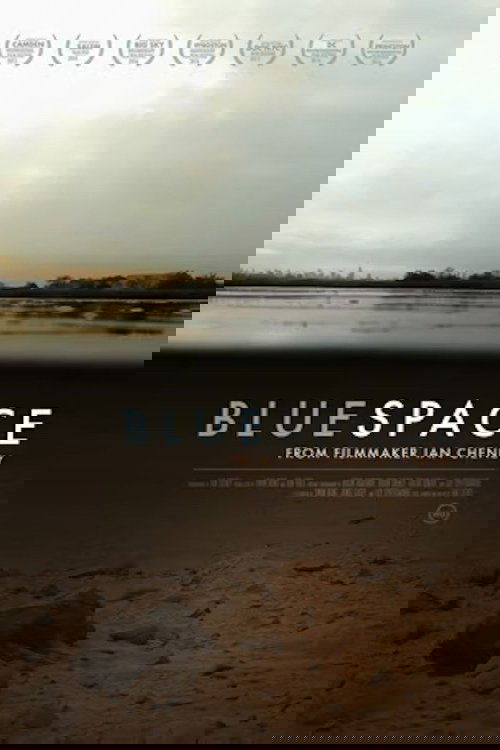
BLUESPACE explores the terraforming of Mars and the waterways of New York City. As scientists develop strategies for warming and colonizing the frigid red planet, waterfront dwellers here on Earth grapple with the legacies of pollution and the specter of rising seas. The science fiction-infused film probes the limits of human engineering and yields unusual perspectives on an increasingly watery planet.
Bluespace

Armed with a camcorder, farmer-filmmaker-activist Severine von Tscharner Fleming spent two years crisscrossing America, meeting and mobilizing a network of revolutionary young farmers resettling the land. 'The Greenhorns' is an ode to their grit and entrepreneurial spirit, an exploration of sustainable agriculture, and an enticement to reclaim our national soil. The ninety minute feature is the culmination of well over 200 hours of original footage from all regions of the United States, as well as original animation by young urban farmer and artist Brooke Budner, and rare agricultural archival footage from the Prelinger Archives. Ultimately, The Greenhorns shows us how farmers can move out of the margins recent history has consigned them to, and back to the heart of the American food landscape.
The Greenhorns

A whimsical, musically-narrated, documentary film about urban agriculture.
Truck Farm
From wheatboard cabinetry to recycled steel, bamboo flooring to dual-flush toilets, these Boston tough guy construction workers get a crash course in what it means to be "environmentally conscious". And when things on the building star to go wrong, the young development team has to keep the project from unraveling. Held as "a clear-eyed film - an examination of the hard work involved in going green" by The Seattle Times, this compelling documentary is a story of bold ideas, new environmentalists, and the future of the way we live.
The Greening of Southie

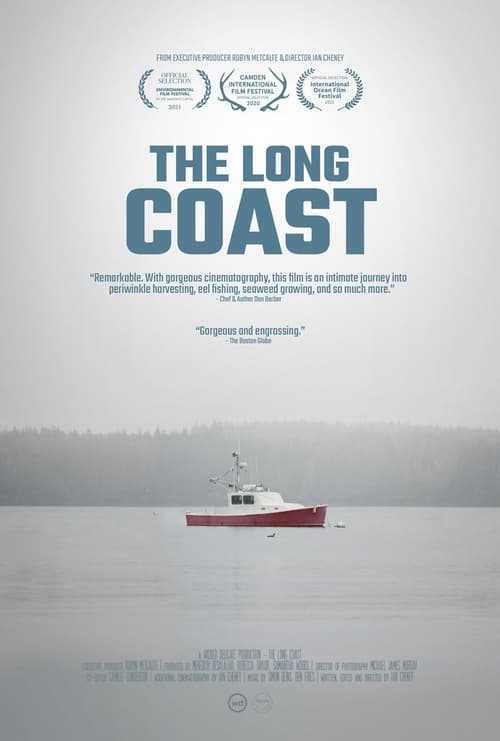
A series of lyrical vignettes illuminates the stories of Maine's seafolk, those whose lives and livelihoods are inextricably connected to the ocean. This atmospheric film shows the beauty, intimacy, and uncertainty that coastal dwellers face in rooting their lives in the ocean, particularly as human actions — from overfishing, to aquaculture, to warming seas — confront Maine and its people with profound change.
The Long Coast
Ian Cheney and Curt Ellis have traded their combine for a canoe, and they're setting out to uncover the ecological consequences their little acre of corn sent into the 'Big River' downstream.