Writing
Polizeiruf 110 is a long-running German language detective television series. The first episode was broadcast 27 June 1971 in the German Democratic Republic, and after the dissolution of Fernsehen der DDR the series was picked up by ARD. It was originally created as a counterpart to the West German series Tatort, and quickly became a public favorite.
Monika and Johannes are married. With increasing frequency, their son Manni becomes the focus of their arguments. Since the two cannot agree to a compromise, they decide to break up. The ten-year-old Manni is supposed to spend four weeks with Monika followed by four weeks with Johannes on an alternating basis. They want to prove to each other who has the better parenting skills. The plan fails, however, because Manni is very good at playing his parents off against each other. When Monika and Johannes finally see through their son’s game, they realize that their way of life does not lead to better parenting and they conclude that good parenting can only be achieved if they work together.
A commercial artist with a lisp chooses silence, unexpectedly propelling his career. His perceived innovation leads to rapid advancement in an ad agency. Mueller-Stahl shines in this biting critique of East German workplace culture.
The 20-year-old Berliner Wilhelm, called Willi, returns from two years as a prisoner of war to the village of Weltzow in the Havel region, where he meets Hans Graber, a former comrade from the front. Hans is now a teacher and finds Willi a job with innkeeper Brunzel. His daughter, Mrs. Leidenfrost, has been a widow for five years, as her husband was killed at the front. Over time, she begins to take a liking to Willi, but Willi is not aware of this. He is interested in the dressmaker Ulla, but skips their first meeting when he learns in the inn that Ulla has an illegitimate child.
The successful entertainment artist Ralf Keul must develop his land on the Baltic Sea or else ultimately give it up. Inexperienced yet courageous, he hurls himself into the undertaking, which spares him no unpleasantness. He battles over the transportation and procurement of materials, constantly on the verge of a nervous breakdown, while his craftsmen offer little additional assistance.
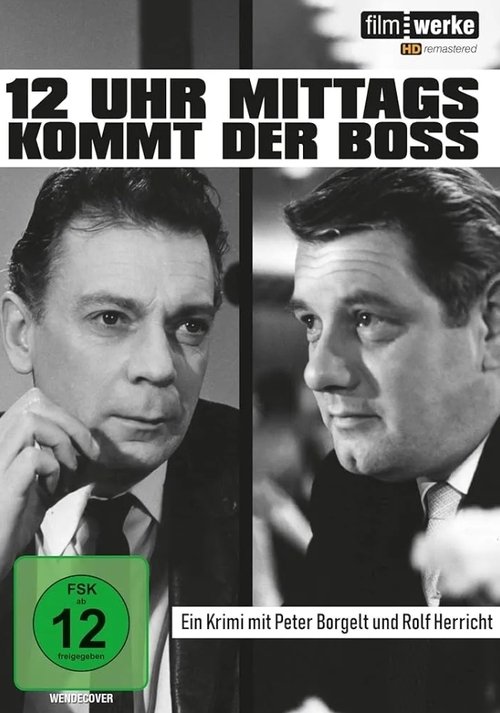
Ewald Honig can't break his bad habit. Hardly has he crossed over into the GDR when the strapping, well-built man in his late fifties once again starts courting ladies with fraudulent intentions. His daughter Ina, burdened with the same genes, specializes in married men in their prime. Two criminologists are on the Honigs' trail, but they soon have enough to handle just dealing with each other. Meanwhile, Honig and his daughter have left their wayward path of their own accord.
Brigitte is caught between two men: on the one hand there is the ambitious Klaus, the father of her young daughter, and on the other the sensitive Wolfgang, her flatmate, to whom she feels attracted. With the active help of the housemates, especially her mother Klucke, she finds out who her heart really beats for.
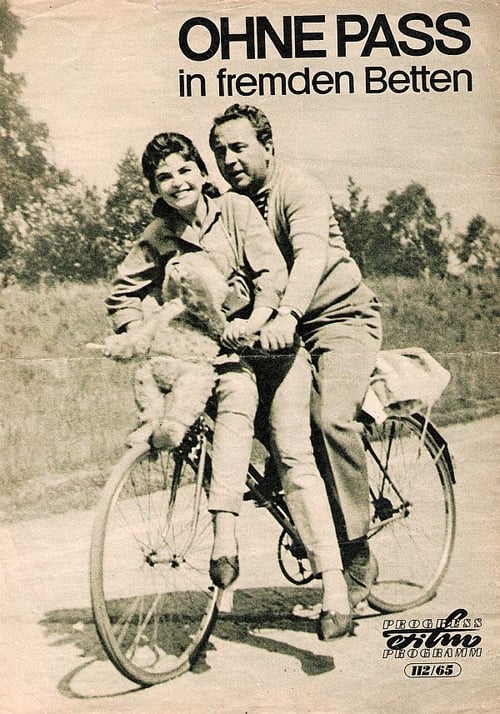
Czech tourist Jelinek decides to take a ride on the "Ferris wheel" in Berlin, and as a result he lags behind the train and is left without his belongings and documents.
A dead body is found in a burning car on the Berlin-Leipzig highway. The police investigate: Murder. Objects found in the car point to gold smuggling. At the funeral of the murdered man, his circle of acquaintances is scrutinized. They are all suspects. The trail leads detective Lindner to a bar.
A film gala featuring a colorfully mixed program of musical numbers, along with the most popular artists of the GDR music, film and television scenes. The majority of the show is comprised of music performances, which are visually altered or transformed. Cabaret-style written contributions and one acts round out the program. Before each performance, the artists involved are seen in an everyday situation in their life.
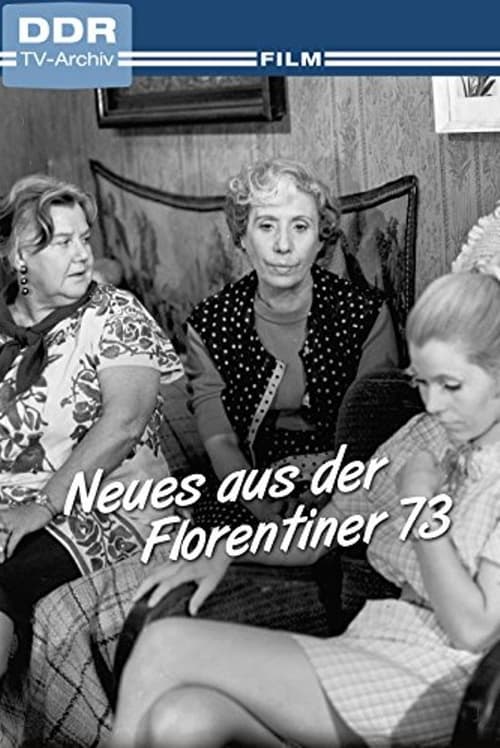
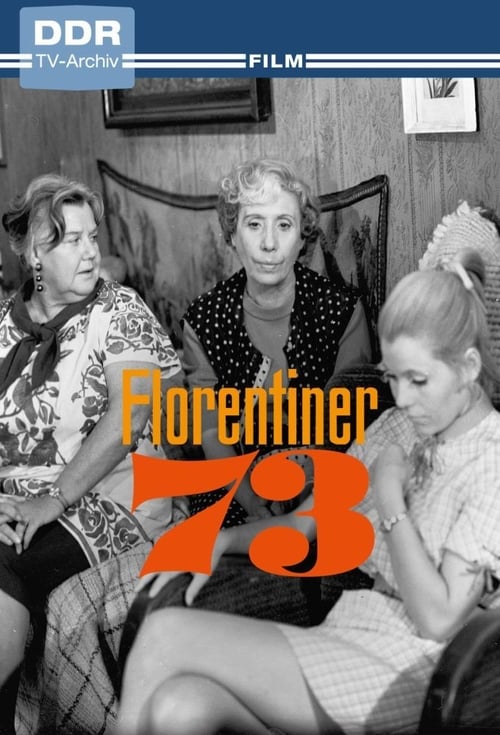
Berlin landlady Mrs. Klucke looks after the residents of Florentiner Strasse 73 like a mother, who could do with her help. When pregnant Brigitte is looking for a furnished room, she ends up with Mrs. Klucke. However, she has to make do with a spare room. At first Brigitte is quite disappointed that all sorts of residents and their guests regularly pass through the room, but over time she gets used to this situation. She soon comes to love the idiosyncrasies of the other residents of Florentine 73 and the motherly care of her landlady.
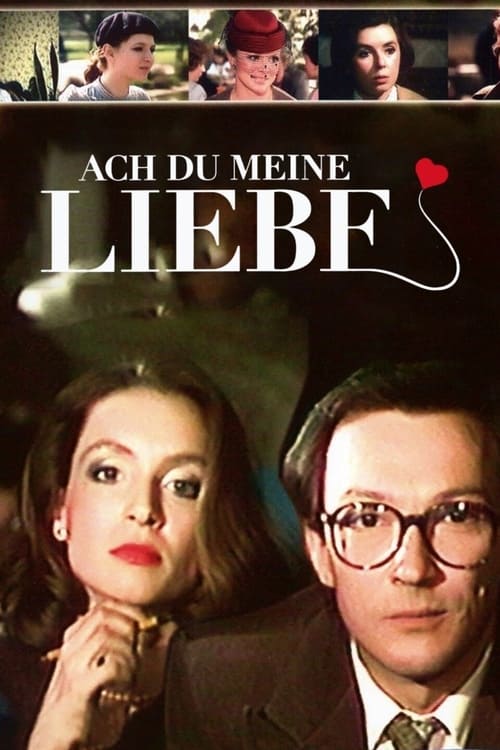
Detlev, a single insurance clerk in his 30s, is kept dependent by his loving and caring mother and loses his girlfriend Karin as a result. Grief and an alcoholic chance acquaintance prompt him to place an ad for marriage. Detlev gets caught up in a whirlwind of friendships and love affairs: with the caring widow Karin; the well-to-do hair salon owner Ute Schöbel; the cultural editor Norma Goldbach, the photo reporter Kerstin and the student Andrea Binz. Detlev, who initially proves himself as a friend and advisor, but also as a lover, becomes increasingly self-confident. He is also successful in his work and finally emancipates himself from his mother. Although he loses "his" women in a turbulent odyssey, Detlev has transformed himself from a mama's boy into a thoroughly acceptable man.