Writing
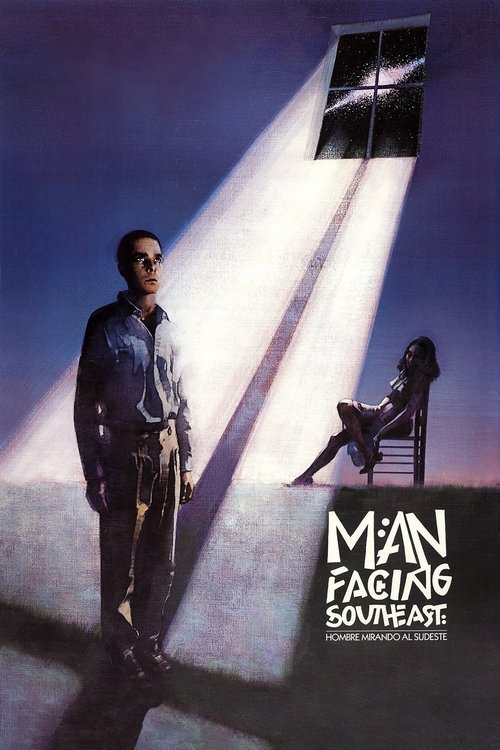
A new patient mysteriously appears in a psychiatric ward. He claims to come from another planet to study humans and their behavior. The alien is gentle but criticizes humans for their harsh treatment of each other. The assigned psychiatrist is himself unhappy, and affected by the patient's insight. But he is ordered to treat the patient according to institutional procedure.
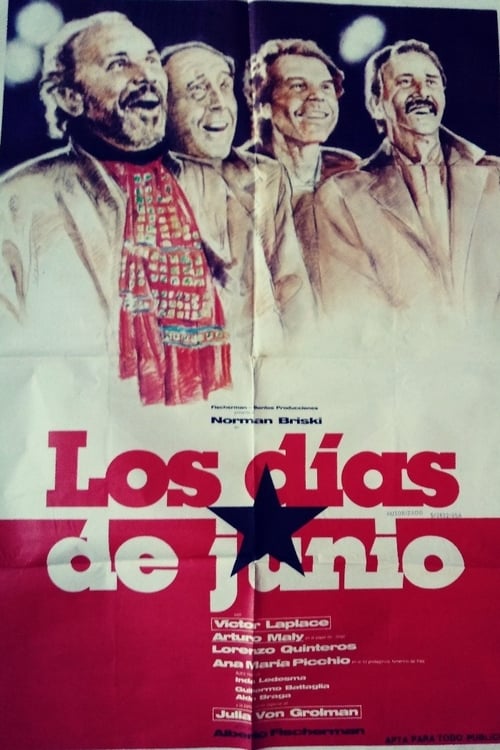
A woman's voice says she was wife to Renzo Franchi and Carlos Gardel (1890-1935), Argentina's great tango singer. People say she's crazy. Her story unfolds. Buenos Aires, 1933: Juana Romero, a seamstress who lives for the music of Gardel, dumps her boyfriend Gustavo for Renzo, a singer who looks like Gardel. She insists that his trio performs Gardel's tangos, which leads to Renzo recording a Ford commercial when Gardel himself is overbooked. The trio, with Joanna in tow, goes on an ill-fated tour of points north. The couple breaks up: she goes home and he tries to get to New York. Fate steps in, and once again he's called upon to pose as Gardel. Then, legend and a bracelet take over. Written by
No description available.
An actor exiled by the dictatorship, back to his country again and is reunited with his friends.
In a small town in Patagonia (Southern Argentina), a Mapuche Indian chief sets a tourist complex under construction on fire. He denies all attempts to defend himself. Locked up, he waits for the arrival of "Caleuche," the Ship (Nave) of Fools (de los locos), a mythical figure of his ancestral strength which "made" him start the fire. An appointed lawyer (a white woman) comes to the chief's defence, alleging the chief had acted in self-defense as the white man was building commercial structures on the sacred burial grounds of his ancestors, and continued doing so even after heated protests.
An Argentine-executive of a multinational-returns to the country to close a factory. There he meets with his exgirlfriend and his best friend before the exile. The film presents an interpretation of the political and social situation in Argentina during the last years of the military government.