Acting
Four-part miniseries about the theologian Thomas Müntzer, who became a revolutionary and opponent of Luther during the Peasant War in 1525.
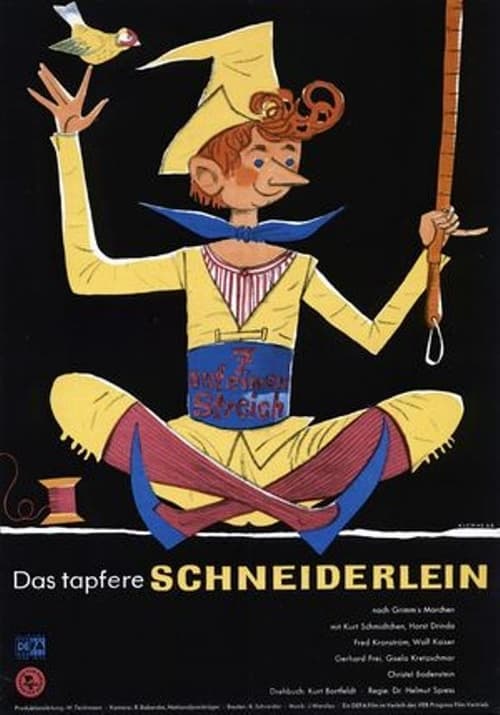
When Prince Vain got his shirt fixed, he proclaims that he had slain two lizards in front of the tailor's house - "two in one strike". When the tailor swats seven flies at once, he sows himself a banner saying "seven in one strike", and together with his bird he starts a journey into the world to pronounce his deed.
The love story of Emma and Johannes begins during the hard years of the Great Depression. Emma repeatedly tries to encourage her husband, who is suffering terribly from unemployment. However, the crisis continues to intensify and social disintegration affects millions.
No description available.
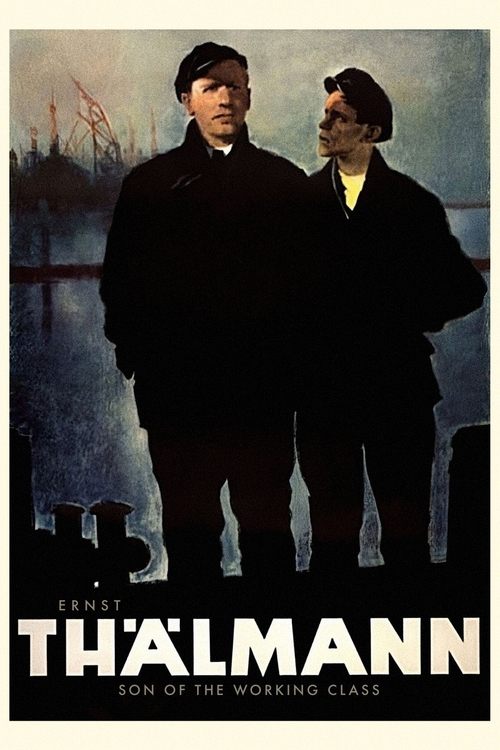
This film is the first of a two-part historical and biographical portrait of the communist politician and anti-fascist Ernst Thälmann. In early November 1918, Ernst Thälmann is an unwilling soldier serving on the western front. As the revolutionary movement at home is threatened by the betrayal of the Social Democrats and fissures in the working class, Thälmann calls on his fellow soldiers to put down their weapons and unite with the workers in the communist struggle at home. Thälmann’s qualms about which side he is fighting on continue, but when the local police attempt to prevent a shipment of provisions and supplies from reaching the people in Petrograd, he intervenes and the ship is unloaded. With this moment of clarity, Thälmann continues to follow his political convictions and joins the workers at the Hamburg uprising in October 1923.
A few Conti Press journalists are granted exclusive coverage of the launch of the newly developed Skylight 3 intercontinental ballistic missile from the CBA rocket center. But the test ends in disaster. Parts of the rocket break loose and the head, armed with napalm, drifts off uncontrollably. Former pilot and star reporter Pit Nordfors succeeds in uncovering the scandalous background to the false launch. But the Conti Press retracts his article as it turns out that the CBA is a major shareholder in the newspaper group. Nordfors soon gets the opportunity to beat the powerful with their own weapons.
For a long time, Paul Warkentin had heard nothing from his father. The rift had occurred when Paul, despite passing his exams at agricultural school, decided not to take over his father's farm in West Prussia, but instead to go to Berlin to work for a publishing house. Now Paul has received news of his father's death, and he must return to his hometown to take possession of the farm as his heir.
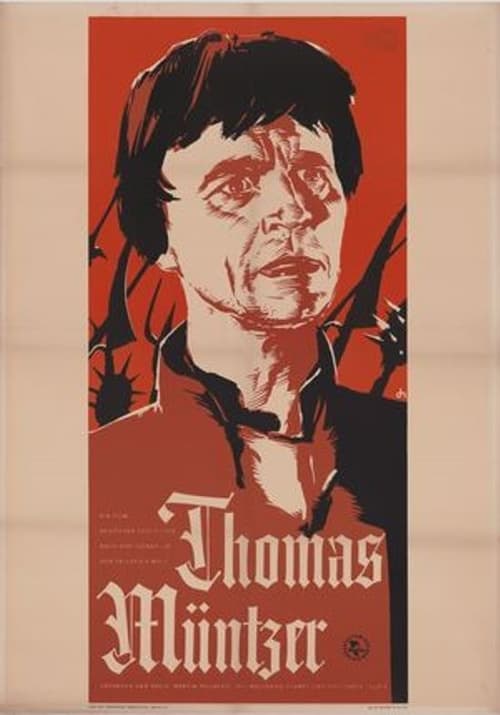
In 1523, young Thomas Müntzer arrives with his wife Ottilie in the Thuringian village Allstedt to assume the rectorate. As a follower of Luther′s teachings, he finds in the Bible not only reasons for clerical, but also for secular reforms. But when Luther turns away from the rural population after a discord with Müntzer, it is Müntzer who becomes the peoples′ spokesman. He is forced to go to Southern Germany, where he convenes with revolting farmers. But his way leads him back to Thuringia. In 1525, he and Heinrich Pfeiffer form the centre of the Thuringian peasant uprising in Mühlhausen, but their success is diminished by the fact that peasants and craftsmen don′t seem to be able to work together. In Frankenhausen, Müntzer becomes the leader of a peasants′ army that is set to fighting the ruler′s army – and sustains a devastating loss. Müntzer is arrested and sentenced to death by decapitation for his insurgency.
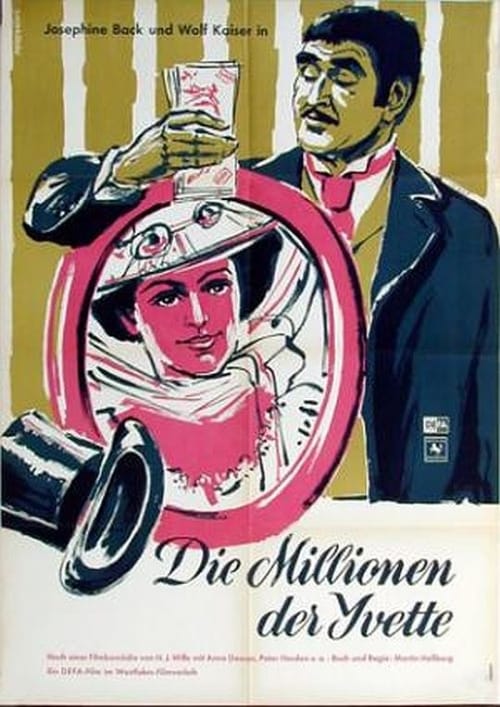
French milliner Yvette has a small fashion salon in Düsseldorf. The young gentlemen of society fall at her feet, but she is not accepted into their circles. That's why her former lover Maurice Daurignac manages to persuade her to pull off a big coup to get revenge on "high society". She pretends to be the heiress to ten million gold francs. A notary arrives from Paris accompanied by two supposed policemen and delivers the alleged money in a sealed parcel to the Bleichstetter bank in Düsseldorf, where it remains until the end of the inheritance process. The case drags on, and in the meantime the two are living large. When the bombshell bursts, Yvette has the young lawyer Dr. Hellmer to thank for the fact that she cannot be thrown to the angry citizens.
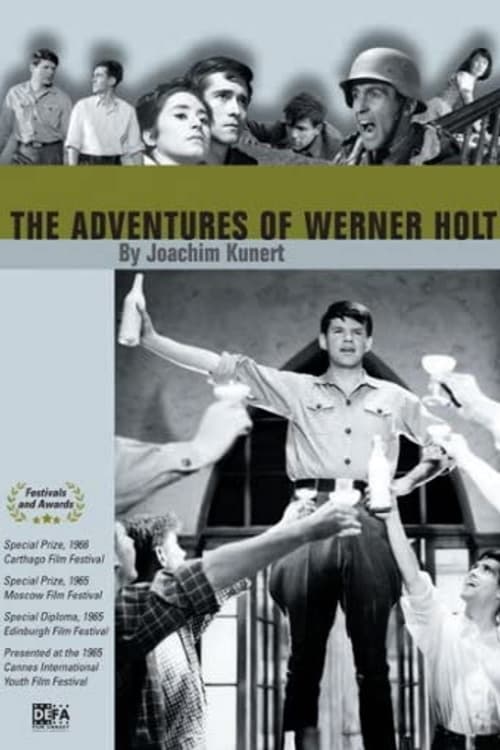
Two 17-year-olds, Werner Holt and Gilbert Wolzow, are pulled out of school and into Hitler's army. Gilbert becomes a fanatical soldier; but at the front, Werner begins to understand the senselessness of war.
Victory and demise of the first proletarian dictatorship in the history of mankind, about the struggling, bleeding workers of Paris who enthusiastically defend their historical initiative. The little Cabet family from Rue Pigalle and their friends let the spectator participate in the action.
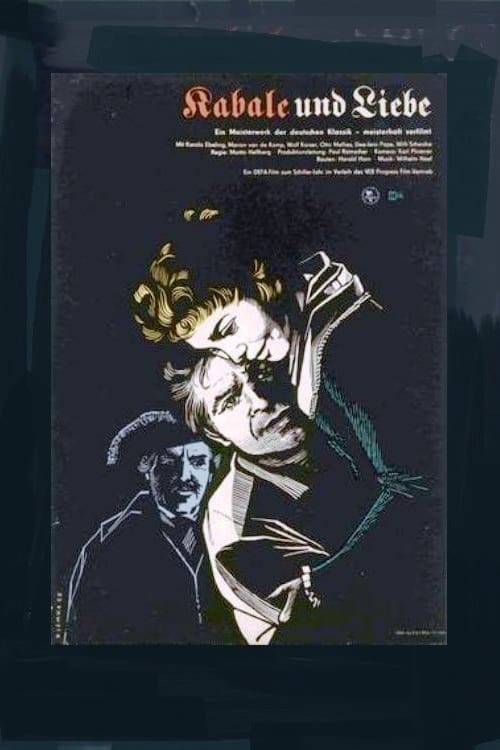
Ferdinand is an army major and son of President von Walter, while Luise Miller is the daughter of a middle-class musician. They fall in love with each other, but both their fathers urge them to end the affair.
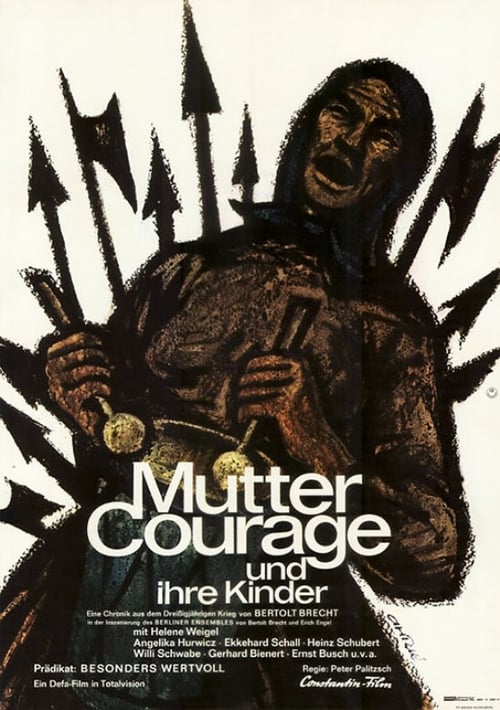
During the Thirty Years' War, the camp-follower Anna Fierling, called "Mother Courage", travels the length and breadth of Europe with her covered wagon. She does not care if it's Catholics or Protestants she trades with as long as business thrives. She loses her three children as a result of the war: bold and spirited Eilif, sincere and upright Swiss Cheese and mute Katrin, who saves the children of Halle by beating a drum on a farmstead roof In wartime, the Fierling children's virtues prove to be deadly. Yet, Mother Courage, remains incorrigible. She will not have anyone "spoil the war" for her and so sets out once more after the soldiers with her wagon.
The film is about Steven who falls in love with Dana. But she only has eyes for the pop star Marc, whom his manager sends back to school because he thinks this is a good PR stunt.
Private detective Fritsch from Munich had received a lucrative assignment: he was to obtain proof of inheritance for a Mr. Seligmann from Canada; this would bring the client a sum of five million dollars. He is therefore looking for an old document that was hidden in a valuable painting that disappeared decades ago. The starting point is a trail that leads to a town in Poland. The painting in question is said to have disappeared there in the final years of the Second World War. But the object of desire cannot be found here, and a new clue points to a grave in Frankenthal in the German state of Rhineland-Palatinate. Fretsch then found out that the painting must probably be in the villa of a personality with significant influence in the economy and politics of West Germany. Fretsch manages to get in touch with the wife of the presumed new owner of the painting and to find out the secret of his rise to multimillionaire status. But the people concerned use their resources to counterattack.
Historical television comedy around Friedrich Alfred Krupp, whose connection to the imperial court and the influence of Kaiser Wilhelm II. to the Krupp family. Not yet 50 years old, the "cannon king" dies in 1902. The emperor holds a memorial speech sown with threats against the "inner enemies". Telltale secret files emerge, strange amorous adventures are in the game.
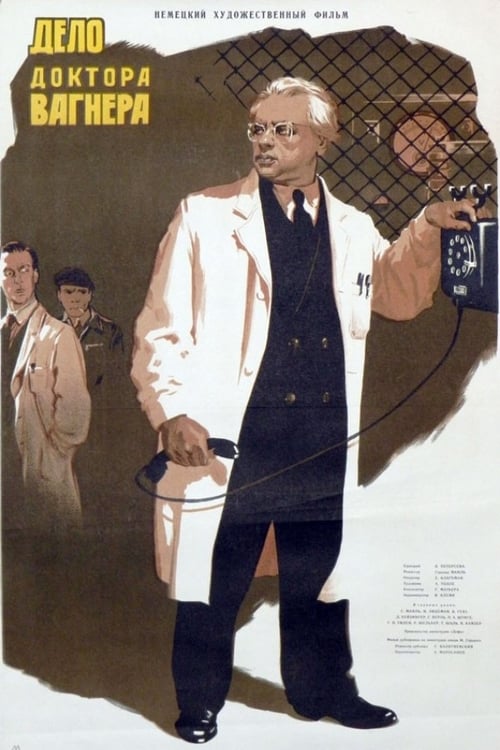
Dr. Wagner is a scientist currently working on an experiment for the Asta plant in East Berlin. If the experiment is successful its a brilliant new invention. But Wagner is the target of sabotage, and all the decisive experiment fails. Wagner can not explain this setback.