Acting
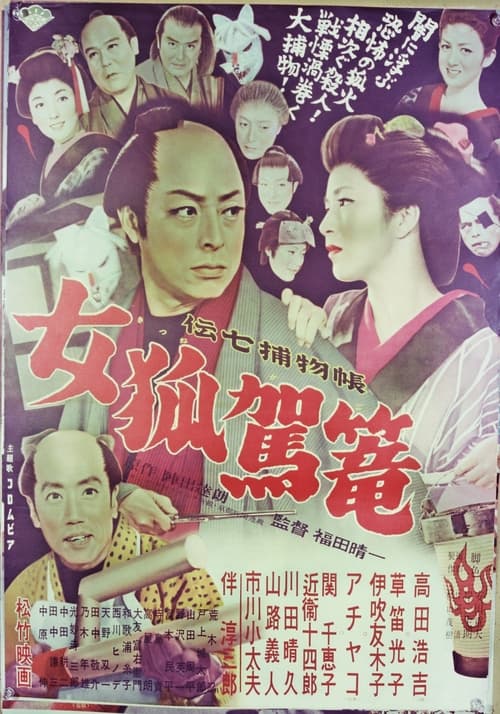
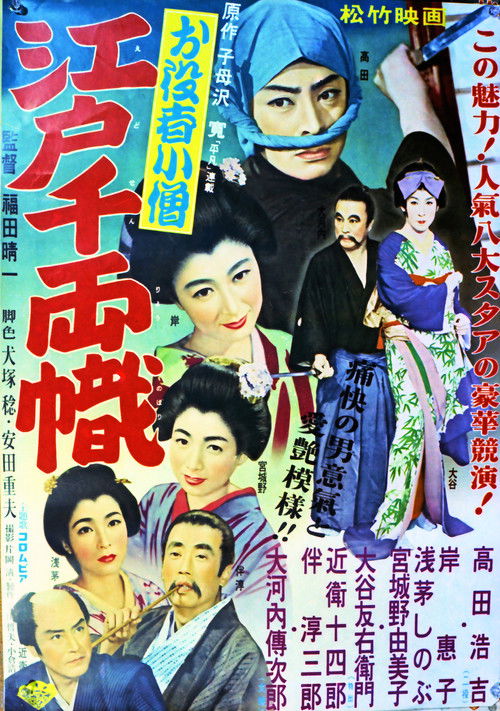
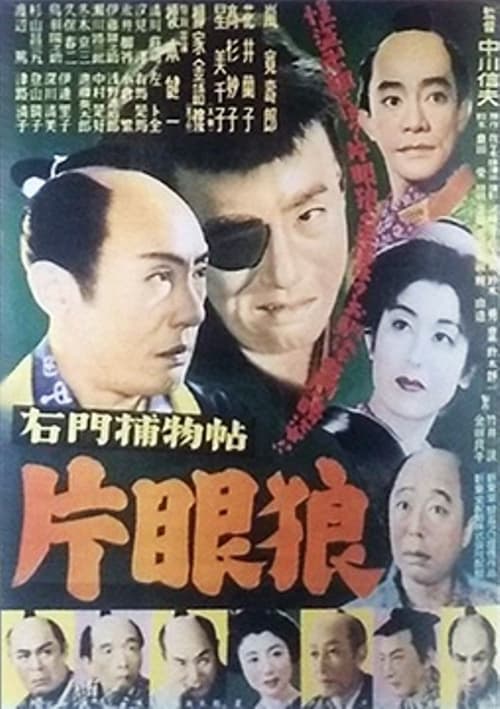
One night in Edo, a mysterious woman in a palanquin appeared at the moneylender Yamashiroya, revealing herself to a beautiful woman. She told the owner, Shigebē, that she had come to collect a life he owed from twenty years ago and then left. The same night, Maruiya Genbē also received a visit from the woman's palanquin, and nearby, a man named Manbē was murdered. The detective Hayanawa Gohē concluded the murder was the work of a fox spirit, but another detective, Den Shichi, skeptical of this theory, noticed footprints on the tatami and decided to investigate further.
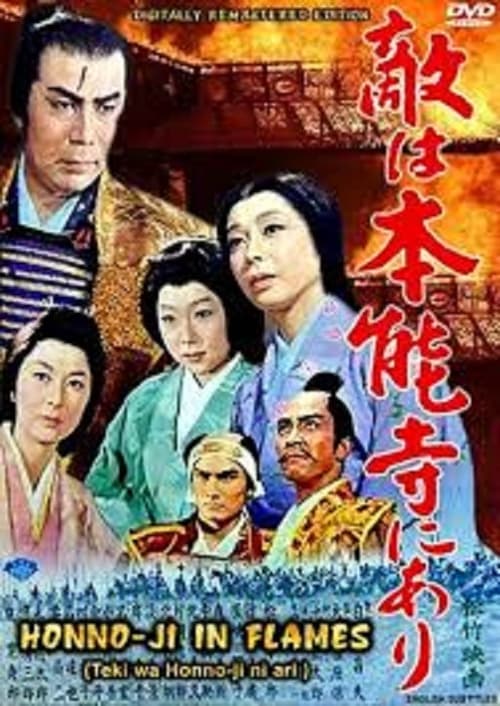
The plot is based on the novel "Akechi Samanosuke no Koi," the final work in a trilogy by Hiroshi Kato about the forced suicide of Oda Nobunaga at the temple Honnoji. Historically, the general Akechi Mitsuhide is credited with causing Nobunaga's downfall. Kato's novel focuses on Mitsuhide's nephew Samanosuke, who fought alongside his uncle during the assault on Honnoji.
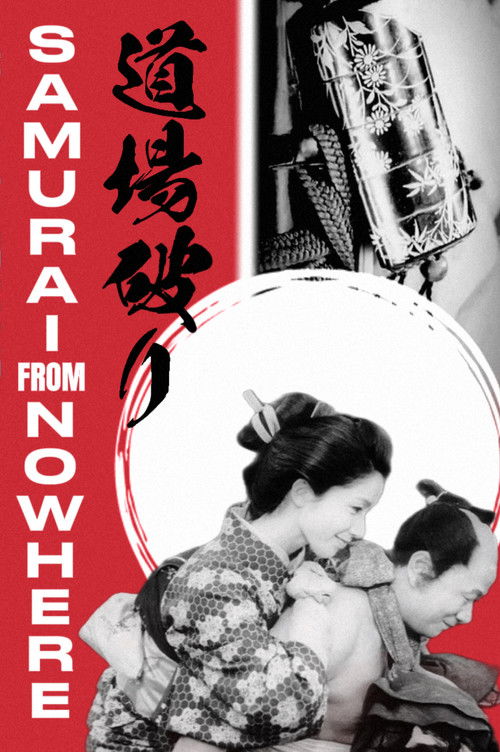
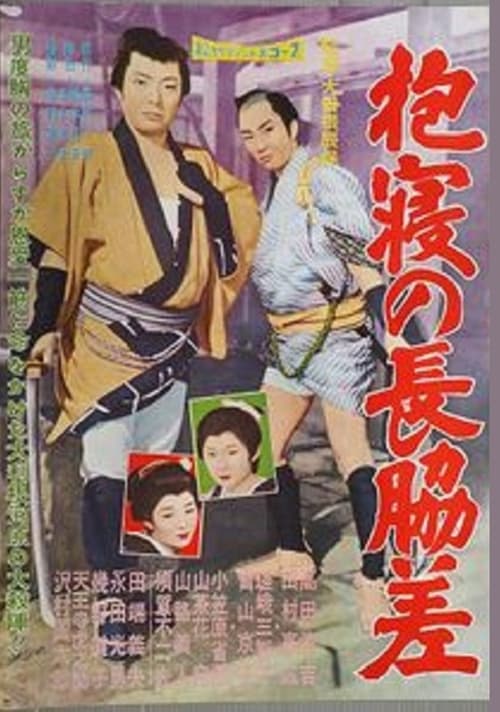
Misawa Ihei (Nagato) is traveling with his wife Tae (Iwashita Shima) who abhors the practice of sword fighting for prize money. Tae is the daughter of the clan's chief counselor who married the low-ranking Ihei to avoid becoming the clan lord's mistress. Into the mix comes Oba Gunjuro (Tetsurō Tamba), a mysterious ronin who will do anything for money. This leads to a fitting climax as the forces of hate and love converge while the couple attempt to break through the border!
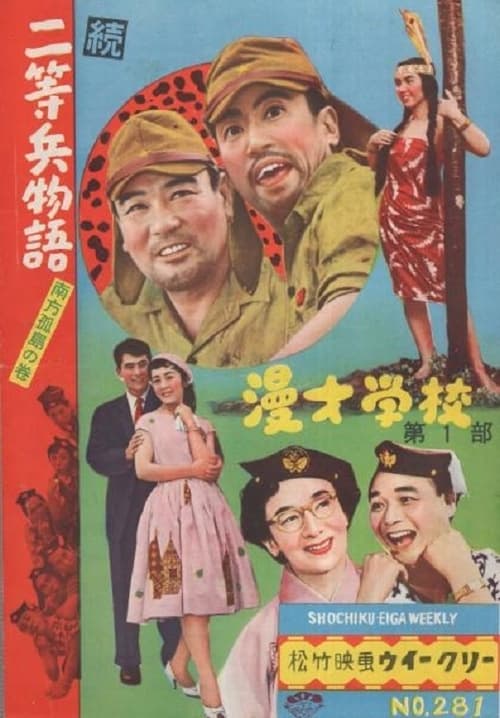
1957 Japanese movie
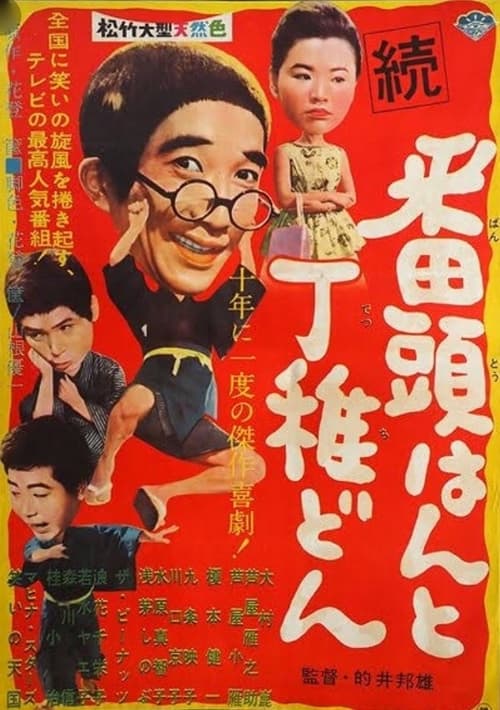
Second sequel to "Story of Second Class Private".
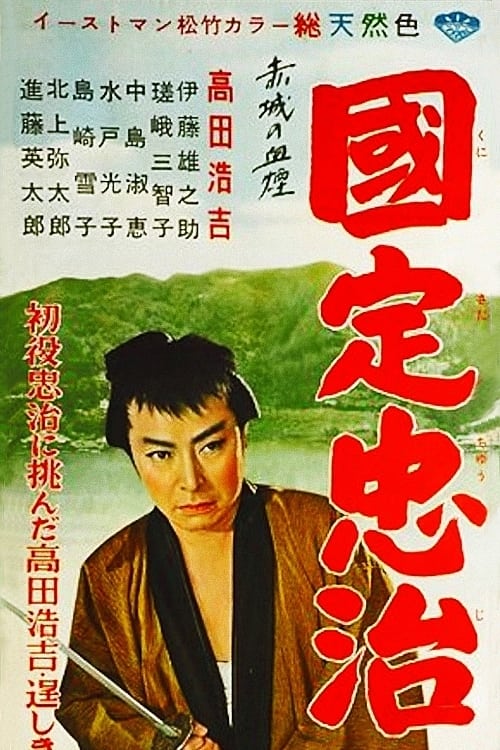
Chuji Kunisada runs into strange adventures which tests his skill as a samurai as he untangles intrigue and murder against the backdrop of the majestic Mount Akagi.
1961 Japanese movie
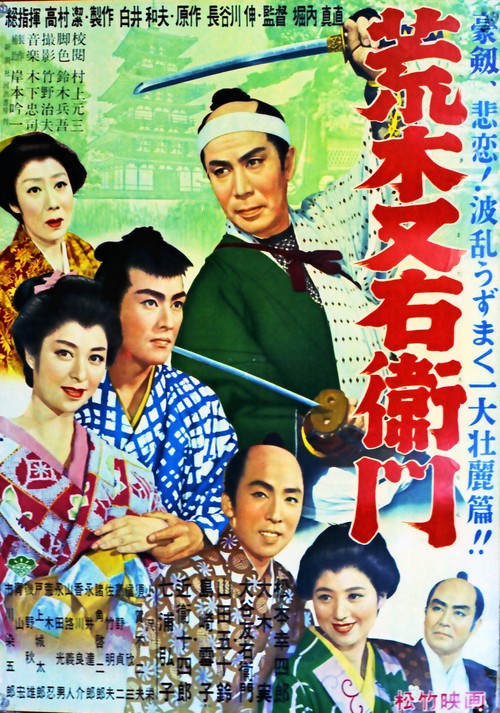
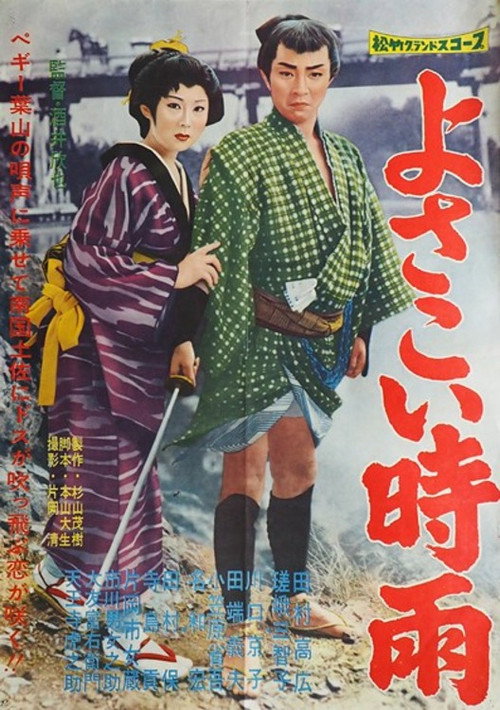
Watanabe Kazuma and Kawai Matagorō from the Bizen Okayama Ikeda clan were close friends, but they inevitably became enemies after Matagorō killed Kazuma's younger brother, Gentayū, and fled. Seeking assistance, Kazuma asked his brother-in-law, Araki Mataemon, for help, but Mataemon refused, saying that it was against the code for a brother to avenge another brother's death. On the other hand, the lord of the clan, Ikeda Tadao, ordered a search for Matagorō, who was found to be sheltered by the Hatamoto, including Andō Jiemon, in Edo. Tadao was furious but unable to act. Matagorō, in Edo, came to regret his birth as a samurai. He met and fell in love with Okō, a bathhouse maid. As the discord between the Hatamoto and the Ikeda clan deepened, Tadao died of illness. Seizing the opportunity to ease the conflict, the shogunate ordered the Ikeda clan to be succeeded by the young lord Katsugorō and to relocate to the Ikeda clan of Inshū Tottori. Meanwhile, Matagorō was exiled from Edo.
Ogami Itto is challenged by a quintet of warriors, each armed with one fifth of Ogami's assassin fee and one fifth of the information he needs to complete his assignment.
1960 Japanese movie
Okazaki Domain samurai Inaba Gotaro accidentally killed a superior while trying to save his beloved geisha, Ko-en. On the run, they were rescued by the actor Nakamura Utaemon, but Ko-en was taken by the Hatamoto, Ono Issai. Gotaro, who fell off a cliff, was saved by the Dutch-trained doctor, Shibarai Ryokai, and his daughter Oume. While traveling to Edo, they met Utaemon in Mishima, who was suffering from a serious eye disease. Ryokai’s treatment saved Utaemon from blindness, and a strong friendship was formed among the three.
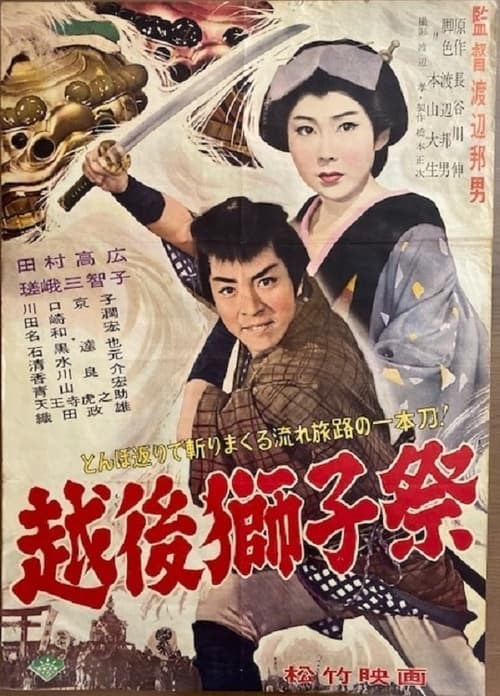
1960 version of Lion Festival of Echigo
No description available.
Tatsuo Osone movie
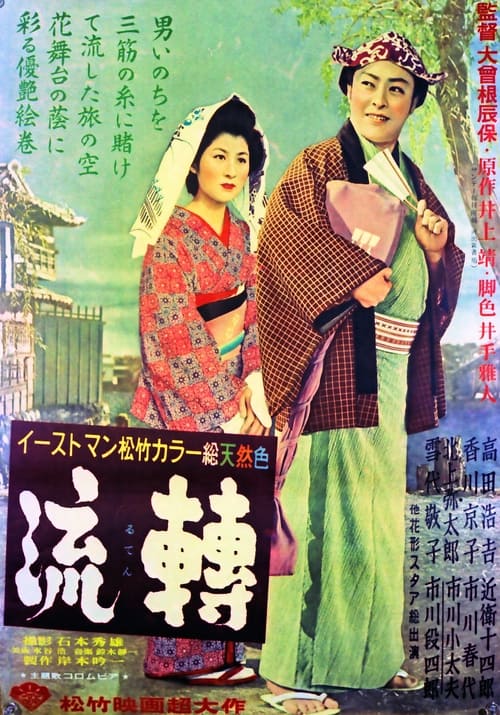
In the eleventh year of the Tenpō era, the Kawarazaki-za theater in Edo buzzed with excitement for a new production of "Kanjinchō" by Naritaya, featuring music by the master Kineya Rokusaburō. However, Naritaya's requests to change some of Rokusaburō's most painstakingly crafted parts of the composition angered his disciple, Shinjirō, leading to a conflict and Shinjirō's abandonment of the shamisen. One day, Shinjirō was captivated by the mysteriously beautiful dance of Oaki, a traveling performer's daughter, who seemed to be channeling her art into a form of revenge.
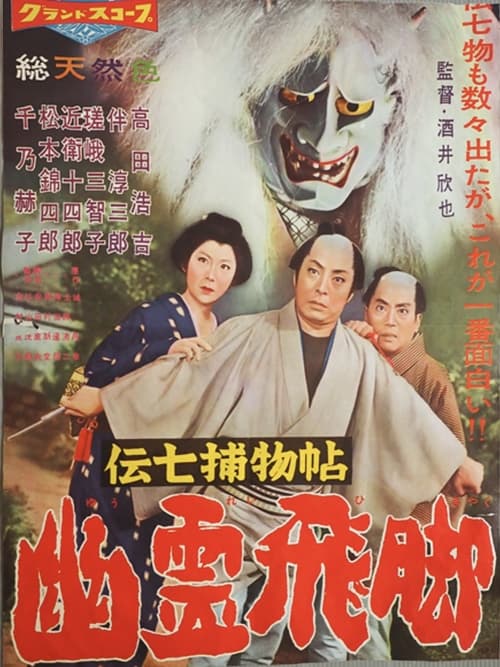
The eleventh episode of the Denshichi Torimonocho series. Around the time of Shogun Ienari, a murderer known as a ghost hikyaku appeared in Edo, raping and killing young girls one after another. One night, a notice was recieved that Oichi, the daughter of Wakasa Kanayu of the small construction group, would be taken away. The mansion was surrounded by ten and twenty layers of people including Denshichi, who was asked to guard the house, and Sesshinsai Ohba, the owner of the dojo. Four seconds later, a violent explosion suddenly occurred.
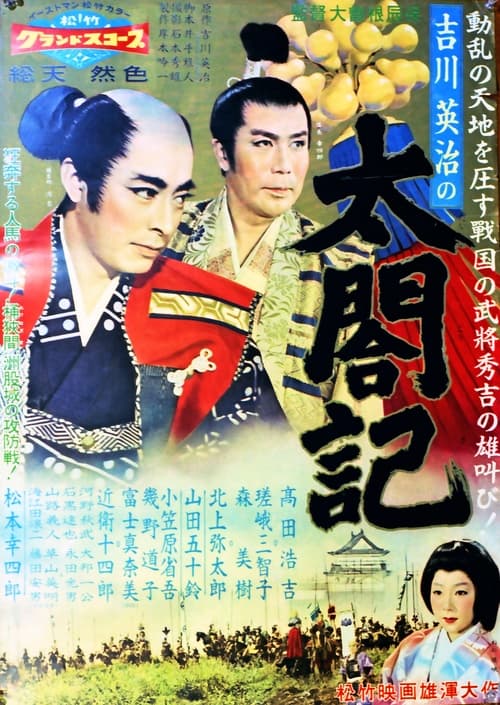
From birth Hideyoshi was a restless, defiant spirit--a child of the poorest of the poor. Cast out of his peasant cottage, he would live by his wits, driven by his burning ambition to become a samurai and to find a warlord worth pledging his sword to. This is the story of his rise, and the thunderous battle he pinned his hopes on. The challenge that had already ruined and bloodied the armies of higher-ranking samurai than Hiyoshi. The battle that brought him rank, fame and fortune and transformed him into Hashiba Hideyoshi, right-hand man to the ruthless Lord Oda Nobunaga, and would drive him on to conquer Japan.