Acting
Polizeiruf 110 is a long-running German language detective television series. The first episode was broadcast 27 June 1971 in the German Democratic Republic, and after the dissolution of Fernsehen der DDR the series was picked up by ARD. It was originally created as a counterpart to the West German series Tatort, and quickly became a public favorite.
No description available.
Ev and Peter fall in love at first sight. Peter studies dentistry in Leipzig and is eager to work in the country. There is an unfilled dentist vacancy in his home village. Ev, on the other hand, is drawn to the city. Being a commercial artist, she sees no chance to find a job in the country. This conflict becomes the first real test for their relationship.
Using the example of three generations of a Hamburg working class family, the rise of the working class from the founding of the Wilhelmin Empire to the First World War, over the time of the Weimar Republic and National Socialism to the destruction of the Third Reich.
A new pupil has joined the seventh grade and - as is often the case - is met with scepticism. What is more: Mathias' classmates are angry because he is frequently late, goes home early and, on top of it, performs badly at school. They have to acknowledge, however; that he is very gutsy. This proves especially true when it becomes a question of passing a dangerous test: who can hold out longest in the ice cellar?
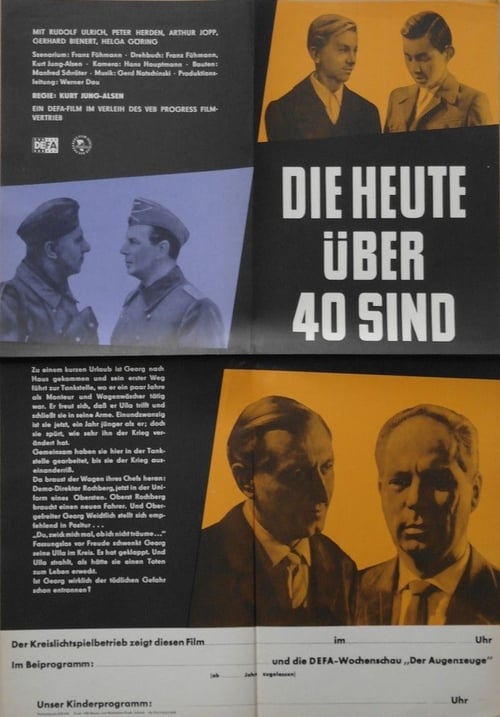
Film by Kurt Jung-Alsen.
Colonel Maratka and Major Kalasz, employees of the Czechoslovakian defense forces, are facing a difficult task. They must complete a mission that is important for the security of their country. The Prague headquarters of the state security service had previously received information from the GDR that West German military intelligence had apparently succeeded in deciphering the secret code B/13 used in the field of missile armament.
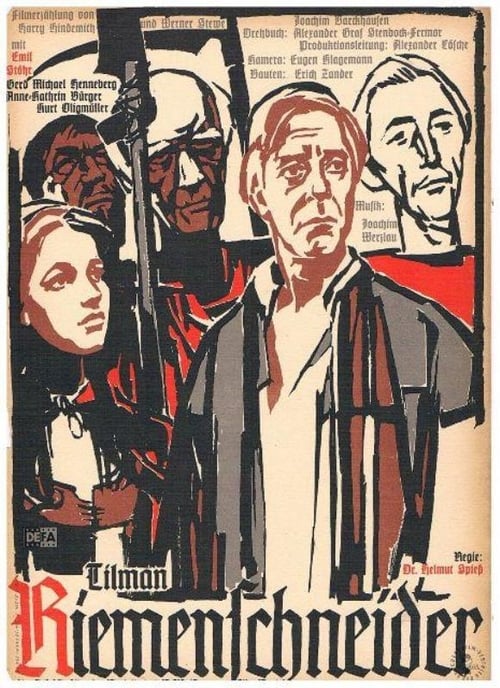
The important German wood sculptor Tilman Riemenschneider (born around 1460) is considered to be artistically and socially established. He was a councillor in Würzburg and held several offices. In his works and in the way he conducted his office, he showed himself to be connected to the common people, who revered him. But he also had a patron in the art-loving Prince-Bishop Konrad von Thüngen. But when the peasants' uprising spread to Würzburg in 1525, Riemenschneider stood up for the rights of the peasants and opposed the use of soldiers, Thüngen became his bitter opponent. Although he initially flees from the superior forces, he returns after the uprising has been suppressed and imprisons Riemenschneider. Weeks later, he is released from prison. His hands were broken, but not his steadfastness.
Frieda and August Walkowiak celebrate their 30th wedding anniversary. However, the marriage has been in crisis for some time. August wants to spend his old age in peace, while Frieda has no intention of giving up her position as LPG chairman. The problems in the countryside are huge, collectivization is not progressing fast enough, even comrade Heinrich Rantsch is clinging to his individual farm. Frieda fights for progress, even in her private life, because not only her burden but also her higher position is a thorn in her husband's side. During the wedding anniversary celebrations, Frieda is called to the LPG. This is the cause of the family quarrel that has been in the air for a long time. August demands her resignation. In vain - and so he moves in with Rantsch. Their daughter Helga also leaves the house because of the tensions. Frieda collapses. When she is in hospital, August comes to his senses.
Twelve-year-old Isabel and her mother, who was a famous political singer, had to escape Chile after the 1973 military coup. Isabel’s father stayed behind fighting in the underground. For six years, they have lived in a new apartment building in East Berlin. At first, the neighbors made an effort to welcome them, but later became more distant. Isabel does not feel at home in the strange country. Not even her friendship to Philip, the neighbors’ son, can change her mind. Almost every day, Isabel sits on the stairs waiting for a letter from her father, from whom she has not heard for many years.
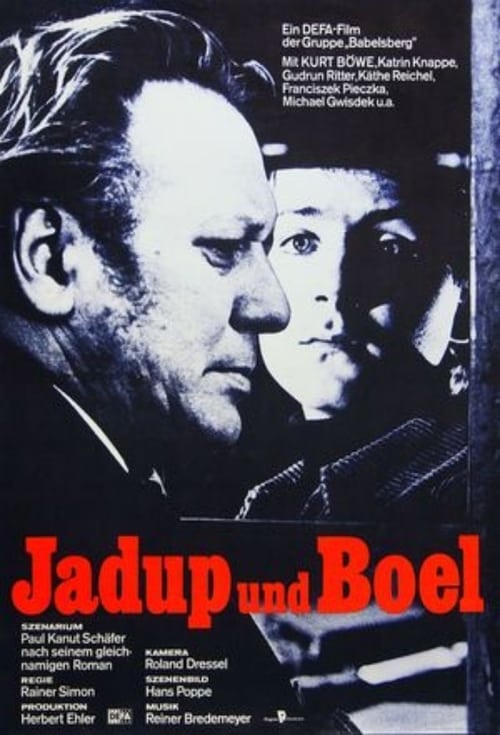
In a small town, everyone has tried to forget what happened shortly after WWII. That is, until a stranger finds a book that Jadup (Kurt Böwe) gave to the young refugee Boel (Katrin Knappe), who resettled in the town over 30 years ago. Painful memories about Boel and the post-war period begin to surface and shake up the whole town. Boel vanished back then and nobody knew why. Word spread about a rape and some tried to blame a Russian soldier. Jadup, the town's respected and popular mayor, remembers, though, how he mistrusted Boel and did not help her through this difficult time; HE didn't even notice THAT Boel loved him. Jadup's confrontation with the past gives him a new, critical view of his current situation and surroundings.
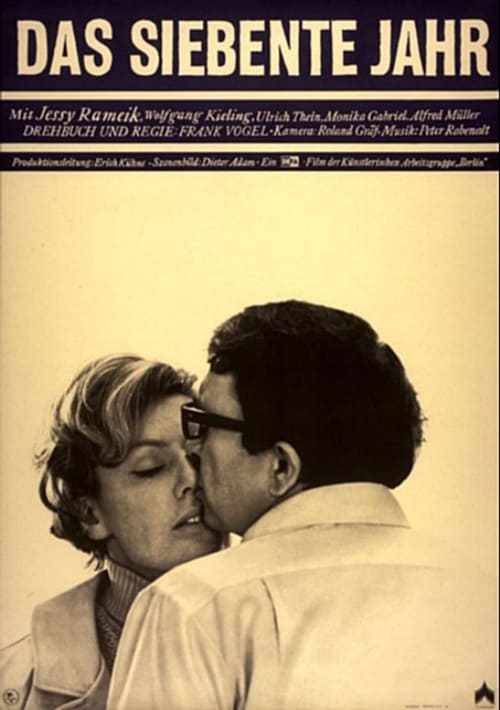
Dr. Barbara Heim, a heart surgeon, and Gunter Heim, a well-known actor, have been married for seven years. They have a six-year-old daughter. Both partners are totally taken up by their work which is physically and mentally demanding. So there is little time left for family life and the strained relations worsen and finally plunge Barbara into a crisis - shortly before their seventh wedding anniversary. At this very point a child dies in hospital, prompting Barbara to ask herself in desperation if - and for how long she can put up with the double burden of career and family. On top of this, she notices that Gunter is starting to compare her to other women.
The nurses and friends Anna and Annette grow desperate over men and love. At the hospital, Anna has fallen in love with Markus, whom she lovingly calls "moose", but they only meet twice a year, when Markus has time for her. In the meantime, she keeps afloat with flights of fancy. Meanwhile, Annette clings to the painter Ludwig who cannot stand such a close relationship. Through Annette and Ludwig, Anna meets an attractive married man but her high spirits do not last long.
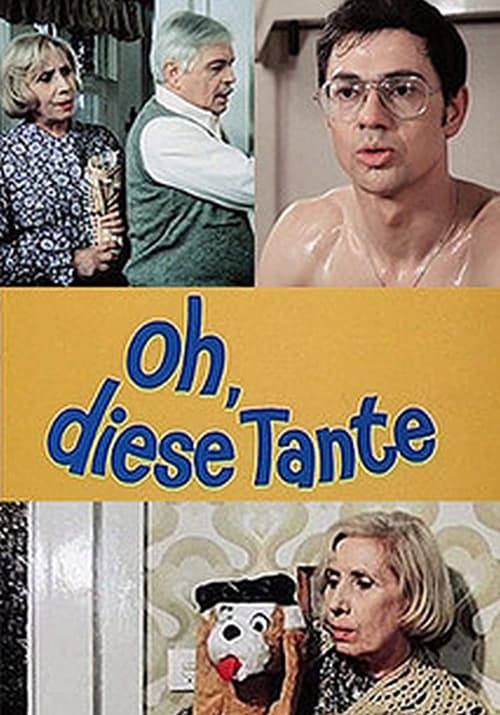
Heinz is a well-stocked veterinarian in Klückow and his Jana in quite firm, although not always present hands. And now - as Aunt Alma is slowly getting rid of the concern for her beloved nephew - Dr. Kröpelin finally got his chance: he makes a marriage proposal to Alma. She would not be averse if it had not been his "bloodthirsty" hobby, the hunt. A get-together on the high seat is still not a desirable prospect for Alma. But the more she refuses, the tighter Kröpelin bites into his intention to marry her anyway, whatever the cost.
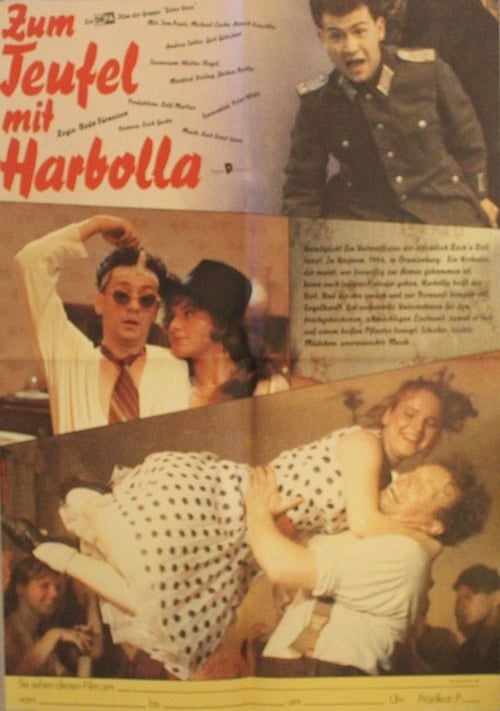
Even the military academy can't stop kind-hearted officer Gottfried Engelhardt from seeing the world through rose-colored glasses. Everything in the young GDR is blooming: Engelhardt's career, the socialist state, the black market, and maybe even a chance at love.
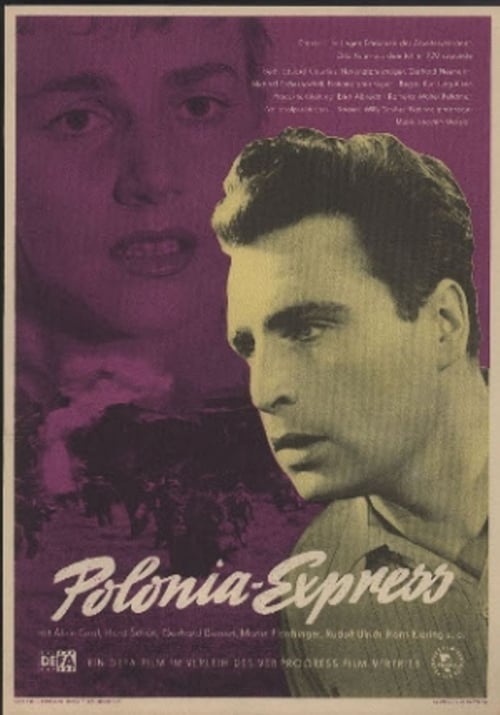
Railway employee Fritz Marr is not regarded well by his superiors. It is the year 1920, and trains regularly pass the railway hub of Erfurt to the East to secretly transport weapons for the fight against the young Soviet Union. Marr knows about this and wants to mobilise other workers to stop these illegal deliveries. To muzzle him, Marr is relocated to a remote rail work construction site.
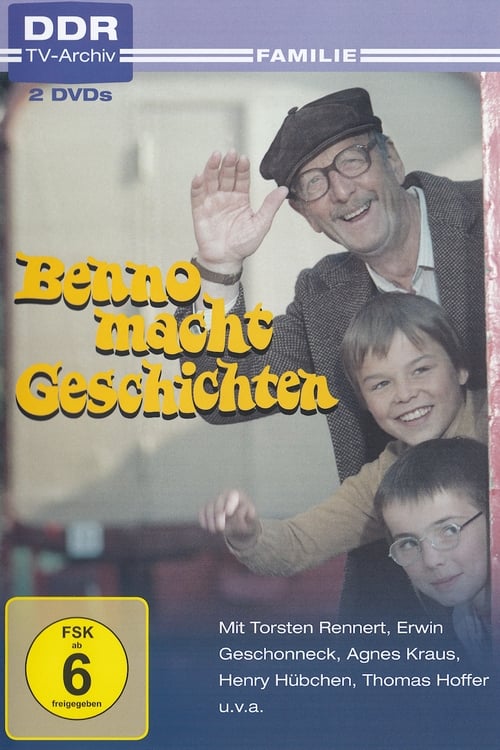
Benno (Torsten Rennert), a bright boy from Berlin, is not really a problem case, although his parents have enough trouble with him. But that's not just because of Benno, but because no one really has time for him. During a train ride, he meets a pensioner Oskar Schrader (Erwin Geschonneck), who likes to cook, collect watches, master magic tricks and who lives in the middle of nature. Between them they develop a real friendship. Benno is allowed to spend his school holidays with his friend. The grumpy Oskar lives alone in a garden colony - with friendly and unfriendly neighbors. Benno enjoys playing tricks with his buddy Mutz (Thomas Hoffer) on this neighborhood including the cranky animal lover Irma Kalweit (Agnes Krause) and the rude daredevil Ralf Klotz (Henry Hübchen).
The merchant's daughter Constanze, begs her father to ask a lion for a favor. Her father approaches the lion who agrees to his request with one condition: that he send the first person he meets upon his return home to the lion's den. It is Constanze. Against her father's will she goes to the lion and discovers that he is an enchanged prince and that only a woman's love can release him from the spell.
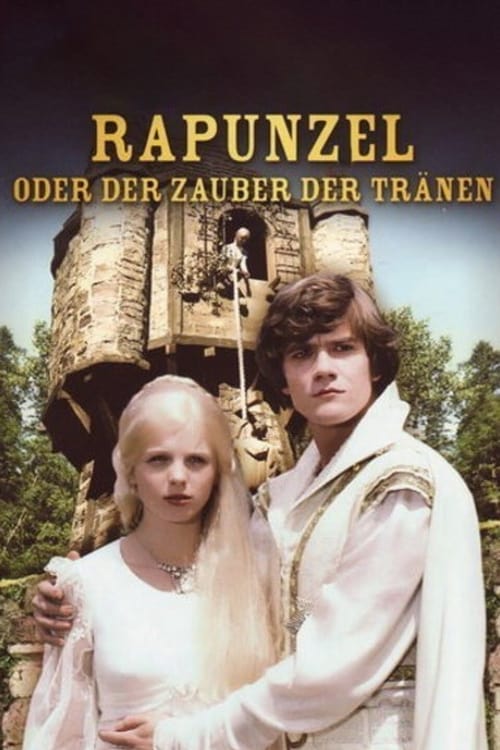
Adaptation of the classic fairytale. Rapunzel lives alone in the woods, in a tower with no doors. Then, one day, a mysterious stranger comes for a visit.
Eduard and Charlotte live an isolated and idyllic life together. But soon Eduard feels that something is missing and he invites his friend Otto to come stay. Charlotte, meanwhile, decides that her foster daughter Ottilie should come live with them. Complex and passionate relationships between the four people begin. Based on Goethe's novel of the same title.