Matthew Lancit
Directing
Known For

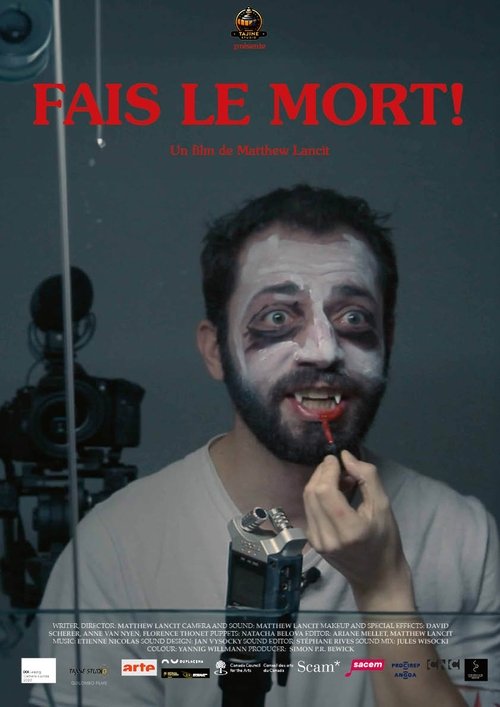
If there is one person Matthew Lancit can’t get out of his mind, it is his uncle Harvey. Dark rings around his eyes, pale, blind, his legs amputated. Like Harvey, the filmmaker also suffers from diabetes. He has the disease under control, but one question is always nagging at him: How much longer? His long-term (self-)observation reliably revolves around fears of infirmity and mutilation. He translates the feared body horror into film, stages himself as a zombie, vampire, a desolate figure. Lancit playfully anticipates his potential decline, serving up a whole arsenal of effects which – as video recordings prove – go back to his youth. It is not for nothing that the “dead” in the title is also reminiscent of “dad.” Because “Play Dead!” also negotiates his own role as a father.
Play Dead!

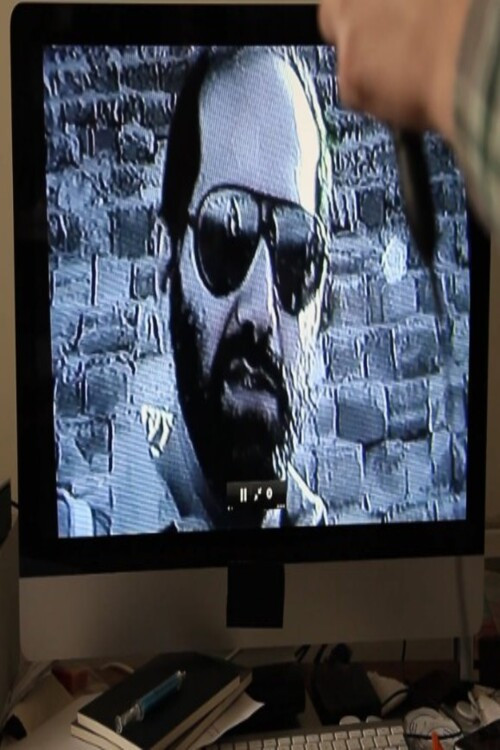
After the making of my previous film (PLAY DEAD!), some unfinished business remained on my desktop. Home movies and various body horror films from my childhood cluttered my computer screen. Part medical treatise, part self-anamnesis, and a mashup tinged with nostalgia, this video essay returns the images emanating from my computer screen to the everyday gaze of a diabetic.
Autobiography of My Diabetes

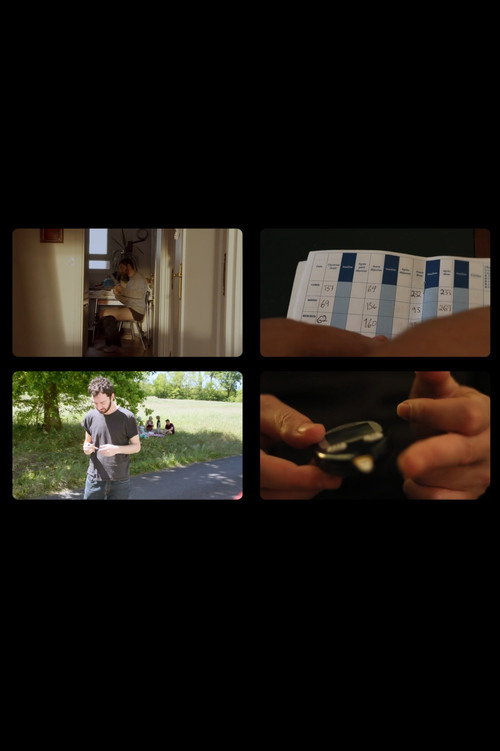
Stomach, thighs and ass refers to the various sites of the body where I can inject myself with insulin. Every night and every morning, and before every meal, I check my blood sugar level, record it in a notebook and take my insulin. For two years, I have kept a video diary of every single insulin injection. This four-channel video is made up of a selection of those needles, sometimes in the intimacy of my domestic space, sometimes in public, up close and far away, moments of anxiety and moments of calm, these documented injections capture brief glimpses of the fleeting life that surrounds them. In the process, the viewer pays witness to both the exhaustion of living with chronic illness and the quiet stillness that can sometimes accompany it.
Stomach, Thighs, and Ass
Matthew Lancit’s 16 Reasons Why I Hate Myself wryly plays with the concept of selfhood, traversing themes such as neuroticism, introspection and self-denigration. By allowing us an intimate look at sixteen of his supposed personal flaws from the physical to the psychological, Lancit posits the idea that we do not determine our identities but rather they determine us. (Sullivan+Strumpf Gallery)
16 Reasons Why I Hate Myself
Playing tour guide, Matthew Lancit takes the audience through his own disintegration as an old man. Hints of his past loom about in the form of himself as a young boy. And a beautiful woman emanates a relinquished love - or love relinquished. All this, and eventually his own death, must play out in front of the dismissive narrator.
Death of a Gentleman
A Canadian Jew wanders through an African culture where "the dead are not dead." Embarking on a road trip across Cameroon's most joyous funeral celebrations, the foreigner befriends his guides and becomes increasingly haunted by memories of his own ancestors.
Funeral Season

Last summer, during a family vacation in the countryside, my daughter mistook the flowers for butterflies, expecting them to fly away. When we returned this year, she seemed to have forgotten that confusion and understood the difference quite well. So, I tried to use my camera to see things how she had once seen them. But, of course, the more I used my camera to see things differently, the further removed I became from childhood, nature, and all things romantic. (ML)
Learning to Eat Soup

In search of the remaining traces of flâneurs (19th Century wanderers of Paris), an unemployed filmmaker takes his newborn daughter on a series of poetic strolls and crosses the paths of people who help reveal the relevance of the flâneur today.
Flâneurs: Street Rambles

A flock of seagulls persist in the senseless attempt to move forward against heavy winds coming off the ocean.