Acting
No description available.
Os Trapalhões was a Brazilian comedy group and also a Brazilian television series created by Wilton Franco. Its members were Dedé Santana, Zacarias, Mussum and their leader Didi Mocó, that was played by Renato Aragão. The name Trapalhões is derived from the Portuguese verb atrapalhar, which means the opposite of helping, to do something the wrong way or to Those that confuse. The name is translated "Tramps" in English DVD subtitles. It was aired by Rede Globo from 1977 to 1999. On March 18, 1990, Zacarias died due to respiratory failure, but the group and the series didn't come to an end until July 29, 1994, when Mussum died due to an unsuccessful heart transplant.
Twin sisters with contrasting personalities, Ruth and Raquel, rival in the fictional Pontal D'Areia, on the coast of Rio de Janeiro.
Dara is a young Gypsy woman torn between her family’s traditions and her desire to choose her own path. Promised in marriage to Igor, her life changes when she meets Júlio Falcão online. Caught between love, the customs of her people and family conflicts, Dara must face choices that could transform her future.
In Greenville, some families never lose their composure. This is the case with the Mendonça and Albuquerque families, who would never allow a "noble" member of their family to become involved with a sugarcane cutter.
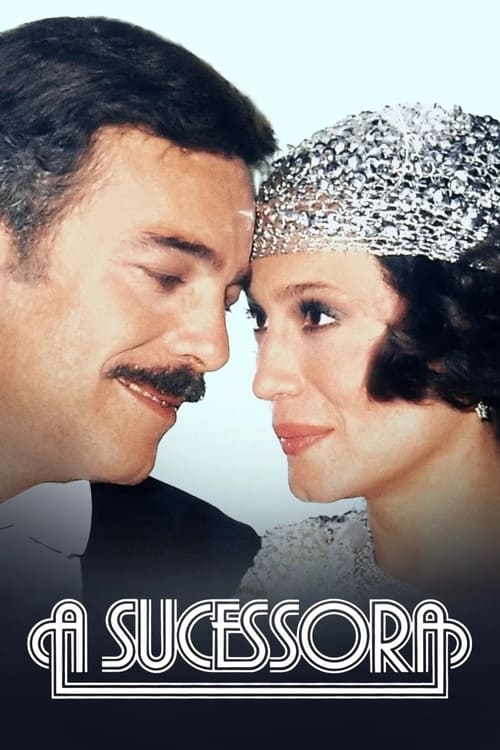
The story follows the experiences of Marina, a young country bumpkin who marries the mysterious and charismatic widower Roberto Stein, a fabulously wealthy businessman living in 1920s Rio de Janeiro. As Marina attempts to acclimate to her new marriage and responsibilities, she discovers that Stein's late wife, Alice, still seems to have a strong hold over the household. Despite her new husband's affection for her, Marina is nonetheless threatened by Alice's presence, which is made conspicuous through her old maid Juliana's obsessions and her intimidating portrait.
Sisters Cotinha, Das Graças, Rosário, and Dorzinha work as domestic servants in Rio de Janeiro and face difficulties in their struggle for a better life.
The story is set in the fictional city of Albuquerque, in the interior of São Paulo, in the early 1960s – a time marked by changing behaviors in much of the world. There, young people enjoy the sounds of rock and twist on the dance floors, follow the fashion of jeans and leather jackets, and show off on Lambrettas and motorcycles through the city streets. In this context, Maria Tereza, a student teacher, dreams of living in the capital and being elected Miss Brazil, but clashes with her boyfriend, João. An idealistic young man who intends to pursue a career in journalism, he is consumed by jealousy of his beloved.
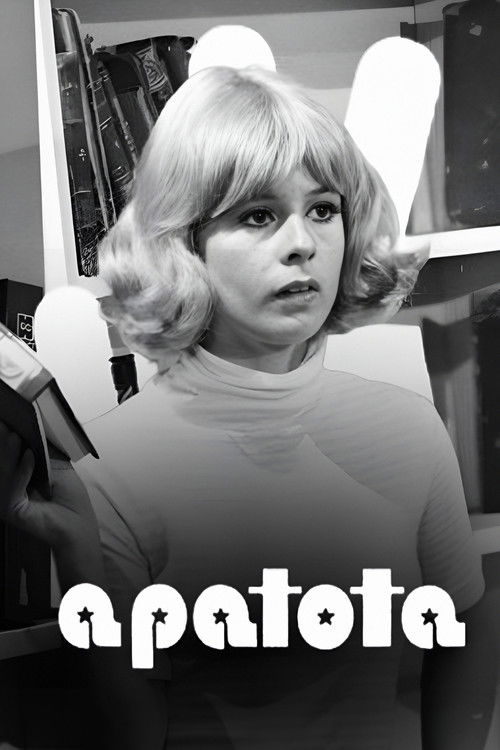
Class differences and a childhood dream are the highlights of "A Patota". Juliana, Vicente, Pedro, and Tião are children who live in a village where the poor and the rich coexist. They dream of traveling to Africa. Teacher Neli, her boyfriend Jorge, and Professor Simões join forces to help them realize this dream.
Mário Fofoca, a bungling detective, moves to Rio and, with the help of a friend, investigates cases—starting with a wife's suspected infidelity.
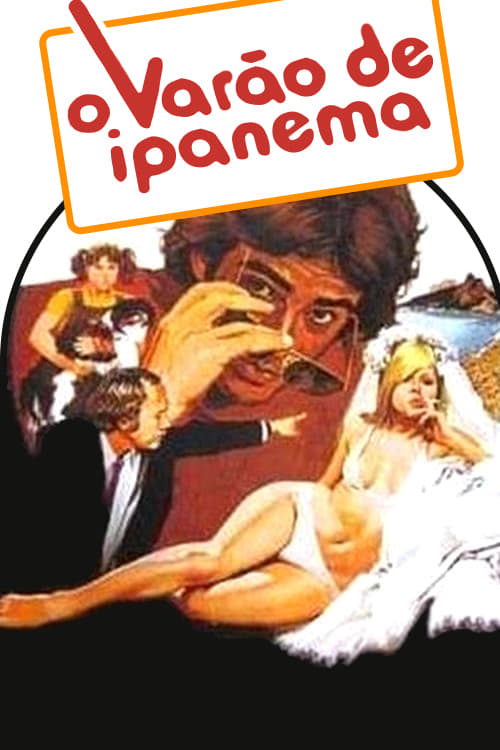
Ferdinando, a bank employee who came from the north and prospered, buys a car and starts to frequent the south zone of Rio de Janeiro. He meets Lucia, with whom he falls in love, to the point of selling his own car to pay the girl's bill, who says she is very rich and lives in a mansion, but it's all a farce.
A "normal" couple are living a "normal" life together, but they have many complaints about themselves and each other.
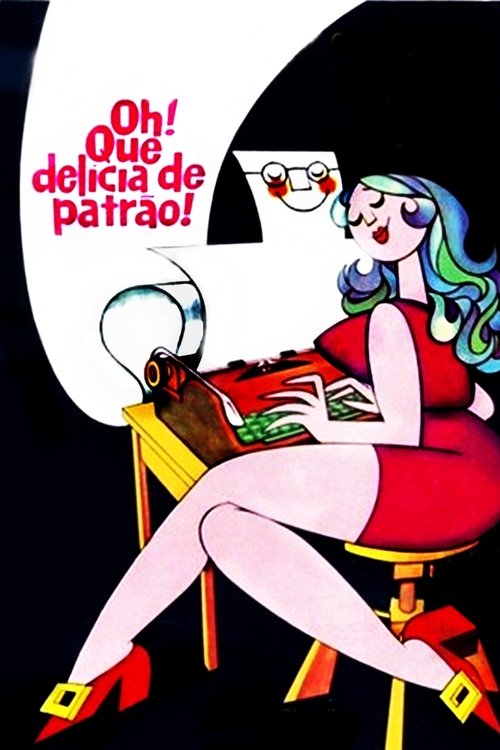
Comedy in two segments. In the first, an important businessman becomes temporarily paralyzed after taking too much of a potent aphrodisiac. To take his place, his employee finds a mechanic who is a look-alike. In the second story, a businessman's woman pretends she is jealous in order to conceal her own unfaithfulness, as she is having an affair with her husband's closest employee.
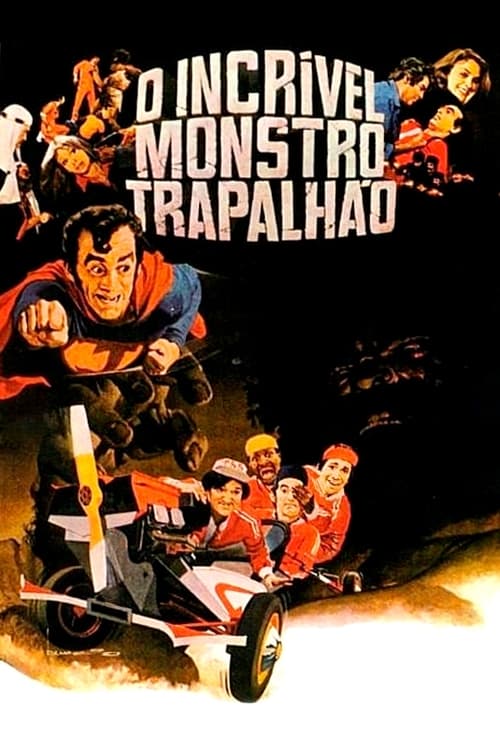
Dr. Jegue is a fumbling inventor and scientist, who in his spare time helps his friends Kiko, Sassá, and Quindim in a mechanic's shop. The four are great friends of Carlos Alberto, a stock car driver who suffers from the frames of rival Hugo and his gang. By doing scientific research in his mini-lab, Jegue discovers two powerful formulas: one extracted through the Quince tree, an abundant fictitious plant in the Northeast; and another that turns Dr. Jegue into a big, bearded, moody man with powerful strength. The Marmeleiro formula is tested in a race at the Interlagos Autodrome in the old track and the news of a "new fuel" becomes the main news of the country. Soon, buyers from all over the world come to Brazil to try to buy the formula, offering a lot of money for it, but Jegue, not ambitious, decides not to sell the formula anymore and leaves it in his country.
A military man picks up a Native Brazilian woman and heads to a gold panning site where he has undisclosed business to attend to.