Acting
Tatort is a long-running German/Austrian/Swiss crime television series set in various parts of these countries. The show is broadcast on the channels of ARD in Germany, ORF in Austria and SF1 in Switzerland.
The SOKO Köln investigates the cathedral city with humor and often with hard work. Their cases take them into a variety of environments, from the Cologne clique to the terraced housing estates on the outskirts of the city.
Polizeiruf 110 is a long-running German language detective television series. The first episode was broadcast 27 June 1971 in the German Democratic Republic, and after the dissolution of Fernsehen der DDR the series was picked up by ARD. It was originally created as a counterpart to the West German series Tatort, and quickly became a public favorite.
Für alle Fälle Stefanie is an German medical drama television series created by Werner Krämer that aired on Sat.1 from May 15, 2005 to August 29, 2005. It was produced by Novafilm Fernsehproduktion. Für alle Fälle Stefanie follows the professional and personal life of nurse Stefanie Engel, then Stephanie Wilde and for a short time Fanny 'Stephanie' Stephan. The show was a giant success for the network and had around seven, in later years, five million viewers on a weekly basis. It won the Goldene Kamera award in 1997 and the Bavarian TV Award in 1996.
No description available.
The exciting stories about the cheeky chimpanzee Charly, who finds a new home with a Berlin vet family.
The show was meant to compete with those on West German television. To this end it was fairly successful even attracting a following in parts of West Germany which could receive Eastern TV. Its production values were high. Apart from song and dance numbers and appearances from East German celebrities, almost every broadcast featured well-known stars from the west, often after their popularity had peaked in their home countries.
A gay man's return to his family in East Germany begins a series of tragic events.
After the death of their father, 18-year-old Helene Raupe (“coccoon”) and her younger sister Asta come under the guardianship of the youth welfare office in East Berlin. Helene fails miserably as a fishmonger, fashion assistant and bus conductor, all jobs ordained for her by the authorities. The young woman really only “emerges” in her fantasies, where she can escape from her dull, normal life.
Perhaps the fun-loving Lotta takes her impulsiveness a bit too far: so far, she’s taken a detour at every turn on the path to adulthood. Now in her mid-20s, she believes she’s finally found her place in life. After passing her exam to become a geriatric nurse, she naturally wants to return to work at “Haus Abendrot.” Once again, there are cheerful, touching, and even sad encounters with the residents of the nursing home, and everyone is happy that Lotta is back. But just now, as she’s making long-term plans for her future for the first time, fate throws a wrench in her plans. Lotta discovers that a fleeting encounter at a party has not gone without “consequences.” So Lotta is suddenly faced with the big question of how much responsibility she can and wants to take on in her life.
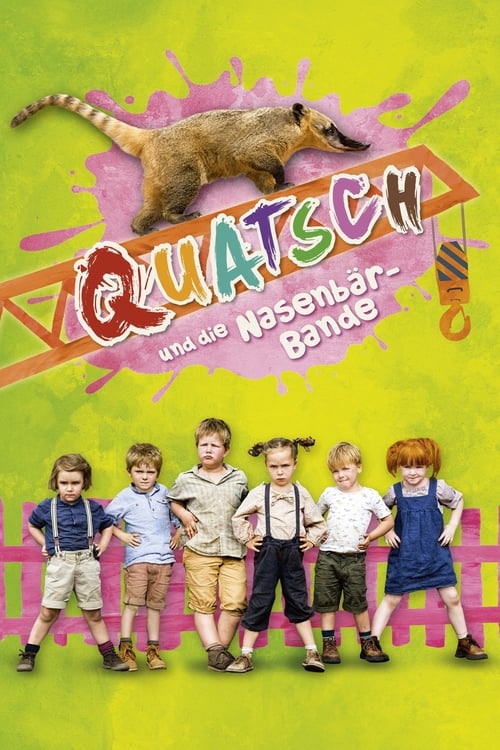
Life could be so good for the children of Bollersdorf if the town had not been discovered by the Society for Consumer Research because of its mediocrity. New products are to be tested here. The market researchers know that what the people of Bollersdorf like sells well everywhere. But while the local parents enthusiastically take part, their children quickly get fed up with the annoying product testers. Even more so when they want to send their beloved grandmas and grandpas to a care home to bring the average age back into line. This is a case for the coati gang! Together with the clever coati Quatsch, the children hatch a clever plan: With adventurous inventions and crazy world records, they want to prove Bollersdorf's uniqueness so that the consumer researchers finally disappear again...
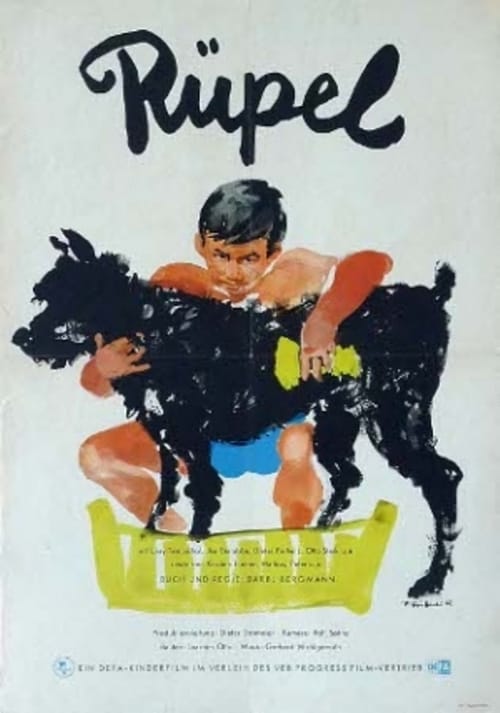
A new pupil has joined the seventh grade and - as is often the case - is met with scepticism. What is more: Mathias' classmates are angry because he is frequently late, goes home early and, on top of it, performs badly at school. They have to acknowledge, however; that he is very gutsy. This proves especially true when it becomes a question of passing a dangerous test: who can hold out longest in the ice cellar?
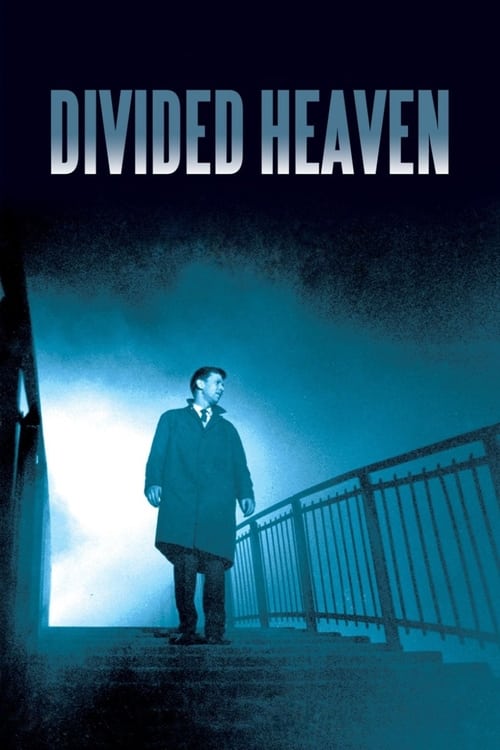
After a breakdown, Rita returns to her childhood village in 1961. As she recovers, she remembers the past two years: her love for the chemist Manfred, ten years her senior; how his enthusiasm about his new chemical process turned to bitter disappointment in the face of official rejection; how he escaped to West Berlin a few weeks before the Wall was built and hoped that she would follow him …
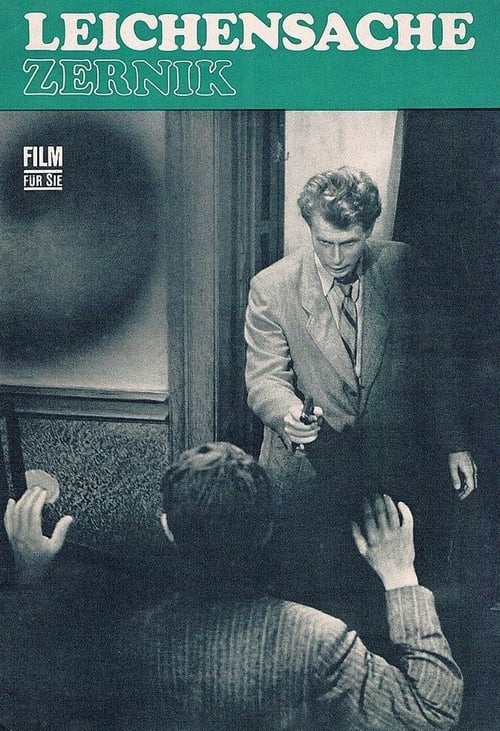
When a motorcyclist dies in an accident, lieutenant Kreutzer and his colleague Arnold receive the order to investigate the backgrounds of this mysterious case. Although the leads point to murder, head physician Dr. Nikolai, the driver of the car involved in the accident, maintains his innocence and even has an alibi. With a lot of arduous detail work, Kreutzer follows all leads and evidence. Both Nikolai’s colleagues and his son act suspiciously. Eventually, Kreutzer convicts the criminal who secretly used the physician’s car for his criminal dealings.
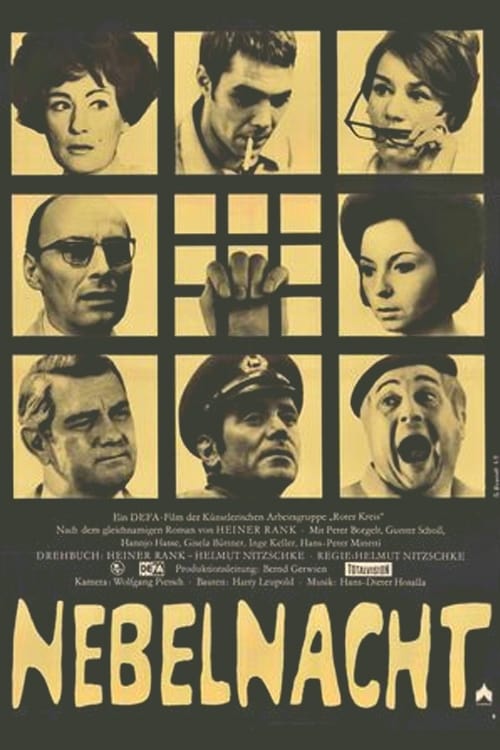
It’s the spring of 1945 in a small resort town on the Baltic. Günter is 16 and firmly believes that the Germans will win the war. During the hunt for a forced labourer who is on the run, Günter catches him and watches as he is shot to death. He proudly accepts the award of an Iron Cross before being shipped to the nearby front as part of the last contingent of troops. He is quickly captured by Soviet soldiers, but manages to escape and return home. When the town is occupied by the Red Army, Günter is arrested for the murder of the forced labourer. The film was banned in 1968 before it was completed, and a large portion of the negative was later destroyed.
In the nineteenth century, seventeen year old Effi Briest is married to the older Baron von Instetten and moves into a house that she believes has a ghost.
After meeting the woman on the train Erwin Retzmann kills her in the forest.
Jürgen Fohrmann works as a hauer underground. In the course of the coal crisis, his mine closes - he loses the work. In this mood, his wife's prosperity thinking gets on his nerves - his marriage threatens to break. The dismissed coal buddy applys, first becomes an auxiliary worker, but then receives a job in an automated operation of the electrical industry and believes to have socially risen through this "clean work". Fohrmann quickly realizes that wearing a "white coat" is only seemingly better than the arduous work in the pit and understands that he can no longer stay out of the work struggles of the buddies.