Fritz Diez
Acting
Biography
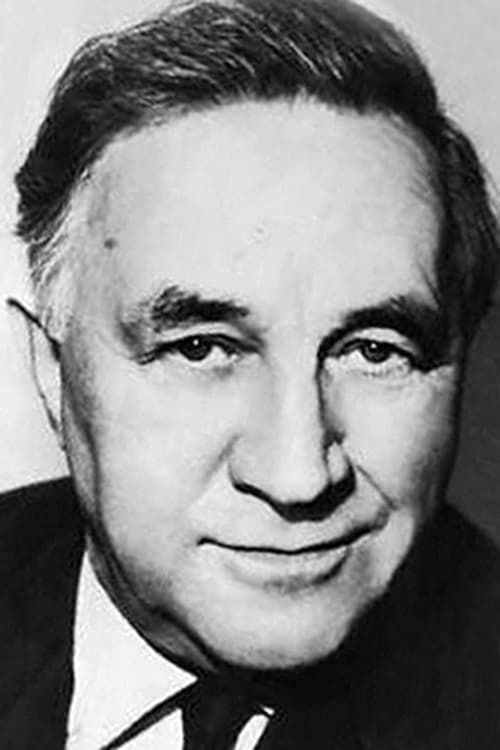
Fritz Diez was a German actor, producer, director and theater manager. Grew up in a poor family, started earning a living as a boy. He was a newspaper salesman, moonlighted on tennis courts, then learned to be an electrician. Graduated from the Academy of Dramatic Art in Meiningen. Upon graduation, he was an actor in provincial theaters in Eisenach, Hanau, Flensburg, Eger, Baden-Baden. Fritz Dietz adhered to leftist views, so he emigrated with his wife to Switzerland in 1935. Played in theaters in Switzerland. In 1946 he returned to Germany. He worked as a general manager, actor and theater director in Dresden. Since the early 1960s at the Volksbühne Theater in Berlin. In the cinema since 1952 - "Shadow over the Islands" (Arne Roge, 1952). In 1955, for the first time, he played the role of Adolf Hitler in the famous film "Ernst Thalmann - the leader of his class". In 1967, he played the role of Hitler in two films of the DEFA studio at once. Soviet film director Yuri Ozerov invited Fritz Dietz to play the role of Hitler in the film epic "Liberation", but the actor was tired of portraying this image both in theater and in cinema, he was afraid of becoming a hostage to one role, and refused. Only under the influence of Erich Honecker, Fritz Dietz was forced to give his final consent to the performance of the role so hated by him. Fritz Dietz - the best performer of the role of Hitler of the XX century. An accurate psychological characterization of the character, an inflated and, at the same time, realistic drawing of the character of the Nazi leader - those features of Fritz Dietz's game that allowed him to play Hitler convincingly and non-cartoonically in the film epic "Liberation" (1968-1970). He played Hitler in the television series "Seventeen Moments of Spring" (1973), "Soldiers of Freedom" (1977) and other films. In 1980 Dietz's last film "Gluck im Hinterhaus" was released, in which he played the father of Karl Jägr.
Known For

Der Staatsanwalt hat das Wort was an East German television series.
Der Staatsanwalt hat das Wort

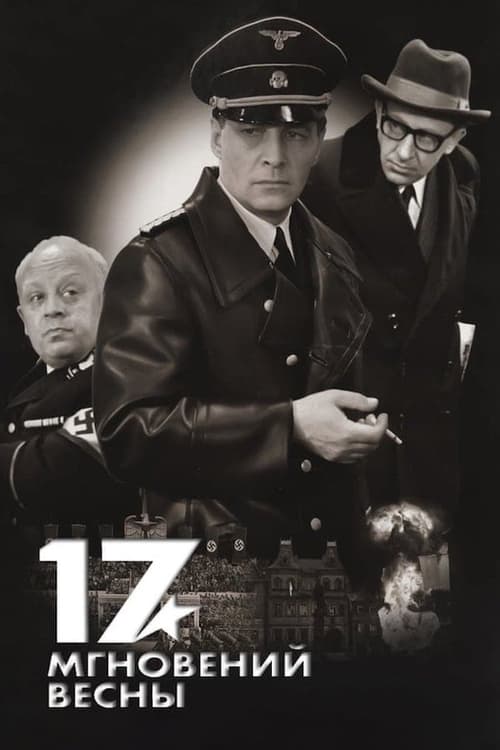
A Soviet spy is tasked with disrupting the negotiations between Karl Wolff and Allen Dulles taking place in Switzerland, aimed at forging a separate peace between Germany and the Western Allies.
Seventeen Moments of Spring

The action of the epic film takes place in the second half of World War II. The plot focuses on the liberation of European countries from German occupation and the anti-fascist activities of the communist parties of these countries. After the victory at Stalingrad, a decisive turn occurred during the war. The main aim is the rallying of all patriotic forces, the creation of a national anti-fascist front in the struggling countries. The swift offensive of the Soviet troops, problems with the opening of a second front, major operations and the offensive of the Soviet army lead to the liberation of Europe. Rebellions are rising in different countries - such as the heroic uprising in Warsaw, in Slovenia, Bucharest and other cities. Brave heroes who performed immortal feats in the name of the happiness of mankind and freedom.
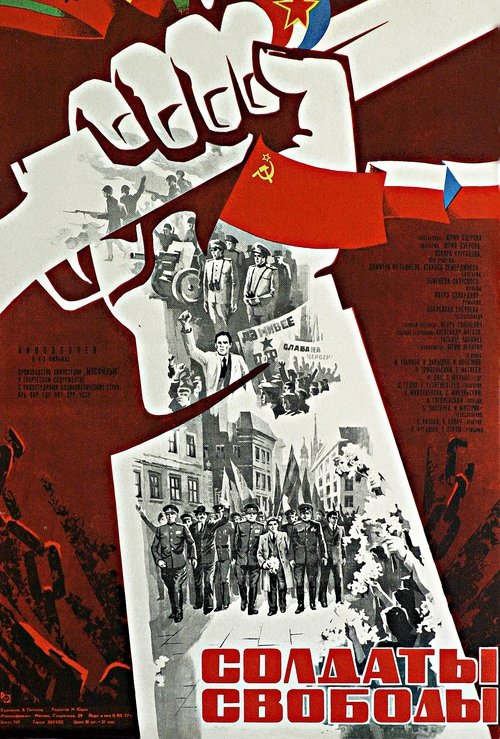
Soldiers of Freedom

The "Fiery Arc" tells of a grandiose battle on the Kursk Bulge in the summer of 1943. Here was the largest tank battle in the history of World War II. Along with the personal fate of the heroes, the film shows battle scenes, the activities of headquarters and intelligence, those who worked at the front and in the rear.
Liberation: The Fire Bulge

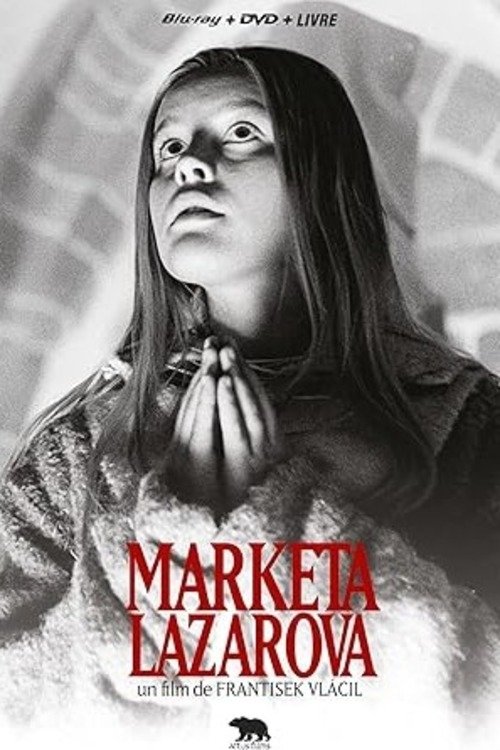
Mikolás and his brother Adam end up with a young German hostage of noble blood during a robbery. While their clan prepares for the wrath of the German king, Mikolás is sent to pressure his neighbor Lazar into a defense pact. Persuasion fails and he abducts Lazar's daughter Marketa on the eve of her initiation as a nun in an act of vengeance.
Marketa Lazarová

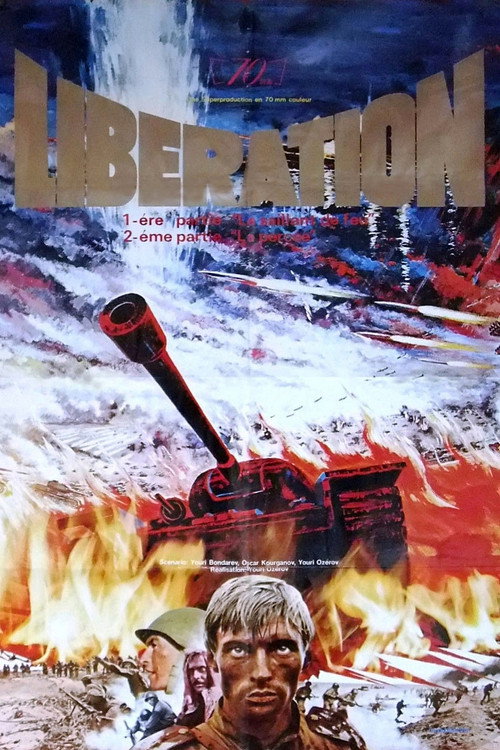
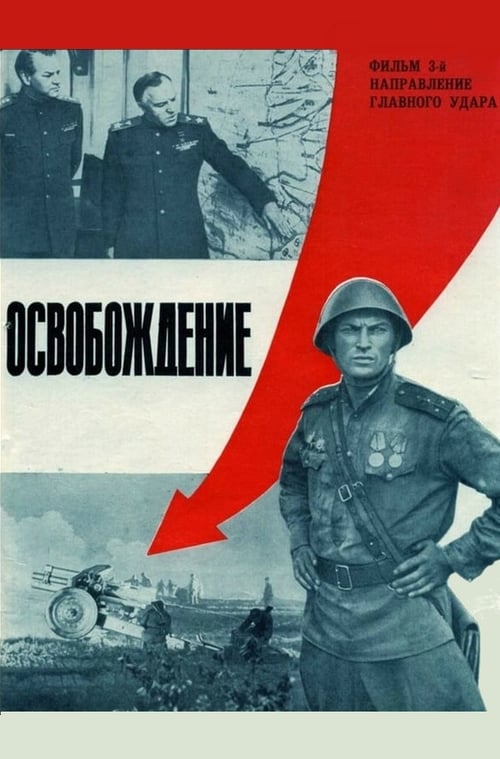
This five part epic war drama gives a dramatized detailed account of Soviet Union's war against Nazi Germany during world war two. Each of the five parts represents a separate major eastern front campaign.
Liberation: Direction of the Main Blow

In Berlin, Lieutenant Yartsev's infantry and Tzvetaev's battery fight their way in the U-Bahn. Captain Neustroev's company is selected to hoist the Victory Banner atop the Reichstag.
Liberation: The Last Assault

Fascist Italy's prime-minister Mussolini is arrested following the Allies landing in Sicily. Meanwhile, Soviet troops plan their offense towards Kyiv. Lt. Col. Lukin's regiment crosses the Dnieper river as the division's vanguard. Unbeknownst to them, they're merely a ploy to mislead the Germans so the rest of the army can catch them off guard.
Liberation: Breakthrough

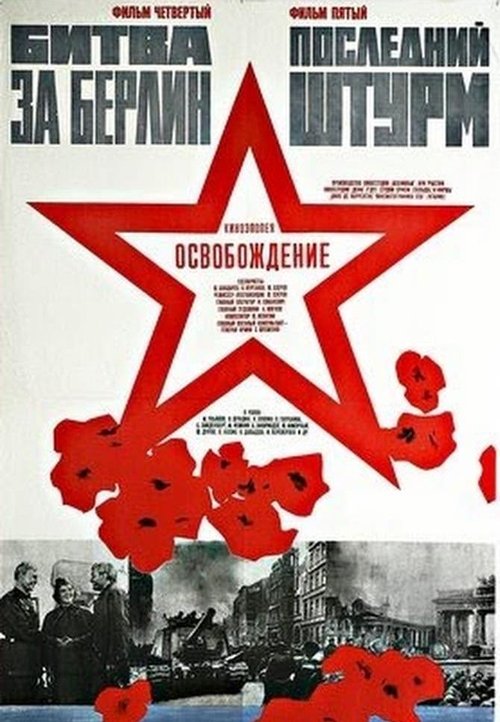
In this the fourth episode, “Battle of Berlin,” the Soviets start their assault on Berlin, and Stalin negotiates with the other Allies.
Liberation: The Battle of Berlin

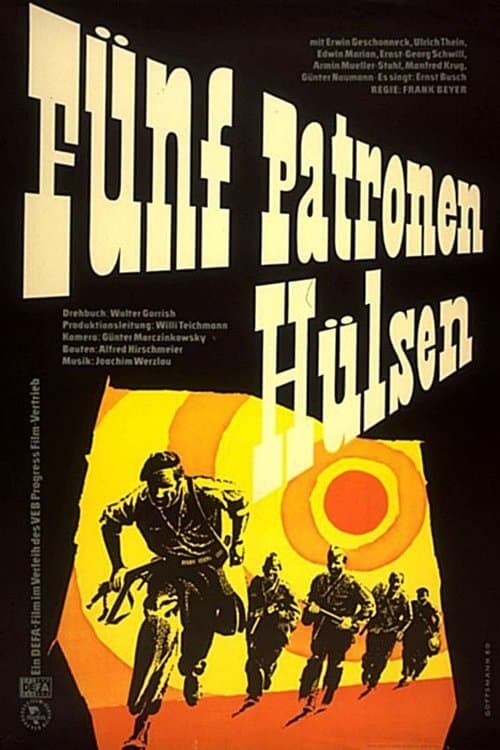
It is the year 1936 and the Spanish Civil War is raging. When the German commander of an international brigade is badly wounded he gives his five comrades a message which he divides up and secretes into in five cartridges. All five shells must reach the battalion in order for the message to be relayed. But Frenchman Pierre can’t bear the heat of the Sierra. When he leaves their hide-out to drink from a well he is hit by an enemy bullet.
Five Cartridges

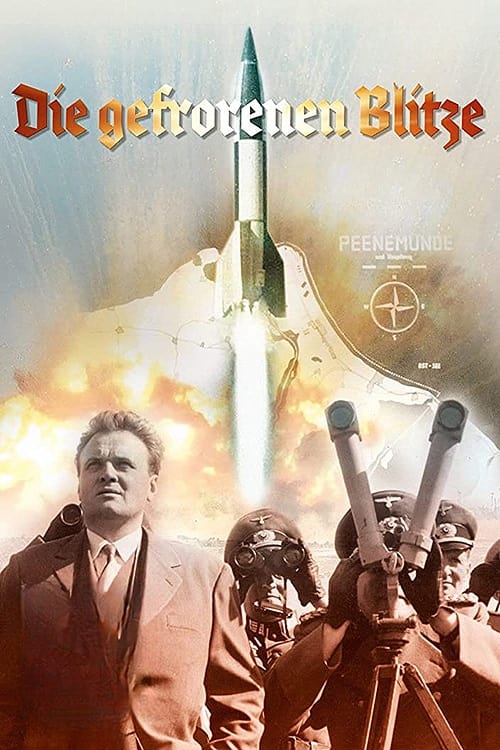
In November of 1939, the British consulate in Norway receives documents saying that the Nazis are conducting secret rocket research in Peenemünde. But the British doubt the authenticity of the so called "Oslo report". Thus, the Germans continue their experiments unimpeded. At the same time, resistance groups from France, England, Poland, and Germany try to find and to sabotage the secret Nazi research base. When the first "V 2" rocket is successfully launched, the Allied commanders finally become interested in the "Oslo report".
Frozen Flashes

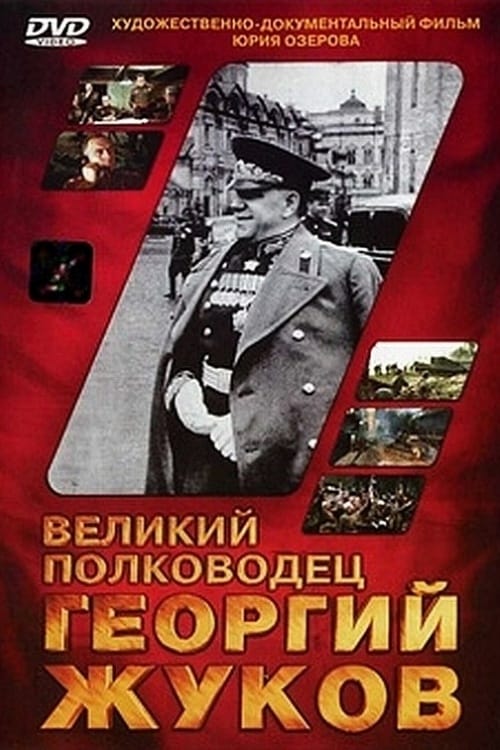
Biopic about Marshal Georgi Zhukov. Documentary footage from WWII and dramatization played by Russian and German actors.
The Great Commander Georgy Zhukov

A story of Igor Kurchatov - a father of Soviet nuclear weapons.
Choice of Purpose

This film is the second of a two-part historical and biographical portrait of the communist politician and anti-fascist Ernst Thälmann. Autumn, 1918: Somewhere on Germany’s western front, Ernst Thälmann, age twenty-four, is calling on his fellow soldiers to put down their guns and join him in the communist struggle at home. When Hamburg’s Police Commissioner blocks a much-needed food shipment to the workers of Petrograd, Ernst battles to see it allowed through. Until his murder on August 18, 1944, Ernst remained true to his political convictions in the face of many setbacks.
Ernst Thälmann – Leader of the Working Class

After the second World War, Dresden has a lot of reconstructing to do. To get the cigarette factory he once worked for running again, Kalle has to travel to Wittenberg - the only place where carbide can be found. Once there, Kalle find himself in the unfortunate situation of having to hitchhike his way back to Dresden, transporting seven heavy barrels of carbide. However, his inventiveness and optimistic attitude help transform the grueling task into an adventurous, entertaining, and funny journey.
Carbide and Sorrel

In 1523, young Thomas Müntzer arrives with his wife Ottilie in the Thuringian village Allstedt to assume the rectorate. As a follower of Luther′s teachings, he finds in the Bible not only reasons for clerical, but also for secular reforms. But when Luther turns away from the rural population after a discord with Müntzer, it is Müntzer who becomes the peoples′ spokesman. He is forced to go to Southern Germany, where he convenes with revolting farmers. But his way leads him back to Thuringia. In 1525, he and Heinrich Pfeiffer form the centre of the Thuringian peasant uprising in Mühlhausen, but their success is diminished by the fact that peasants and craftsmen don′t seem to be able to work together. In Frankenhausen, Müntzer becomes the leader of a peasants′ army that is set to fighting the ruler′s army – and sustains a devastating loss. Müntzer is arrested and sentenced to death by decapitation for his insurgency.
Thomas Müntzer

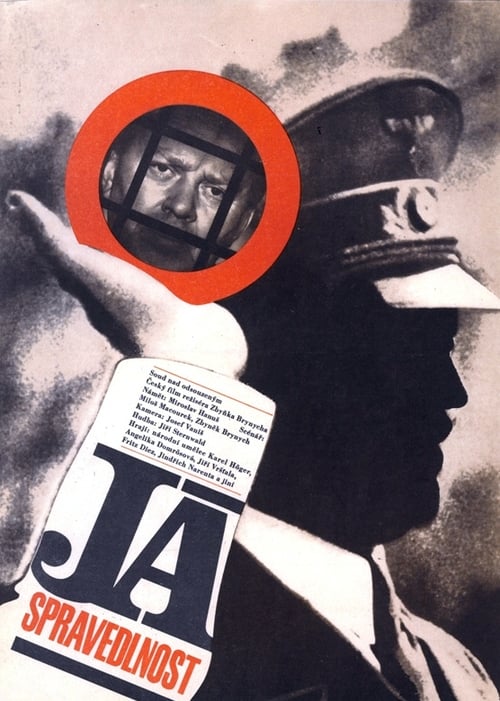
At the year 1946, the time of the Nuremberg Process. One of the main actors of the Second World War, who reportedly committed suicide, Adolf Hitler is, however, missing. The Czech doctor Herman (Karel Höger) is kidnapped from Prague and driven to the sanatorium of Professor Rolf Harting (Jirí Vrstála). The sanatorium is a disguised military stronghold, most probably occupied by a Nazi garrison, with prison cells and an execution chamber in the basement. At night, Herman is taken to a patient in whom he, to his horror, recognizes Hitler (Fritz Diez).
I, Justice

Karl Erp is a middle-aged man with two children and a boring marriage. After starting an exciting affair with his intern, Miss Broder, he leaves his loveless marriage and moves in with his lover. Under pressure from Miss Broder’s mother, Karl once again promises marriage. He finds, however, that the excitement that drew him to her in the first place doesn’t carry over into their daily lives.
Backhouse Bliss

A warship returning from a training exercise was tasked with apprehending an unknown schooner that had violated GDR territorial waters. Although nothing illegal was found during the search of the ship, the ship's commander Fischer was suspicious of the owner of the schooner, Arendt, a former lieutenant of a Nazi coastal battery. Fischer's doubts were confirmed when a diver came aboard the schooner and photographed a military object underwater. The investigation showed that the detained schooner was on a sabotage mission, and the "activities" of Arendt, a former Gestapo Obersturmführer, were also revealed.
Im Sonderauftrag

During construction work in a small town in Thuringia, the burial of an unidentified man in an SS uniform with gunshot wounds is discovered. Taking into account that there were no military operations in this place and an ancient gold coin was found near the body, two police inspectors, Captain Stetter and Lieutenant Hoffmann, arrive to investigate the unusual incident. Soon they manage to get on the trail of a mysterious crime that took place twenty years ago, but it is cut short with the murder of the owner of the plot of land where the corpse was found. Realizing that the new crime is closely connected to the death of an unknown SS man, the police search for clues in the memories of old residents and archival documents.