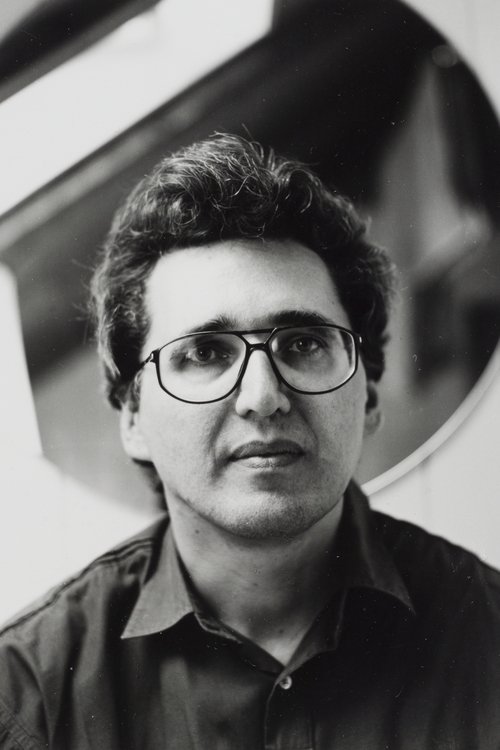
Boris Groys
Acting
Biography
Boris Efimovich Groys (born 19 March 1947 in Berlin, Germany) is an art critic, media theorist, and philosopher. He is a professor of Russian and Slavic Studies at New York University and senior research fellow at the Academy of Design in Karlsruhe, Germany. He has been a professor ofAesthetics, Art History, and Media Theory at the Academy of Design/Center for Art and Media Technology (HfG/ZKM) in Karlsruhe, Germany and a visiting professor at a number of universities in the United States and Europe, including the University of Pennsylvania and the University of Southern California.
Known For

Documentary satire about a project by Christoph Schlingensief: Ten years after his TV project "Talk 2000", Schlingensief started to work on a new talk show – at least that was what he claimed. But in reality, it was obvious that the pilot episodes he produced would never be broadcasted. Nevertheless, all celebrities from the political and cultural sphere, Schlingensief had requested, accepted his invitation, including the filmmaker Oskar Roehler, the televangelist Jürgen Fliege, the politician Claudia Roth, or the rapper Sido. It is beyond question, that the talk show panel took an unconventional course directly from the start – and was soon threatening to turn into an uproar.
Christoph Schlingensief - Die Piloten
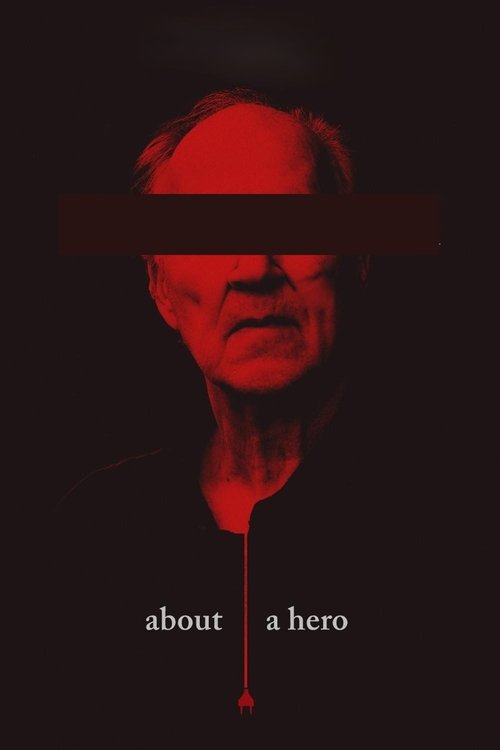
After a local factory worker named Dorem Clery dies under mysterious circumstances, Werner Herzog travels to Getunkirchenburg to investigate his perplexing death. But Herzog, our narrator, is not who he seems, and the film is not what we expect…
About a Hero
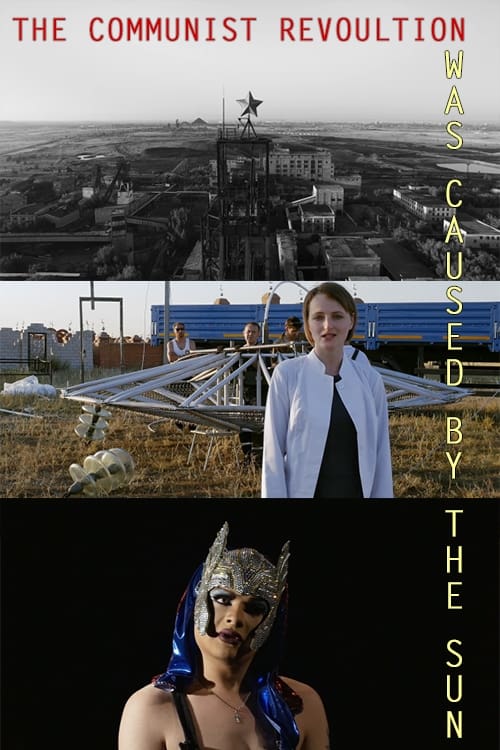
The second installment of Anton Vidokle’s trilogy on Russian cosmism, The Communist Revolution Was Caused By The Sun, looks at the poetic dimension of the solar cosmology of Soviet biophysicist Alexander Chizhevsky. Shot in Kazakhstan, where Chizhevsky was imprisoned and later exiled, the film introduces Сhizhevsky’s research into the impact of solar emissions on human sociology, psychology, politics, and economics in the form of wars, revolutions, epidemics, and other upheavals. It aligns the life of post-Soviet rural residents and the futurological projects of Russian cosmism to emphasize that the goal of the early Soviet breakthroughs aimed at the conquest of outer space was not so much technical acceleration, but the common cause of humankind in their struggle against the limitations of earthly life.
The Communist Revolution Was Caused By The Sun
Thinking in Loop: Three videos on iconoclasm, ritual and immortality. Combining theoretical texts and film footage, the topic of these videos is, actually, video as a medium: the use of the image within the video, the analogy between video and essay, the difference between private and public use of the video, the video running in loop as a contemporary form of ritual. The film footage is not used here as a mere illustration to make the text more comprehensible, or to make certain theoretical positions more evident. Rather, these video lectures thematize the gap between what we hear and what we see, and reflect on the relationship between image and word in our media driven world.
Thinking in Loop 2. Religion as Medium
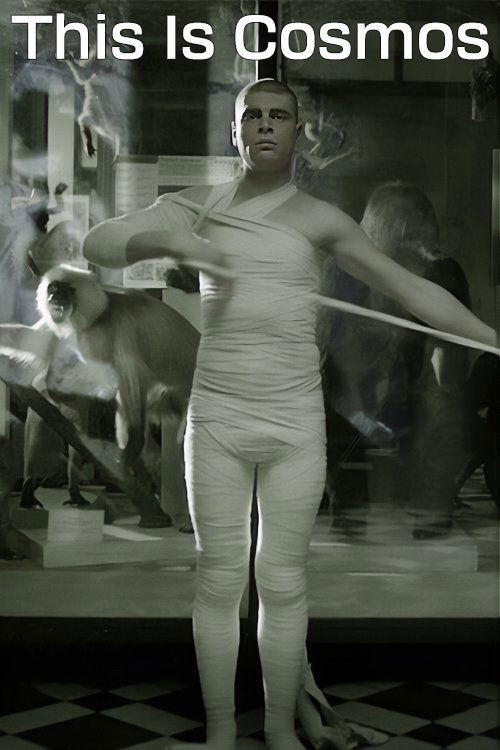
Based on the ideas of Russian philosopher, Nikolai Fedorov, Anton Vidokle’s film was shot in Siberia, Crimea, and Kazakhstan. Fedorov, like others, believed that death was a mistake, “because the energy of cosmos is indestructible, because true religion is a cult of ancestors, because true social equality is immortality for all.” Fedorov was one of the Cosmo-Immortalists, a surge of thinkers that emerged in Russia in the late 19th and early 20th centuries. They linked Western Enlightenment with Russian Orthodoxy and Eastern philosophical traditions, as well as Marxism, to create an idiosyncratically concrete metaphysics. For the Russian cosmists, cosmos did not mean outer space: rather, they wanted to create “cosmos” on earth. “To construct a new reality, free of hunger, disease, violence, death, need, inequality – like communism.”
This Is Cosmos
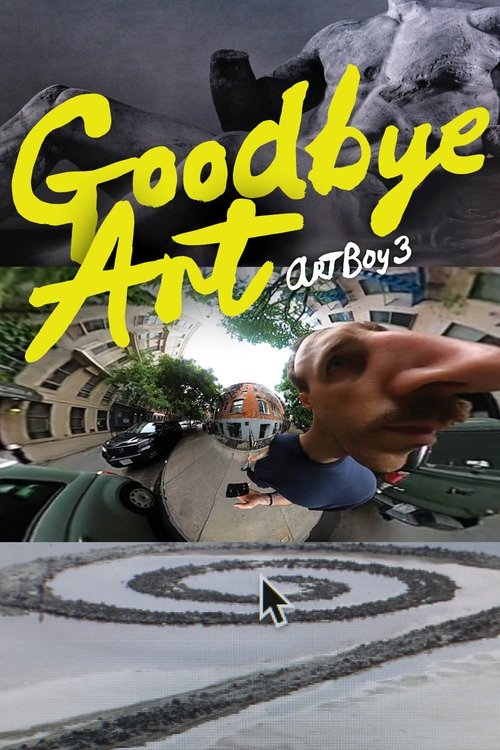
Goodbye, Art attempts to answer the question of why art feels stuck today. How did we get here? Why does art suck now? The film puts that question to artists and intellectuals and even to a man who suspects that the Earth might be flat.
Goodbye, Art
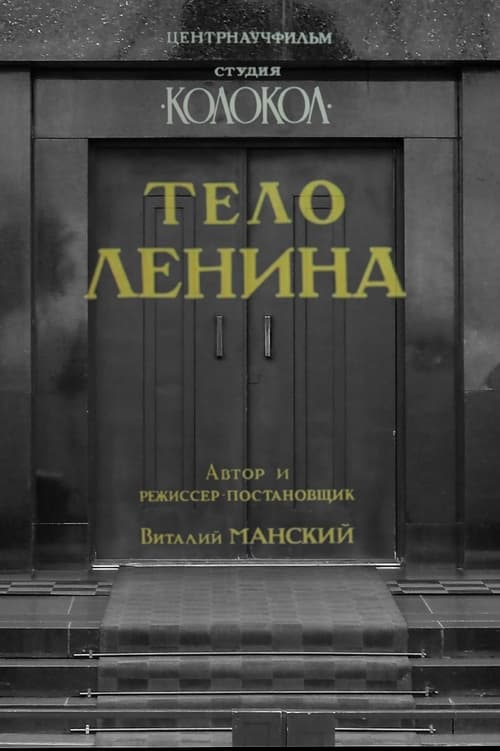
In 1991, the Communist Empire of the USSR was destroyed. And one of the main symbols of Soviet power — Lenin's Mausoleum and Lenin's Body itself were left without an owner. The film tells about Lenin's body, its contents, its protection and different opinions about the future of this body — to sell, to revive ..., to bury. "Lenin's Body" is a film about a society that survived the collapse of the Empire.
Lenin's Body
Inspired by the "The wind of cinema" festival which every year deals with issues relating to the relationship between cinema and philosophy, it shows a conversation between the critic Enrico Ghezzi and some directors including Werner Herzog, Amos Gitai, and the philosopher Boris Groys. The theme addressed is the "Catastrophe".
Shards of Cinema and Philosophy
A film that came with a book in the same name, The Future of Art; A manual. The film contains documentary and interviews on acclaimed artists about the direction of art towards the future.
The Future of Art
Thinking in Loop: Three videos on iconoclasm, ritual and immortality. Combining theoretical texts and film footage, the topic of these videos is, actually, video as a medium: the use of the image within the video, the analogy between video and essay, the difference between private and public use of the video, the video running in loop as a contemporary form of ritual. The film footage is not used here as a mere illustration to make the text more comprehensible, or to make certain theoretical positions more evident. Rather, these video lectures thematize the gap between what we hear and what we see, and reflect on the relationship between image and word in our media driven world.
Thinking in Loop 1. Iconoclastic Delights
Thinking in Loop: Three videos on iconoclasm, ritual and immortality. Combining theoretical texts and film footage, the topic of these videos is, actually, video as a medium: the use of the image within the video, the analogy between video and essay, the difference between private and public use of the video, the video running in loop as a contemporary form of ritual. The film footage is not used here as a mere illustration to make the text more comprehensible, or to make certain theoretical positions more evident. Rather, these video lectures thematize the gap between what we hear and what we see, and reflect on the relationship between image and word in our media driven world.