FEEL IT.STREAM
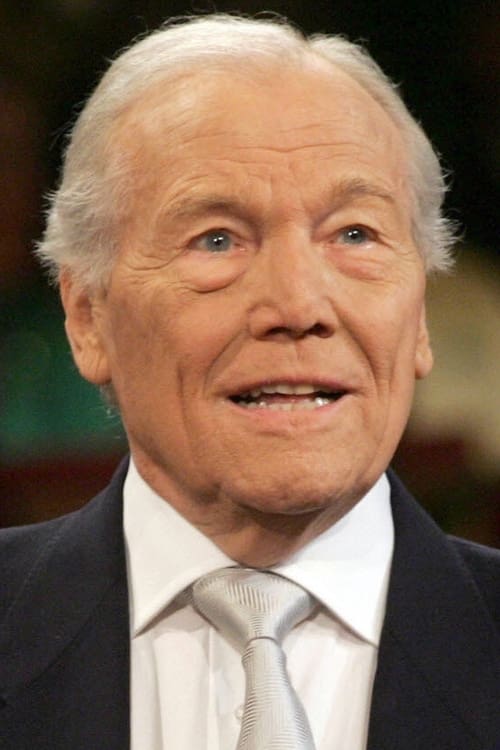
Georges Prêtre

Georges Prêtre

Sound

Biography

Georges Prêtre was a French orchestral and opera conductor. Prêtre attended the Douai Conservatory and then studied harmony under Maurice Duruflé and conducting under André Cluytens among others at the Conservatoire de Paris. Amongst his early musical interests were jazz and trumpet. After graduating, he conducted in a number of small French opera houses sometimes under the pseudonym Georges Dherain. His conducting debut was at the Opéra de Marseille in 1946. He also conducted at the opera houses in Lille and Toulouse. His Paris debut was at the Opéra-Comique in Richard Strauss's Capriccio. He was director of the Opéra-Comique 1955–1959. He conducted at the Lyric Opera of Chicago 1959–1971. He was conductor, 1959, and music director 1970–1971, at the Paris Opéra. He was principal conductor of the Vienna Symphony 1986–1991
Known For

Les Contes d'Hoffmann
6.9

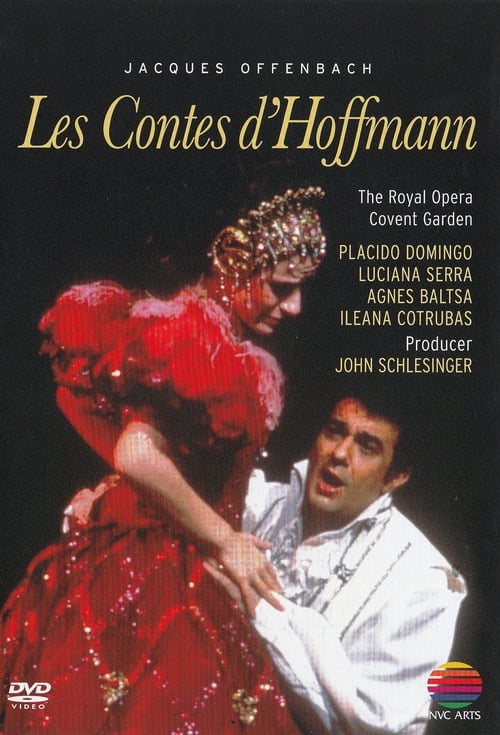
Seeking to exorcise the failure of his current love affair, the poet Hoffmann tells the tales of his three past loves - the doll-like Olympia, the high-class courtesan Giulietta, and the ambitious but delicate Antonia - and recalls how each was thwarted by the evil influence of his rival. In this production by the distinguished film director, John Schlesinger, with spectacular designs by Maria Bjornson and William Dudley, Offenbach's nightmare world is brought to life. The all-star cast is headed by Placido Domingo as Hoffmann: his three loves are Ileana Cotrubas, Anges Baltsa and Luciana Serra and the manifestations of his rival are sung by Geraint Evans, Robert Lloyd, Siegmund Nimsgern and Nicola Ghiuselev. The score, which includes such favourites as the "Barcarolle" and the "Doll's Song", is conducted by Georges Pretre.

Les Contes d'Hoffmann

1981Movie
Maria Callas in Concert - Hamburg 1959 and 1962
10.0

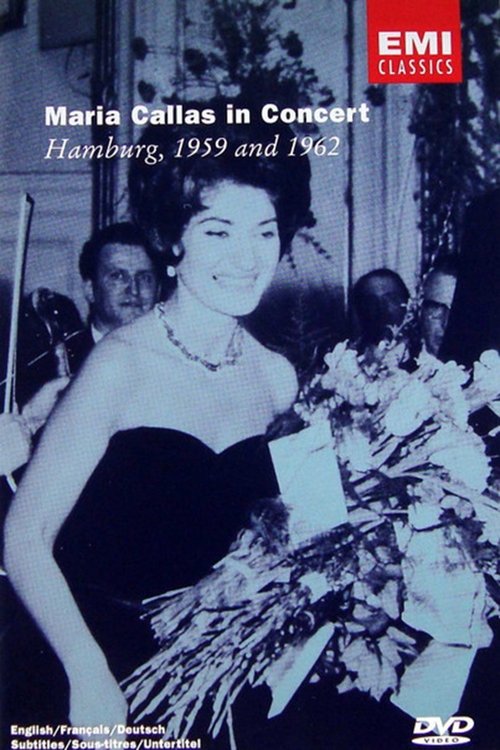
The 1959 concert finds Callas just 1 year before the loss of her voice and although her voice is not what it was in 1952 you can still hear the Vocal Miracle. The repertoire interchanges between heavy dramatic soprano (Lady Macbeth, Elisabetta), to soprano coloratura (Rosina) and to soprano dramatico d'agilita (Imogene in Pirata, Gulia). The maturity of the interpretation regarding the legatti, the phrasing is astounding and Callas dominates each aria singing them in the only possible way. "Tu che invoco" appears as a cataract of dramatic phrases in a fine classical style of this classical period opera, then Lady Macbeth appears diabolical & dark although she avoids keeping her voice in the high C, her Rosina is sparkling and facile in the coloratura as if it is a natural way of speaking and Elisabetta is where time stops: the drama in this aria holds a metaphysical aura. Finally her entire Mad Scene from Pirata shows all her talent as an actress and bel canto singer.

Maria Callas in Concert - Hamburg 1959 and 1962

1962Movie