Acting
Polizeiruf 110 is a long-running German language detective television series. The first episode was broadcast 27 June 1971 in the German Democratic Republic, and after the dissolution of Fernsehen der DDR the series was picked up by ARD. It was originally created as a counterpart to the West German series Tatort, and quickly became a public favorite.
Der Staatsanwalt hat das Wort was an East German television series.
No description available.
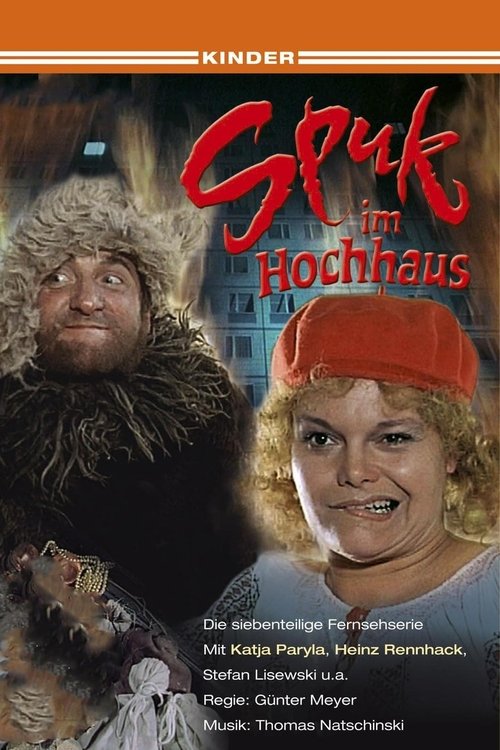
An adventures of a Berlin family spending summer in haunted house.
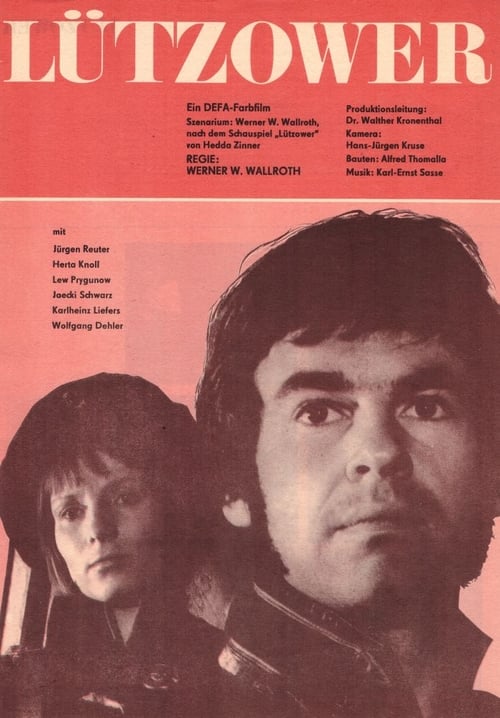
During the Napoleanic Wars, members of the Prussian Lützow Free Corps steal a French war chest from the house of collaborator Kerstinn, but their captain Friesen is captured and sentenced to death. But Friesen is saved by French Sergeant Fleuron and they flee the occupied city together. Kerstinn's daughter Marie is disgusted by her father's disloyalty and has also fallen in love with Friesen. When she learns about a trap that is being set for Lützow Free Corps, she sets out to warn them with the help of her father's clerk Püttchen, a Lützow sympathizer.
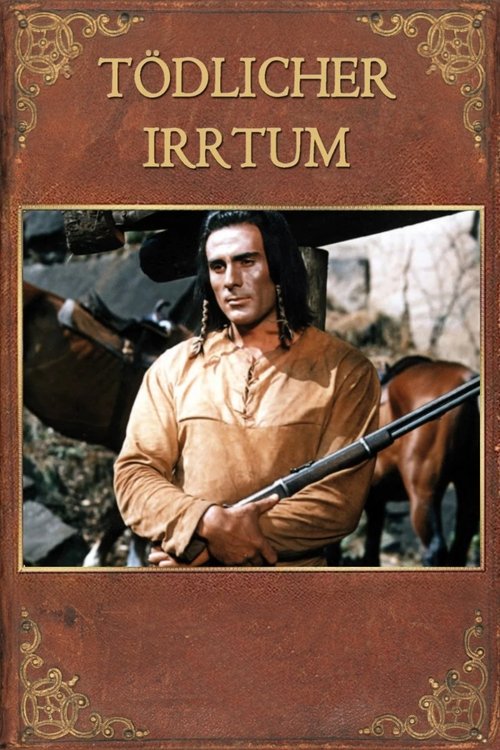
The story of Ulzana, an Apache chief who has reached a rapprochement with the local Mexican population and generously extends it to whites who travel through the territory. His people have become inured to the treacherous ways of the white man, however, and are now reliant on them for booze, 'relief flour' and beef steak.
At the end of the 19th century, the Wyoming Oil Company has established itself in the vicinity of Wind River City at the foot of the Rocky Mountains, where they have been illegally pumping oil from Native American territory. One of the company's greedy agents, Mike Allison, kicks out both his white partners and the Native Americans. He has his some of his associates secretly murdered and blames it on the Native Americans, who are then killed when they get in the way of his plans. Five chiefs with lifelong shares in the Oil Company die mysteriously as a result. The young chief Shave Head asks his a half-blooded brother Chris Howard for help.
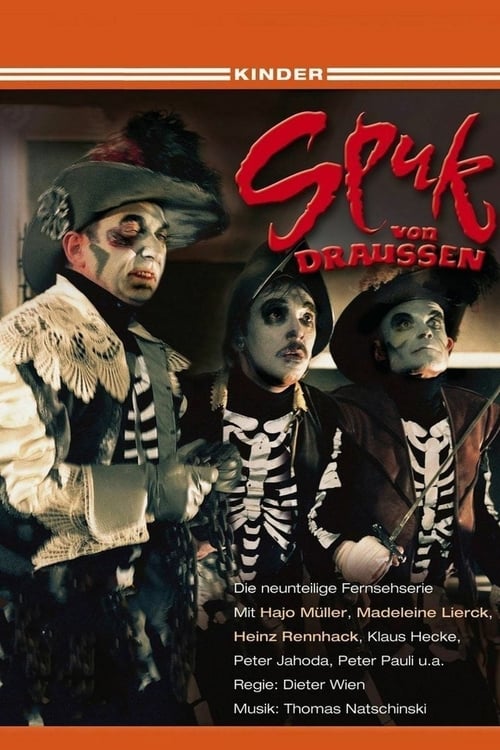
200 years ago, innkeepers Jette and August Deibelschmidt led a rapacious life. Out of greed, they repeatedly got their guests drunk in order to steal from them. When police commissioner Friedrich Wilhelm Licht tried to put them out of action, the house caught fire and all three died. In his last words, he curses the pair of thieves, saying that they will not find peace until they have done seven good deeds after 200 years.
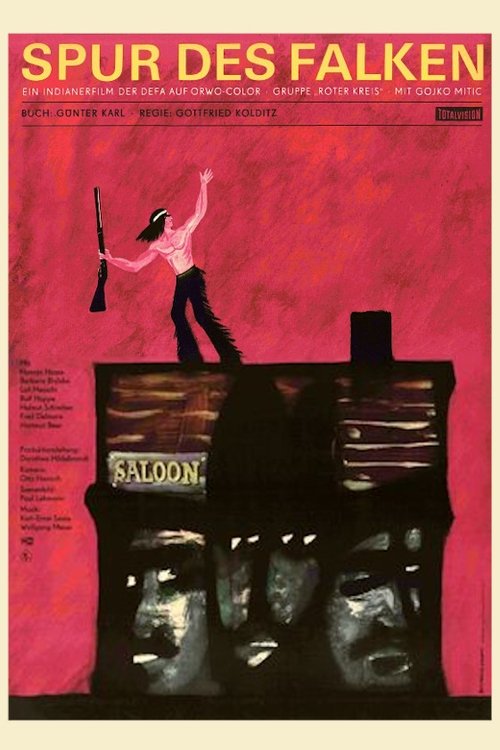
In the latter half of the 19th century, gold is discovered in the Black Hills, sacred land of the Lakota people. Gold diggers, profiteers and adventurers flock to the region. Among them is the hard-hearted land speculator Bludgeon, who tries to expel the Lakota using brutal methods. Lakota warriors retaliate, and soon the gold diggers' town becomes a battlefield.
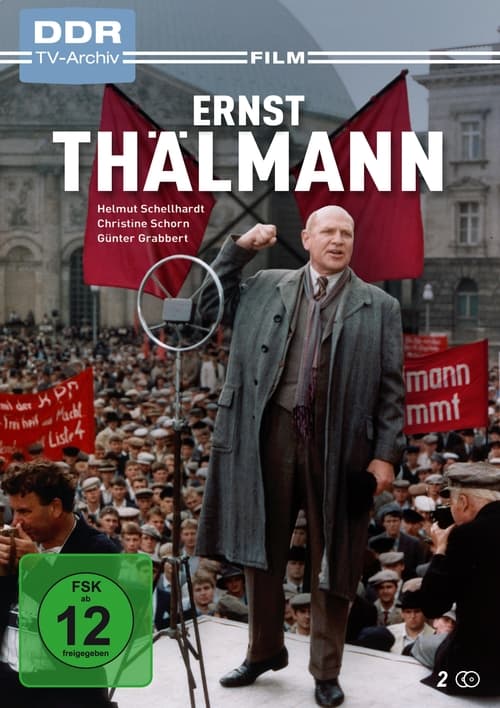
This elaborate two-part television film features a section from the life of communist worker leader Ernst Thälmann. It begins with the bloody riots on May 1, 1929 in Berlin, in which police officers shot at demonstrating workers, and ends with February 7, 1933, when Thälmann appeared as a speaker at the illegal meeting of the Central Committee of the Communist Party of Germany in goat neck. This period was marked by the struggle of the Communists against the ever stronger National Socialists and the rise of Adolf Hitler.
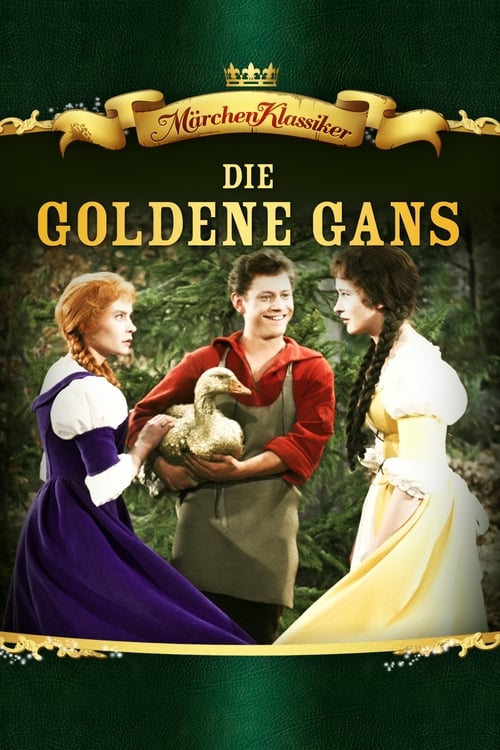
Klaus lives with his two brothers Kunz and Franz in a little village. Together, they ply their trade as cobblers in a small workshop. But the workload rests mainly on the shoulders of ill-treated Klaus. When Kunz and Franz go off into the forest to chop wood for fuel they run into an old woman who asks them for some wine and bread. Rudely and gruffly, they refuse her request and return home without any wood. Klaus then has to set out and he meets the old woman as well. He gladly offers her his frugal meal which is suddenly turned into pancakes and good wine. In addition, he receives a golden goose for his kindness. The bird possesses a an unusual characteristic: all those who are prying, nosy, envious and rapacious get stuck to it and become glued to one another.
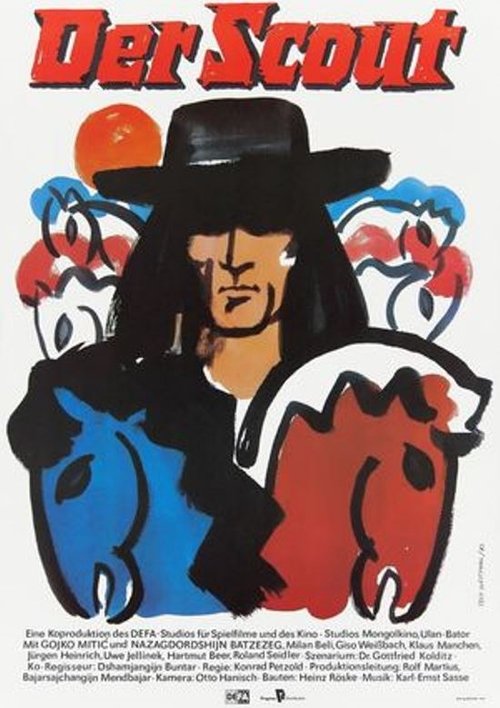
1877, the tribe of the Nez Percés Indians are driven into the reservation by a white cavalry force. So that they can not escape, their horses are requisitioned. Sub-chief "White Feather" has no choice but to make a scout with the cavalry and retrieve the stolen horses through his life.
This story of the miller Florian, who gave all his money to the war against Napoleon, is loosely based on a true story. After the war, Florian's reimbursement is challenged, and he must also pay taxes on his destroyed mill. He resists the tax collectors and takes off to Vienna, where he intends to defend his rights. On the way, he rescues the Duchess of Guastalla from assault. She also wants to go to Vienna, as His Majesty Franz II is trying to contest an heir in her favor. With cunning, luck, and dagger, Florian fights his way through a slew of nobility and their secret police.
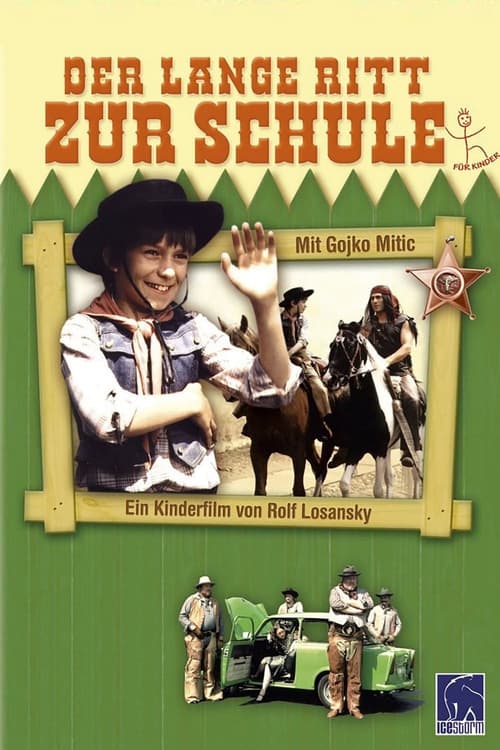
A young boy fantasizes his way to school into a battle between cowboys and Indians, where the bad guys want to steal some gold medals. Real events and fantasy interacts in his mind.
In medieval Germany, poor and witty Till Eulenspiegel fools and cheats citizens, churchmen, and landlords. Although in most cases he uses his wit for personal well-being, he often helps the poor and weak. Eventually, he gains an influential but also dangerous position as royal fool at the court of the emperor.
A village has to be destroyed for coal mining. Henning, a 15 years old boy, who wants to visit his grandfather one more time, realizes that nothing will be the way it used to be.
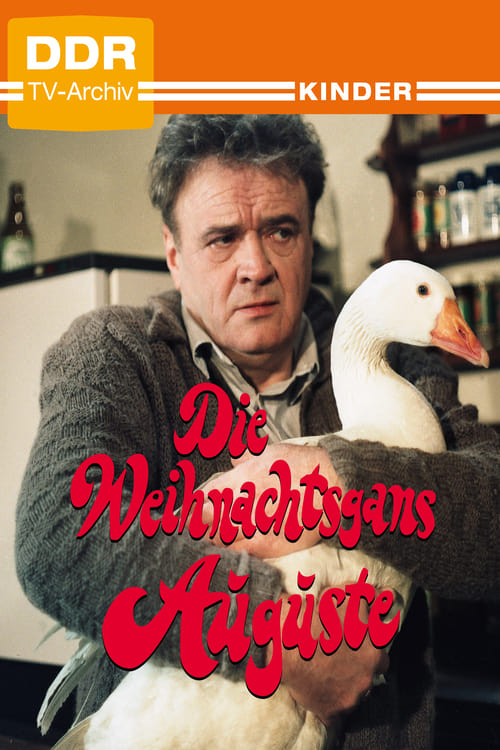
The opera singer Ludwig Löwenhaupt wants a proper festive roast for Christmas, so he buys a goose in advance to feed the whole family. What he doesn't realize, however, is that the children, Elli, Gerda and Peterle, will grow fond of the animal, which is christened Gustje, and will no longer want to eat it. After the "liberation", the "five kilos of meat", which were initially locked up in the cellar, become a pet that the children take to bed with them and communicate with. But shortly before Christmas, father Löwenhaupt still wants to slaughter them. However, as his family protests and his conscience gets in the way, he can't slaughter the goose after all. So Gustje only has to leave a few feathers as proof that she has been plucked, and the opera singer is given another goose that has already been cut up.
The three athletes Holger, Jens, and Ralf are fighting in the Nordic combined for a place in the junior national team. What has begun as fruitful team work in the children and youth sport schools, develops into a strong rivalry among the young men. Each of them excels at only one of the sports - Jens is a brilliant cross-country skier, but a bad ski jumper, and with Holger it is the other way around - thus, they need each other, yet they still fight against each other.