Camera
Polizeiruf 110 is a long-running German language detective television series. The first episode was broadcast 27 June 1971 in the German Democratic Republic, and after the dissolution of Fernsehen der DDR the series was picked up by ARD. It was originally created as a counterpart to the West German series Tatort, and quickly became a public favorite.
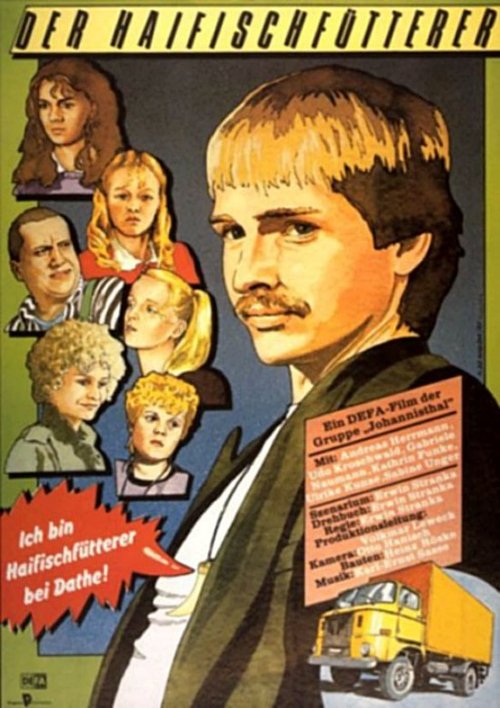
The furniture mover Stefan is on the verge of serving his time in the military. He has always been a guy with distinctive civil courage who cannot stand injustice. Now he has ten days left in which he plans to make a lot of decisions, not least the decision with which woman he wants to spend his life. Stefan is picky, however, and none of them seems good enough for him.
Tambari - it's a name of an old boat which children of a small village on a Baltic sea shore got from an old fisherman Luden. But not all the village adults were ready to approve it...
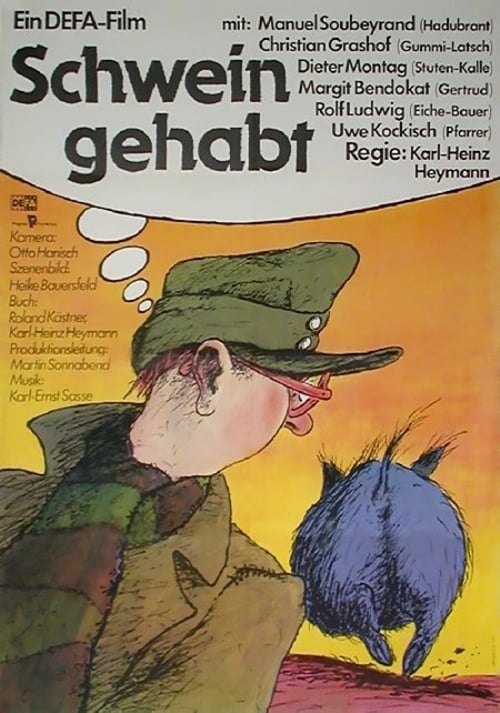
In the winter of 1945/46, new teacher Hadubrant is tricked by Olly, the 14-year-old daughter of his landlady, into stealing a wild boar. It has fallen into Olly's trap, but as game is the property of the Soviet army, Hadubrant wants to put it to good use: school meals. But others in the village are also interested in the pig. The mayor wants it to fulfill his meat plan, the priest wants to swap it for coal to heat his church, the policeman wants to return it to its rightful owner, and some simply want to eat it. The pig keeps disappearing in mysterious ways. Hadubrant's commitment to his charitable cause finally earns him a delegation to the district town for "higher duties".
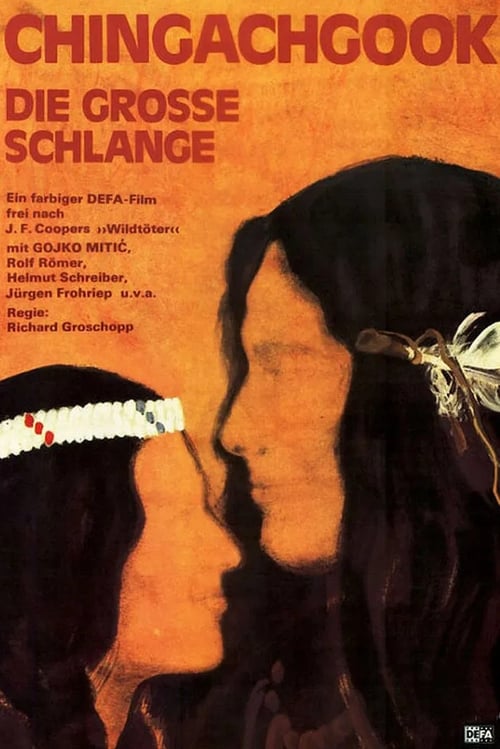
Chingachgook, a Mohawk-born Delaware warrior, strives to rescue his wife Wahtawah from the clutches of an enemy camp of Huron. Joined by his trusted huntsman Deerslayer, the two confront racist pioneers and brutal British soldiers in their quest. Deerslayer catches the desire of Judith and thus the jealousy of her suitor, Harry. The action of the story functions like a seesaw, characters continuously traveling back and forth between a house on the lake and the Huron camp until the violent climax.
In the latter half of the 19th century, gold is discovered in the Black Hills, sacred land of the Lakota people. Gold diggers, profiteers and adventurers flock to the region. Among them is the hard-hearted land speculator Bludgeon, who tries to expel the Lakota using brutal methods. Lakota warriors retaliate, and soon the gold diggers' town becomes a battlefield.
A young woman from a progressive middle-class family moves to Shanghai with her husband Rolf in the mid-1930s. Although she has a child, she is not prepared to retreat into private life. She meets Dr. Richard Sorge and decides to become a scout. After training near Moscow - she is given the cover name Sonja - she is sent to Manchuria on her first assignment with her comrade Ernst. She has an affair with Ernst and has a child with him. A new assignment that takes her to Poland separates her from Ernst. She is awarded the Order of the Red Banner in Moscow for her work. She then goes to Switzerland and radios information about the impending war to the Soviet Union. She meets Rolf and Ernst, who are on an assignment in the Far East. Sonja marries an Englishman to avoid being extradited to Germany.
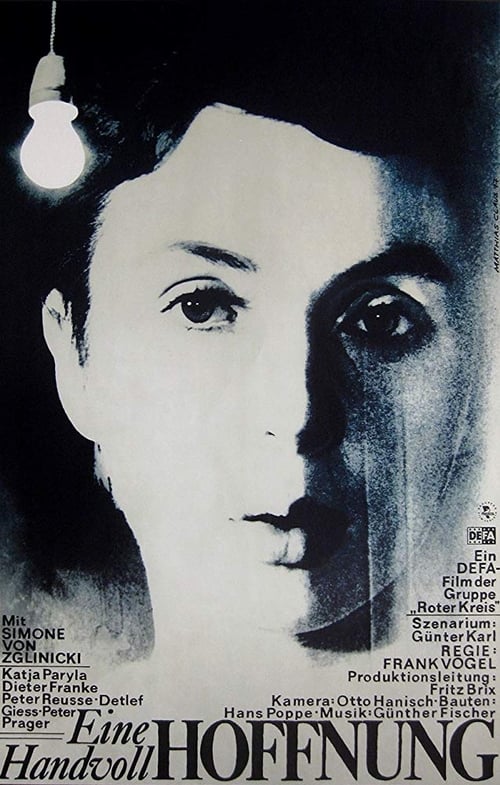
Berlin at the end of the 1940s. Anneliese Weyher is working as a switchboard operator. She is living with her aunt after losing her parents in the war – a stroke of fate that has thrown the young woman off course emotionally. Indifferently, she is doing her work; her private life consists of an affair with a black-marketeer. Even when Anneliese witnesses an armed robbery, committed by infamous Wollnick and his gang, she stays lethargic and apathetic – she keeps silent instead of helping the inspector who is a friend of her aunt. It is not until Anneliese by coincidence meets her former lover, the watchmaker Kurt, that her life seems to take a positive turn.
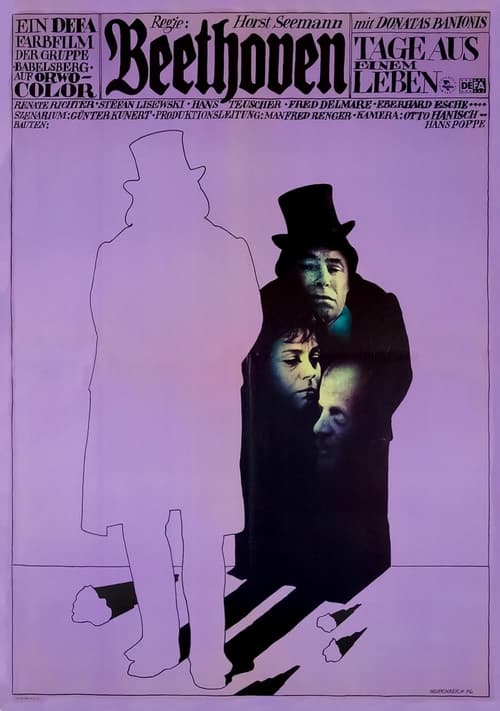
Vienna, 1813-1819: Beethoven (played by Donatas Banionis) is at the peak of his fame. Orchestras all over the world play his music, but he lives modestly and is dependent upon private patrons. Nagged by his patronizing brothers, spied upon by officials for his republican beliefs and faced by his progressive hearing loss, the composer becomes more and more isolated. Seeman’s poetic film explores the joys, heartbreak and artistic spirit of the great composer as he works on his Ninth Symphony.
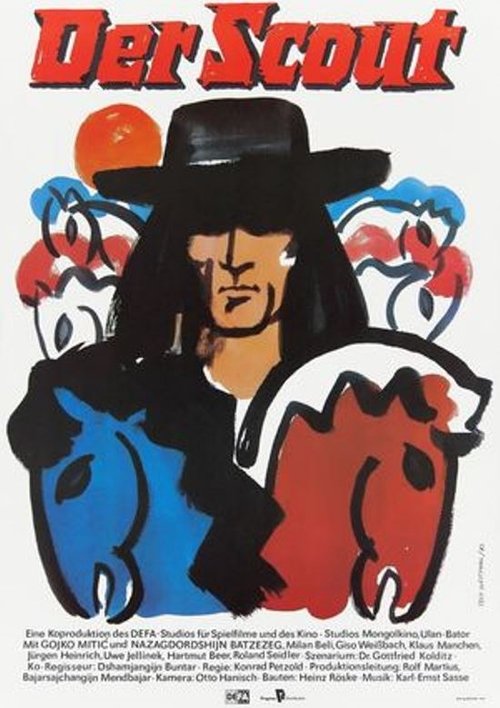
1877, the tribe of the Nez Percés Indians are driven into the reservation by a white cavalry force. So that they can not escape, their horses are requisitioned. Sub-chief "White Feather" has no choice but to make a scout with the cavalry and retrieve the stolen horses through his life.
A farm in Tunisia at the time of the French protectorate. The children Hamida, a shepherd boy, and Renaud, grandson of a French farm owner, are friends. One day, the parentless Hamida falls into a river while searching for a lost sheep. Renaud, who accidentally caused the loss of the sheep, rescues him, but Hamida falls dangerously ill with pneumonia. Can Renaud help his friend?
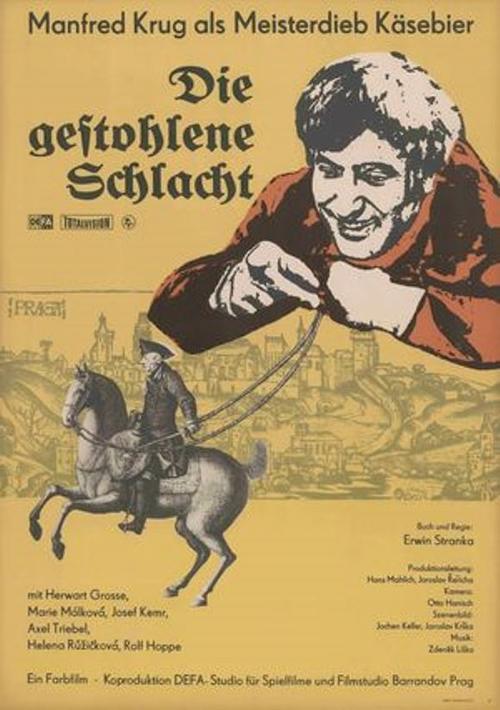
In 1757, the second year of the Seven Years' War, Frederick II the Great stands at the gates of Prague. He has been trying to take the city for weeks, as the enemy commander Duke Charles of Lorraine is inside. Frederick has just defeated him, but the tide could soon turn against the Prussians, as new Austrian troops are approaching. None other than the famous master thief Andreas Christian Käsebier is to sneak into Prague to open the gates from the inside. As a reward, the king promises him freedom. Käsebier accepts the offer because he is tempted to steal an entire city. But by chance, Käsebier learns that the king wants to betray him. After a successful battle, he is put back behind bars for life. This doesn't suit the master thief at all, especially as he has just fallen in love with Katka in Prague.
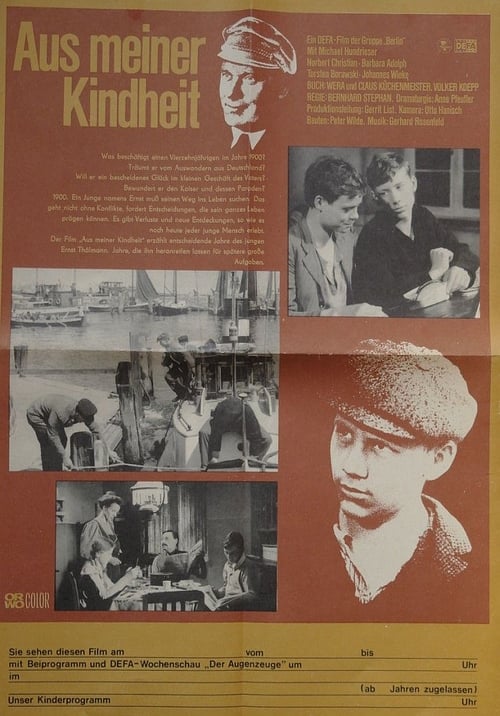
Ernst is a student in Hamburg around 1900 and leads a life like many other young people. In his free time, he roams the colorful metropolis with his buddy Karl. After school, he helps his father, whose business he is to inherit one day. Ernst has many questions about the world and life, but it is difficult to find satisfactory answers... At this time, nobody suspects that he will go down in the history books as the workers' leader Ernst Thälmann.
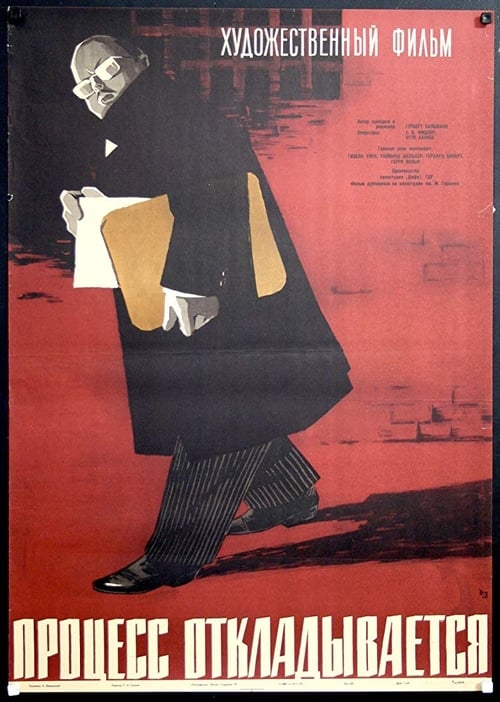
In 1955, Michael Vierkant, a Jew who had emigrated during the Nazi era, returns from abroad to the Federal Republic of Germany to obtain the conviction of Korn, the former informer responsible for the murder of his sister. Korn is back in office; Michael's efforts remain unsuccessful. There is a direct confrontation between the two, and Michael shoots Korn in self-defense. He flees and is hidden by the young, reclusive artist Marie Jäger, but is then caught by the police and charged with premeditated murder. The case is taken out of the hands of the criminal investigation department by the Office for the Protection of the Constitution, which constructs an act of political revenge on behalf of the communists. Michael manages to escape from prison. Marie and her friends organize a press conference at which Michael reveals the connections. The trial is postponed.
In 1929 Berlin, the progressive editor-in-chief Bornstein is on trial for libel. An article in his magazine attempted to uncover the role that Reichsanwalt Jörns had played ten years earlier in the "clarification" of the murders of Rosa Luxemburg and Karl Liebknecht. The article explained that the then court martial judge knowingly covered up for the murderers and delayed the trial. At the trial, the testimony of witnesses succeeded in proving the truth of the publication and exposing those behind the murders as those who were preparing fascism.
In the middle of the 18th Century, the Ruster family immigrates to America. The father, a former farm laborer, leads a hard life as a settler along with his family. One day the nine year-old George, his second-youngest son, is kidnapped by Iroquois. He is taken in by an Indian family in the place of a deceased son and receives the name "Blue Bird." The boy has homesickness and difficulties accustoming to the customs of the Indians.
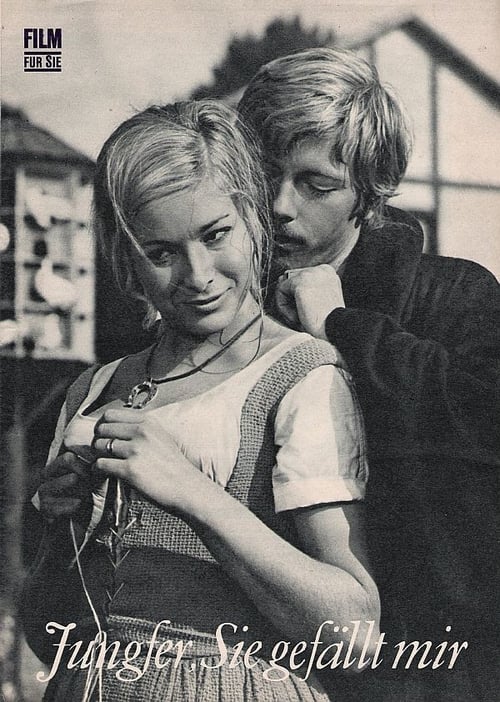
A Saxon village in 1792: While the Prussians go against France, the haymaking takes place in the village and the resolute Marthe catches her daughter Ev with the village blacksmith Ruprecht in the hay.
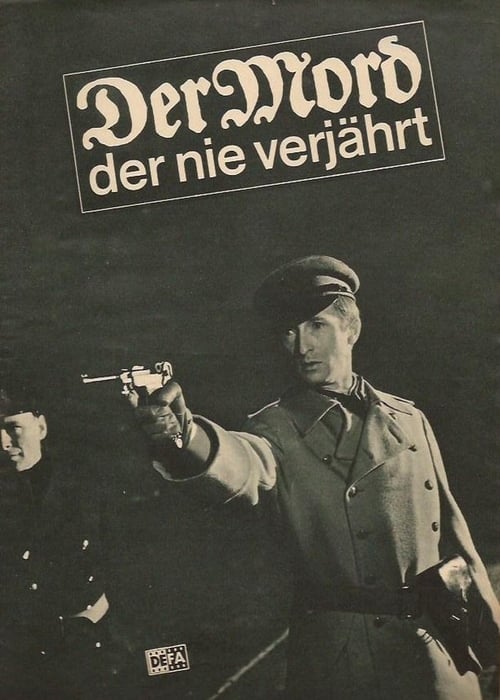
It is a fateful moment: during one of his concerts, Jewish pianist Klaus Seiser discovers Gestapo officer Dr. Becker in the audience. He had imprisoned and harassed the young Seiser in 1943 because of a leaflet. Although the musician had managed to escape from prison at the time, he was caught at the Swiss border and Becker had him sent to Dachau concentration camp. Now, years after the end of the Nazi regime, Seiser denounces the Gestapo man and hopes for justice.
Europe, 1620: The well-known astronomer and mathematician Johannes Kepler, who teaches as a professor in Linz, receives the message that his mother is prosecuted as a witch in Württemberg. The truth behind the allegations is rather simple: His mother has been denunciated by a former friend after an argument with the authorities. Kepler tries desperately to convince the prosecutors of the absurdity of their allegations with rational arguments.
No description available.