Jacques Chirac
Acting
Biography
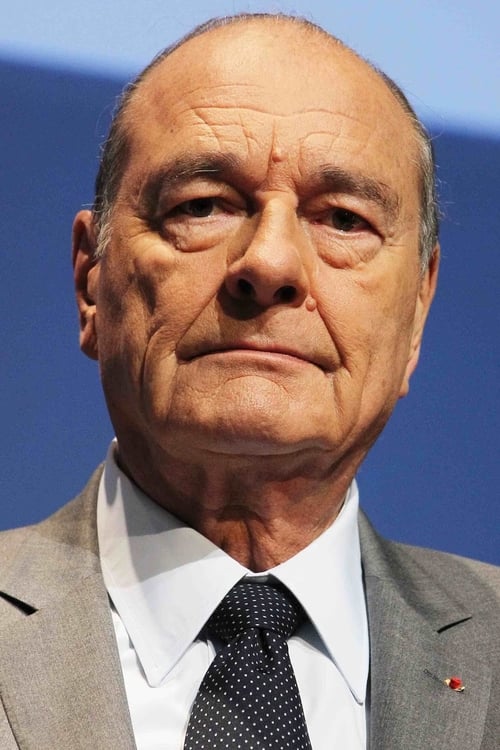
Jacques Chirac, born November 29, 1932 in Paris and died September 26, 2019 in the same city, was a senior French civil servant and statesman. He was Prime Minister from 1974 to 1976, then again from 1986 to 1988, and President of the Republic from 1995 to 2007. After studying at the Institut d'Études Politiques de Paris and the École Nationale d'Administration (ENA), he joined the office of Prime Minister Georges Pompidou in 1962 as a special adviser. He was elected Member of Parliament for Corrèze within the Gaullist majority and appointed Secretary of State four times and Minister four times, starting in 1967. Chirac was subsequently chosen as Prime Minister by Valéry Giscard d'Estaing in 1974. Two years later, having had poor relations with Giscard, he resigned from Prime Minister's office and launched the Rally for the Republic (RPR), a political party claiming to be Gaullist. While continuing his career as an elected official in Corrèze, he became Mayor of Paris in 1977 and ran in the 1981 presidential election. After the right-wing victory in the 1986 legislative elections, he was appointed by Socialist President François Mitterrand to serve as Prime Minister once again. He was thus the first head of government under a cohabitation regime under the Fifth Republic and, at the same time, the only politician to have served as Prime Minister twice under the same regime. He was defeated in the second round of the 1988 presidential election by the incumbent president, then became leader of the opposition, despite subsequently facing the growing popularity of Édouard Balladur. In 1995, he was elected Head of State with 52.6% of the vote in the second round, defeating Socialist Lionel Jospin. He initially governed with the right-wing majority he acquired in 1993. The beginning of his first term was marked by a pension and social security reform that was massively contested and partially abandoned, and by the recognition of the French state's responsibility for the persecution and deportation of Jews during the Occupation. Following the dissolution of the National Assembly in 1997, he lost his majority in Parliament and was forced into cohabitation with Lionel Jospin, during which a referendum was held establishing the five-year presidential term: Jacques Chirac was thus the last president of the Fifth Republic to have served a seven-year term. In the 2002 presidential election, he was re-elected for a five-year term with 82.2% of the vote in the second round, benefiting from a "republican front" against the National Front candidate, Jean-Marie Le Pen. During his second term, after launching the Union for a Popular Movement (UMP), he led the international opposition to the Iraq War launched by US President George W. Bush in 2003 and campaigned for a "yes" vote in the 2005 referendum on the European Constitution, which resulted in a "no" victory. At the end of his presidency in 2007, faced with low popularity and a succession of electoral defeats, and weakened by a stroke in 2005, he decided not to seek a third term. On June 9, 2008, the "Chirac Foundation" for sustainable development and intercultural dialogue was launched. Jacques Chirac died in Paris on September 26, 2019.
Known For

No description available.
Vivement dimanche

Midi Première is a French variety show presented by Danièle Gilbert, directed by Jacques Pierre and broadcast from January 6, 1975 until January 1, 1982 on TF1. The program was generally broadcast between 12:15 p.m. and 12:55 p.m., then giving way to the 1:00 p.m. TV news. However, the broadcast schedule could change, depending on the guests, and the setting where the recording of the program was shot. Certain performances by artists who have become cult like the one where Ringo jostles with a demonstrator in interpretation (1977), that of Dalida with the title There is always a song with the soundtrack that does not start, twice, at the right speed (1978), Claude François and his Clodettes, who, in the provinces, are unable to join "the set" in order to interpret his song, the latter being taken by the crowd of delirious fans (summer 1977) . The group Supertramp performed there with the title "Dreamer" on March 8, 1975.
Midi Première

For thirty years, Zone Interdite has been the magazine that documents and analyzes the upheavals in French society. Conducted over time, the investigations broadcast in the program reveal the taboos, passions, and struggles of the French people at the heart of current events.
Zone interdite

No description available.
30 millions d'amis

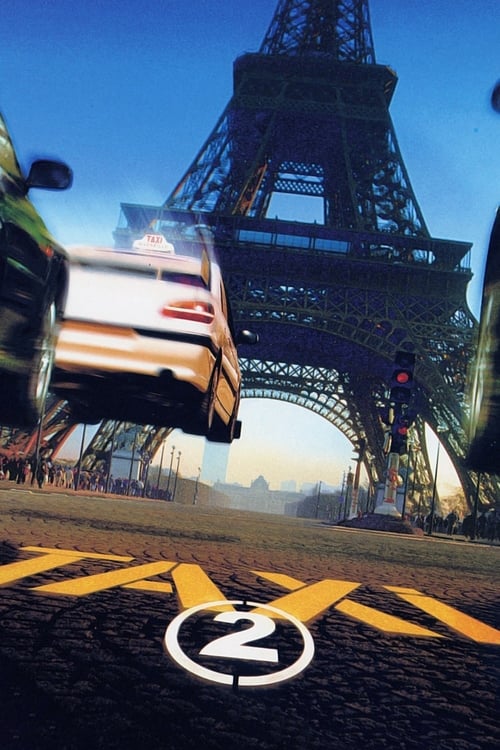
A cabdriver and a cop race to Paris to rescue a love interest and the Japanese minister of defense from kidnappers.
Taxi 2

No description available.
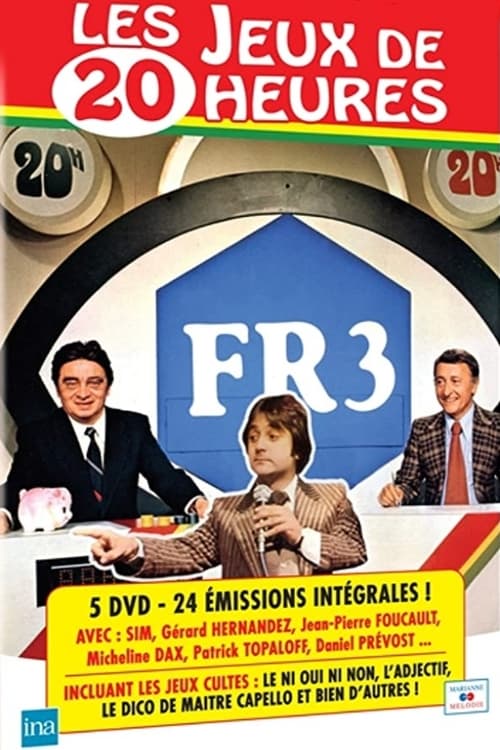
Les Jeux de 20 heures

The show features an interview with a famous personality from the world of politics, economics or culture.
L'Invité

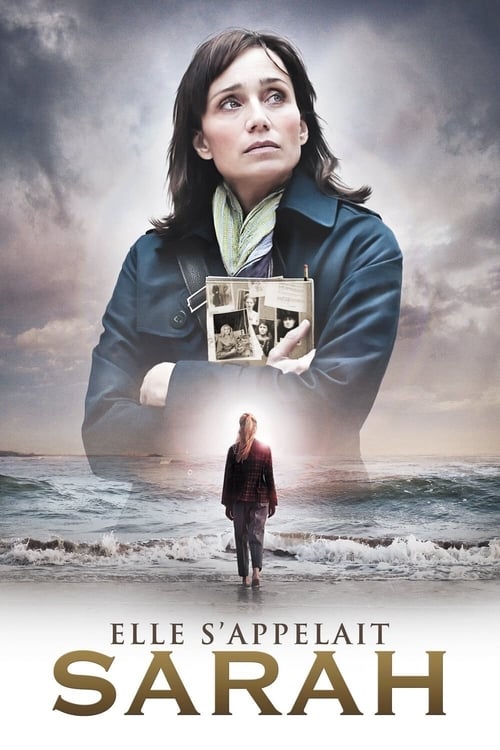
On the night of 16 July 1942, ten year old Sarah and her parents are being arrested and transported to the Velodrome d'Hiver in Paris where thousands of other jews are being sent to get deported. Sarah however managed to lock her little brother in a closet just before the police entered their apartment. Sixty years later, Julia Jarmond, an American journalist in Paris, gets the assignment to write an article about this raid, a black page in the history of France. She starts digging archives and through Sarah's file discovers a well kept secret about her own in-laws.
Sarah's Key

How did Sarah and Victor get along for more than 45 years? Who was this enigmatic woman living in the shadow of her husband? Love, ambition, betrayals and secrets feed the story of this extraordinary couple, as they experience both the large and small moments of the last century's history.
Mr & Mme Adelman

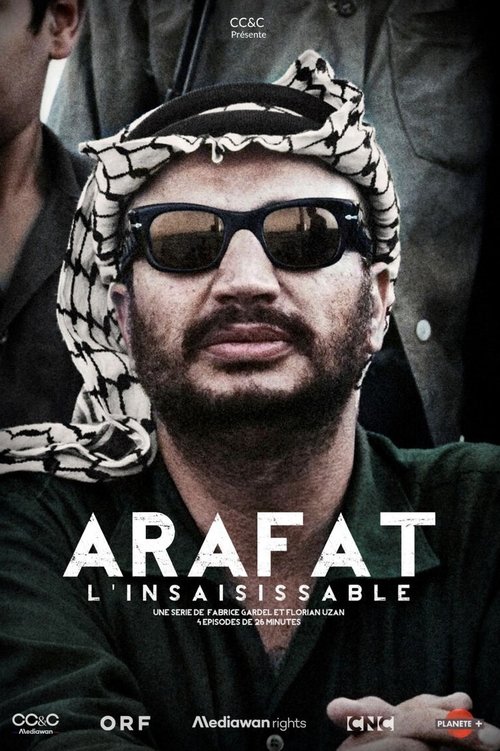
A portrait of Palestinian political leader Yasser Arafat (1929-2004).
Unveiling Arafat

The behind-the-scenes story of French television… This documentary unveils the lesser-known history of two audiovisual decades that have shaped today's television. To explain from the break up of the French broadcasting service ORTF, in 1974, to the creation of Arte, via the birth of Canal+, the life and death of La Cinq and the privatization of TF1 — the succession of political, economic and cultural decisions that have shaped what is known as the “PAF” (French Audiovisual Landscape).
Télévision (histoires secrètes)

For more than twenty-six years, the show has offered reports abroad, surveys of social phenomena and portraits. Because it is sometimes difficult to understand the life of your neighbor or of everyone you meet in the street, Special Envoy will do it for you: listen, question, understand, investigate.
Envoyé Spécial

For ten years, Raymond Depardon has followed the lives of farmer living in the mountain ranges. He allows us to enter their farms with astounding naturalness. This moving film speaks, with great serenity, of our roots and of the future of the people who work on the land. This the last part of Depardon's triptych "Profils paysans" about what it is like to be a farmer today in an isolated highland area in France. "La vie moderne" examines what has become of the persons he has followed for ten years, while featuring younger people who try to farm or raise cattle or poultry, come hell or high water.
Modern Life

Not your usual film biography, A Conversation With Gregory Peck (2000) goes on-the-road and behind-the-scenes with Gregory Peck and his one man show. The actor's traveling program features question and answer sessions with the American icon and allows the actor to reminisce about his career.
A Conversation with Gregory Peck

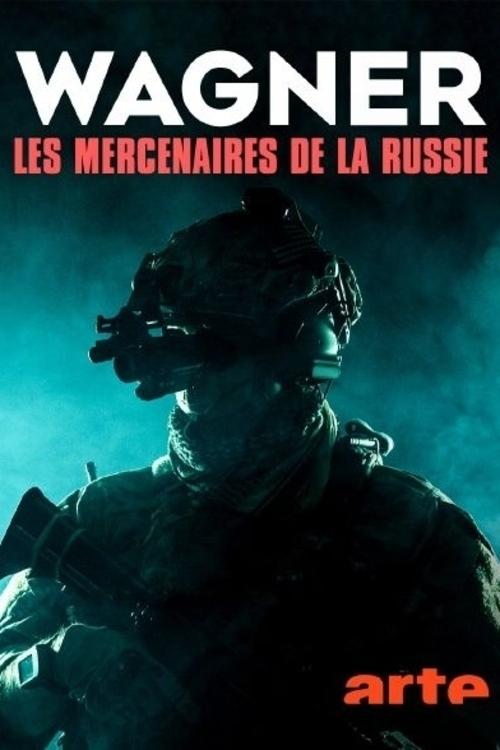
This suspenseful documentary thriller tells the story of the fearless Russian journalists, who risked their lives investigating civilian deaths in Syria and the Central African Republic and revealed to the world through it the existence of a dangerous group of mercenaries in charge of the Kremlin's clandestine operations. Helped by international investigators they could expose Putin’s clandestine militia. Following their fight for the truth alongside the reports of human rights defenders, the documentary discovers how this secret militia became the infamous shadowy army known as Wagner Group and the rise of its powerful leader Yevgeny Prigozhin.
The Rise of Wagner

The co-founder of the Gamma press agency, Raymond Depardon, created this documentary of press photographers in Paris and their subjects by following the photographers around for one month, in October, 1980. In-between long hours waiting for a celebrity to emerge from a restaurant or a hotel, boredom immediately switches to fast action as the cameras click and roll when the person appears. The reaction to the gaggle of photographers is as varied as the people they often literally chase all around town. While some of the celebrities, such as Jacques Chirac who was mayor of Paris at the time, are perceived as comical caricatures, others are shown simply going about ordinary pursuits - including Catherine Deneuve, Gene Kelly, and Jean-Luc Godard.
Reporters

A four-hour journey through the first ten years of Les Guignols. Cult sequences, historic sketches, reference expressions... offer sixty or so “Guignolized” personalities the opportunity to analyze the phenomenon or react to their puppets. Their impressions, shared with Gilles Verlant, punctuate the Night. All those who have made Les Guignols what they are today - Alain De Greef, the historical authors, puppet creator Alain Duverne, etc. - take the opportunity to reveal a few of their secrets.
Les Guignols, les 10 premières années

In the mid-1980s, the GAL, a Spanish paramilitary group, pursues and assassinates members of the terrorist gang ETA who have taken refuge in the sanctuary they have created in the south of France. Grégoire Fortin, advisor to the French Minister of Justice, and Domingo 'Txomin' Iturbe, leader of ETA, are forced to negotiate in order to find a solution to the violence that plagues the region.
Sanctuary

With the Olympics returning to Greece, the opening ceremony of Athens 2004 sought to show the entire development of the Olympics over the centuries, until arriving at the modern Olympics.
Athens 2004: Olympic Opening Ceremony (Games of the XXVIII Olympiad)

In May 1974, Valéry Giscard d'Estaing became President of the Republic and wanted to bring about a new era of modernity. One of his first decisions was to break up the ORTF with the creation of three new television channels: TF1, Antenne 2 and FR3. Three new public channels but autonomous and competing. It is a race for the audience which is engaged then, and from now on the channels will make the war! This competition will give birth to a real golden age for television programs, with variety shows in the forefront. The stars of the song are going to invade the living rooms of the French for their biggest pleasure. This unedited documentary tells the story of the metamorphosis of this television of the early 1970s, between freedom of tone, scandals, political intrigues and programs that have become mythical.