Horst Gill
Acting
Known For
Polizeiruf 110 is a long-running German language detective television series. The first episode was broadcast 27 June 1971 in the German Democratic Republic, and after the dissolution of Fernsehen der DDR the series was picked up by ARD. It was originally created as a counterpart to the West German series Tatort, and quickly became a public favorite.
Polizeiruf 110

The film concentrates on the last days of the German navy during World War II.
Rottenknechte
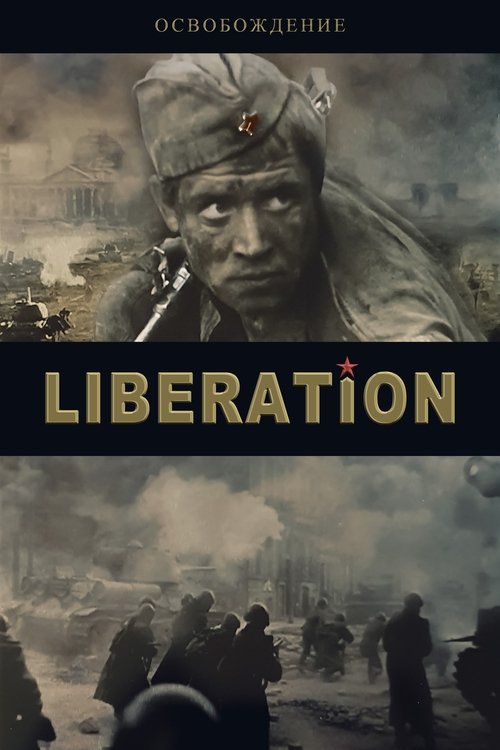
The "Fiery Arc" tells of a grandiose battle on the Kursk Bulge in the summer of 1943. Here was the largest tank battle in the history of World War II. Along with the personal fate of the heroes, the film shows battle scenes, the activities of headquarters and intelligence, those who worked at the front and in the rear.
Liberation - Part 1 : The Fire Bulge
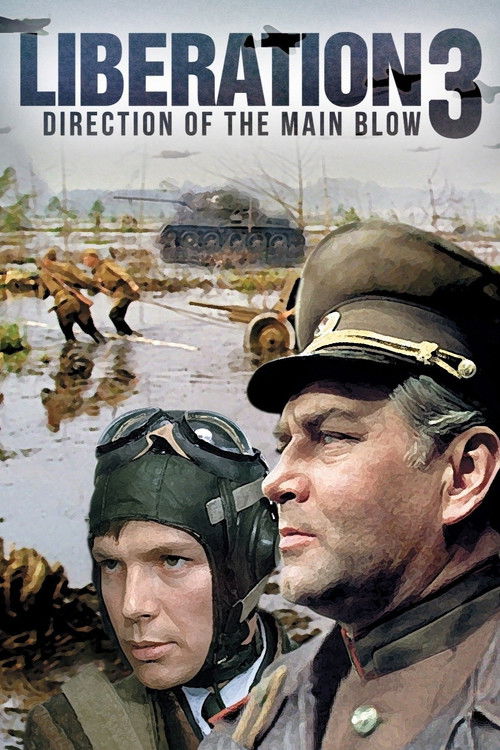
This five part epic war drama gives a dramatized detailed account of Soviet Union's war against Nazi Germany during world war two. Each of the five parts represents a separate major eastern front campaign.
Liberation - Part 3 : Direction of the Main Blow
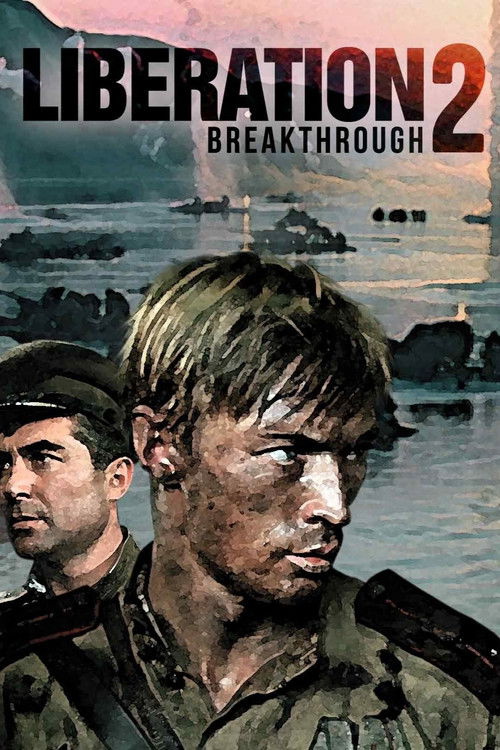
Fascist Italy's prime-minister Mussolini is arrested following the Allies landing in Sicily. Meanwhile, Soviet troops plan their offense towards Kyiv. Lt. Col. Lukin's regiment crosses the Dnieper river as the division's vanguard. Unbeknownst to them, they're merely a ploy to mislead the Germans so the rest of the army can catch them off guard.
Liberation - Part 2 : Breakthrough

In this the fourth episode, “Battle of Berlin,” the Soviets start their assault on Berlin, and Stalin negotiates with the other Allies.
Liberation - Part 4 : The Battle of Berlin
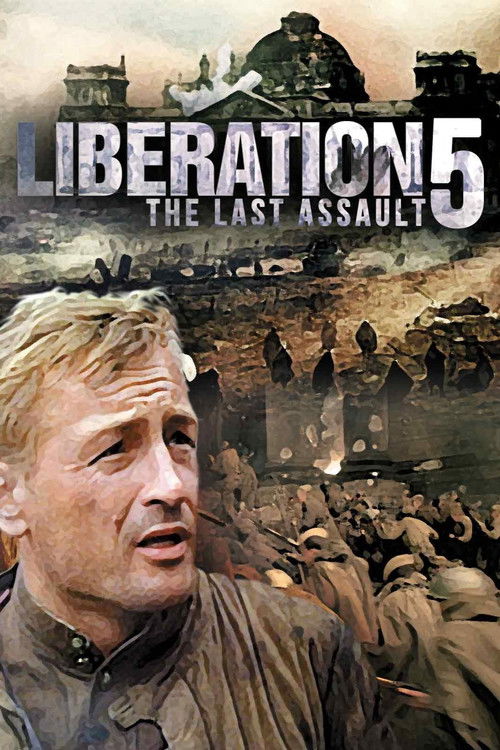
In Berlin, Lieutenant Yartsev's infantry and Tzvetaev's battery fight their way in the U-Bahn. Captain Neustroev's company is selected to hoist the Victory Banner atop the Reichstag.
Liberation - Part 5 : The Last Assault
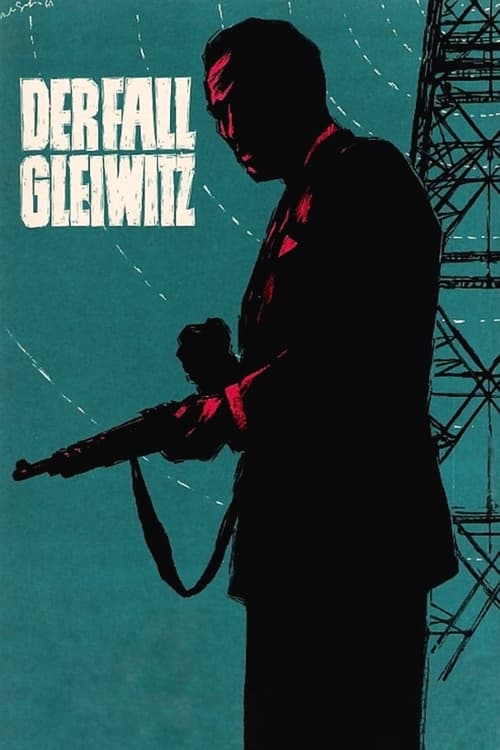
To justify their invasion of Poland at the start of WWII, Nazi high command hatches a secret plan: six Polish men from an SS training camp are sent on a special mission to the town of Gleiwitz, to fake a Polish raid on Germany. The ‘provoked’ Germans will thus launch a ‘counterattack’ on Poland.
The Gleiwitz Case
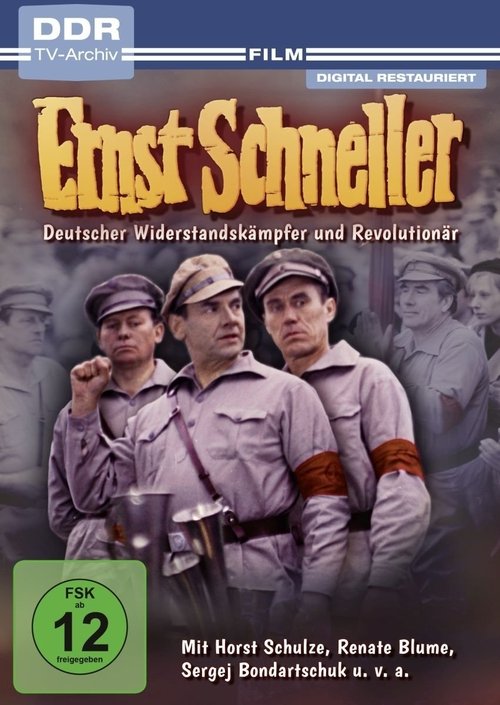
The movie begins by showing how Schneller takes up the profession of a teacher out of love for the children. When the First World War begins, he becomes a 'volunteer officer' and slowly the political situation begins to shape him. He develops into a revolutionary fighter.
Ernst Schneller
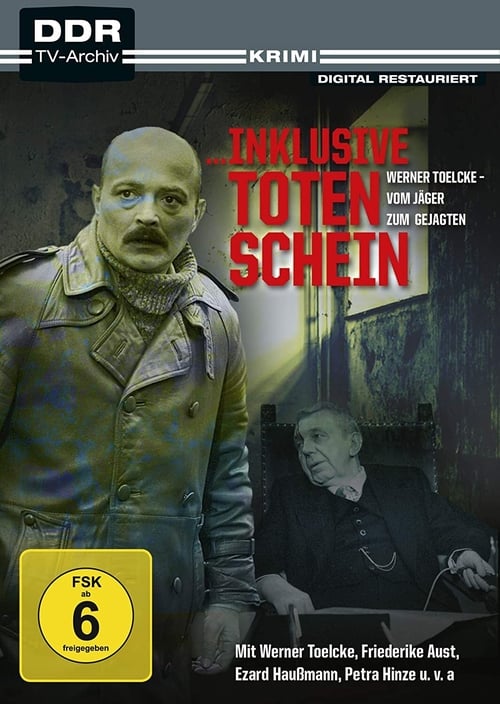
Civil engineer Berger is looking for his mother and learns that she has died and was last in a home run by the notorious construction company Huberty. When the company boss Huberty becomes the victim of an assassination attempt shortly afterwards, suspicion falls on Berger, but Huberty's death is linked to the fraudulent bankruptcy of the construction company. The boss's wife is found to be the culprit. An unpleasant surprise awaits Berger, a civil engineer from Hamburg, when he returns home after years of working in Mexico: his mother has disappeared. Her tracks are lost in a "retirement home" run by the Huberty Society. Berger suspects that his mother has been the victim of a crime. He hunts a murderer and becomes the hunted himself...
...inklusive Totenschein
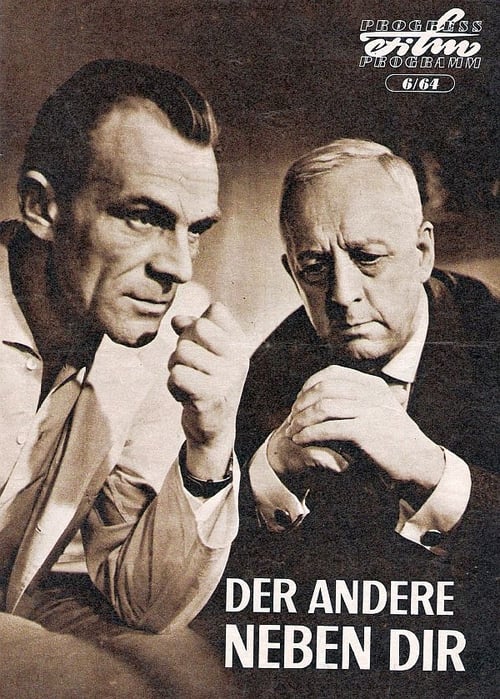
Two doctors, a German and a Czech brain surgeon, meet in a Berlin hospital, unaware of how fatefully they are linked by events from a dark past. A trip to a congress in Prague and an encounter with the wife of his Czech colleague force the German chief surgeon to rethink his previous life. The film deals with the explosive topic of the extent and causes of complicity in the crimes of National Socialism.
Der Andere neben dir
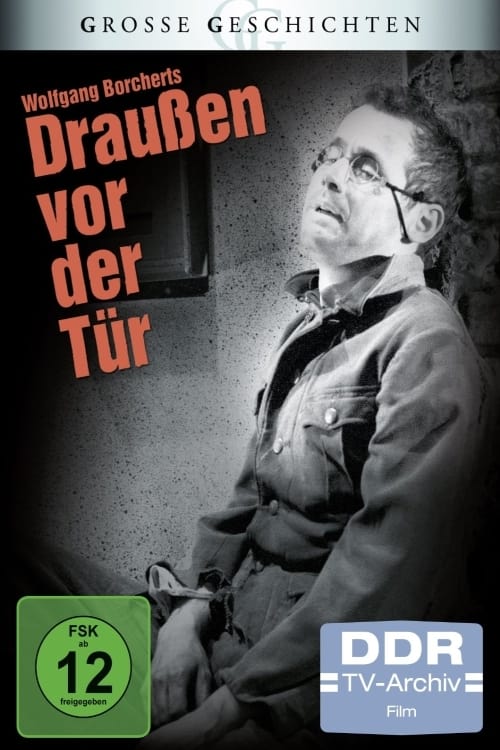
Based on a one act play in five scenes by Wolfgang Borchert, "Draußen vor der Tür" depicts the return of a former German soldier from the Eastern Front, to post-WWII Germany and the sobering realities of de-nazification and "peacetime."
Draußen vor der Tür
Irene Klaussen, a brilliant, tomboyish Berlin student, falls for new classmate Peter Lemke. To prove herself, she follows him, first to a school dance in a borrowed gown, then to a year’s stint on a remote oil‐plant construction in Granow. Ostracized at first, she wins respect under FDJ secretary Anton by mastering every trade and helping him study for engineering school. After returning to Berlin, she discovers Peter’s infidelity and, disillusioned, goes back to Granow, finding true partnership and purpose with Anton.
Es geht nicht ohne Liebe
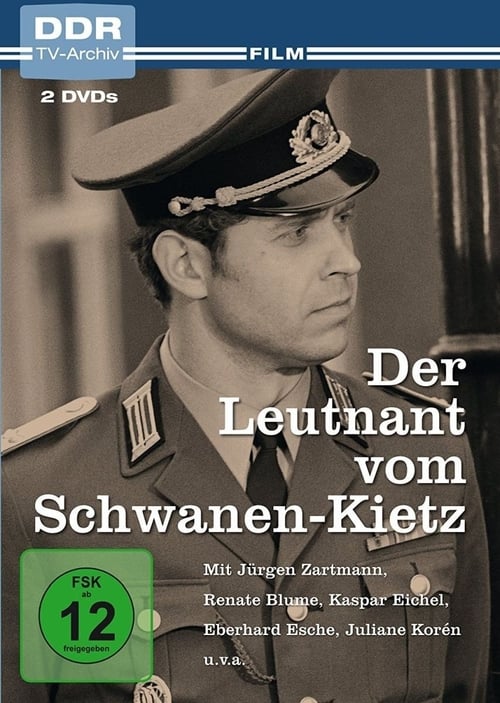
The film describes the activity of an ABV of the People's Police in its section in East Berlin. A mixture of “positive” characters from the beginning, the extensively staged “owl”, who is introduced as a criminal and over the course of time, especially due to the influence of the ABV, develops into a good citizen, and incorrigible characters, with whom the ABV fails with its extensive attempts at rehabilitation and who are arrested after having committed again offenses.
Der Leutnant vom Schwanenkietz

No description available.
Tod im Preis inbegriffen

Film by Rolf Losansky.