Directing
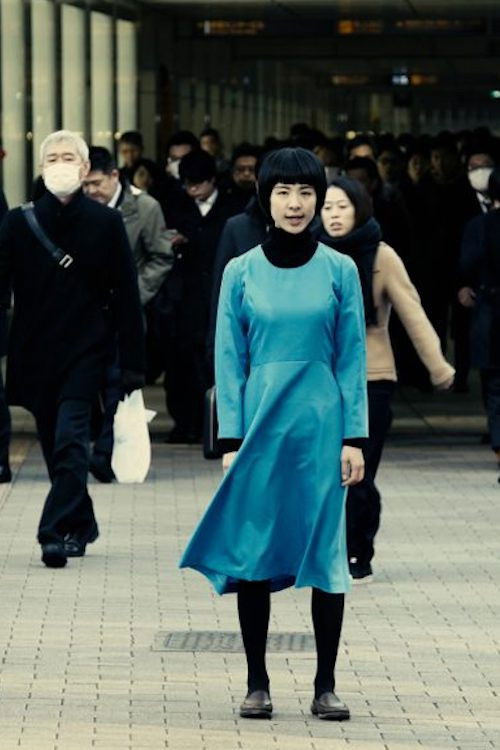
This film centers on an interview with Hajime Kondo, a 99-year-old veteran of the Second Sino-Japanese War (1937–1945) and one of the few former soldiers to publicly testify to the war crimes he committed. When asked whether he still remembers these testimonies, it becomes clear that age has largely erased his recollection of the events themselves. The interview footage is juxtaposed with performances by eleven Japanese youths, aged 16 to 26, who have memorized Kondo’s original testimony word for word. Shown as two looping sequences of different lengths, the film generates ever-changing combinations, probing how histories of violence persist—or disappear—across personal and collective memory.
We asked random people on the streets of Japan the question: “What happened in and around Japan between 1900 to 1945? Please tell us as much as you know.” We shot only their mouths, so they wouldn’t have to feel embarrassed if they made mistakes in front of the camera. As expected, most people could not give correct answers. We collected 200 answers and edited them into one timeline, creating an image of a void in collective memory.
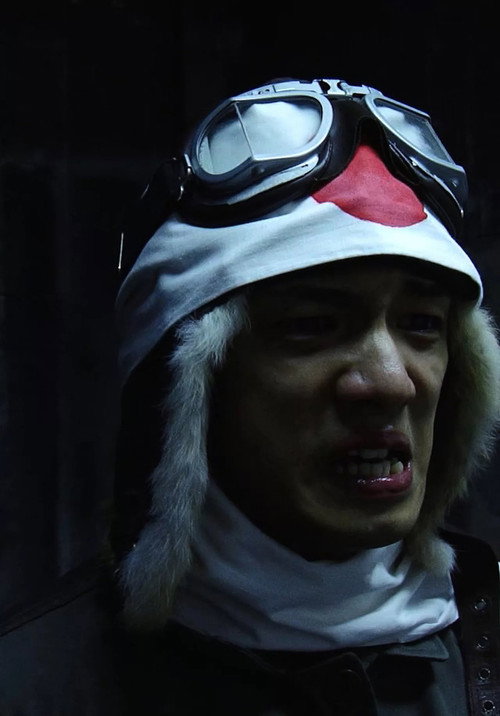
"I wrote a typically sentimental scene; a scene where a young Kamikaze fighter saying good-bye to his parents. I hired a young actor to play the scene. While shooting, I repeatedly demanded him to “express more Samurai spirit”, again and again, no matter how well he plays the character, until we reach the moment where the scene starts to express the emotion from unexpected direction. In the past five years in Japan, we started to see more and more overly sentimental war films made. They all have very clear and vulgar nationalistic messages in it. The scene I wrote was directly inspired by those films." (Meiro Koizumi , 2009)
Spanning a new single-channel film and still photography, the project sees Koizumi work for the first time with non-Japanese subjects, engaging United States veterans from the Iraq and Afghanistan wars. Five veterans recount traumatic experiences during these past military conflicts, while wearing body-cams that record images of their current domestic spaces and landscapes in the US. Koizumi seeks to capture banal and ordinary images from his subjects’ daily lives, attempting to construct another kind of image of war. The work articulates how traumatic memories of conflict impact the everyday for these individuals.
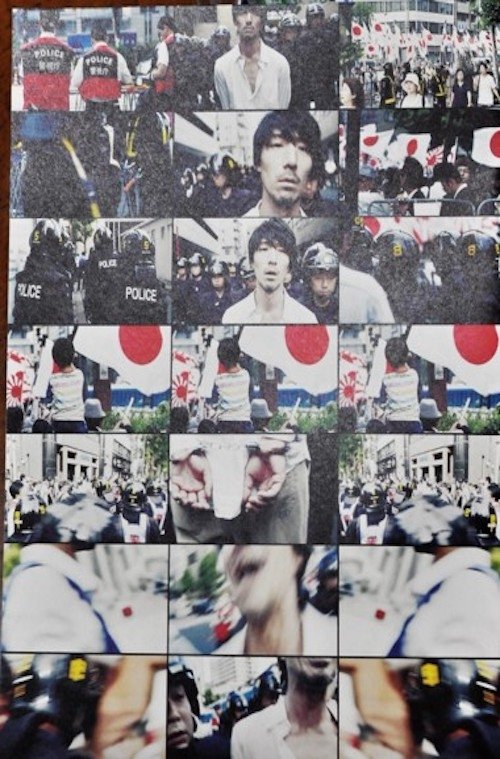
'Rite for a Dream (Today My Empire Sings)' was made in connection with the annual commemoration of the World War II surrender of the Japanese on August 15. Koizumi provides a logical sequel to the subject of his painting series 'Air'. The footage was shot during the controversial demonstration by opponents of the emperor, in the streets of Tokyo; and as is the custom, tensions rose to a pitch between supporters and adversaries. Into this chaotic situation the artist brought a number of musicians and an actor.