Directing
“Won’t make it today, hope you don’t mind.” A casual call, the husband will be late again, not to be expected before eight. He is an officer in the National People’s Army, still young, but with a lot of postings under his belt, always accompanied by his wife. She has resigned herself to her fate, while he flourishes enviably in his profession. Róża Berger-Fiedler spends most of the time by his side, following him in brisk cuts from appointment to appointment. Talking is required and demanded constantly: to representatives of the Soviet armed forces, young recruits, subordinates. Words come easy to him, but not everything runs smoothly.
East German short documentary
A village in the Republic celebrated its traditional clover festival in the summer of 1976. In the form of a political feuilleton, the film conveys to the viewer the new attitude to life of the people in the countryside.
A portrait of Helga Hörz, professor of ethics and philosophy at the Humboldt University in Berlin.
A 74-year-old man stands before the Dresden District Court. After more than forty years, the former highly decorated SS man has been brought to the scene of his crimes. The trial is the cinematic framework in which the background and mechanisms of the social system of nationalism are uncovered by tracing the social development of this SS man.
An extraordinary documentary about a little-known aspect of Jewish life in the GDR: Róza Berger-Fiedler chronicles the Yiddish Cultural Festival, which took place for the fourth time in East Berlin in 1990. The film features performances by renowned Jewish artists from the GDR, Poland, and Lithuania, as well as conversations with prominent figures in Jewish community life and Jewish cultural production from several European countries.
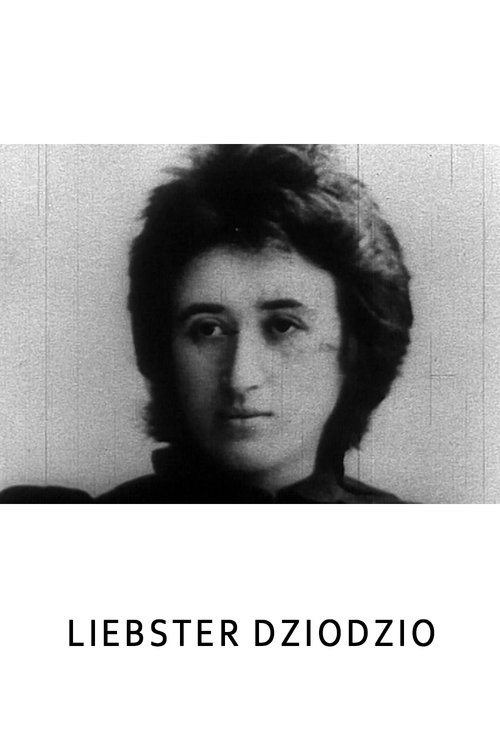
"Dearest Dziodzio" was filmed using quotes from letters Rosa Luxemburg wrote to her lover, the revolutionary labor leader Leo Jogiches, during her stays in Poland, Germany, France and Switzerland in the years 1893-1905. With historical photo and film montages, mixed with newly shot material, the film tries to give an insight into the life problems, the thoughts and feelings of Rosa Luxemburg. The film is enriched by the recordings of the original letters, which are read out by the director, as well as by drawings, watercolors and herbaria by Rosa Luxemburg.
The life and work of Halle-born Georg Friedrich Händel, the Händel Museum, and the Händel Festival in Halle are presented.
Sometimes Hannelore wishes she were a Hans, because “when a woman has to deal with a lot of men, she has to summon up a lot of strength to be heard”. The mayor of the island of Ummanz off Rügen used to be a cook. Now she represents the government and demonstrates “socialist democracy in action”. Director Róza Berger-Fiedler weaves Madam Mayor’s encounters with her constituency and discussions about the office with all its responsibilities into a sensitive portrait of a dedicated person.
No description available.
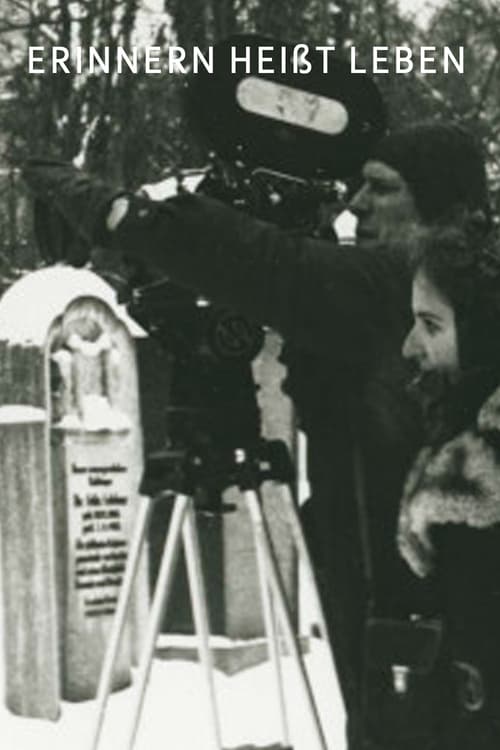
In this film, Róza Berger-Fiedler traces the history of the Jews in Berlin from the Middle Ages to the present day and connects it with his own biography.