Johan Grimonprez
Directing
Biography
Johan Grimonprez (born 1962; Roeselare) is a Belgian multimedia artist, filmmaker, and curator. He is most known for his films Dial H-I-S-T-O-R-Y (1997) which the Guardian included in its article From Warhol to Steve McQueen: a history of video art in 30 works, Double Take (2009) and Shadow World: Inside the Global Arms Trade (2016), based on the book by Andrew Feinstein. Grimonprez wrote and directed the documentary Soundtrack to a Coup d'Etat about the promise of decolonisation, the hope of the non-aligned movement and the dream of self-determination. Grimonprez was born in 1962 in Roeselare, Belgium. After studying cultural anthropology, he went on to complete his studies in photography and mixed media at Royal Academy of Fine Arts in Ghent. Grimonprez received an MFA in Video & Mixed Media at the School of Visual Arts in New York. In 1993, Grimonprez was accepted into Whitney Museum Independent Study Program and later attended the Jan van Eyck Academy in Maastricht, Netherlands. In 1993, Grimonprez worked on the series Besmette Stad for the program Ziggurat on Belgian television. His films are characterised by a criticism of contemporary media manipulation, described as: "an attempt to make sense of the wreckage wrought by history." This films "speak to the need to see history at a distance, but at the same time to speak from inside it". Other themes include the relationship between the individual and the mainstream image, the notion of zapping as "an extreme form of poetry", and the questioning of our consensus reality, which Grimonprez defines as: "a reality that is entangled with the stories we tell ourselves in the worldview we agree on sharing." Grimonprez claims that "Hollywood seems to be running ahead of reality. The world is so awash in images that we related to 9/11 through images we had already projected out into the world. In a sense, fiction came back to haunt us as reality. A perpetual distraction, this illusion of abundance staged by techno-magic hid the ugly face of an info-dystopia. Images of Abu Ghraib, 9/11, swine flu, the BP Gulf oil spill and the economic crisis composed our new contemporary sublime." Amongst Grimonprez's influences are Walter Benjamin, Jorge Luis Borges, and Don DeLillo.
Known For

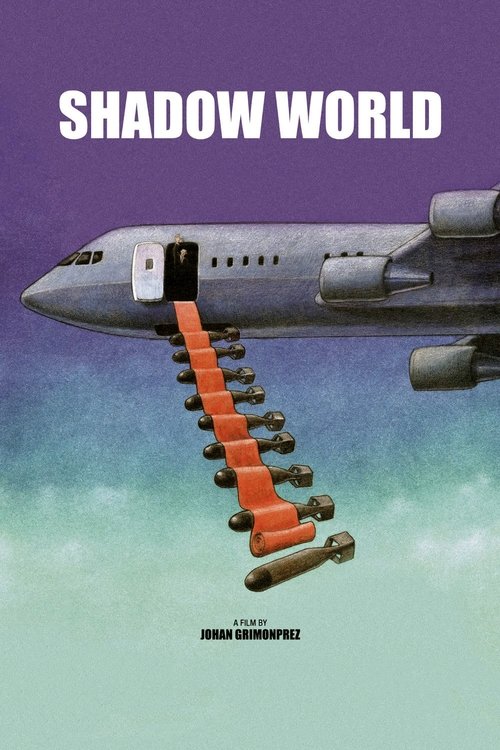
A detailed investigation into the political and economic interests that, since the beginning of the 20th century, have pulled the strings of the arms trade, hidden in the shadows, feeding the shameful corruption of politicians and government officials and promoting a state of permanent war throughout the world, while they cynically asked for a lasting and universal peace.
Shadow World

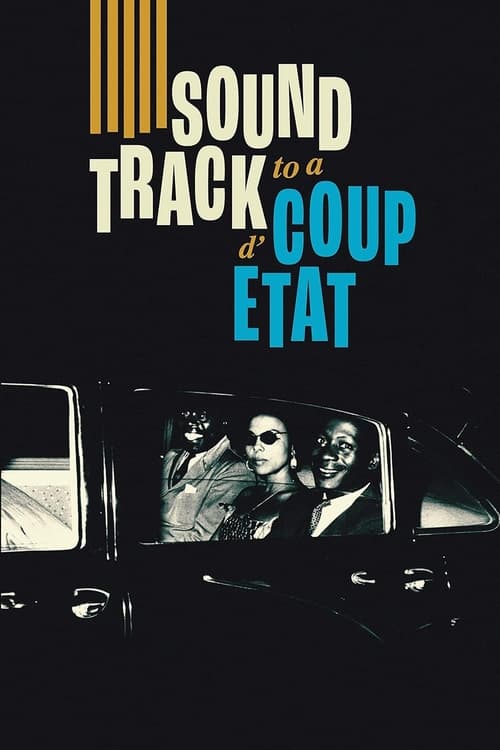
Jazz and decolonization are intertwined in a powerful narrative that recounts one of the tensest episodes of the Cold War.
Soundtrack to a Coup d'Etat

In 1515 Machiavelli stated that it is better for the Prince to be feared than loved. Some 500 years later, Michael Hardt, political philosopher and co-author of Empire, Multitude and Commonwealth, asks what it would mean to base a political system on love, rather than on fear. How can we transform a society that is increasingly defined by a permanent state of war and cultivated by an industry of fear? How can we realize the paradigm shift necessary to move away from a reality that depends on the exploitation of people and the cult of privatisation of public resources?
Every Day Words Disappear

When asked a question on politics, late Palestinian poet Mahmoud Darwish once answered: “I write about love to expose the conditions that don’t allow me to write about love.” In TWO TRAVELERS TO A RIVER Palestinian actress Manal Khader recites such a poem by Mahmoud Darwish: a concise reflection on how things could have been.
Two Travellers to a River

In Three Thoughts on Terror, investigative journalists Robert Fisk, Jeremy Scahill and Vijay Prashad approach the concept of terror from their respective angles.
Three Thoughts on Terror

An anthropologist, who tries to decode corporate culture, gets obsessed with the story of a parachutist who died after his equipment malfunctioned. In the parachutist's finitude - caught in an ultimate meditative moment of plunging to an approaching death - the anthropologist sees a sudden and catastrophic voiding of the webs that hold and cradle us all.
What I Will
Renegade TV was a regular feature on late night Channel 4 in the UK in the late 1990's. This special was made in conjunction with Dazed Magazine and featured a Mondo style compilation of news clips and stories from around the world.
Renegade TV Gets Dazed

During the making of Double Take, professional Hitchcock doppelgänger Ron Burrage pointed director Johan Grimonprez to a story doing the rounds online: supposedly, the Master of Suspense didn’t have a belly button. This captured the imagination of Grimonprez, as it implied that Hitchcock had not actually been born at all—an interesting extra layer on the hall of mirrors he was constructing in Double Take.
Hitchcock Didn’t Have a Belly Button: Karen Black Interview by Johan Grimonprez

In 1980 an extraordinary demonstration hit the streets of the Brazilian city of Sorocaba. Under the military dictatorship, a court had outlawed kisses that undermined public morals. The ruling by Judge Manuel Moralles, which punished such kisses with jail terms, described them this way: “some kisses are libidinous and therefore obscene, like a kiss on the neck, on the private parts, etc., and like the cinematographic kiss in which the labial mucosa come together in an unsophismable expansion of sensuality.” The city responded by becoming one huge kissodrome. Never had people kissed so much. Prohibition sparked desire and many were those who out of simple curiosity wanted a taste of the unsophismable kiss.
kiss-o-drome

In January 1999, at the height of the Lewinsky-Clinton affair, Herman Asselberghs and Dieter Lesage asked me if I would be in for a trip to Lost Nation. They explained this was part of a project they were setting up in Brussels: a place slash library slash installation about vanished nations such as Yugoslavia, Czechoslovakia, East and West Germany, USSR, and Zaire. But where was Lost Nation? Browsing through their library, Herman and Dieter stumbled onto Lost Nation, an American village located on Highway 136 in Eastern Iowa, with a community of 497 citizens. And so, this little road movie was the result. A trip to a nation where the average citizen spends about 5 years of his lifetime waiting in line, 2 years trying to reach people by telephone, 1 year searching for misplaced objects, 8 months opening junk-mail and 6 months sitting at traffic lights. A nation that attempted to impeach the wrong president.
LOST NATION, January 1999

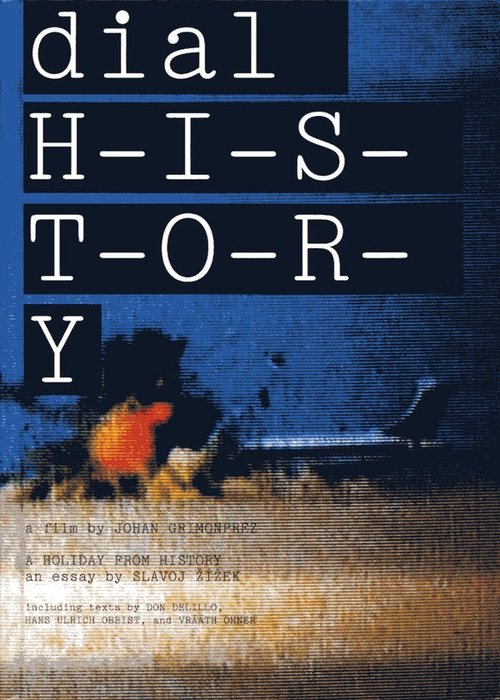
An acclaimed hijacking documentary that eerily foreshadowed 9/11. We meet the romantic skyjackers who fought their revolutions and won airtime on the passenger planes of the 1960s and '70s. By the 1990s, such characters were apparently no more, replaced on our TV screens by stories of anonymous bombs in suitcases. Director Johan Grimonprez investigates the politics behind this change, at the same time unwrapping our own complicity in the urge for ultimate disaster.
Dial H-I-S-T-O-R-Y

"I painted the worlds entering the eyes." In her day, painter and portraitist Sofonisba Anguissola was much celebrated. In this sumptuous animation, she is rescued from the realm of obscurity and given new life in an epistolary missive to her pupil, Flemish master Anthony Van Dyck.
Four Chambers to the Heart

Dozens of couples dance in a circle, a house topples down a slope, a cat manically revolves around itself. A few seconds beforehand, an admonishing voice points out that a centuries-old philosophical assumption is under close scrutiny. It is René Descartes’ first tenet, »I think, therefore I am,« that the British neurologist Raymond Tallis calls into question in the video by the artist Johan Grimonprez. Tallis takes the view that human consciousness is not an individual construction but exists above all in relation to a vis-à-vis.
Raymond Tallis - On Tickling

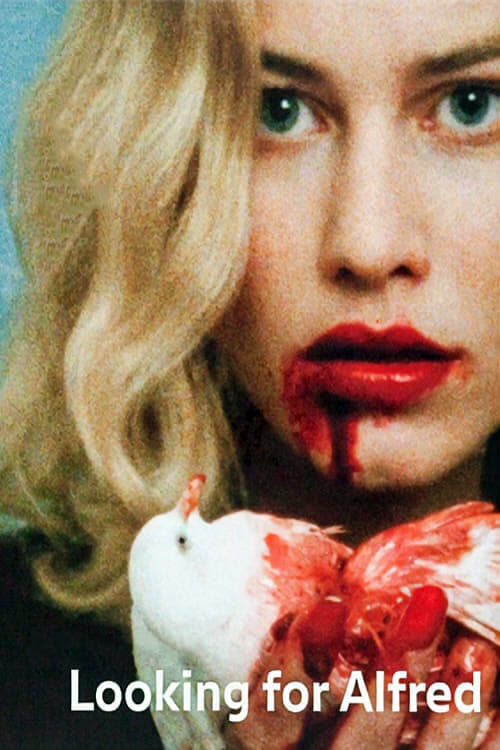
Obsessed with de/reconstructing our corrupted visions of media, celebrity and appearance, Johan Grimonprez assembled a bewildering gaggle of Hitchcock lookalikes, staggering in girth and exacting in attitude, in a quest to find the most accurate specimen.
Looking for Alfred

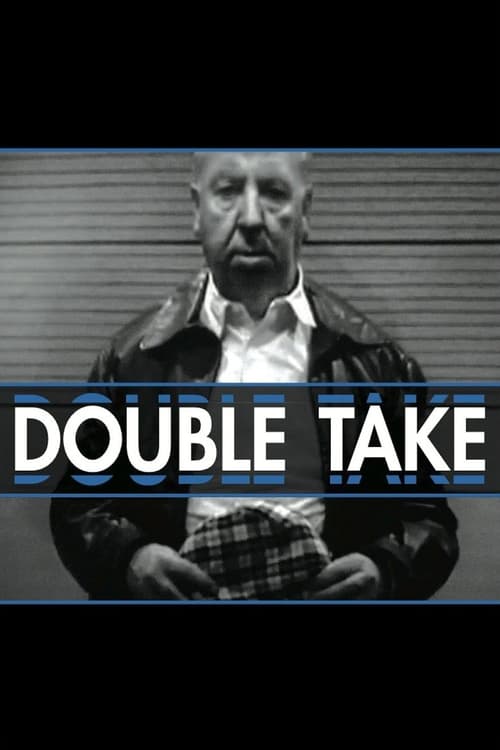
Director Johan Grimonprez casts Alfred Hitchcock as a paranoid history professor, unwittingly caught up in a double take on the cold war period. Subverting a meticulous array of TV footage and using 'The Birds' as an essential metaphor, DOUBLE TAKE traces catastrophe culture's relentless assault on the home, from moving images' inception to the present day.
Double Take

In this video Vromman shows us virtuoso how a “plan séquence” is capable of exploring a given spatial arrangement notably an abandoned church in Ghent. It is as though the camera possesses a will of its own, or, more appropriately, as it became itself a dancer within the given space. The columns become veritable side wings behind which the dancers are playing hide and seek and where perpetually new movements and new images are discovered. Summary by argosarts.org
Ghent, 10 June 1989, for Geraldine Nerea

In Blue Orchids, Johan Grimonprez creates a double portrait of two experts situated on opposite ends of the same issue—the global arms trade. The stories of Chris Hedges, a former New York Times war correspondent, and Riccardo Privitera, arms and equipment dealer for the now-defunct Talisman Europe Ltd, provide an unusual and disturbing context for shocking revelations about the industry of war. While interviewing Privitera and Hedges for Grimonprez’s recently released feature Shadow World (2016), it became clear that the two men were describing the same anguish and trauma, but from paradoxical perspectives. One has dedicated his life to unmasking lies, while the other has built his life on them. Both their personal and political histories gradually reveal the depths of suffering and duplicity, showing that the arms trade is a symptom of a profound illness: greed.
Blue Orchids

Kobarweng reconstructs the first encounter between a remote village set in the highlands of the island of New Guinea and the outside world. Mainly told through a native narrative, it reclaims the memory of a colonial past. Switching the roles of observer and observed, it is anthropology-and specifically the desire underlying anthropological representation, that is depicted as an object of curiosity destabilized by the villager's questions. Point of departure was Kaiang Tapior's question "Where is your helicopter?", a remark which puzzled the filmmaker during his visit to the village of Pepera.
Kobarweng or Where Is Your Helicopter

The result of a workshop for which Franciska Lambrechts supplied a varied company of individuals and some basic equipment: a super-8 camera with 3 B/W films. What we see is a creative montage wherein the workshop and the discussed topics itself are at the core.
Comment filmer Molenbeek?

Johan Grimonprez transposes an extract from Meg Stuart’s compelling choreography ‘No Longer Ready-Made’ to the anonymous waiting room of a railway station. This colourless space along with nameless travellers provides the excellent setting for Stuart’s hectic and intense convulsions. A train ride along the nightly Brussels northern area supports the vitriolic New York City prose of David Wojnarowicz on the soundtrack.