Radim Procházka
Production
Known For
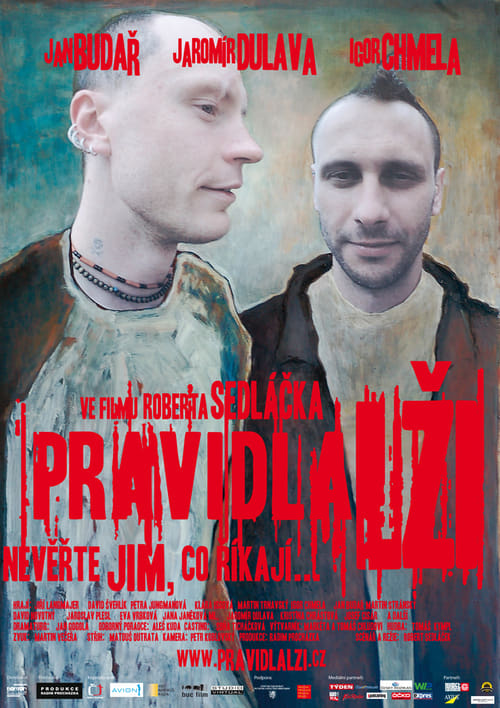
33-year-old Roman decides to tackle his drug addiction by undergoing group therapy as part of a community holed up on an isolated farm in the Šumava mountains. Twelve people, men and women of varying ages and social status, voluntarily subject themselves to a tough regime under the supervision of three therapists. Many of them have stared death in the face already – overdoses, suicide attempts, and aggression heightened by the use of hard drugs, outwardly affecting even the strongest of them. Each brings something of his past into the group, which he has to experience again, both for himself and for those assembled. Past anguish, wrongs and guilt give rise to new problems: in this thickening atmosphere of suspicion and lies, who can still be trusted? This intimate psychological drama deliberately sets out to break up the tight narrative form through retrospectives in which we learn about the past life of each individual.
Rules of Lies
No description available.
Průvan
No description available.
proStory
Zdena, a young nurse, starts her first night shift at an old people’s home and immediately faces a difficult task: she has to deal with the body of a deceased client. A gentle portrait of faltering youth and a realistic tale of an encounter with death in a blend of physically intense moments and absurd humour.
Barcarole
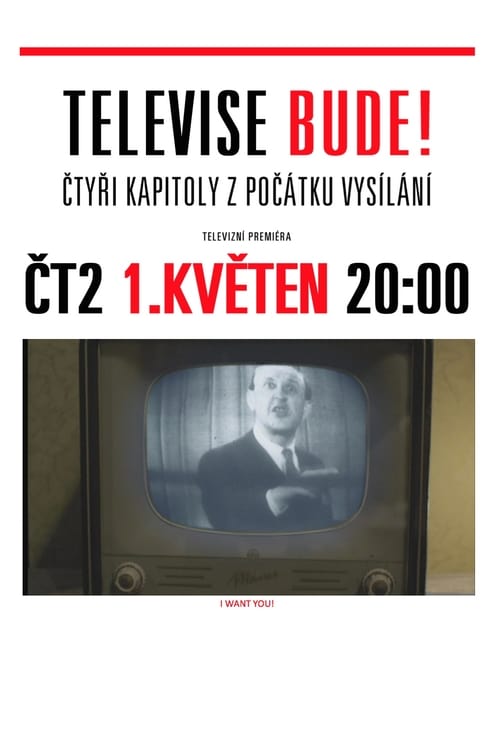
Flexible, powerful, and naive. The fates of three men intersect at the launch of Czechoslovak television broadcasting. Ambitious actor František Filipovský has no idea that his casual improvisation on the theme of "the miser" will go down in history. For Minister of Information Václav Kopecký, it is a moment of great nervousness: will he convince his comrades that television broadcasting is the golden goose of communist propaganda? A young television technician is fascinated by the "remote transmission of images and sound" – he has a job he never dreamed of. But can a person fulfill their dreams in communist Czechoslovakia in the 1950s without getting involved with the regime?
Televise bude!
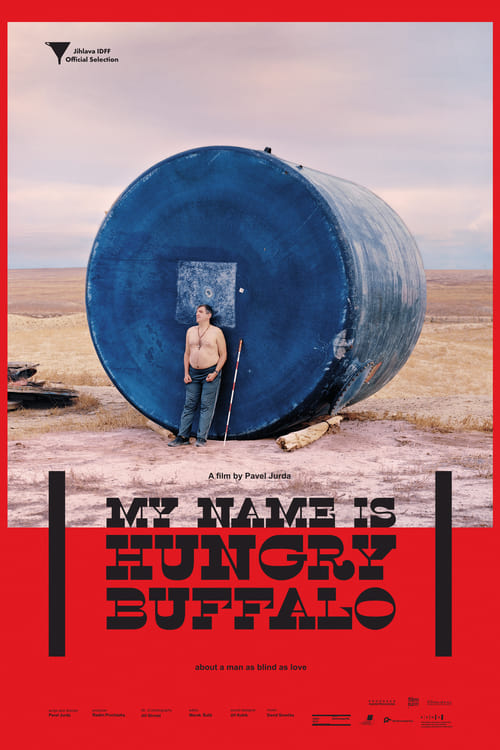
Jan calls himself Buffalo. He loves cowboys, he’s blind, and may lose his hearing. The documentary follows his journey to America to visit the chief of the Navajo tribe, who wants to perform a ritual to help his hearing. The film is full of unpretentious humor thanks to Jan’s charisma. In the USA, he’s like the Don Quixote of the Wild West - a naive adventurer in a world that is much more ordinary than his imagination. This observational, but not standoffish, film is also an example of how the medium of film can relate to blind people by constantly showing the difference between what Jan perceives and what we actually see.
My Name is Hungry Buffalo

The opening of The Vasulka Effect couldn’t be more apt: Steina Vasulka addresses her husband Woody through various TV screens. He does the same and replies. A perfect image of the relationship between the free-spirited, groundbreaking pioneers of video art. After meeting in Prague in the early 1960s, they relocated from Czechoslovakia to New York, where they later founded The Kitchen, their legendary art and performance gallery.
The Vasulka Effect
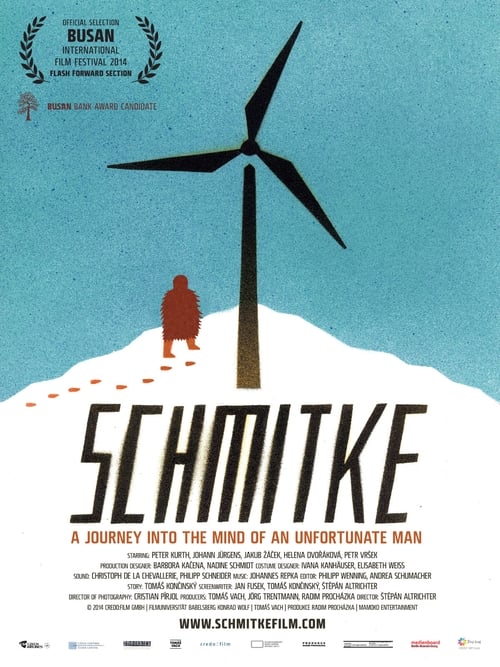
Schmitke is an old German wind turbine engineer. One day, he is dispatched to the Czech side of the Ore Mountains to fix an old squeaking wind turbine. His colleague disappears and mysterious things begin to happen in the forest.
Schmitke
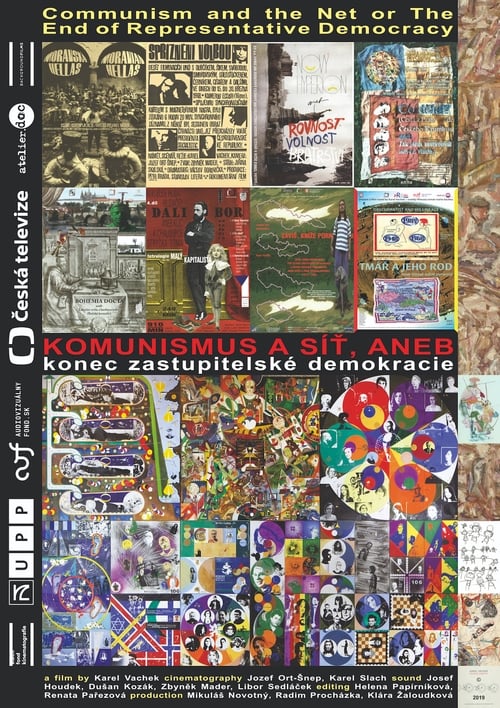
The six-hour essay in four parts examines the history of regimes and revolutions, leaders and martyrs, from a philosophical perspective. The collage of personal memories, staged scenes and archives of collective memory compares the Prague Spring to the Velvet Revolution and shows the exposure, conflict, crisis, and catharsis of the post-communist society.
Communism and the Net, or the End of Representative Democracy
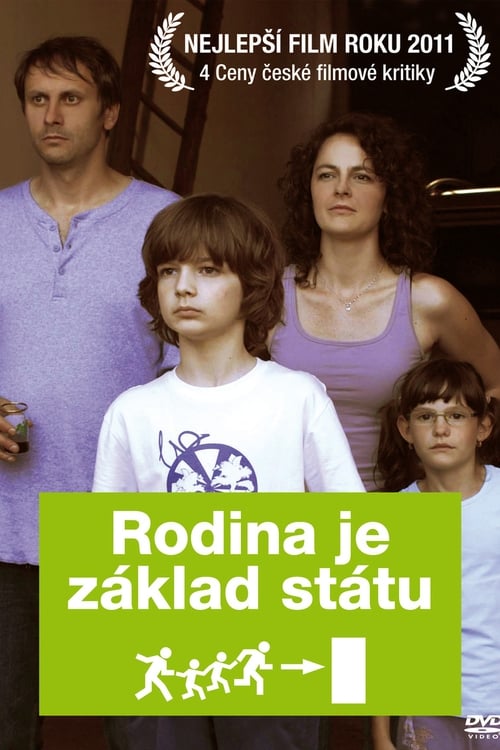
Libor, a former teacher, enjoys a well-paid position as a bank manager, living in a luxurious villa outside Prague. His business partners are taken into custody and the authorities have a few questions for him to answer. Rather than wait around, he decides to take off to Moravia with his wife and two children. In the process, he pretends that everything is normal, rediscovers the value of family life, meets up with a former colleague lost in provincial obscurity, and becomes the object of a manhunt. Libor is not a criminal type, merely someone who signs cheques and is drawn into a business world failing to recognise its own criminality (he doesn’t even flee the country).
Long Live the Family!
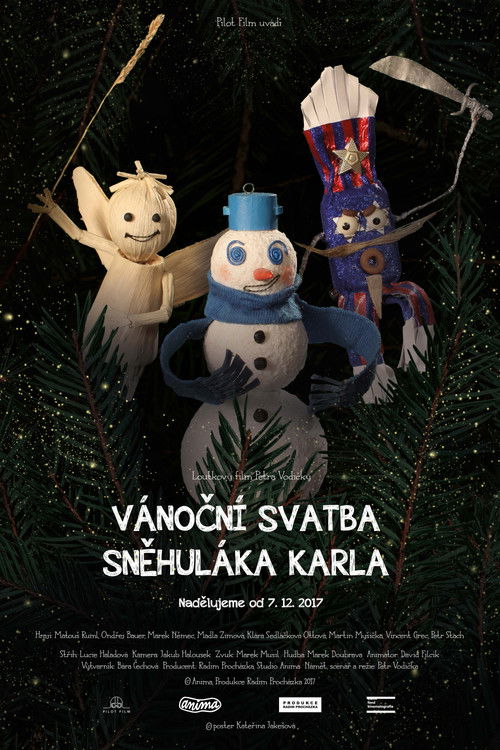
Even amongst Christmas decorations a spark of fancy may appear. What to do though when merciless Fate (or the human hand) has placed our beloved right to the other side of the tree? No use crying when a decoration wants to achieve something - it must unhook itself. And thus, our snowman Karel sets off with the straw angel Kamil in search of snow-lass Eva. They wander through the Christmas tree overcoming obstacles, and with the help of other distinctive decorations they eventually reach Eva who is being held captive by the evil Balls brothers.
Charlie the Snowman's Christmas Wedding
In the middle of the village of Drnovice, with a population of two thousand, near Vyškov in South Moravia, stands a football stadium for eight thousand spectators. It is a pyramid of a defunct football civilization, once ruled by famous names such as Karel Brückner and Radek Drulák. The rise and fall of the Drnovice football club is typical of Czech football, politics, and business in the 1990s—behind it lie not only beautiful goals, but also mysterious sponsors, corruption, and doping. Let's travel back to a time when even the highest-ranking government officials couldn't tell heating oil from gasoline, and when Czech footballers were playing for the European title.
Catenaccio a la Drnovice or Journey to the Beginning of the Time of Economic Transformation
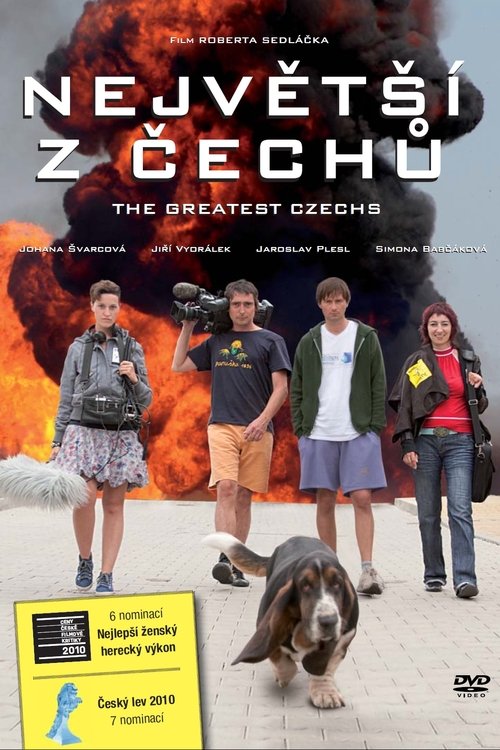
Film crew on the road: Director (Jaroslav Plesl), his Producer (Simona Babcáková), and their Director of Photography (Jirí Vyorálek) and Sound Arist (Johana Svarcova). Starving artists who already have a number of films to their names, Czech Lion award-winning films, excellent reviews and have been screened at numerous festivals, but they don't have audiences. Their next collaborative effort - the Director's lifetime dream - is quickly becoming oblivion because he failed to win a grant, which means it won't be made. And so the frustrated Director and his colleagues await their chance among record-holders of curious disciplines such as crawling with a squash racket or collecting four-leaf clovers. How will the collision of these two worlds end? What will the Director's next film be about?
The Greatest Czechs

The day’s work never ends for a guard worth his salt, even when the gallery closes at seven. And Vašek is a perfect example, at least until he meets Ginger – a femme fatale who has her own plans where he’s concerned. Love turns this nice lad into a thief: armed with a false moustache, sunglasses and a stolen painting, he gets on a train and it remains to be seen whether or not his journey to Rome is paved with good intentions. The train compartment is full of passengers keen to impart their life stories – to him or to anyone who’ll listen. The withdrawn young man pays close attention to it all, even though he has plenty to worry about as it is. The police and a bunch of crooks are hot on his heels and it’s difficult trying to give them the slip with a hefty painting in tow.
Journey to Rome
No description available.
Diáře a romány Pavla Kohouta
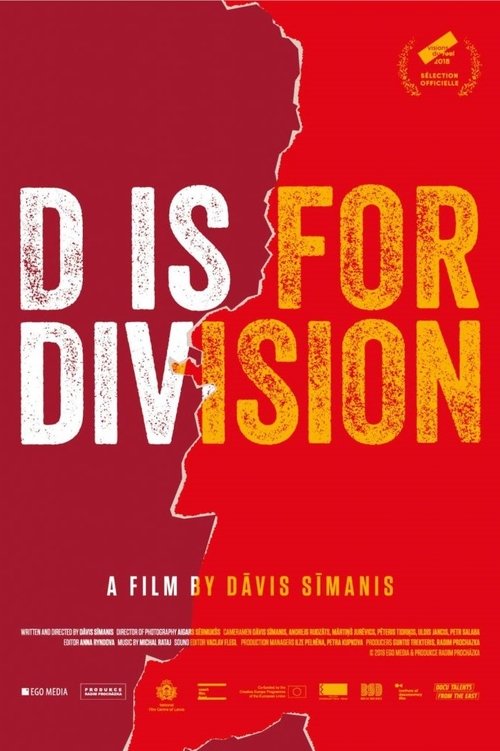
1940. On the border between Latvia and the USSR, a woman is killed in front of her house as she tried to protect her son from the liberating attack of the Soviets. Almost 80 years later, the archive photo bearing witness to this news item and representing a collateral victim of the European Union’s founding conflict forms the starting point for a journey undertaken by Davis Sīmanis. He navigates from one side to the other of this border, which today represents another separation, one that is geographical but also cultural: between Europe and Russia.
D is for Division
No description available.
Tenkrát 3 – Husákovo ticho
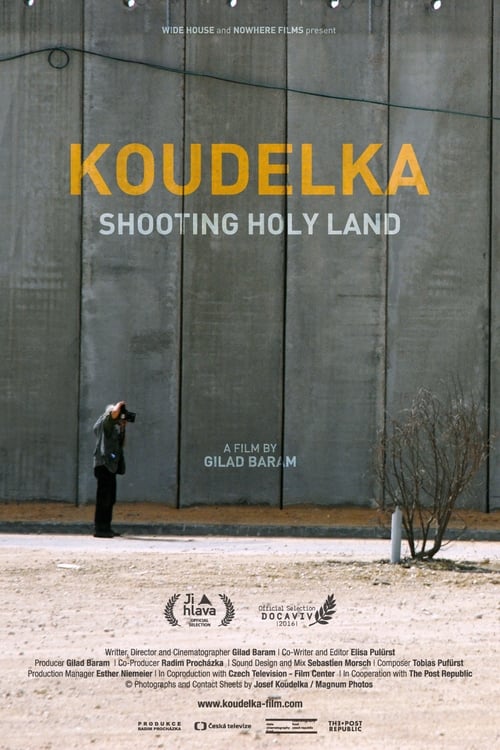
Czech Photographer Josef Koudelka grew up behind the Iron Curtain and always wanted to know "what was on the other side". Forty years after capturing the iconic images of the Soviet invasion of Prague in 1968, the legendary Magnum photographer arrives in Israel and Palestine. On first seeing the nine-meter-high wall built by Israel in the West Bank, Koudelka is deeply shaken and embarks on a four-year project in the region which will confront him once again with the harsh reality of violence and conflict. Director Gilad Baram, Koudelka's assistant at the time, follows him on his journey through the Holy Land from one enigmatic and visually spectacular location to another.
Koudelka Shooting Holy Land
A rich Czech tourist and his translator come to an Inuit shaman – an Angakkoq. The meeting, arranged at a local museum, is to discuss a legendary encounter between the Angakkoq’s ancestors with the ancestors of the Czech tourist. The foreigner is willing to pay a lot of money for the story. The shaman’s evocative narration brings to life a fictional story from the time of the first Christian missionaries in Greenland. This short film about the clash of different cultures and mentalities is the first Czech-Greenlandic co-production.
The Price of a Story
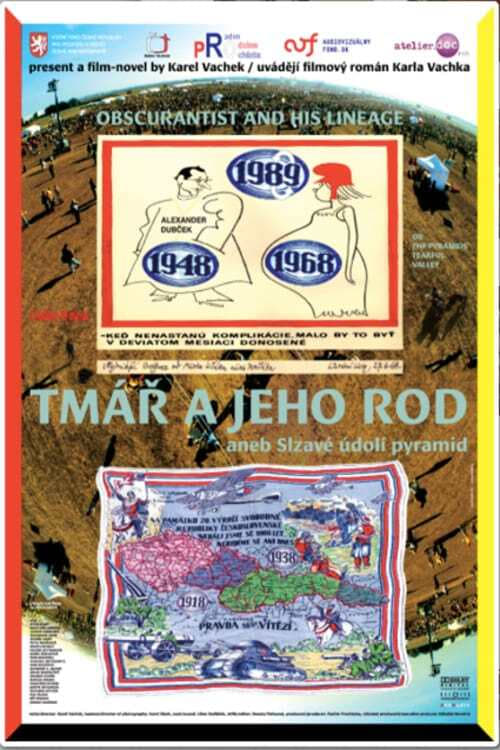
Karel Vachek’s latest documentary essay deals with the fine line between an internal belief in God and institutionalized religion. At the same time it brings up the need for a healthy sense of skepticism and the benefit of not believing in anything that advertises itself as certain. The filmmaker sets out for the USA, Japan, Great Britain, Poland, and the Balkans in his sometimes amusing investigation of spiritual substitutes, such as esoteric "teachings” or various fraudulent and magical practices, to which we sometimes fall prey due to our natural religious cravings. In addition to a Czech "prefab” family, who describe the carryings-on of their poltergeist, well-known mystery buffs appear in the film: Erich von Däniken, Raymond Moody Jr., and Ivan Mackerl.