Acting
Der Staatsanwalt hat das Wort was an East German television series.
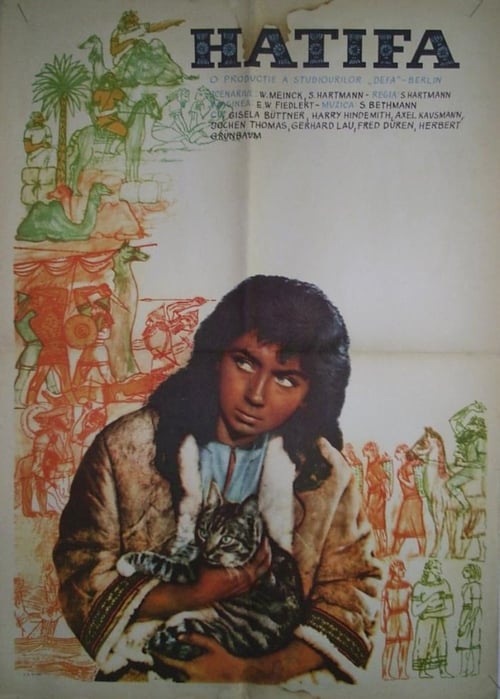
Hatifa is tired of her difficult fate and escapes from the place of her enslavement, a quarry in the desert. There she wanders around in freedom, but ultimately helpless, without water or food. Shortly before dying of thirst, she is saved by the sage Simsal, who is traveling with a caravan of the merchant Ganem. Hatifa quickly makes many friends, including the young servant Hodja. Only to him she confides her secret. The girl had to keep the fact that she was a slave to herself. After all, anyone who helps escaped slaves is mercilessly threatened with the death penalty. Out of consideration for the caravan, they both flee, but are soon picked up by Ganem. When he realizes that he can make a lot of money with Hatifa, he sells her again to a quarry.
No description available.
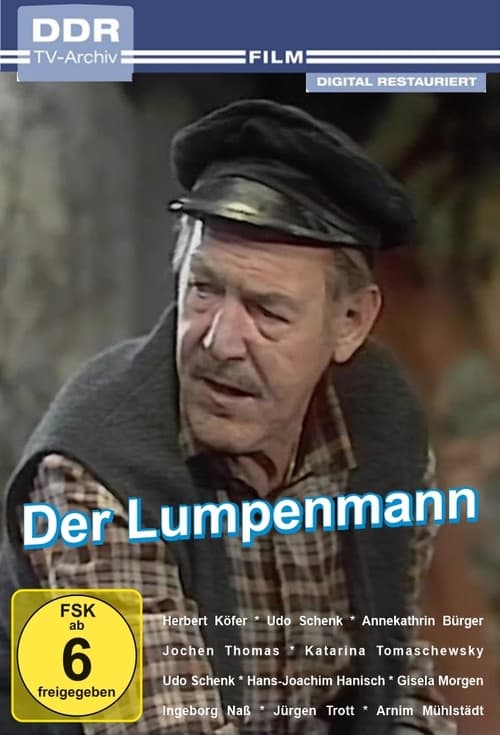
Peter, medical student and son of old materials dealer Richard Müller, wants to get engaged to the daughter of the director of a local construction company. The profession of his father has so far only vaguely hinted out of shame. And so his future in-laws think Richard is working in ministry. When he learns about it, he is initially offended. After all, he lives his profession with body and soul. But then Richard takes advantage of the misunderstanding and pays the bride parents a visit.
Four-part miniseries about the theologian Thomas Müntzer, who became a revolutionary and opponent of Luther during the Peasant War in 1525.
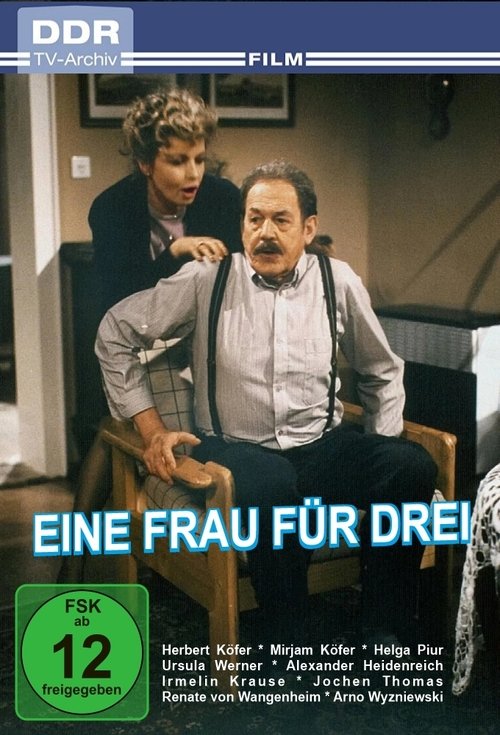
After two failed marriages, Walter is finally looking for a wife again. But his father Paul, who believes his own position in the house would be jeopardized if a daughter-in-law came into the house, cunningly gets rid of all the candidates. Walter has placed an advertisement for a wife, as both the male-headed household run by Walter's father Paul and the upbringing of his adolescent son Peter require a female hand to keep things in order. Grandfather Paul, on the other hand, feels that the cosy trinity and especially his own position in the house would be jeopardized if another daughter-in-law took over the reins. So Paul sets about inventively thwarting Walter's intentions. At first, it is completely inexplicable to Walter why all his encounters with marriageable ladies end in failure. But he has other things to worry about at the moment anyway. His son, Peter, is having an affair with his teacher's daughter, of all people.
A boy is busy writing all sorts of things in his diary.
Daniela – a single mother, whose boyfriend left for the US – believes wholeheartedly in Cuba's revolutionary new order. Meanwhile, in Florida, a plot is afoot. Under the command of an American officer, four Cubans ex-patriots and a Guatemalan land on the Cuban coast to prepare a US invasion of the island. Daniela's superior, the corrupt Cuban officer Palomino, is secretly helping the invaders and the young woman becomes entangled in the intrigue.
The beautiful and charming laundress Lurette is a well sought-after young woman in Ludwig XV’s Paris. Her heart is already taken, however, and she makes elaborate plans during Carnival to obtain the man she truly loves, the carpenter Campistrel. During her plans to make Campistrel jealous and recognize his love for her, she meets the Duke of Marly, who plans to make her his mistress. The unsuspecting Lurette finds herself caught in a love triangle, and her peer, Marcelline, must save the beautiful Lurette from these scandalous schemes.
Lifelong hard work for the count makes the servant Anton a cripple. Everybody calls him Crooked Anton. When, after the end of the war, the land of the count gets divided amongst the farmers, Anton receives a piece and hopes to be able to work freely. But an old debt and intrigue keep Anton and his family from finding peace. The farmers of the village begin to discover their own power when Annegret, Anton's daughter, leaves. Is a new beginning possible for Anton? This film paints an impressive panorama of the development of a minor village in Mecklenburg from the end of the war to the uprising of 17 June 1953.
Erich Kubak is an excavator operator at the lignite plant. A technical weakness in the excavator, which repeatedly leads to production downtime, is causing problems for everyone. Erich works on an improvement, but this is not accepted by the chief engineer. On his own initiative, Erich carries out an experiment and causes a great deal of damage. He is dismissed as excavator operator and then resigns. Meanwhile, his son Ewald, who also works at the plant, manages to interest the chief engineer in his father's improvement proposal. Together they work on perfecting it. When Erich finds out about this, he returns to the factory.
Hella and Günter want to have a baby, but it doesn't work out. With a few beers in the crown, Günter has the idea that saves the day: why shouldn't his friend Norbert try to inseminate him? Hella, however, is not so easy to persuade to have an affair.
Despite the fact that production manager Kruse doesn't have the actors or the crew for the job, he recklessly boasts that he could direct a revue film. To prevent him losing face, Kruse brings together four people - a dramaturg, a composer, a writer and an architect - and gives them the thankless task of turning his idea into a film. Except for the relatively unknown composer Alexander Ritter, who is enthusiastically committed to the project, the other members of the team find themselves stuck in this mess.
Two 17-year-olds, Werner Holt and Gilbert Wolzow, are pulled out of school and into Hitler's army. Gilbert becomes a fanatical soldier; but at the front, Werner begins to understand the senselessness of war.
A film about the historical uprising of the seamen in Kiel: During the Russian October Revolution of 1917, German and Russian soldiers start to solidarize with each other. By disarming the officers, machinist Henne Lonke and stoker Jens Kasten prevent the attack on a Russian freighter. When German admiralty gives out orders for operation "Nibelungen", which would lead the German fleet into a suicidal attack against England and quell the revolutionary spirit, seamen and soldiers from different political backgrounds unite in protest.
Screen adaptation of Julius Fucik's story about communist fighters.
Klaus lives with his two brothers Kunz and Franz in a little village. Together, they ply their trade as cobblers in a small workshop. But the workload rests mainly on the shoulders of ill-treated Klaus. When Kunz and Franz go off into the forest to chop wood for fuel they run into an old woman who asks them for some wine and bread. Rudely and gruffly, they refuse her request and return home without any wood. Klaus then has to set out and he meets the old woman as well. He gladly offers her his frugal meal which is suddenly turned into pancakes and good wine. In addition, he receives a golden goose for his kindness. The bird possesses a an unusual characteristic: all those who are prying, nosy, envious and rapacious get stuck to it and become glued to one another.
In an act of friendship and solidarity between two mining towns in 1929, the locals of Kryvyi Rih, Ukraine, give their flag as a gift to the locals of Bergstedt, Germany in this GDR propaganda film. This quickly takes on a symbolic meaning for the miners in Bergstedt as the Nazi party demands that this Soviet gesture be erased and the flag be replaced with their own. The miner and communist party functionary Otto Brosowski publicly declares it his duty to defend this flag against every danger, and he keeps his promise despite his family being threatened by torment and torture.
Frieda and August Walkowiak celebrate their 30th wedding anniversary. However, the marriage has been in crisis for some time. August wants to spend his old age in peace, while Frieda has no intention of giving up her position as LPG chairman. The problems in the countryside are huge, collectivization is not progressing fast enough, even comrade Heinrich Rantsch is clinging to his individual farm. Frieda fights for progress, even in her private life, because not only her burden but also her higher position is a thorn in her husband's side. During the wedding anniversary celebrations, Frieda is called to the LPG. This is the cause of the family quarrel that has been in the air for a long time. August demands her resignation. In vain - and so he moves in with Rantsch. Their daughter Helga also leaves the house because of the tensions. Frieda collapses. When she is in hospital, August comes to his senses.