Acting
No description available.
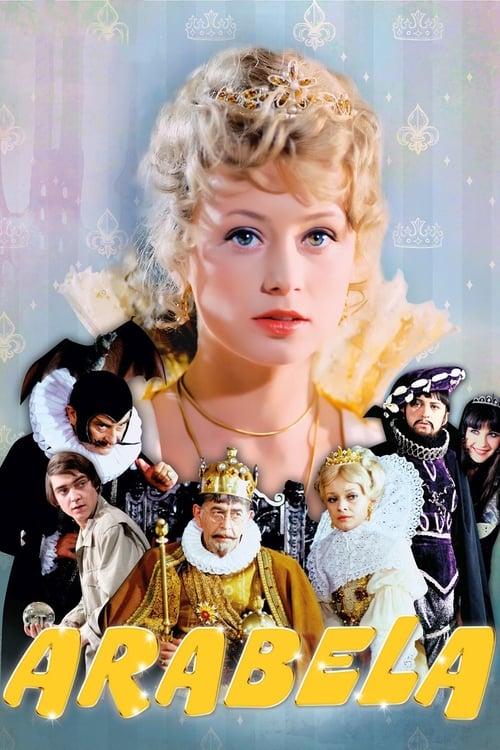
Arabela was a children's television series produced in Czechoslovakia which aired from 1979 to 1981. The series has 13 episodes and is in the Czech language.
Sanitka was a Czech television, drama series, first broadcast in 1984 and eleven episodes were made. It starred Jaromír Hanzlík, Tomáš Juricka and Zlata Adamovská among others.
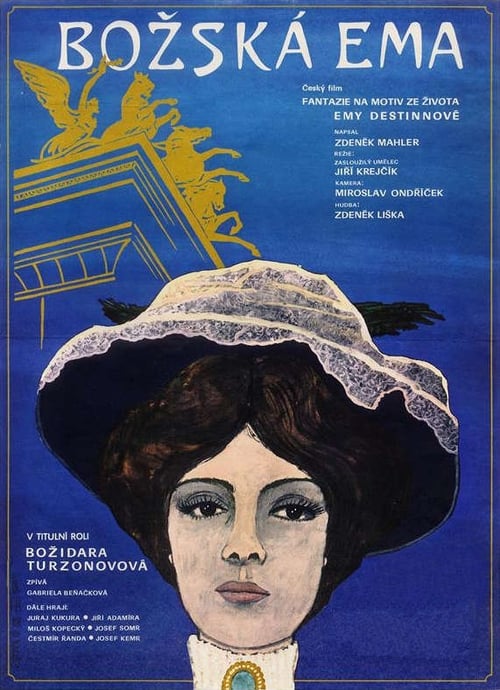
The opera lady singer Ema Destinnová is in all her splendor at the American stages. But in Europe there rages war and she decides to return home to Bohemia.
A story of a little girl Verka and her life during the beginning of WWII. Based on Vera Sládková novels.
A military base. An awkward soldier. A statue of Bach. And suddenly all guns in the area change into music instruments. Great mystery is immediately found by TV station. And soon the military base becomes a stage for huge TV show.
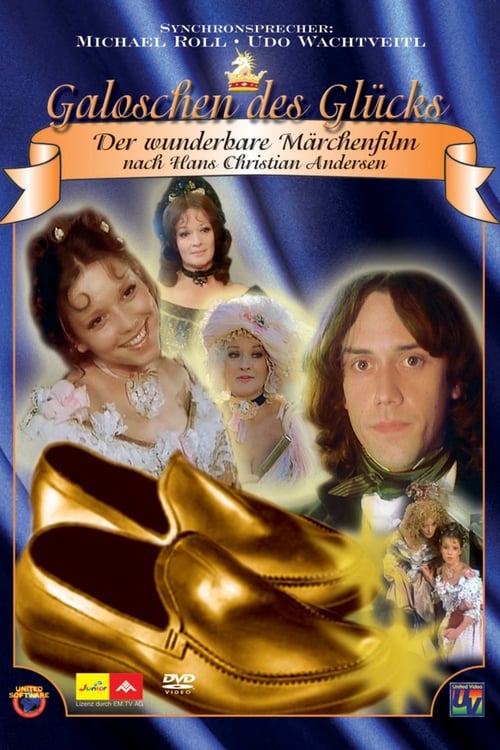
The Slippers of Happiness is another film made by the Slovak Film Production in co-production with West German companies based on classic world fairy tales. After Slovak folk tales [The Greatest Peck in the World, Salt Over Gold] and the works of German fairy tale writers Wilhelm Hauff [The False Prince] and the Brothers Grimm [The Land of the Thrush's Beard, Perinbaba], screenwriter Alex Koenigsmark and director Juraj Herz were inspired by the famous fairy tale by Hans Christian Andersen. It tells the story of slippers that the Fairy of Fortune enchanted so that they would fulfill every human wish and thus bring people happiness. The filmmakers humorously transferred the plot from Copenhagen to old Prague.
Piesočná potvorka (lit. The Sand Creature) is a 1985 Czech television miniseries based on Edith Nesbit's 1904 children's novel Five Children and It. The four Majer children—Janka, Braň, Cyril and Vladek—spend holidays together at a cottage, with their aunt Marta, who takes care of them in their parents' absence. One day, the older children decide to dig in an old sandbox and find an ancient wonder: Brontofusika, a prehistoric creature that can grant wishes. So Janka wishes that everyone would be as beautiful as the heroes from a fairy tale. It happens. No one recognizes the children in this disguise, not even their own aunt, which brings a lot of funny but also unpleasant situations. But the magic only works until sunset!
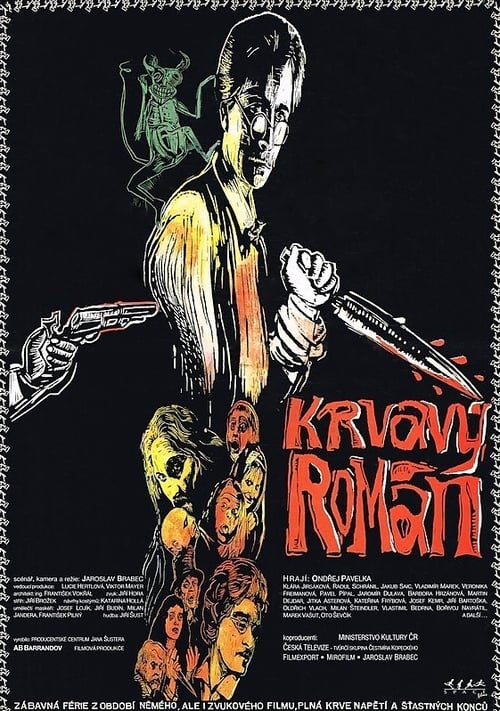
The distinctive artist, typographer, and writer Josef Váchal is known to the public primarily for his Blood Novel. The surrealistic exuberance of this defense of 19th-century pulp fiction caught the attention of Jaroslav Brabec and his colleagues, who found a corresponding image of 20th-century "trash." The authors' interest focuses primarily on the silent film era, with a journey through the history of cinema continuing through the advent of sound film to the present day (auteur cinema of the 1960s, modern horror), formally employing techniques such as tinted film. The versatile parody intertwines a colorful plot with the story of the author (Váchal/Paseky), who comments on and creates his book, and is further split in the plot into the characters of Fragonard and the Master. As with Váchal, reality increasingly enters the fiction, so that the only "happy ending" turns out to be the artist's finished work.
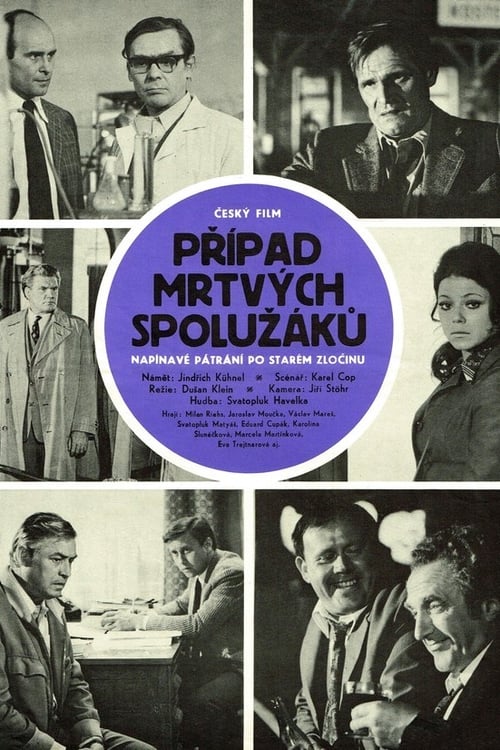
A West German businessman Friedrich Schmidt is arriving to Czechoslovakia with private mission and mission for Intelligence service. He wants to settle the old event from the time of the Second World War when he as a student of the Czech grammar school in the town of Kostelec took part at the denunciation of his schoolmate Pavel Richter. Pavel was during the period of Nazi terror following the assassination of Acting Reich Protector of Bohemia and Moravia Heydrich executed. Schmidt has also to enter into relations with persons suitable for cooperation with the West Intelligence service. Schmidt - earlier, before the German occupation Smíd - meets the schoolmates and endeavors to avert suspicion that arose already at the time of the tragic event.
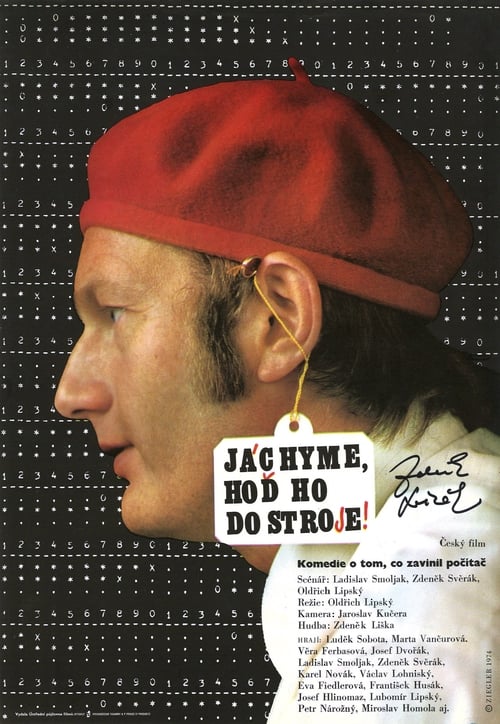
A sincere provincial young man, Frantisek Koudelka leaves to work in Prague. For the trip he buys a computer made horoscope with biorhythms charts, marked according to his date of birth, there are trappy, precarious, unsuccessful and even critical days and few successful days. The clumsy luckless person Frantisek has finally a guidance for his life.