Acting
Polizeiruf 110 is a long-running German language detective television series. The first episode was broadcast 27 June 1971 in the German Democratic Republic, and after the dissolution of Fernsehen der DDR the series was picked up by ARD. It was originally created as a counterpart to the West German series Tatort, and quickly became a public favorite.
Der Staatsanwalt hat das Wort was an East German television series.
No description available.
The artists Käthe Kollwitz, Otto Dix and Otto Nagel used different forms of expression, but had the same goal: fight against war, against exploitation and for the liberation of oppressed people.
A young poor girl falls in love with a rich heir.
Provincial shop owner Jakob Stäubli and his wife Frieda are looking forward to celebrating Christmas together with their daughter Nelly. But Nelly doesn't come. She prefers to celebrate in the city in the company of her new boyfriend André, a "better gentleman." The saddened Stäublis decide to sell their shop and move to Zurich as well. As they explore the city together after the move, the two country bumpkins find themselves in all sorts of turbulent situations. Father Stäubli is also exposed to erotic temptations when his daughter's lover sends a woman after him to get money out of him.
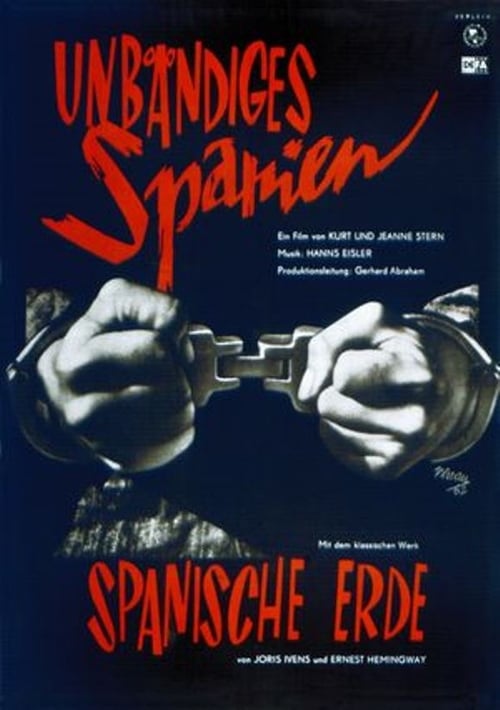
Documentary film about the Spanish Civil War.
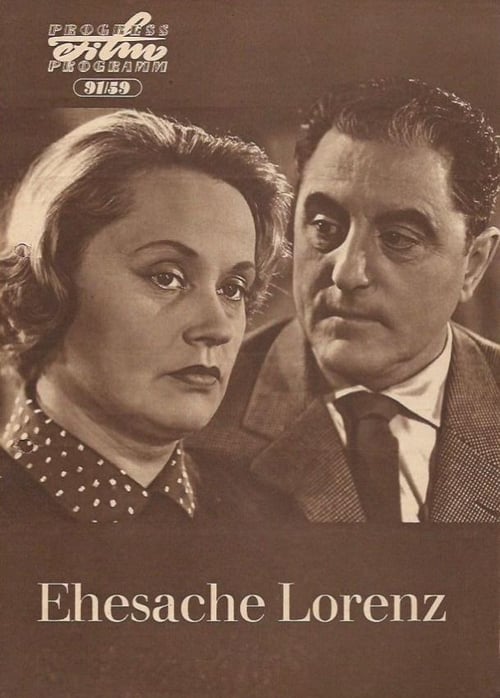
Trude and Willi Lorenz have had an exemplary marriage for 24 years. Their daughter Gitta takes them as a role model for herself and her fiancé Peter. But appearances are deceptive. Willi cheats on his wife with the young secretary Helga. He is a department manager in a heavy engineering company and travels a lot on business. Trude also has a busy working day as a divorce judge. Obviously, family life has been neglected as a result, and now Trude herself is facing a problem that is very familiar to her from her job. An alderwoman has drawn her attention to her husband's infidelity, and a visit from Helga, who demands that she give up her husband, forces her to make a decision. Willi Lorenz has cheated on both women. In a discussion, he finally confesses to Trude and their life together. The fact that it doesn't come to the "Lorenz divorce case" is also thanks to the sincere, compassionate driver Schliffke, who tactfully opens the eyes of his boss Lorenz and the young Helga.
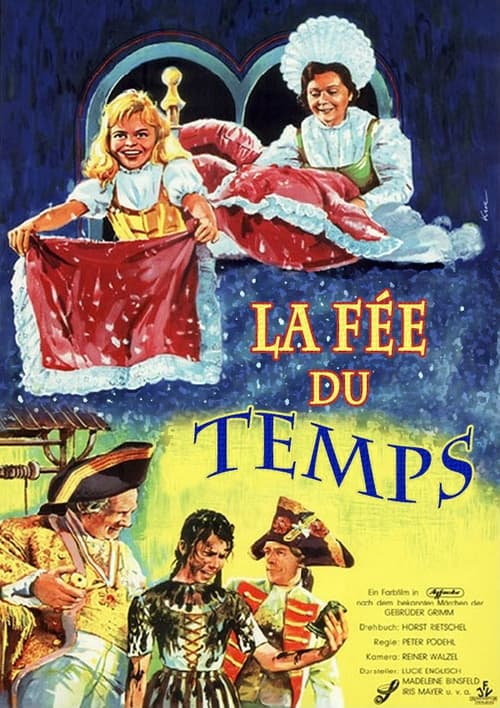
The widow has an ugly and lazy daughter, Pechmarie, and a beautiful and hard-working step-daughter, Goldmarie. Because Pechmarie is her real daughter, the widow clearly favors her and makes Goldmarie do all the work. Poor Goldmarie must also sit and spin all day by the well until her fingers bleed. When she tries to rinse out the spindel, it drops into the cold water. Her unsympathetic step-mother tells her to jump in after it. Goldmarie does as she is told, and then wakes up in the middle of a beautiful field of flowers. This is the land of Frau Holle, who welcomes Goldmarie and invites her to stay, as long as she will help with the housework. Marie stays and serves Frau Holle gladly, until she suffers so terribly from homesickness that she asks to go home. Before bringing her back, Frau Holle rewards Marie with a shower of gold. Upon her return, Goldmarie and her gold are welcomed by her greedy step-sister and -mother. Hoping for the same kind of reward, the step-mother sends ...
At the urging of his dying aunt, a young man of limited means forgoes marriage into comfortable society. He becomes husband to an unwed mother and father to a child. Their meager existence is threatened, however, when the woman he left at the altar reenters his life.
Kasper Mai, an export merchant and comrade with a “clean” record, discovers he is the prince of Hohenlohe-Liebenstein. His royal grandmother designates him as the heir to her estate. A private trip to her reveals that she does not want a NATO airbase built on her land. The GDR and his grandmother thus find a common interest, and a clever lawyer from the East works against other family members looking to settle their debts with the estate money.
A policeman is not convinced that the prime suspect in a murder case is realty guilty and so decides to reinvestigate the case, despite the lack of co-operation from locals.
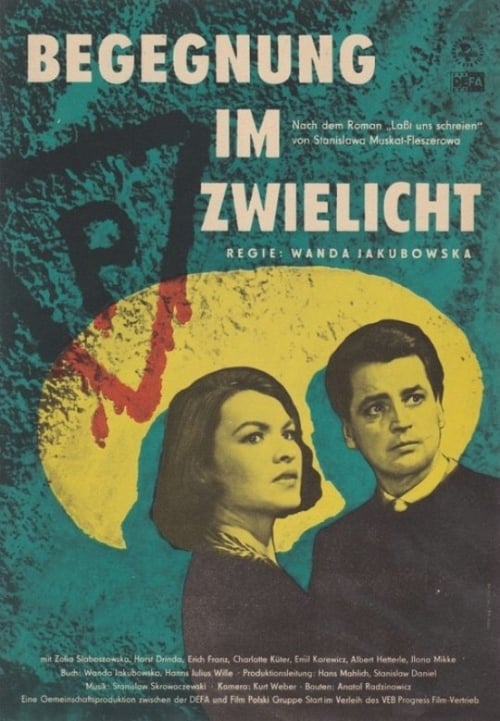
It was supposed to be a cozy Christmas evening with the family. Labor Director Walter Lörke was particularly looking forward to it. But then his daughter Anne surprised him with her future son-in-law Thomas Ostermann. And that's not all: Lörke is to become a grandfather. This doesn't suit him at all, especially as the young man clearly shows his critical attitude towards the state whose ideals Lörke has fought for all his life. An argument ensues - on Christmas Eve. Lörke leaves the apartment in a rage. But he is driven by unrest: He wants to know what kind of person his future son-in-law is and why he has such a negative attitude towards the state. It turns out that Thomas has had bitter experiences with the opportunistic attitudes of many adults and that, although he was the best student in his class, he was not admitted to university because of his critical opinions.
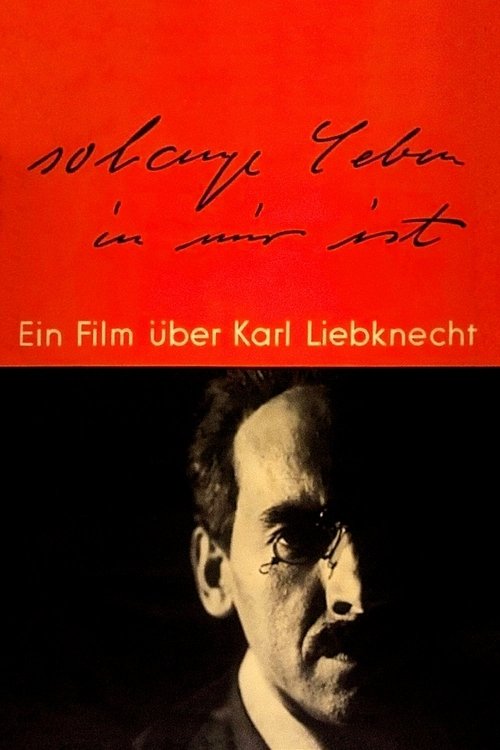
This is part one of a two-part biopic about Karl Liebknecht. In 1914, Germany is arming itself for war. Karl Liebknecht, left-wing revolutionary Social Democrat, workers’ leader and a virulent antimilitarist, is one among 110 SPD members of Parliament who vote against approving war loans. From then on, he is considered un-German and a traitor to the fatherland, and his own party’s leadership turns against him. Despite threats, Liebknecht speaks up against the war and writes the manifesto “The Main Enemy Is at Home.” Even when he is arrested and charged with treason, he does not surrender.
World-famous geneticist Professor HĂĽlsenbeck is a man of integrity who refuses to mix science and political gain. When his findings are being used to harm humanity, he immigrates to the USA in 1933 in protest against Nazi racial politics.
The story takes place in Mythikon, a small village on Lake Zurich in the 17th century. The pastor of a rural Zurich community is so obsessed with hunting that his passion threatens to cost him his office and dignity. Now, help is sought from the famous general and cousin of the pastor, who is supposed to set things right with a clever plan.
If any one man is responsible for the rejuvenation of the postwar Swiss film industry, that man was director Leopold Lindtberg. Matto Regiert (Madness Rules) was co-adapted for the screen by Lindtberg from a novel by Friedrich Glauser. Heinrich Gretler stars as Police Constable Studer, the hero of several of Glauser's most popular works. This time, Studer must solve the murder of the director of an insane asylum -- and it's not (surprise, surprise) the most likely suspect, manic-depressive patient Herbert Caplaun. For box-office purposes, Matto Regiert stresses a romantic subplot involving Caplaun and nurse Irma Wasem.
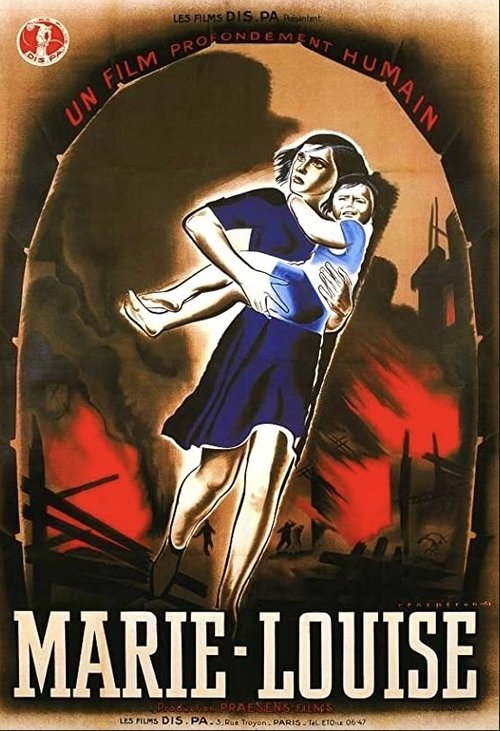
The titular Marie-Louise is a young French lass who is evacuated to Switzerland when her country is overrun by the Nazis. Suffering a nervous breakdown, she is given comfort and shelter by a wealthy family. Unfortunately, living in the lap of luxury makes Marie-Louise hesitant to return home to her mother and war torn home. Eventually the girl comes to her senses, but it isn't easy.
A working-class son who became orphaned in the war is brought up by his foster father to become an upright citizen. Now, after graduating from a teacher training college, he is faced with the task of preparing young people for life.