Camera
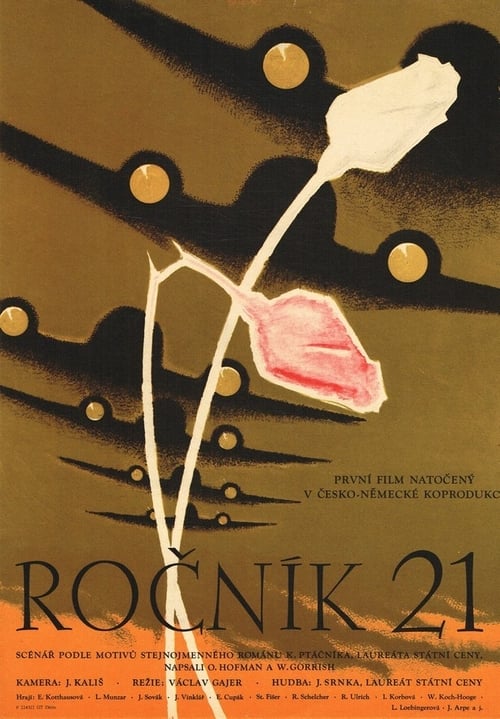
In November of 1939, the British consulate in Norway receives documents saying that the Nazis are conducting secret rocket research in Peenemünde. But the British doubt the authenticity of the so called "Oslo report". Thus, the Germans continue their experiments unimpeded. At the same time, resistance groups from France, England, Poland, and Germany try to find and to sabotage the secret Nazi research base. When the first "V 2" rocket is successfully launched, the Allied commanders finally become interested in the "Oslo report".
Berlin in the 1930s - Adolf Hitler comes to power, communists and social democrats are persecuted, books are burned and Jewish citizens are ostracized. The outwardly shiny façade of Berlin, the capital of the Reich, reveals nothing of the unequal struggle of young people against the increasing oppression...
A high-rise building in the center of Berlin in the GDR on July 11, 1982. The final match of the soccer World Cup is being broadcast on television. Five episodes revolve around this event: Soccer fanatic Kneutzsch is torn between the exciting match and the rather irritated woman by the unexpected visit of a lady to whom he has written a marriage announcement ... Dr. Kobermann - on painkillers - has mistaken the bathroom door for the corridor door and locked herself out. Her husband is sitting in front of the TV with headphones on and doesn't hear her ringing, so she seeks refuge in her nightgown with a neighbor, a flautist. After his ex-love Carmen leaves him and wants to return home, the exiled Andrés follows the game - in the knowledge that his father, thousands of kilometers away, is also watching...
Fifteen-year-old Heinz Stielke is a Hitler Youth fanatic who is devastated to learn a hidden truth about his respected father who was a German officer in WWII: He was Jewish. Pushed out of his community after the discovery, young Heinz falls into a tailspin of alienation and anger. He is subsequently thrust into a series of social collisions across the war-torn German fatherland.
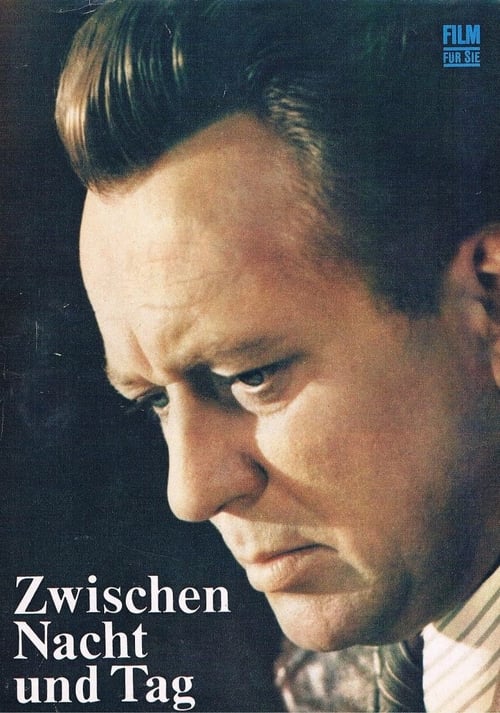
A commercial artist with a lisp chooses silence, unexpectedly propelling his career. His perceived innovation leads to rapid advancement in an ad agency. Mueller-Stahl shines in this biting critique of East German workplace culture.
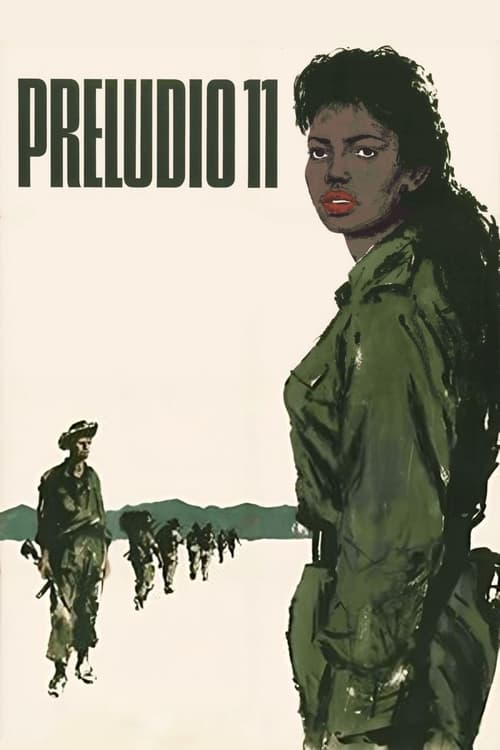
Daniela – a single mother, whose boyfriend left for the US – believes wholeheartedly in Cuba's revolutionary new order. Meanwhile, in Florida, a plot is afoot. Under the command of an American officer, four Cubans ex-patriots and a Guatemalan land on the Cuban coast to prepare a US invasion of the island. Daniela's superior, the corrupt Cuban officer Palomino, is secretly helping the invaders and the young woman becomes entangled in the intrigue.
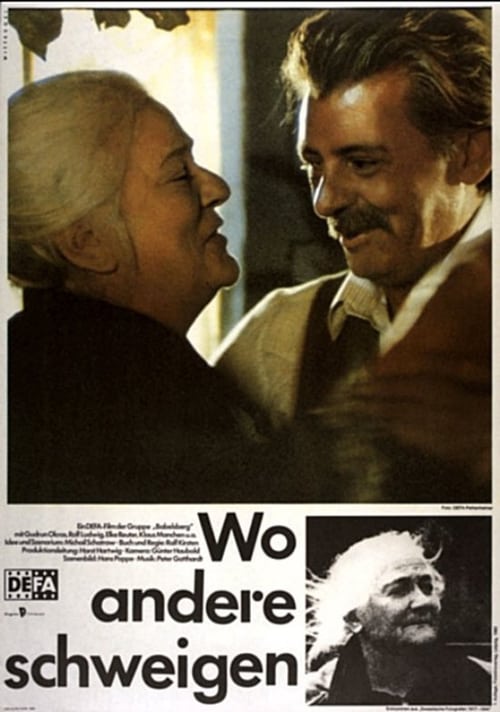
Episodes from the life of German poet and communist Erich Weiner: his stay in Paris, participation in the Spanish Civil War, years of exile in Russia. Moscow, May 1941. Children play in the sun, young people fall in love, make plans for their future. German emigrants, including 50-year-old Erich, are concerned about events in their homeland and sense impending disaster...
Ferdinand is an army major and son of President von Walter, while Luise Miller is the daughter of a middle-class musician. They fall in love with each other, but both their fathers urge them to end the affair.
Erich Kubak is an excavator operator at the lignite plant. A technical weakness in the excavator, which repeatedly leads to production downtime, is causing problems for everyone. Erich works on an improvement, but this is not accepted by the chief engineer. On his own initiative, Erich carries out an experiment and causes a great deal of damage. He is dismissed as excavator operator and then resigns. Meanwhile, his son Ewald, who also works at the plant, manages to interest the chief engineer in his father's improvement proposal. Together they work on perfecting it. When Erich finds out about this, he returns to the factory.
A flamboyant comedy about love, work and money—revealing that the "planned" economy produced some unconventional entrepreneurial methods.
Pensioner Erich Zarling loves two things: his daughter Ulrike and his dog sports club, of which he is chairman. But this position is in danger, so he wants to make himself indispensable with a daring move: He wants to build a sports clubhouse. He has come up with a curious idea to raise the funds: the sale of thirty state-owned trees from Berlin's Puschkinallee. His daughter Ulrike, who loves to sing and dance, is a chambermaid at the "Stadt Berlin" hotel. And against her father's wishes, she dreams of the boards that mean the world. A guest, the pop singer Balter, hires her as a replacement for his absent partner at the "Night of the Celebrities". He promises her more, but disappoints her. Father Zarling comforts her and they sing the "Rose Song" together in his tricked-out sportsman's home.
At the beginning of the Second World War, Czech music student Honsik comes to Germany from Prague to join a "foreign worker company". After rescuing a boy from the rubble of a bombed-out house, he himself is seriously injured and taken to a hospital in Stralsund. There he is regarded as a second-class citizen and the Germans are preferred to him. Nurse Käthe stands up for him, cares for him and defies all prohibitions. A love affair is kindled between the two, but it is not under a good star. Honsik tries to flee to his homeland with his comrades and Käthe supports him. At the last moment, however, Honsik realizes that his love for Käthe is stronger than his homesickness and makes his way back. Once back home, he can only watch as Käthe is arrested by the Gestapo. With the help of a resistance fighter, the young man from Prague manages to escape after all.
Ten days in the life of socialist politician Clara Zetkin. In August 1932, she is summoned from Archangelskoje near Moskow to open the new legislative session because at seventy-five, she is the oldest representative in the German Reichstag. Although she is ill and almost blind, she see this as her chance to make her voice heard amid the growing Nazi influence in Germany.
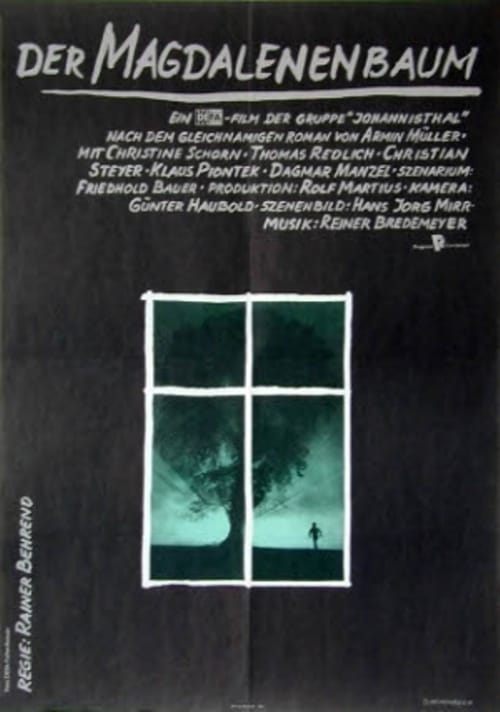
The young sailor Felix Striebel goes on vacation to a village and visits the fresh grave of "Mother Magda".
Berlin during the Great Depression of 1929. Unemployed cab driver Emanuel sees no more opportunities for himself in the city and wants to try his luck somewhere outside. His friend Fritz lends him his cab for one last trip. In the process, he meets the dancing girl Susi. She is young, beautiful, carefree, self-confident and persuades him to stay. During a demonstration by the unemployed, a policeman is stabbed to death. Emanuel is suspected. He is arrested in the evening at Susi's revue. Frida and Gerda and other young people with their problems and their longing for a little security and social safety are also there.
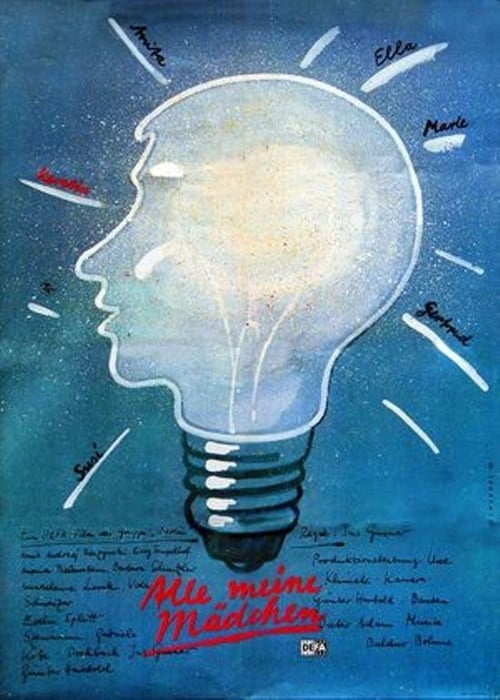
Ralf Paeschke is a film student who has to make a documentary film about a group of women working in a lamp factory. There is brazen Susie, mischievous Kerstin, lonely Anita, single Ella, withdrawn Gertrud and the imposing forewoman. When Kerstin is suspected of stealing, tension among the women mounts. Ralf demands that things be clarified, and his film plays an unexpected role in the matter.
Johanna is a dedicated female scientist in a near-future world. Her research team develops a drug called "Petersein masculinum 199," capable of transforming a woman into a man. Driven by scientific curiosity and an unrequited love for her cold project leader, Professor Peters, Johanna volunteers as the first human test subject.The chemical process succeeds, and she becomes a man named Johann Anders. However, the physical triumph quickly turns into a psychological crisis. As Johann, she experiences the world from a male perspective and is shocked by what she finds. The men around her live in a world of emotional detachment, power struggles, and casual sexism.When Johann sees how the Professor emotionally mistreats his own daughter, the illusion shatters. Horrified by the lack of empathy required to thrive in this patriarchal society, Johann ends the experiment on day 29. She chooses to change back into a woman, rejecting the toxic male world.
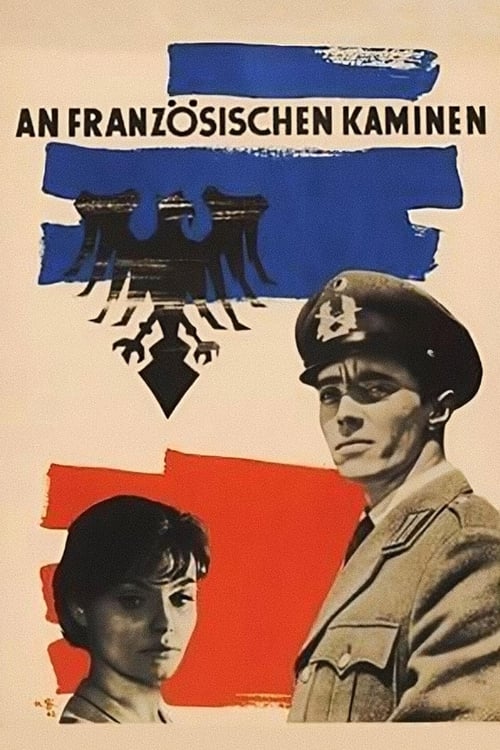
Bundeswehr soldier Klaus’ regiment is stationed in France, to take part in NATO maneuvers. The soldiers are ordered to be kind to the populace, since the West German High Command wishes the French to forget the atrocities that were committed during the Second World War. Klaus falls in love with Jeanne, the daughter of the local mayor. He discovers that his commanders intend to demolish the ruins of a local church, in which civilians were murdered by the German occupation forces at 1944. A local journalist who researches the event discovers that West German General Rucker ordered the massacre, but he is mysteriously murdered. Klaus defies his commanding officer Siebert, who instructs him to steal the documents indicting Rucker, and hands the evidence over to Jeanne.
The puppet boy Turli, who was only recently been carved from wood by the toymaker Kasimir, suddenly springs to life. Turli has nothing but nonsense on his mind and wreaks chaos everywhere he goes, although he is actually supposed to attend school.
Fritz Weineck, a worker′s son from Halle, loves music – and dreams to make a living out of it one day. When his friend Alfons, a World War I veteran, gives him a trumpet as a gift, Fritz seems to come closer to fulfil his dream. But then, Fritz realizes that after the end of the German empire workers still have to desperately fight for their rights, and decides to use his instrument for political means: At a meeting of militant workers, he uses his trumpet as a signal horn. But Fritz suffers a severe setback when a comrade dies in the fight for an arms depot because of his fault.