Thomas Lucas
Directing
Biography
Thomas Lucas is an American television director, writer and producer based in Armonk, New York. He spent many years working for the Science Channel and National Geographic Television before starting his own production company. Lucas and Greg Diefenbach co-founded Alliant TV Network, an online documentary distribution company, as well as the platform XiveTV.
Known For

PBS' premier science series helps viewers of all ages explore the science behind the headlines. Along the way, NOVA demystifies science and technology, and highlights the people involved in scientific pursuits.
NOVA

Cutting-edge stories about the origins of the universe, black holes, exploding stars, the search for ET life, and the nature of the planets. How did the universe begin? Where will it end? Are there other worlds like Earth?
Cosmic Journeys
Astronomers are closing in on the proof they've sought for years that one of the most destructive objects in the universe—a supermassive black hole—lurks at the center of our own galaxy. Could it flare up and consume our entire galactic neighborhood? Join NOVA on a mind-bending investigation into one of the most bizarre corners of cosmological science: black hole research. From event horizon to singularity, the elusive secrets of supermassive black holes are revealed through stunning computer-generated imagery, including an extraordinary simulation of what it might look like to fall into the belly of such an all-devouring beast.
Nova: Monster Of The Milky Way

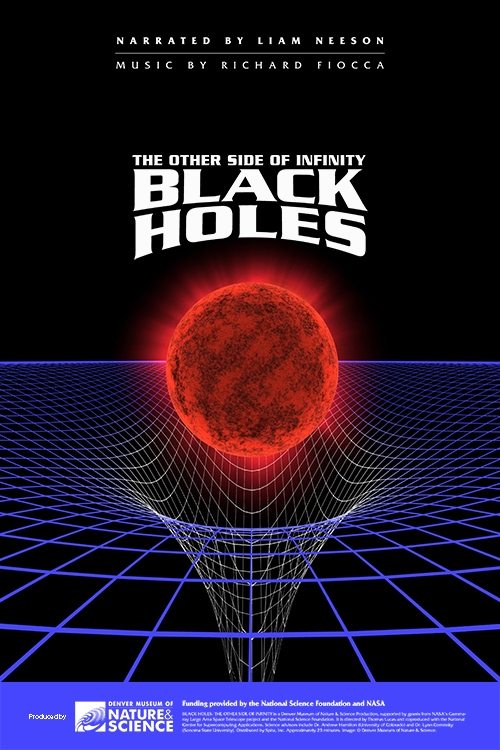
A presentation of the facts and theory surrounding the astronomical phenomenon of "black holes", using the latest in computer-generated imagery. Theories regarding their origin are presented, along with speculation about what lies with and beyond them.
Black Holes: The Other Side of Infinity

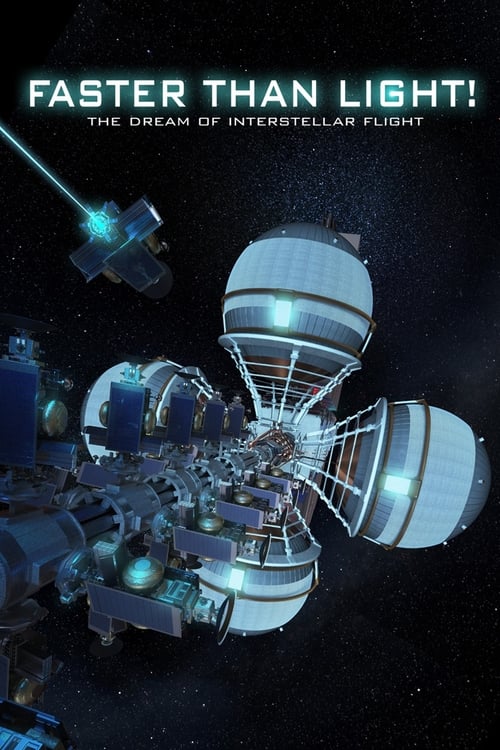
“Faster Than Light” explores the longstanding quest to develop spacecraft with enough power and speed to reach the stars. The film asks: What will it take to reach a newly discovered planet circling our Sun’s nearest neighbor, Proxima Centauri? Based on real science and engineering, “Faster Than Light” takes audiences on a thrilling journey into the future, aboard laser-driven space sails, antimatter engines, and even warp drive – right out of science fiction. “Who can say how far, and how fast, our technology will one day take us?” said director Thomas Lucas.
Faster Than Light: the Dream of Interstellar Flight

The second planet from the sun, Venus, with its toxic overheated surface, has long been neglected by planetary mission planners. Lately, Earth's sister planet has taken center stage in one of the greatest quests in science today: the search for life-bearing exo-planets across the Milky Way galaxy. This quest hinges on several essential questions: Why did planet Earth live, and why did Venus die?
Exploring Venus

Follows a trail of energy into the power centers of the universe. Each program visualizes these realms based on current scientific data and uses state of the art supercomputer simulations. Dive into the heart of a supermassive black hole, fly down onto the toxic landscapes of alien planets and ride along the roiling surface of a star that's about to explode!
Secrets of the Universe

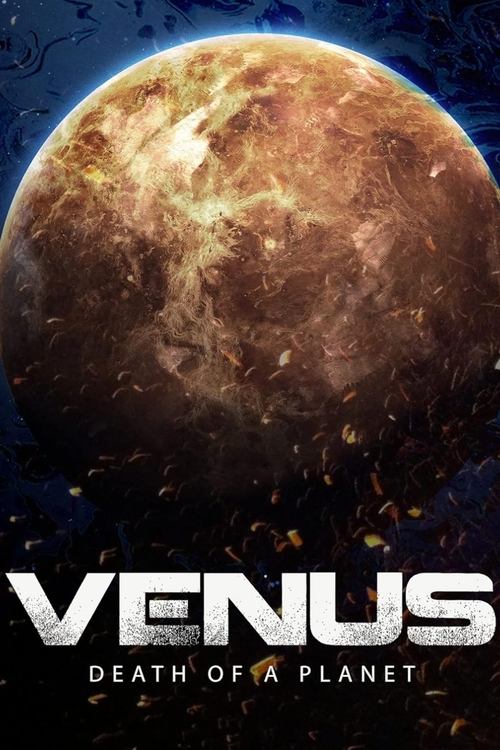
Billions of years ago, Venus may have harbored life-giving habitats similar to those on the early Earth. Today, Earth's twin is a planet knocked upside down and turned inside out. Its burned-out surface is a global fossil of volcanic destruction, shrouded in a dense, toxic atmosphere. Scientists are now unveiling daring new strategies to search for clues from a time when the planet was alive.
Venus: Death of a Planet

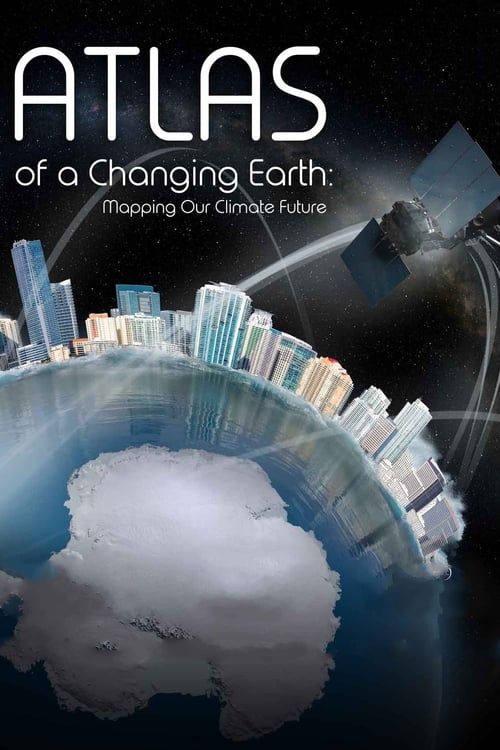
This film illustrates how a revolution in one of the most basic of all human enterprises – the making of maps – is shedding new light on our planet's evolution as global temperatures rise. This original MagellanTV documentary explores the dynamic processes causing glaciers in Greenland and Antarctica to melt, and shows how rising seas could threaten coastlines around the world.
Atlas of a Changing Earth

The remarkable synergy between biology and technology is blurring the line between man and machine. We are at a critical juncture in our evolution: as technology continues to progress, humans are becoming more machine-like and machines are becoming more human. With striking 3D animation and special effects, Beyond Human joins inventors, scientists and philosophers for an unprecedented voyage into the future of bioengineering and robots.
Beyond Human

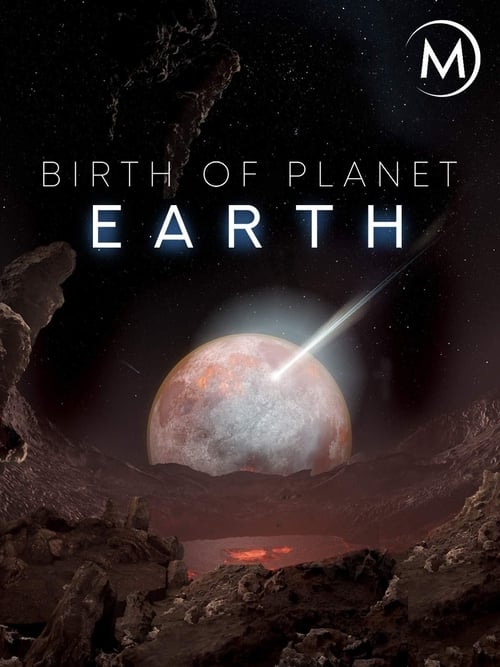
Birth of Planet Earth tells the twisted tale of our planet’s origins. Scientists now believe that our galaxy is filled with solar systems, including up to a billion planets roughly the size of our own. The film employs advanced, data-driven, cinematic-quality visualizations to explore some of the greatest questions in science today: How did Earth become a living planet in the wake of our solar system’s violent birth? What does its history tell us about our chances of finding other worlds that are truly Earth-like?
Birth of Planet Earth

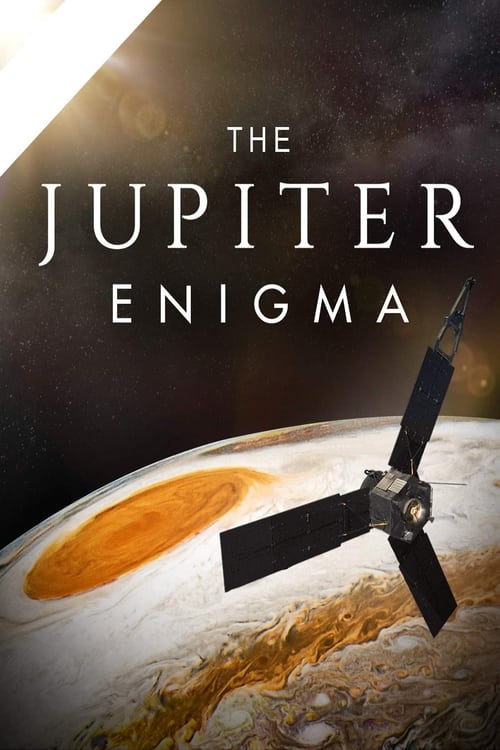
What can the giant planet Jupiter tell us about the birth of our solar system five billion years ago? Drawing on new findings from NASA's Juno mission, scientists are peering into Jupiter's stormy heart to reveal the very origins of our solar system: a chaotic early time when smaller planets were flung space or sent into shattering collisions, and the fate of planet Earth hung in the balance.
The Jupiter Enigma

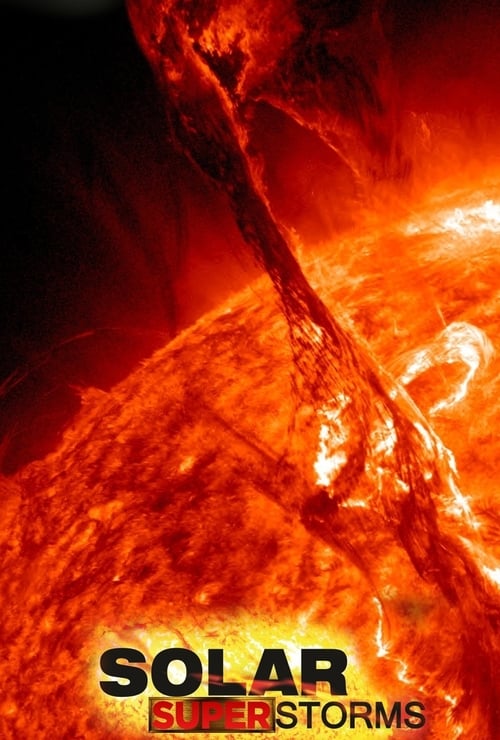
The causes and consequences of solar weather.
Solar Superstorms

Uncover clues about the origins of our galaxy with a team of astronomers and scientists as they strive to locate a strange presence hidden deep in the core of the galaxy. Learn how this mysterious realm harbors clues to the origin of the world and probes the future course of our galaxy and universe.
Unfolding Universe

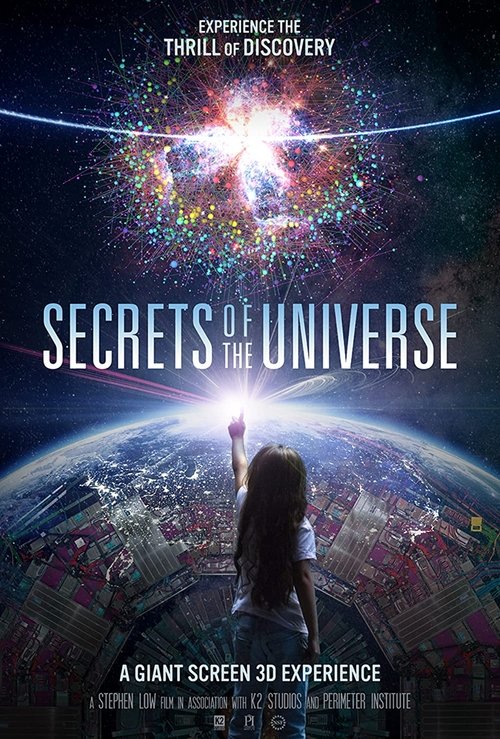
Secrets of the Universe is a sweeping, 3D Giant-Screen adventure that immerses audiences in the greatest mysteries of our time- puzzles spanning from the infinitesimal to the infinitea journey guided by some of the most brilliant minds, seeking to answer life’s greatest questions..The answers await at the collision points of intellect and imagination, of theory and experiment, of the tiniest particles and most powerful forces in the Universe. Our science adventure is led by scientist Manuel Calderon as we travel to CERN, just outside of Geneva on the Franco-Swiss border, to use the Large Hadron Collider (LHC), the biggest machine ever built and the most powerful scientific instrument ever created.
Secrets of the Universe

Follow a group of researchers traveling to Darin Island determined to track sharks and learn their migration patterns. To do so, they must strategically place tracking devices on the beasts, which proves to not always be easy. Dangerous currents intervene and the sharks can deliver bone-crushing swipes with their tails. Find out how the sharks and scientists fare! Distributed by XiveTV.
Galapagos Realm Of Giant Sharks

Some believe Mars is the next home for Humanity. But the real "red planet" is a trickster; strikingly beautiful, yet sweetly sinister. Even as a growing armada of instruments arrive, this small cold world conceals its secrets. This film merges the mythic and the scientific to show that Mars may not be what we imagine. Settlers beware: the Red Planet may change us as much as we change it.
Mars Calling: Manifest Destiny or Grand Illusion?

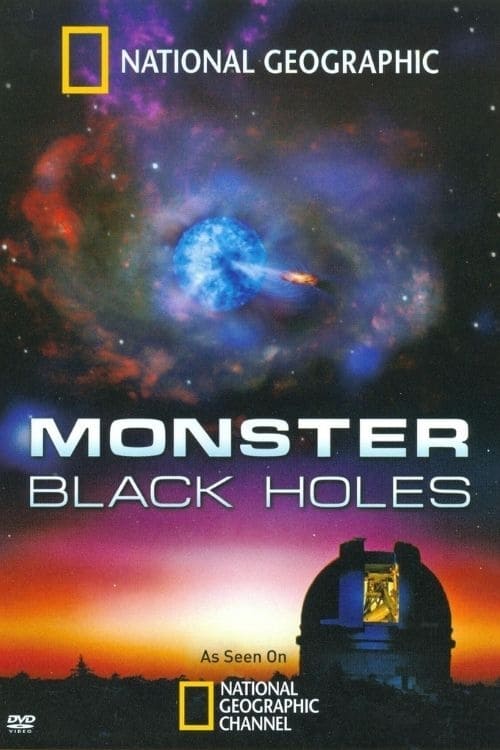
Travel to the edge of space and beyond to discover natures ultimate abyss black holes. Explore where they are found, how they begin, and how it may be possible to harness and use the power they produce. In Monster Black Holes, scientists steadily piece together the complex dynamics of a black holes birth and are also examine the growth of a select few black holes to super massive proportions that dominate the centers of galaxies. As a monster black hole swallows everything in its path, it generates energy that shapes the universe around it in powerful ways. Journey into the heart of a black hole and explore what happens to matter when it falls into a black hole, and whether the Milky Way galaxy will one day come to an end when the black hole at the galaxy's center explodes.
Monster Black Holes

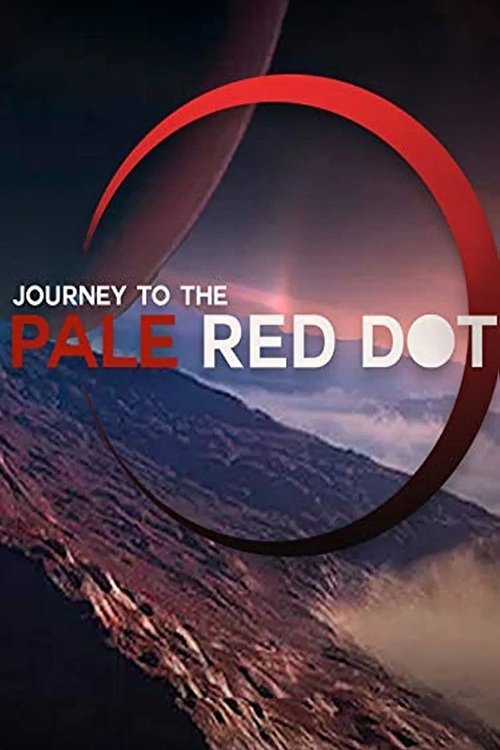
The search for planets beyond our solar system has brought an historic discovery: a planet slightly larger than Earth orbiting a star called Proxima Centauri. At just over 40 trillion kilometers from the Sun, Proxima Centauri is our closest stellar neighbor. Does its planet have a climate, or even life?
Journey to the Pale Red Dot

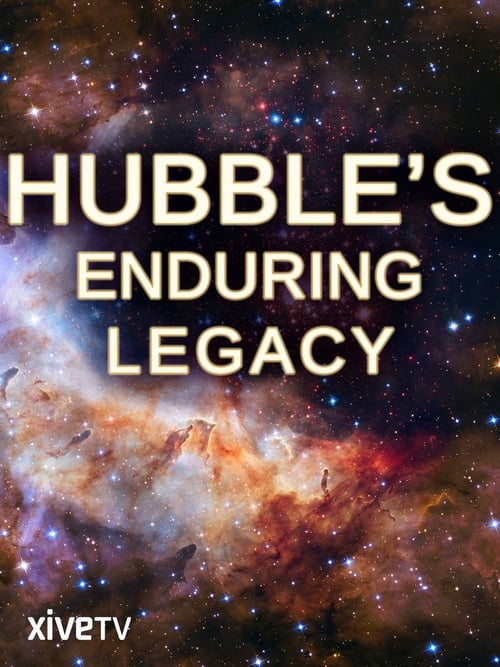
A fleet of high-tech telescopes, led by the NASA and ESA Hubble Space Telescope, has delivered an unprecedented chain of discoveries about how galaxies like the Milky Way took shape, how stars live and die, the influence of black holes, and the birth of the planets and the solar system. In this new age of astronomy, scientists are testing topics from the origin of life to Einstein's theories.