Acting
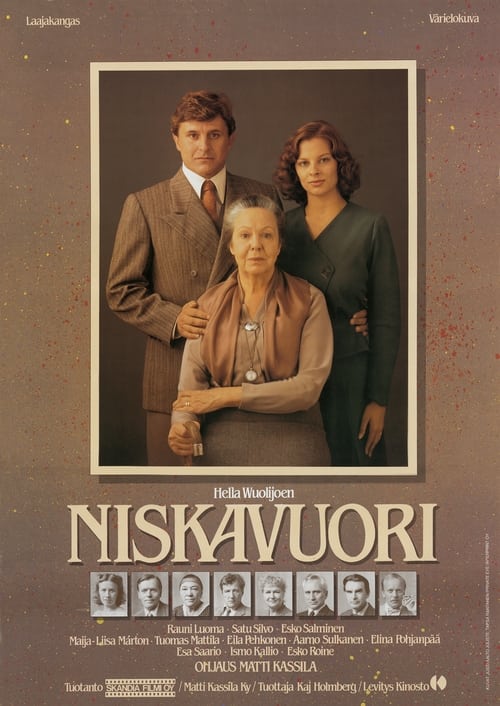
Ilona, a young teacher, arrives in a village in Tavastia. She and Aarne, the wealthy owner of the Niskavuori farm, who is frustrated with his marriage, fall in love. The relationship becomes a public secret. Aarne's wife Martta, who owns half of Niskavuori, wants to hold on to her husband until the last. For Loviisa, the matriarch of Niskavuori, the most important thing is the reputation and honor of the family.
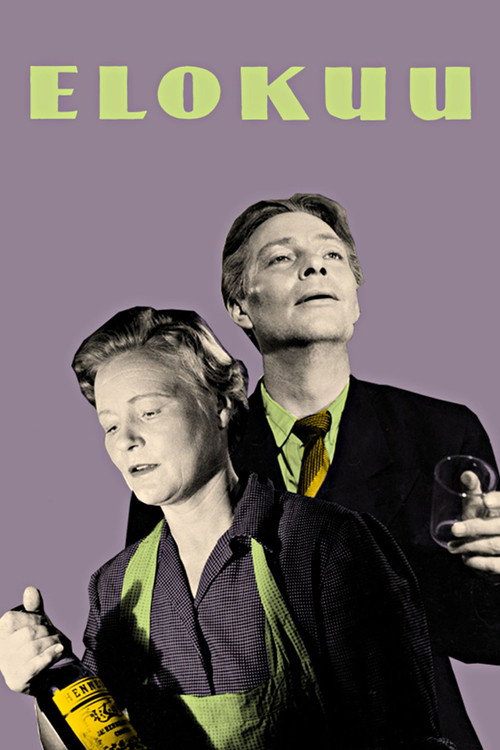
The title of the Finnish film Elokuu translates to August. Directed by Matti Kassila, one of Finland's premiere filmmakers, Elokuu was adapted from a novel by Nobel prize winning finnish author F.E. Sillanpää. Simply put, the story concerns the decline and fall of a once-proud family, thanks to the alcoholism of its paterfamilias. Toivo Makela delivers a powerfully effective performance as the inebriated protagonist, avoiding the usual "drunken" cliches. The overlong running time, coupled with the downbeat nature of the subject, limited the film's worldwide appeal.
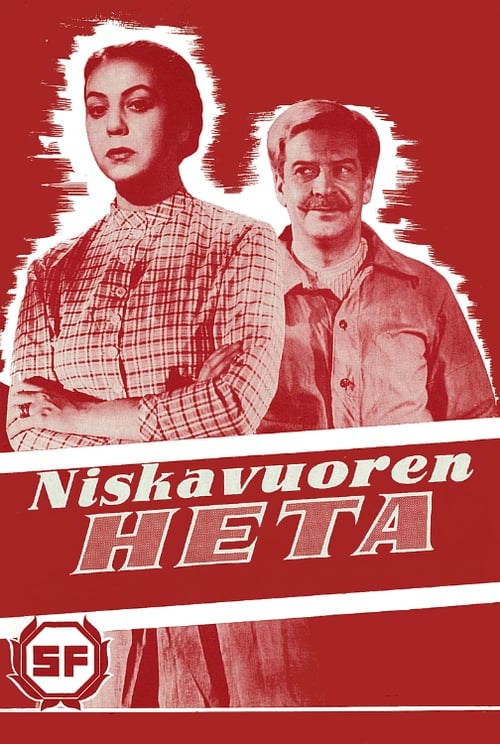
Heta, the strong-willed daughter of the Niskavuori family, who is pregnant, marries Akusti, a farmhand, and remains bitter toward Santeria, who broke her heart. Heta and Akusti begin their life together on the modest Muumäki farm, where they are assisted by their loyal maid Siipirikko.
Lasse divorces his second wife Pirko when it turns out that he has a child with Raija. They get married, but as Lasse reflects on his three marriages, he soon becomes unsure whether marrying for the sake of the child was a wise decision after all.
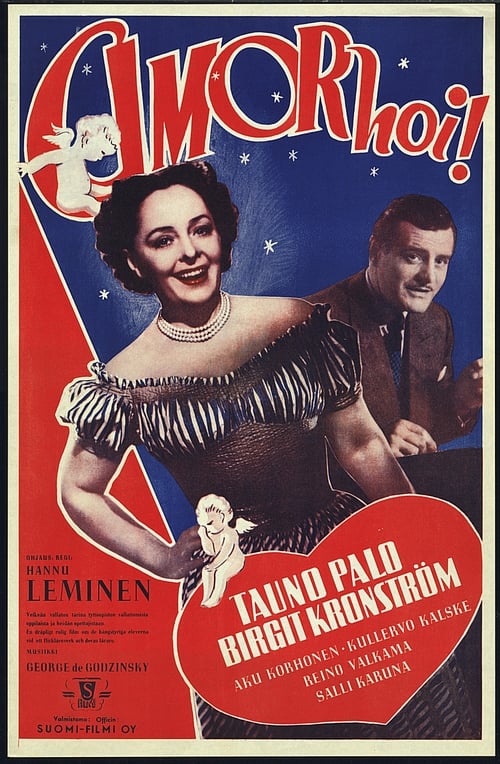
Master Tuula Vihervo teaches languages at a women's college, where American-Finnish Charles Thompson Jr arrives to do an inspection on behalf of his father's college donor. The arrival of a guest and Tuula's infatuation causes a stir inside the college and in a restaurant in Helsinki, where Tuula starts performing as the singer Irina Meller.
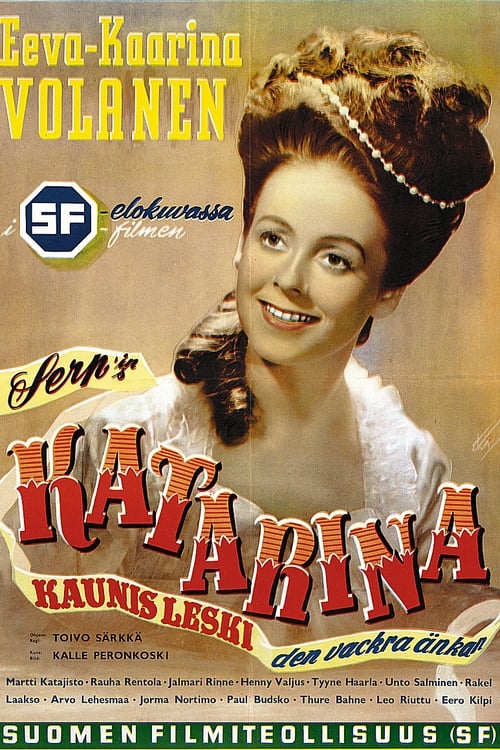
1790 Turku. After Katarina Thorwöst becomes a widow, there are many suitors, but her heart belongs to the fencing teacher lieutenant Carl-Magnus Schildt.
A comedy about a poor artist who is accidentally accused of the murder of his fiancee.
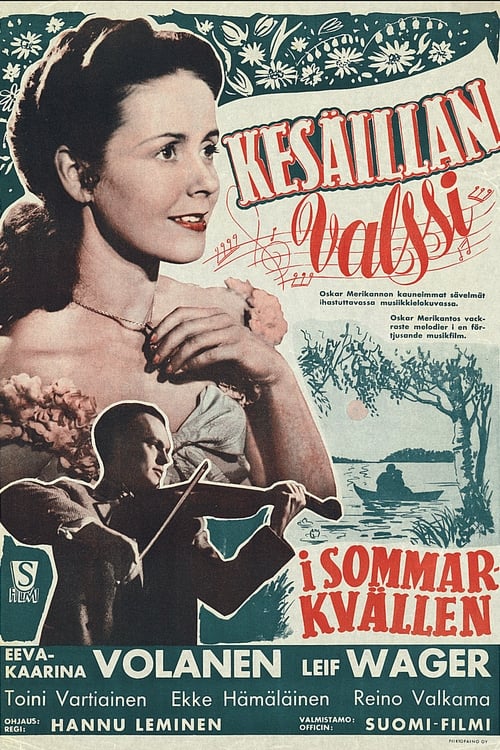
A story built around the music of Oskar Merikanto, tells the love story of the poor musician Lauri Alanko and the daughter of the rich Grahn family Annina. Annina’s family doesn’t approve of the relationship, and the couple’s happiness is also threatened by Lauri’s worsening eye disease.
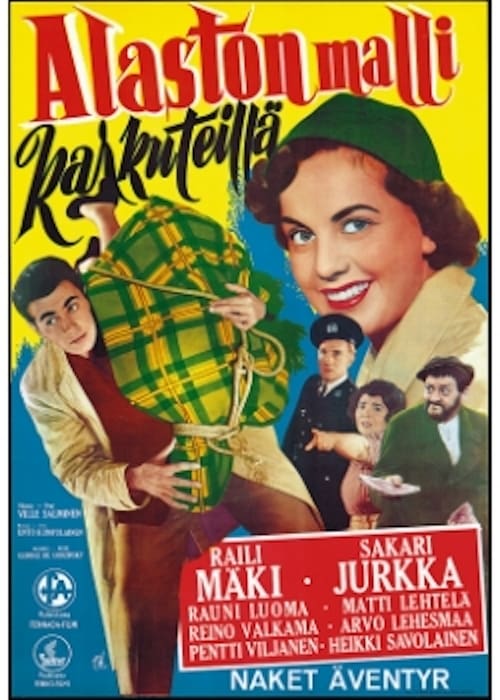
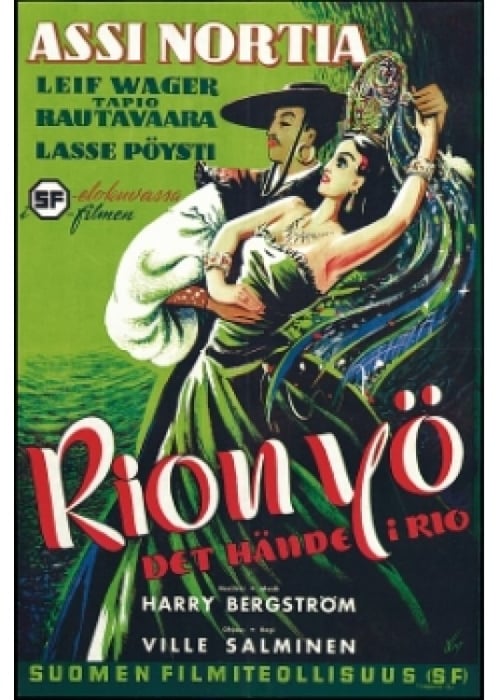
Three sailors rescue Carmen, who has fallen into the clutches of the white slave trade, and also manage to destroy a drug gang.
Tuula's husband Jukka takes care of all domestic chores. Tuula seems to have no idea that her husband spends his evenings working as a major league ice hockey referee. She also finds out about his extra-marital affair with a female rally driver. In revenge, Tuula starts seeing her gynecologist Timo Paasi, a married man with six children.
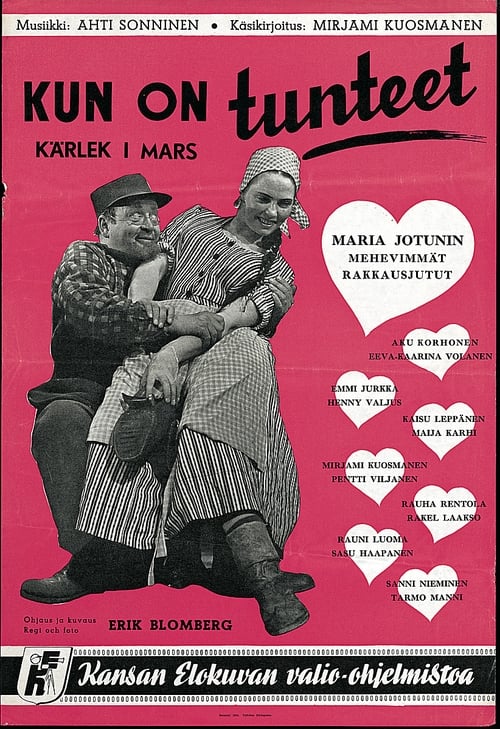
Based on short stories by early 20th century feminist writer Maria Jotuni, the film is a series of lively dialogue scenes between men and women, young and old, living in a small Finnish town. Most episodes evolve into humorous battles between the sexes. The film's central character is a young maid played by Maija Karhi.
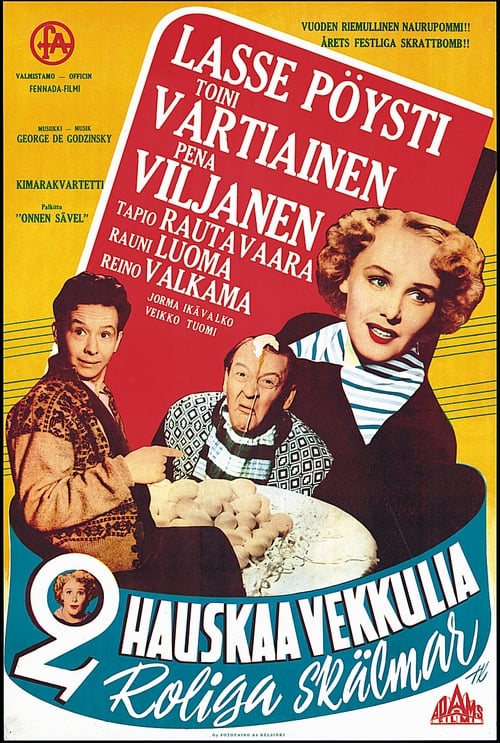
Musical comedy about two friends trying to advance in music business at any price.
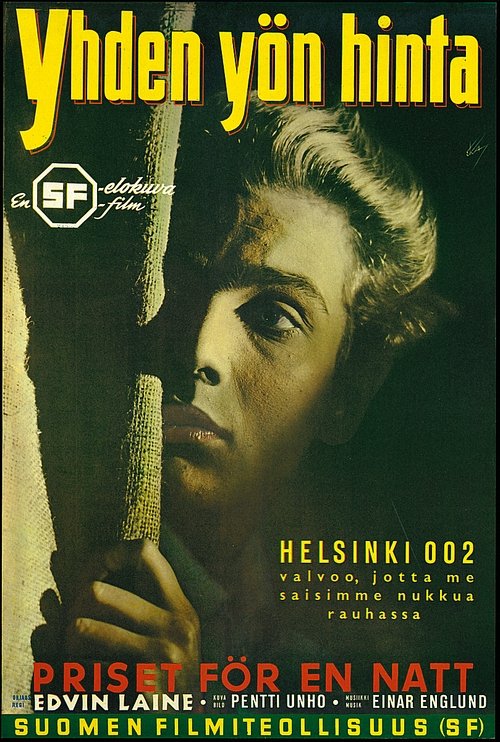
The streets of Helsinki, Finland, at night. Violence mixed with incidents and everyday life. Reported by police officers on the graveyard shift.
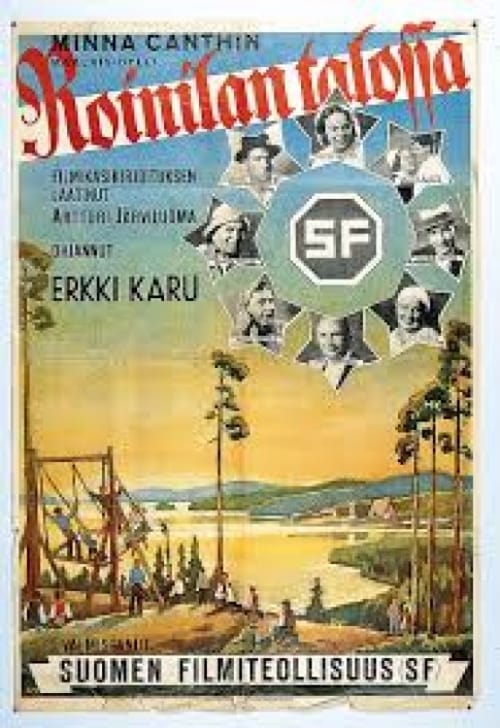
In the rural landscape of southern Häme, the lost will of the recently deceased Ojala is being sought. In its absence, Olli, the master's nephew, takes possession of the house. The devious Olli tries to win over Anna, the daughter of the Roinila family, who is fond of Mauno, the farmhand.
Medical student Antti Ahonen, who is fighting tuberculosis, finds himself in the middle of a love triangle with his friend Heikki Huhtamäki and his crush Helmi Hirvinen.
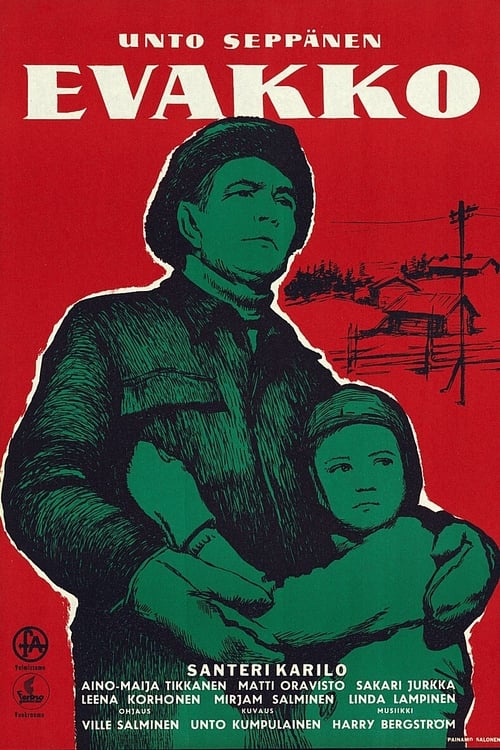
Evakko is a portrayal of Soviet-Finnish winter war of 1939/40 and the associated evacuations in different parts of the country. It tells the story of a Karelian family along with their whole village who were forced to leave their homes because of the war. The film has a surprisingly perky tone for the subject matter.
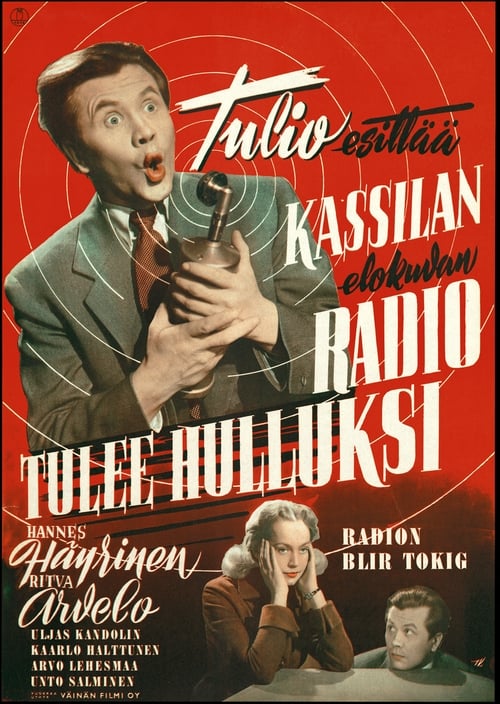
Radio reporter Toivo Teräsvuori gets an idea for an experimental report using a hidden microphone, but he is reported as a madman talking to himself and is taken to the Houruniemi mental hospital. At the hospital, the volatile Toivo is considered insane, and even his wife Eila's testimony does not help the matter. Instead, Professor Piukka orders Toivo to undergo brain surgery.
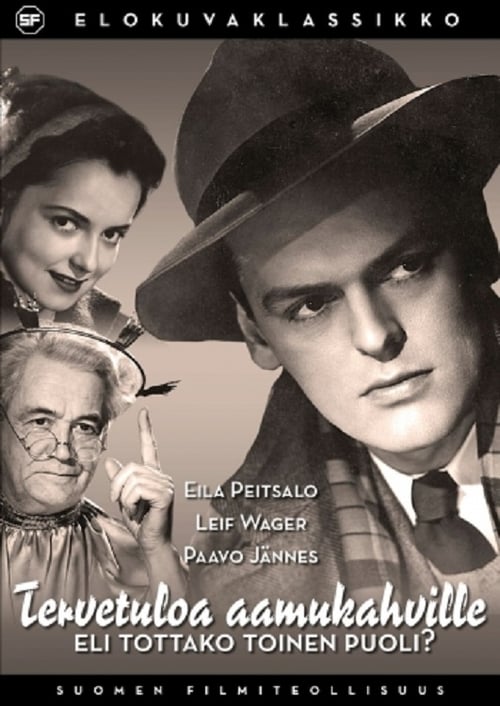
St. Peter's announcement interrupts the Welcome to Morning Coffee radio program. He asks people for help because he does not know whether private detective Uljas Uriel Vaaksanpää has died or is still alive. The strange events are followed from the perspective of different characters.
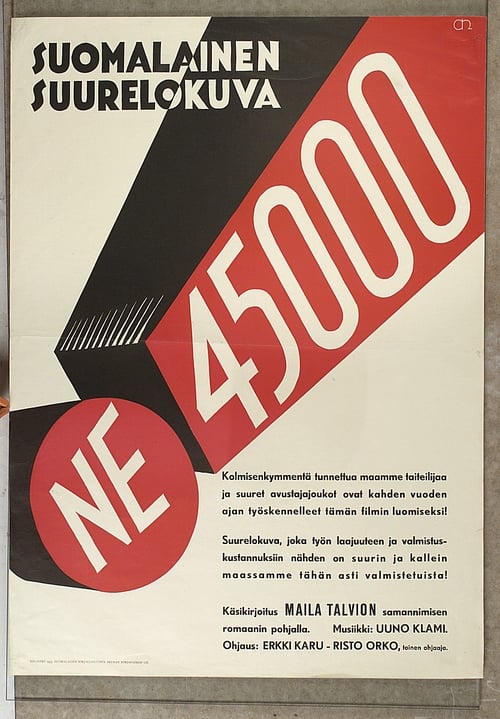
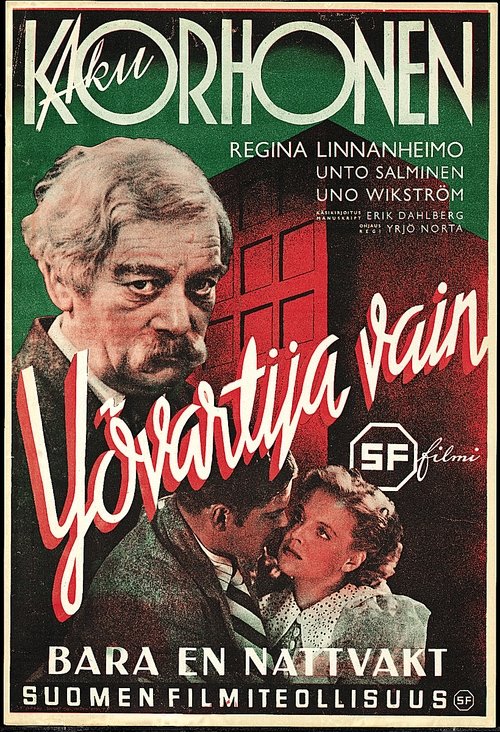
Old Virtanen is a respected night watchman at a textile factory and a single father to his daughter Aino, who is about to graduate from high school. The heartless factory owner Kuusela fires Virtanen, who is forced to look for a new job. When Aino, who is in love with the manager's son Veikko, disappears after her graduation party, her father, who has fallen ill with worry, is overcome with despair.
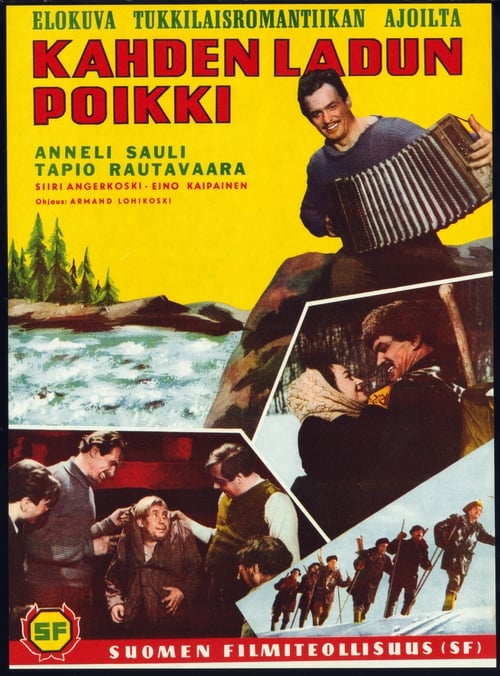
Young Anna marries Tuomas, an old widower. Tuomas reluctantly sells his forest to the boss of Ruukki and is forced to take in a group of loggers, among whom the handsome womanizer Humu begins to seduce the young mistress of the house.