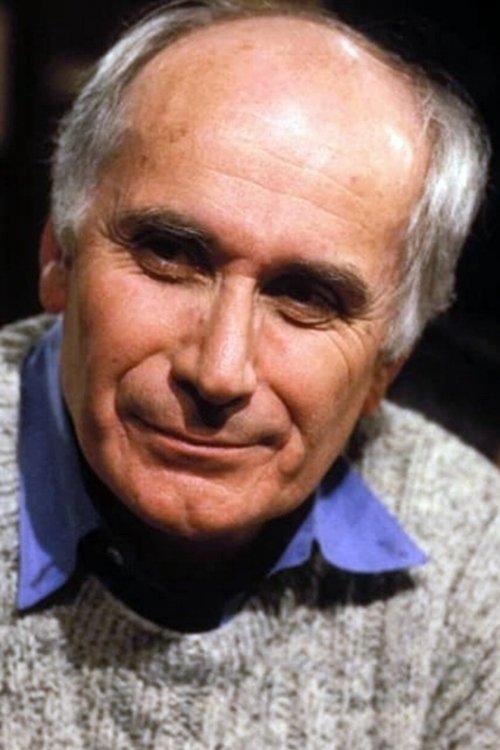
François Maspero
Writing
Biography
François Maspero (19 January 1932, in Paris – 11 April 2015, in Paris) was a French author and journalist, best known as a publisher of leftist books in the 1970s. He also worked as a translator, translating the works of Joseph Conrad, Mehdi Ben Barka, and John Reed, author of Ten Days that Shook the World, among others. He was awarded the Prix Décembre in 1990 for Les Passagers du Roissy-Express. François Maspero was born in 1932. His youth was marked by the cultural environment of his family, several of whom were noted scholars, and his parents' participation in the Resistance. His father, Henri Maspero, a sinologist and professor at the Collège de France, died at Buchenwald, but his mother survived the Ravensbrück concentration camp. His grandfather, Gaston Maspero, who died before his birth, was a famous Egyptologist. François Maspero opened a book store in the Latin Quarter in 1955, at the age of 23. In 1959, in the middle of the Algerian War, he and Marie-Thérèse Maugis formed the Maspero publishing house, Éditions François Maspero. They later were joined by Jean-Philippe Bernigaud and Fanchita Gonzalez Batlle, and then by Émile Copfermann. Their first two collections, "Cahiers libres" and "Textes à l'appui", focused on the Algerian War from an anti-colonialist perspective, and on contestation of the French Communist Party's unreformed Stalinism. Maspero published Frantz Fanon's The Wretched of the Earth (1961), censored by the French authorities, with a preface by Jean-Paul Sartre, as well as Fanon's L'An V de la Révolution algérienne. Maspero published other testimonies on Algeria, including investigations of the use of torture by the French Army, also censored. Besides facing lawsuits as a result of his courageous publishing decisions, Maspero was the target of bomb attacks. He republished Paul Nizan's Les Chiens de garde and Aden Arabie, also with a preface by Sartre. Then he created the review Partisans, which survived until 1973. Many important writers first came to public attention through the "Cahiers libres" collection, such as Régis Debray, published in 1967 or Bernard-Henri Lévy in 1973. Georges Perec published his first texts in Partisans. In the 1960s, Éditions Maspero paid particular attention to the problems of the Third World and of neo-colonialism, publishing among others books by Che Guevara. Maspero published Mongo Beti's Cruel hand on Cameroon, autopsy of a decolonization in 1972, which was censored by Minister of the Interior Raymond Marcellin at the request, brought forward by Jacques Foccart, of the Cameroon government, represented in Paris by ambassador (and author) Ferdinand Oyono. In 1975, he republished Jean Maitron's classic History of the anarchist movement in France (1880–1914). In the years 1967-82 he published the "Petite Collection Maspero" (Little Maspero Series). In 1983, Maspero publishing house was transformed into the Éditions La Découverte, later bought by Vivendi Universal Publishing, later Editis. ... Source: Article "François Maspero" from Wikipedia in English, licensed under CC-BY-SA 3.0.
Known For

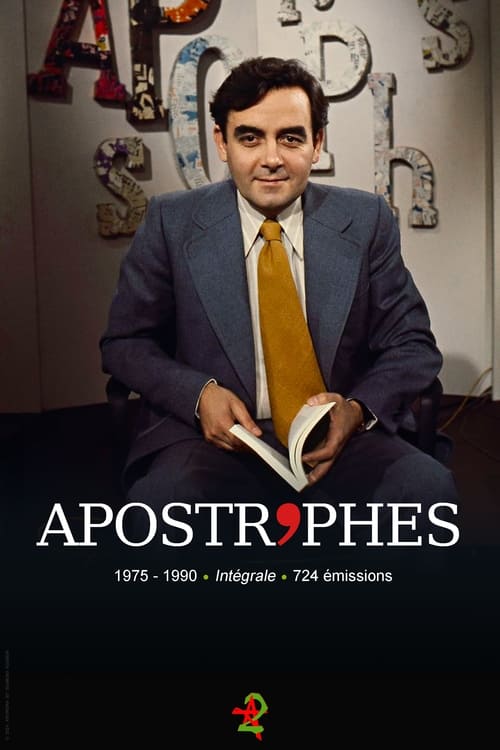
Apostrophes was a live, weekly, literary, prime-time, talk show on French television created and hosted by Bernard Pivot. It ran for fifteen years (724 episodes) from January 10, 1975, to June 22, 1990, and was one of the most watched shows on French television (around 6 million regular viewers). It was broadcast on Friday nights on the channel France 2 (which was called "Antenne 2" from 1975 to 1992). The hourlong show was devoted to books, authors and literature. The format varied between one-on-one interviews with a single author and open discussions between four or five authors.
Apostrophes

In seven different parts, Godard, Ivens, Klein, Lelouch, Marker, Resnais, and Varda show their sympathy for the North-Vietnamese army during the Vietnam War.
Far from Vietnam

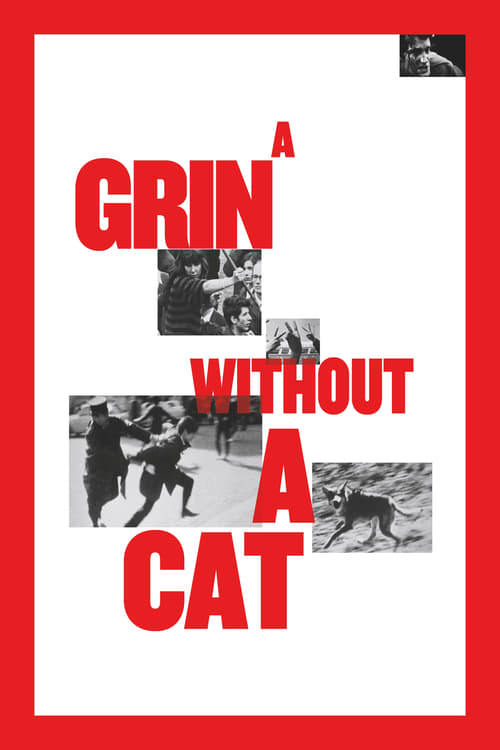
Chris Marker’s A Grin Without a Cat is an epic political essay tracing the rise and decline of the global left from the 1960s to the 1970s. Through archival footage and commentary, the film examines revolutionary movements in France, Latin America, and beyond, reflecting on the ideals, failures, and fading hopes of a generation.
A Grin Without a Cat

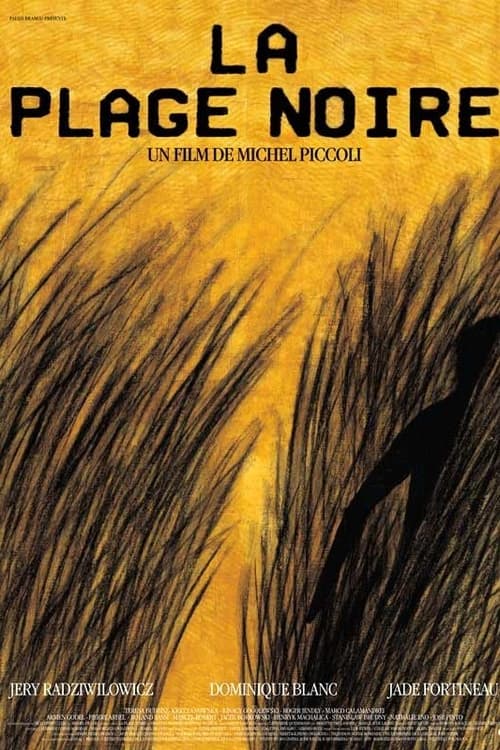
An exhausted militant wants to take a break from the incessant frenzy surrounding him. His country’s dictatorship is on its last legs and chaos reigns. His wife Sylvie leaves their country for France. She writes about the new democracy struggling to be born back home. His daughter Joyce must hide out in the deserted childhood home in the solitude and infinity of the Black Beach. Several adversaries – the militia of a hazy regime in his native land and the Paris police – wage a strange game of chess in which he is the pawn. Threats abound and he’s haunted by his past, his fears, dead friends. He has three allies: his wife, his daughter, and an old girlfriend from his fighting days.
The Black Beach

On September 5, 1960, the trial of about twenty French activists from the "Jeanson Network" began, supporters in the metropolis of the action of the Algerian FLN independence activists. But after a few days, the situation was reversed and the trial transformed into a political arena, it was the government, the army, their policy, it was the entire Algerian war whose trial began. Accused, witnesses, lawyers, overflowing a stunned court, transformed the courtroom into a tribune of the opposition. The trial coincided with the publication of the "Manifesto of the 121" on the right to insubordination, signed among others by Jean Paul Sartre, Arthur Adamov, Simone de Beauvoir, André Breton, Marguerite Duras, Pierre Boulez, René Dumont, François Chatelet…
Manifesto of the 121

“Forgetting is complicit in recidivism,” says the commentary of this film dedicated to the demonstration of October 17, 1961 in Paris and the savage repression that followed. 11,538 Algerians will be arrested, which is reminiscent of the great Vel d’hiv roundup of July 16 and 17, 1942 where 12,884 Jews were arrested. The film brings together eyewitnesses including a priest, a peacekeeper, a couple of workers sympathetic to the Algerian cause, a lawyer, Paris municipal councilors including Claude Bourdet (then one of the leaders of the PSU and journalist to France Observateur), Gérard Monatte, the future police union leader, and the editor and writer François Maspero.
The Silence of the River

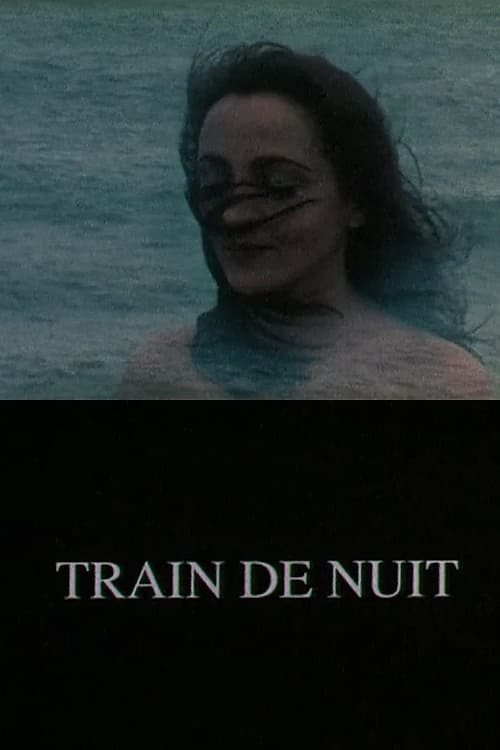
The man is seated in the compartment. Alone, he speaks to Lise through his memory. He goes towards the sea. It’s the goal of the travel. There in this big house with a view on the waves, despite Lise not being there, despite her death, he sees her, he is with her.
Train de nuit
An affectionate portrait of the left-wing publisher and bookshop owner François Maspero, who was a contributor to Far From Vietnam and would later publish the commentary to Le Fond de l’air est rouge. Maspero is one of the most satisfying and likeable of Marker’s films from this period, achieving an exemplary balance of quirky human warmth with a clear and inventive form of political argument.