Marie Oliaková
Acting
Known For
No description available.
The Dogheads
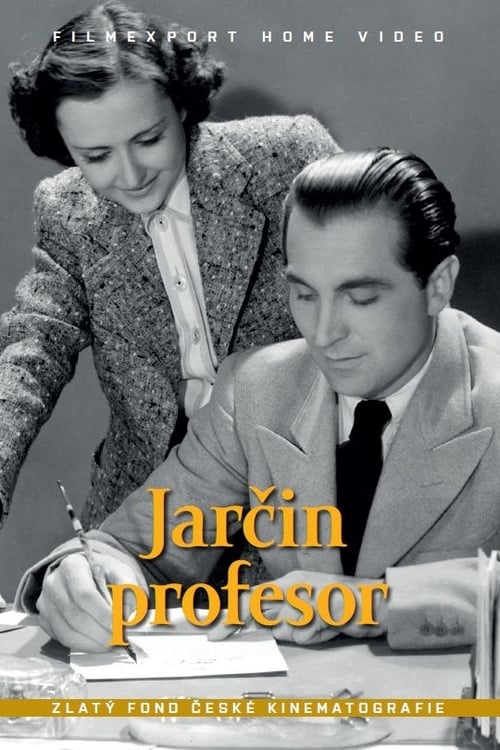
A graduate of the Faculty of Philosophy, Karel Stržický earns extra money in the summer as a day laborer for the landowner Drahan. Jarča, the Drahans' daughter, spends the holidays with her parents, and her father has a lot of worries about her. The unsuccessful student is failing her German. However, an easy solution is offered - Karel will prepare her for remedial work. The mischievous Jarča considers him an ordinary coachman, and so she initially turns her nose up at him. However, the cultured young man manages to win her trust and heart. This does not go down well with his rival in the fight for the girl's favor, and he immediately comes up with a nasty slander: Karel is supposedly a former convict! A rift is not long in coming...
Jarčin profesor

Jánošík has been topic of many Slovak and Polish legends, books and films. According to the legend, he robbed nobles and gave the loot to the poor. The legend were also known in neighboring Silesia, the Margraviate of Moravia and later spread to the Kingdom of Bohemia. The actual robber had little to do with the modern legend, whose content partly reflects the ubiquitous folk myths of a hero taking from the rich and giving to the poor. However, the legend was also shaped in important ways by the activists and writers in the 19th century when Jánošík became the key highwayman character in stories that spread in the north counties of the Kingdom of Hungary (present Slovakia) and among the local Gorals and Polish tourists in the Podhale region north of the Tatras.
Jánošík
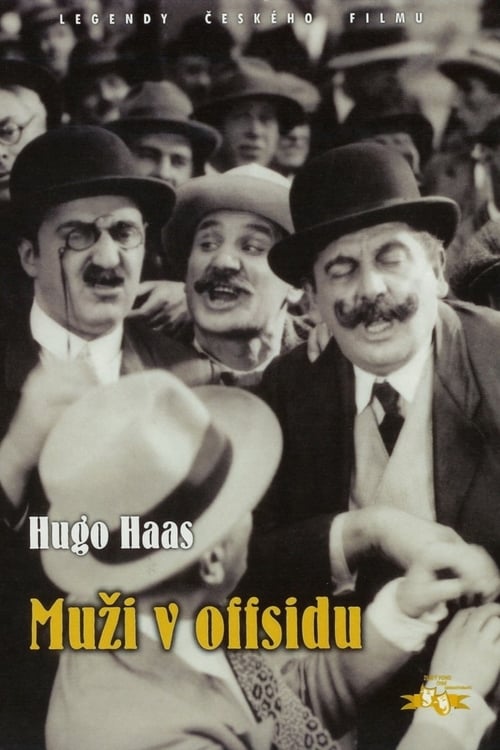
The owner of the ready-to-wear store, Mr. Richard Naceradec from Zizkov, is an enthusiastic fan of S.K. Slavia and despite his wife's opposition, he goes to football every Sunday. Tailor Emanuel Habásko lives alone with his adult son Eman. Widow Ouholicková chases Krejcí endlessly, but father Habásko bravely resists. Habásko do not recognize any other club except S.K. Viktoria. One day, Naceradec will face Eman at the match between Slavia and Viktoria.
Men on the Offsides
No description available.
Liebe auf Bretteln
No description available.
První políbení
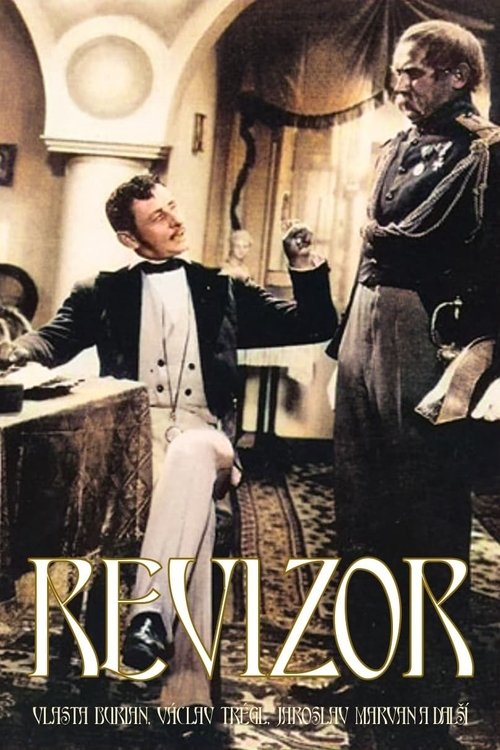
Vlasta Burian appears in a town of Czarist Russia impersonating an Inspector General, and he is entertained lavishly by the local political-hacks and peasants seeking his favor for whatever they are advocating or need fixed. Burain is involved in a series of comical situations as he takes everything he can gets his hands on while the peasants, who must plead for the betterment of their conditions, are left on the outside-looking-in. He makes his escape just as the real Inspector General is set to appear, but those-in-need will be no better off when the real McCoy shows up then they were with Burian.
The Inspector-General
The imperial councilor Ullik decides to modernize his old mills by installing a new turbine. His eccentric brother-in-law Artuš tries to prevent this, as the construction work disrupts the statics of the tower in which he lives. Ullik's older daughter Tynda is a talented singer. The bewitched girl secretly accepts the courtship of the virile Václav, the son of the night watchman. Her younger sister, the doctor Marie, wins the heart and hand of the astronomer Zouplna, despite her father's prohibition...
Turbina
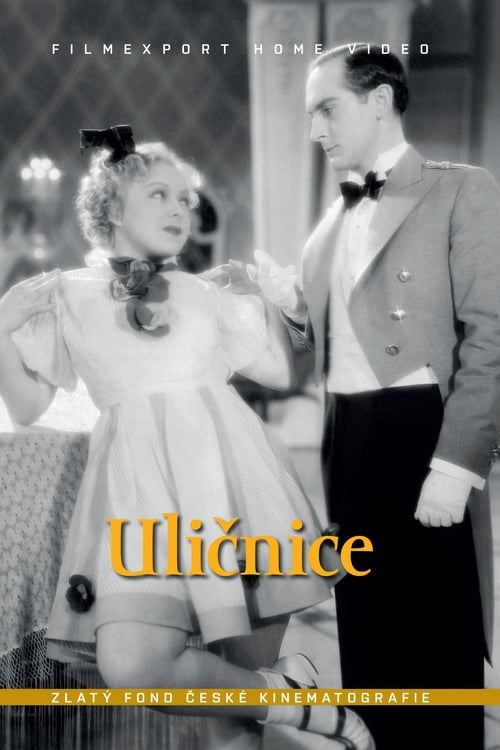
Eighteen-year-old factory worker's daughter Věra Janáková is head over heels in love with the famous pilot Jiří Málek. She only knows him from a photograph, but that's enough for her to run away from the boarding house and set out to find him. There, she discovers that the old Málek family are expecting the arrival of a girl from the orphanage, from whom they intend to raise Jiří's future wife. Enterprising Věra doesn't hesitate and quickly disguises herself as a thirteen-year-old frog...
Uličnice
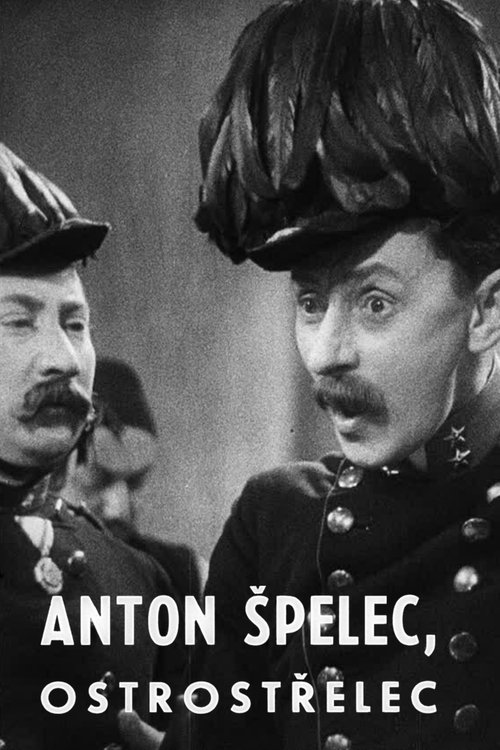
Anton Špelec (Vlasta Burin) is a producer of musical instruments by trade but a sharp-shooter at heart. He expects to be awarded a medal at a large parade in town where veteran sharp-shooters will be honored. When the town council is one medal short, Anton must wait another year for his prized possession. He drowns his disappointment in drink at the local pub and becomes so drunk that he insults the emperor who sentences him to jail. Instead of fulfilling the emperor’s orders himself, Anton sends his employee in his stead.
Anton Špelec, Sharp-Shooter

Vincenc Babočka, an insignificant employee of the police station, plays detective in private, convinced of his exceptional abilities. However, a vacation in Karlovy Vary unexpectedly gives him the opportunity to prove what he is really capable of. He is mistakenly considered to be the international adventurer Leon Weber, who is being pursued by the police. He decides to take advantage of the confusion and expose Weber's accomplices, who are planning to steal diamonds belonging to the Maharaja of Yohir. According to Weber's plan, he meets the Maharaja disguised as General Naryshkin, but everything only works out until the real Weber appears in town...
Three Eggs in a Glass

You will meet the family of the miller Kaliba, who is proud not only of his mill, but also of the family tradition, according to which the milling profession has been passed down at the inn's mill for almost three hundred years. And since Mr. Kaliba has no son, it is certain that his only daughter Liduška must marry a miller. Perhaps this would have happened if the Kalibas had not gone to the anniversary exhibition. Here, Liduška meets the handsome engineer Karel Loukota, who is an overly zealous member of the cycling club "Don't Get Married!", but is not immune to love at all. Of course, he will face many hardships and obstacles, the biggest of which is, of course, the miller Kaliba with his fierce efforts to uphold the family tradition...
From the Bohemian Mills
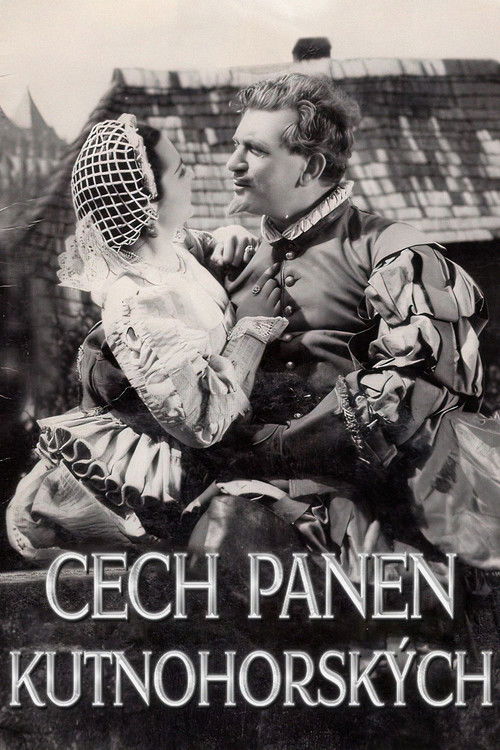
A morally questionable lord comes to the aid of a working class man who is to be executed for speaking out about thieving rich scoundrels sticking it to the poor.
The Merry Wives
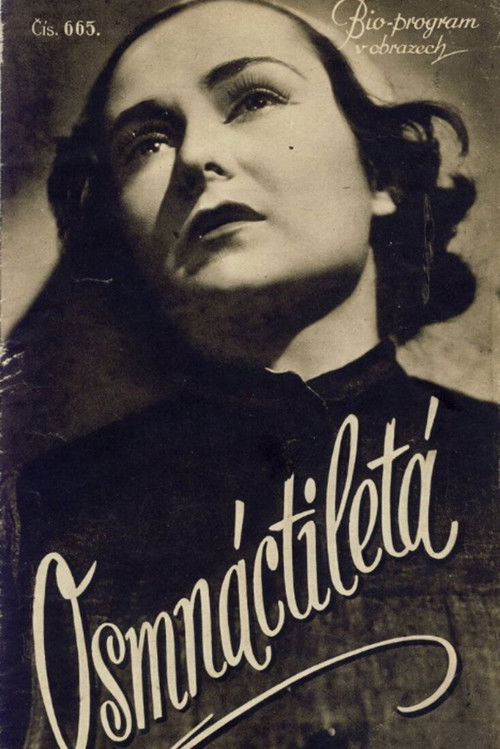
The story tells of a village girl, falsely accused by her sister-in-law of the murder of her illegitimate child. The unfortunate girl ends up in court, but fortunately her lawyer suspects that passion and hatred rule in this case. Together they search for the child's father, who seduced and abandoned the heroine...
Eighteen Years Old
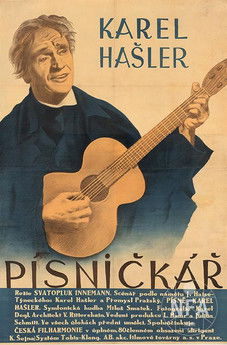
No description available.
Ballad-Singer
No description available.
Love Song
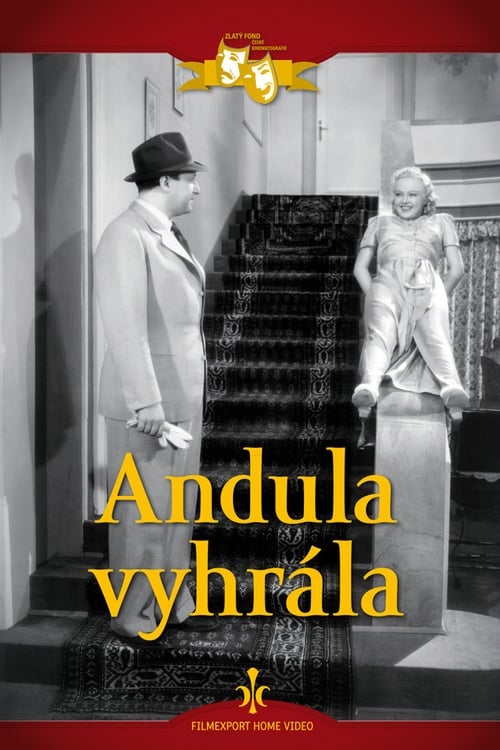
A rich bachelor, Pavel Haken, tries - with the help of his faithful servant - to escape the courtship of marriageable young ladies. They meet at a ladies' social club. In the cafeteria there, he is helped by the talkative Andula, the daughter of a poor taxi driver. Haken longs for peace and has a secluded weekend villa built for him. The brief silence that followed his mother's departure is interrupted by the inhabitants of a tent camp. The girls from the club have taken advantage of Mrs. Haken's offer and camped on their property, and Andula helps out in the camp kitchen...
Andula vyhrála
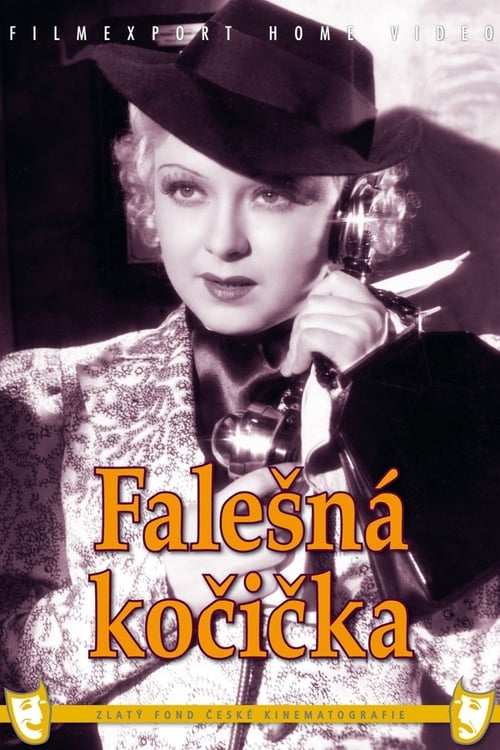
A fortune teller predicts that Dr. Přelouč will marry the third poor girl he meets. Míla, the daughter of factory owner Janota, likes the doctor and, with the help of his housekeeper Amálka, sneaks into his home disguised as a poor shoelace saleswoman. She first prepares for her role by exploring the outskirts, where she meets Vendelín Pleticha, who becomes her guide to the local pubs and her teacher of the vernacular. Dr. Přelouč is enthusiastic about the poor, uneducated girl and tries to teach her the basics of social behavior and standard language. All this until he discovers that Míla has deceived him and that Pleticha is not her father, as she had claimed...
Falešná kočička

The troubles of a young married couple with an overprotective mother and mother-in-law. Usually it ends with a wedding, but this time it begins. Young doctor Petr Dvořák marries the charming Marta Hábová. However, their honeymoon to Venice is unexpectedly complicated by Martina's widowed mother, a rich, kind, but very absent-minded lady. First, they are not allowed to cross the border because they did not declare the things she secretly packed for them for the trip, and then they spend the night behind bars because the mother-in-law, in her absent-mindedness, reports the secretly packed things as stolen after she catches a pair of robbers in her house. It is no wonder that the young marriage is soon shaken to its foundations...
Konečně sami
No description available.