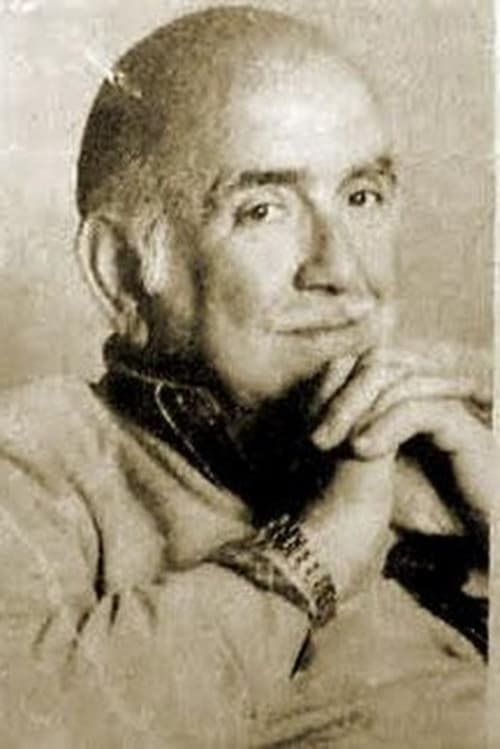
Fernando Ayala
Directing
Biography
Fernando Ayala (2 July 1920 – 11 September 1997) was an Argentine film director, screenwriter and film producer of the classic era. He is widely considered one of the most important Argentine film directors and producers in the history of the cinema of Argentina. Demicheli initially began as a trainee assistant director in 1942, in El Viaje, and within two years he had become an assistant director. By 1949 he had obtained his first job as director, and from 1958 he also served as producer for the films he directed and some others. Between 1950 and 1987 he was involved in the direction and production of well over 40 films, such as Ayer fue primavera in 1955 and Argentinísima and Argentinísima II in 1972 and 1973 respectively. In 1963 he was a member of the jury at the 13th Berlin International Film Festival.[1] His 1983 film The Deal was entered into the 13th Moscow International Film Festival where it won a Special Diploma. From Wikipedia, the free encyclopedia
Known For

A motel that is open all day specializes in beautiful women, and a couple of men decide to visit their rooms.
Open Day and Night

The head of a criminal gang has all the power among his men until one decides to testify against him.
The Boss

Dr. Sigmund is a psychoanalyst whose only goal in his group therapies is to conquer the women who attend there.
Los neuróticos

A charming racecar driver is visited by his 20-year-old son who is nothing like his father. Solemn and introverted, the boy is shown the ways of sensual pleasure by his father's mistress, but he falls in love with another young woman. Intending to marry the girl, the young man takes the relationship very seriously. His father, however, believes the boy should have a more carefree lifestyle and decides to intervene by seducing his own son's fiance. This action proves to be a tremendous mistake.
Primero yo

The story about a family that must maintain an insatiable grandmother.
Grandma

In 1920, workers from Patagonia, in Southern Argentina, gather around an anarcho-syndicalist society and go on strike, demanding better working conditions. When the situation turns unsustainable, President Yrigoyen sends Lieutenant Colonel Zavala to impose order.
Rebellion in Patagonia

A typical office employee decides one day rebelling against its routine and not going to work because it has a "lazy". His family, friends and colleagues are trying to dissuade him unsuccessfully at the beginning. But as time passed his situation complicated emotional and economically. These circumstances thwart his rebelliousness.
The Slowness

The Valet enters a hotel room with Joseph Garcin in tow. The windowless room has a single entrance and no mirrors. Two women, Inès Serrano and Estelle Rigault, are then led in; afterwards, the Valet leaves and locks the door. Realising that they are in hell, the trio expects to be tortured; however, no torturer is forthcoming. While waiting, they strike up a conversation and discuss each other's sins, desires, and unpleasant memories. Adaptation of the play by Jean-Paul Sartre.
No Exit

Leonor Capulletti and Quique Monteschi, fanatics of the same club, love each other in a passionate as well as conflictive courtship, because their respective families are allied in opposing and irreconcilable factions.
Love's Successes

Buenos Aires, Argentina. A failed reporter teams up with a Hungarian immigrant to set up a fake correspondence journalism school.
The Bitter Stems

An insurance broker and his misadventures for trying to finalize a policy.
Piantadino

An architect goes on vacation and begins an affair with a young woman in a small town in Córdoba.
El viaje

Upon turning 55, Pepe, a bank manager, feels bored with his life. He abandons his family, quits his job, takes a woman younger than him as a lover, and becomes associated with a moneylender.
El año del conejo

A small revolution breaks out in a small Argentine town, as one group of Peronists calls they newly elected peronist a communist. The newly elected official enlists the aid of allies ranging from the town drunk to young peronists to help hold his post. What follows is a slapstick war with a serious message.
Funny Dirty Little War

A man meets a former military service buddy who offers him a good deal. Money starts pouring in, but things change from one day to the next.
Sweet Money

Benjamin Ortalora is a young man who leaves Buenos Aires after murdering a rival. He goes to Montevideo where his cool boldness draws the attention of gang leader Azevedo Bandeira. When the old bandit becomes ill, Ortalora makes a determined play to take his place.
The Dead Man

The film is a fictional chronicle of a resonant police case that occurred in the city of Catamarca: the crime of the young María Soledad Morales, which had great public repercussion due to the links with the power of the culprits.
El caso María Soledad

The Night of the Pencils was a series of kidnappings and forced disappearances, followed by the torture, rape, and murder of a number of young students during the last Argentine dictatorship (known as the National Reorganization Process). The kidnappings took place over the course of several days beginning on September 16, 1976.
Night of the Pencils

A grocer gets rich speculating on the shortages generated by World War II until he suffers the consequences firsthand.
La guerra la gano yo

The neighborhood of La Boca, in Buenos Aires, is divided in two sectors: one is where decent people live under the tutelage of Magdalena, in the other, Manuel,ir responsible of a nightclub. Among decent people live Manolo, the milkman, awaiting the arrival of a Spanish woman to marry her. At the same time, the villain of Manuel also hopes for a Spanish nightclub. Women Arrivals weapon confusion.