Directing
Shot on super 8, the film appears like a journey, a dream along the Narmada river in India, between myths of Progress and myths of the river. "Dams are the temples of modern India", claimed Nehru after the country's independance. Soon, one of the largest complex of dams ever conceived will be completed on the Narmada. A social struggle is getting organized. We travel on the river until the ocean, on our way to meet inhabitants, beliefs, and convictions that cohabit and are brought into conflict as this valley undergoes major transformations.
On the French-Italian border, Nina, Lily, Sasha, Malick and other young people come from all over Europe to live in abandoned olive groves in the hinterland’s mountains. They are part of a collective to support migrants who seek to cross this border. Living in huts, they joyfully experiment in solidarity, with other forms of social organisation on the fringe of capitalist society. In the evening, next to a fire, migrants and activists tell each other stories and share their dreams. Their visions of the world confront each other. As the seasons go by, the complexity of these encounters, the dissensions within the group, and activist burn-out test their utopias.
Just as Mbaye is about to return to Dakar, France announces that it is closing its borders due to the Covid epidemic. A journey against the tide begins.
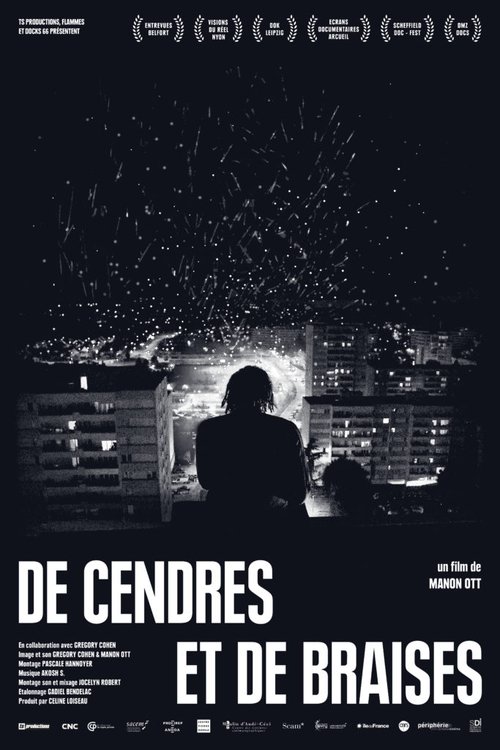
The poetic and political portrait of a working-class suburb undergoing transformation, "De Cendres et de Braises" invites us to listen to the words of the inhabitants of the Mureaux housing project, near the Renault-Flins factory. Whether they are gentle, rebellious, or sung at the foot of the project's tower blocks, at the factory entrance, or beside a fire, these words take us through the night until a new day rises.