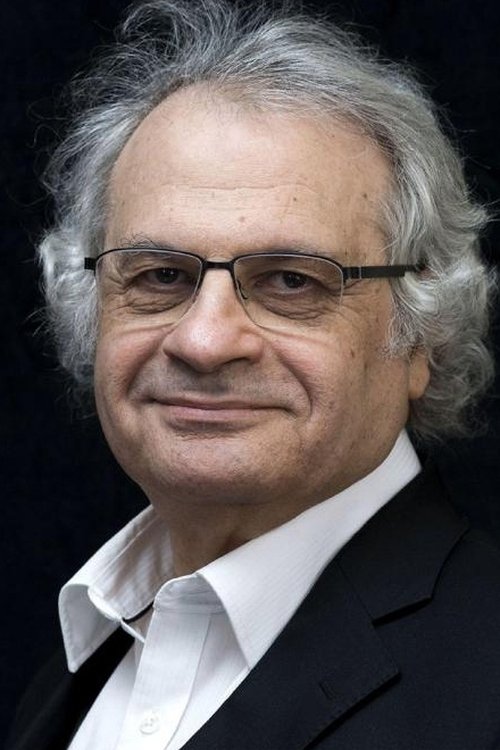
Amin Maalouf
Writing
Biography
Amin Maalouf (Arabic: أمين معلوف; born 25 February 1949) is a Lebanese-born French author who has lived in France since 1976. Although his native language is Arabic, he writes in French, and his works have been translated into over 40 languages. Of his several works of nonfiction, The Crusades through Arab Eyes is probably the best known. He received the Prix Goncourt in 1993 for his novel The Rock of Tanios, as well as the 2010 Prince of Asturias Award for Literature. He is a member of the Académie française and was elected its Perpetual Secretary on 28 September 2023. Maalouf was born in Beirut, Lebanon, and grew up in the Badaro cosmopolitan neighborhood, the second of four children. His parents had different cultural backgrounds. His father was from the Melkite Catholic community of the village of Machrah, near Baskinta in Ain el Qabou. His mother, Odette Ghossein, is Lebanese from the Metn Village of Ain el Kabou. She was born in Egypt and lived there for many years before coming back to Lebanon; she lived in France until her passing in 2021 at the age of 100 years. Maalouf's mother was a staunch Maronite Catholic who insisted on sending him to Collège Notre Dame de Jamhour, a French Jesuit school. He studied sociology at the Francophone Université Saint-Joseph in Beirut. He is the uncle of trumpeter Ibrahim Maalouf. Maalouf worked as the director of An-Nahar, a Beirut-based daily newspaper, until the start of the Lebanese civil war in 1975, when he moved to Paris, which became his permanent home. Maalouf's first book, The Crusades Through Arab Eyes (1983), examines the period on the basis of contemporaneous Arabic sources. Along with his nonfiction work, he has written four texts for musical compositions and numerous novels. His book Un fauteuil sur la Seine briefly recounts the lives of those who preceded him in seat #29 as a member of the Académie française. Maalouf has been awarded honorary doctorates by the Catholic University of Louvain (Belgium), the American University of Beirut (Lebanon), the Rovira i Virgili University (Spain), the University of Évora (Portugal), and the University of Ottawa (Canada). In 1993, Maalouf was awarded the Prix Goncourt for his novel The Rock of Tanios (French: Le rocher de Tanios), set in 19th-century Lebanon. In 2004, the original, French edition of his Origins: A Memoir (Origines, 2004) won the Prix Méditerranée. In 2010 he received the Spanish Prince of Asturias Award for Literature for his work, an intense mix of suggestive language, historic affairs in a Mediterranean mosaic of languages, cultures and religions and stories of tolerance and reconciliation. He was elected a member of the Académie française on 23 June 2011 to fill seat 29, left vacant by the death of anthropologist Claude Lévi-Strauss. Maalouf is the first person of Lebanese heritage to receive that honor. In 2016, he won the Sheikh Zayed Book Award for "Cultural Personality of the Year", the premier category with a prize of 1 million dirhams (approx. US$272,000). In 2020, he was awarded the National Order of Merit by the French government. He was given the honor by President Emmanuel Macron. In 2021, he was elected a Royal Society of Literature International Writer. Source: Article "Amin Maalouf" from Wikipedia in English, licensed under CC-BY-SA 3.0.
Known For
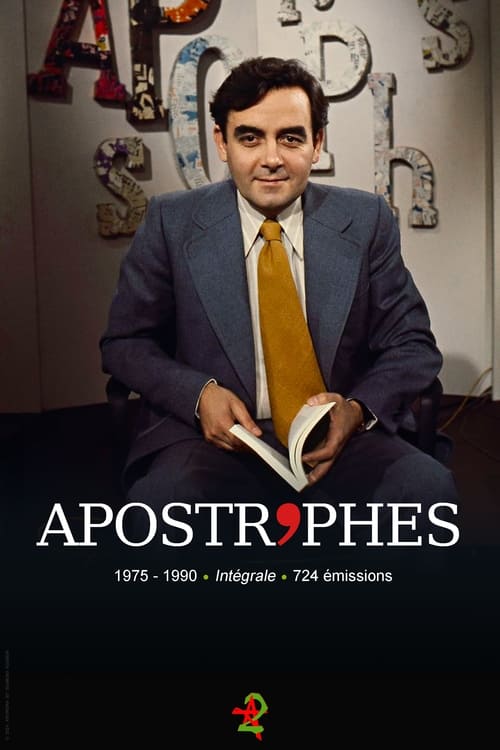
Apostrophes was a live, weekly, literary, prime-time, talk show on French television created and hosted by Bernard Pivot. It ran for fifteen years (724 episodes) from January 10, 1975, to June 22, 1990, and was one of the most watched shows on French television (around 6 million regular viewers). It was broadcast on Friday nights on the channel France 2 (which was called "Antenne 2" from 1975 to 1992). The hourlong show was devoted to books, authors and literature. The format varied between one-on-one interviews with a single author and open discussions between four or five authors.
Apostrophes

Robert Lepage’s dreamlike production, with its thousands of twinkling LED lights stretching across the stage to represent the sea, encapsulates the mystic feeling of L’Amour de Loin, Saariaho’s haunting opera of distant love. Eric Owens is Jaufré Rudel, a troubadour in 12th century France who has become tired of his hedonistic life and longs for an idealized love. Enter the Pilgrim (Tamara Mumford) who tells him his perfect love does, in fact, exist, far across the sea. She is Clémence, Countess of Tripoli (Susanna Phillips). The magic of the characters’ inner lives as they explore the meaning of love, longing, life, and death is heightened by Saariaho’s hypnotic and bewitching score, conducted by Susanna Mälkki.
The Metropolitan Opera: L’Amour de Loin
No description available.
Konuşmamız Lazım
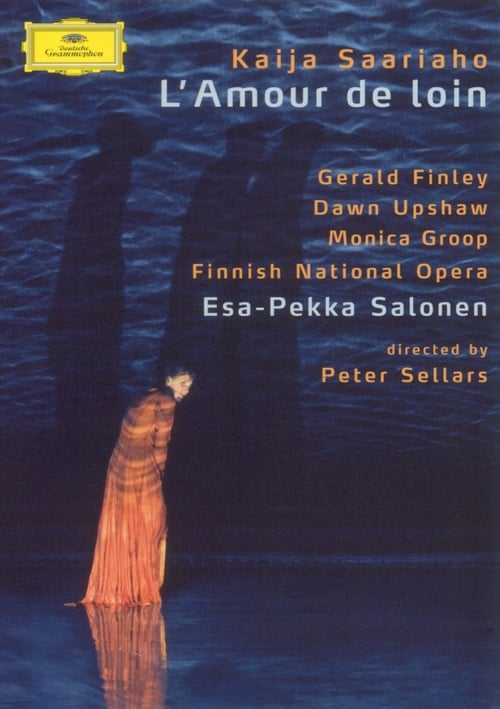
This is the 2004 version of Kaija Saariaho's opera performed by the Finnish National Opera and conducted by Esa-Pekka Salonen.
Saariaho: L'Amour de Loin

The apocalyptic blast in the Port of Beirut, Lebanon, on August 4, 2020, exacerbates anger at those in power: protests cross religious boundaries as the Lebanese people curse corruption, nepotism, gross economic mismanagement and squandering of resources. How did the Land of Cedars, a country with so much to offer, allow itself to get into such a dire situation? And will it be able to bounce back?