Bill Brand
Directing
Biography
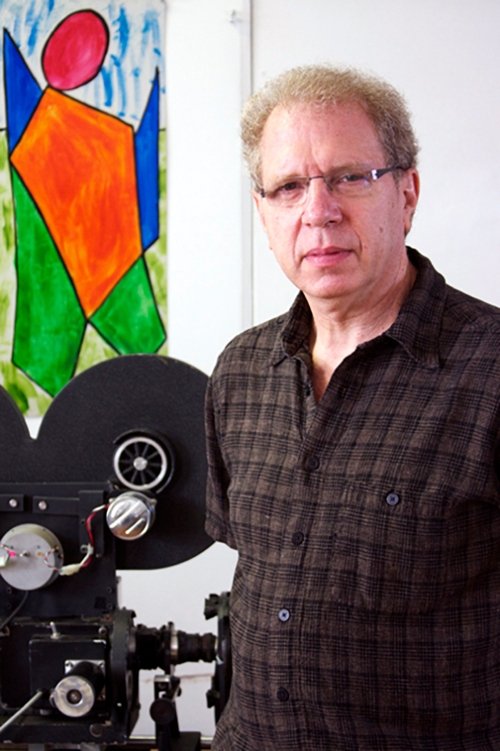
Bill Brand is a multi-disciplinary artist whose films, public artwork, installations, paintings and works-on-paper have exhibited worldwide in museums, galleries microcinemas and on television. His 1980 Masstransiscope, an animated mural installed in the New York City subway, is in the MTA Arts and Design permanent collection. Bill Brand’s artwork has been featured at Museum of Modern Art, Whitney Museum, Smithsonian American Art Museum, National Gallery of Art, Anthology Film Archive and Shanghai Duolun Museum of Modern Art. He is represented by Galerie Arnaud Lefebvre, Paris and Court Tree Gallery, Brooklyn. His films have been presented at major film festivals including the Berlin Film Festival, New Directors/ New Films Festival, Tribeca Film Festival and Rotterdam Film Festival. His films are discussed in histories of cinema including the books Experimental Filmmaking: Break the Machine (2015) by Kathryn Ramey; Results You Can’t Refuse: Celebrating 30 Years of BB Optics, (2006) edited by Andrew Lampert, Documentary, A History of the Non-Fiction Film, (1992) by Erik Barnouw; and Allegories of Cinema, (1990) by David James. Brand’s work has also been written about in news and journal articles by Janet Maslin, Jonas Mekas, J. Hoberman, B. Ruby Rich, Ian Christie, Noel Carroll and Randy Kennedy among others. Bill Brand is Professor Emeritus at Hampshire College and teaches Film Preservation at New York University's Moving Image Archiving and Preservation graduate program. He is co-owner of BB Optics, Inc., a company that specializes in archival film preservation and post-production services. Bill Brand founded the showcase and workshop Chicago Filmmakers in 1973, and served on the Board of Directors of the Collective for Living Cinema until 1991 in New York City. He co-founded Parabola Arts in 1981 and is currently an artistic director. He served on the board of trustees for The Flaherty (2008-15) and is an advisor to the Orphan Film Symposium and Mono No Aware. Bill Brand lives in New York City with his wife, the artist Katy Martin.
Known For

This film is a scrambled narrative that illustrates, in soap opera fashion, life of artists in Lower Manhattan and at the same time dramatizes questions about the nature of filmic representation. Split decision is a boxing term used when the judges divide their votes in finding a winner. In this case the fight is between the two heroes of the film who are seen intermittently in a bar, negotiating a pick-up, and at home, breaking up in a domestic quarrel. The fight is also in the telling, between modes of conventional representation and modes of radical representation - between conventional continuity editing, and abstraction created through computer generated grids. The film features an appearance by Carolee Schneemann and digital imaging from before the era of personal computers.
Split Decision

Home movies shot on Super 8mm by W+B Hein over 10 years.
Home Movies 1971-81

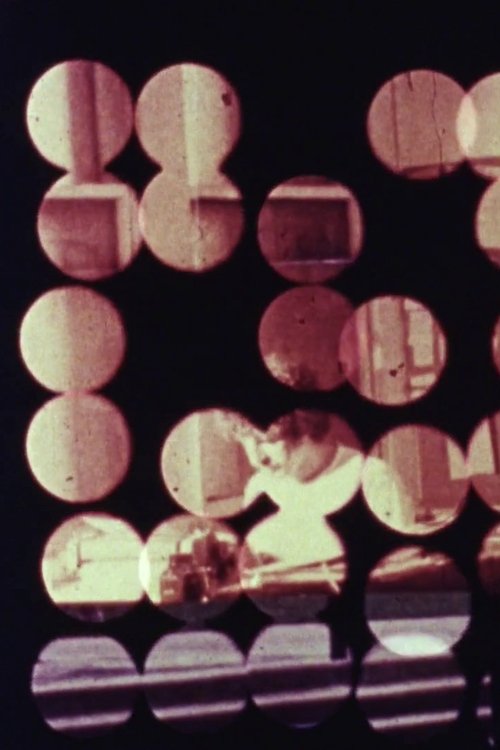
Still at Work, a self-portrait of the artist in his places of work: the studio in Lower Manhattan and Sarah Lawrence College, the school where he taught. The film animates a still photograph through a grid of random dots.
Cartoons: Still at Work

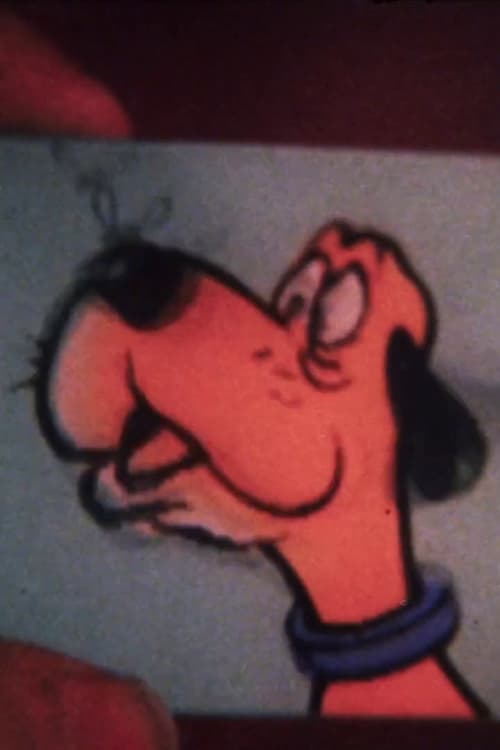
An Angry Dog is a hand-held animation made from a Cracker Jack toy.
Cartoons: An Angry Dog

This is an impressionistic portrayal of the 1982 folk festival at Tracy and Eloise Schwarz’s farm in Central Pennsylvania. The festival, dedicated that year to the legendary Elizabeth Cotton, includes Bluegrass, Old Timey, Cajun, Country, and Gospel music. In contrast to the easygoing atmosphere of the festival, the film is a frenetic swirl of elaborately collaged shapes derived from traditional Pennsylvania Dutch designs. While sometimes the music seems to animate the image, at others the image itself becomes visual music on its own, eliciting ephemeral and sometimes forlorn emotions. The film offers an unusual meeting of a folk tradition and the avant garde, implying a fundamental connection between the two.
Tracy's Family Folk Festival

Chuck's Will's Widow is a eulogy for my father and mother whose ashes are spread in the Adirondack mountain woods where the film is shot. Visualized through a field of swirling shapes, the fragmented landscapes weave an emotional fabric containing inexplicable personifications and associations.
Chuck's Will's Widow

I filmed two Shanghai artists, Zhuang Yin and Zhao Bo, who took me to their favorite places. Yin chose a small grove of trees – an urban oasis surrounded by building construction. Bo chose a busy street market for plants and pets. With ink on xuan paper I made abstract shapes that I animated and composited into videos from the orchard and market.
Orchard-Market

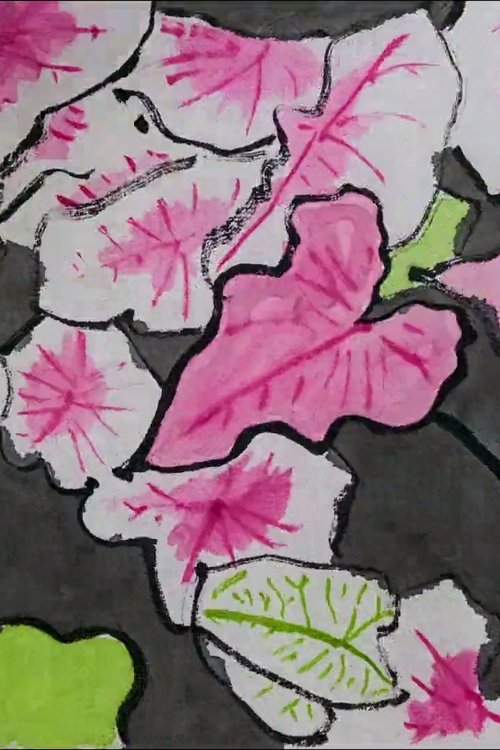
Scattered in seemingly random order, on the screen, we see the light that traverses the kinetic fields of Bill Brand’s latest film August Garden. Made for a group exhibition at Galerie Arnaud Lefebvre (Paris), the film accompanies a series of flower ink paintings, carefully made by the artist. Before, in the first seconds, we’re able to see an animation of August Garden 07 (ink and watercolor on xuan paper, 9″ x13″, 2019), which titillates lively for brief moments.
August Garden

Flickering flames viewed through air vents of a wood burning pot belly stove resemble the shutter of a film projector.
Cartoons: The Autobiography of Benjamin Franklin

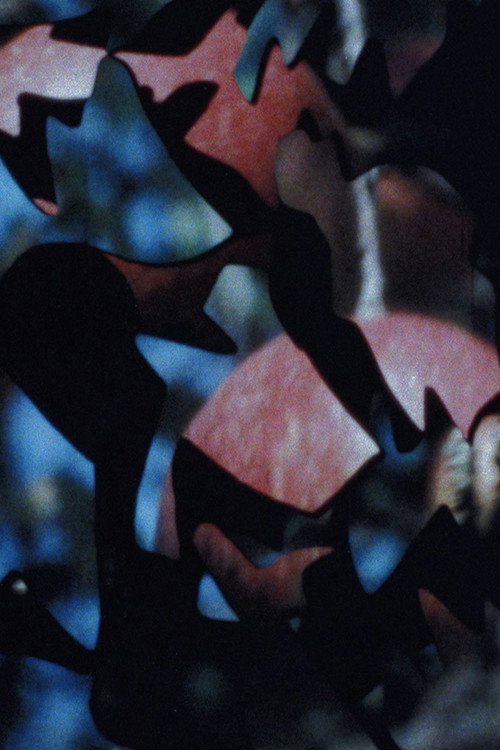
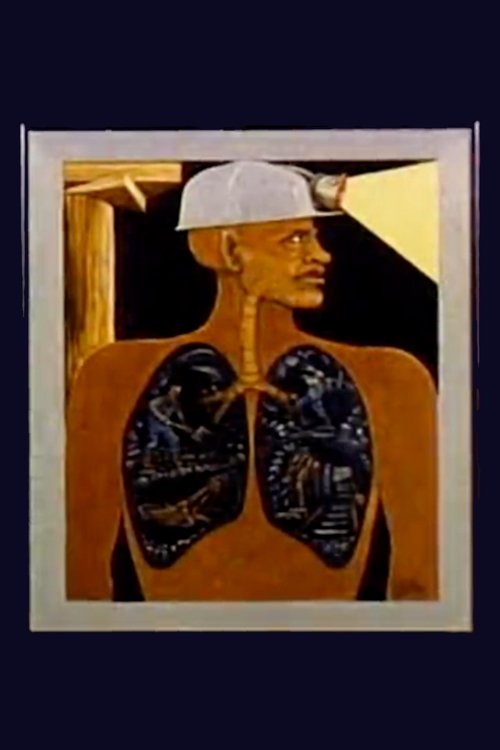
West Virginia industrial landscapes are collaged on an optical printer through a series of jagged shapes that transform the photographed scenes into a semi-abstract kinetic field. The technique developed by Brand in his earlier films, extends the already complex visual idiom by inlaying social, sexual, personal and political subject matter. Woven into the fabric of the film is the story of Fred Carter, a retired coal miner and black lung activist who was framed by the Federal Government in its effort to undercut the black lung movement and to stop his bid for president of the United Mine Workers Association. His story is told through fragments of documentary interviews and by a poet whose narrative forms a counter theme within the film. The film’s thematic content and formal visualizations sit in precarious balance.
Coalfields

Part of the SUITE series. Here, my body is explicitly a screen on which I project my father’s photographs of the family to articulate my position of difference within the family experience of illness and death. —Bill Brand
Suite: Interior Outpost

Made at S.U.N.Y. at Binghamton as a class exercise, filmmaker Saul Levine performs with students who each try to mimic his previously recorded phrase and then try to imitate each other imitating the recording.
Cartoons: Before the Fact

Nearly continuous colour changes rotating around a spectrum, occurring at varying speeds of rotation and in varying values of light. Colours are seen on the scraped area starting nearly white and rotating very slowly. As the film progresses the colour values become darker and the speed of rotation increases until by the end of the film, the colour is nearly black and is rotating around the spectrum about once per second. On the right the opposite occurs, starting nearly black, rotating very slowly. The moment to moment combination of colours and values is a function of the varying rate of rotation.
Angular Momentum

This is my digital/analog contribution to “Xochimilco Treasure Hunting” in Mexico City on the final day of "HAZLO TU MISMO," Do-it-Yourself Independent Analog Film Laboratory Encounter, Sept. 9, 2018.
Huevos a la mexicana

Consisting of a 300-foot-long painting made on reflective material, Masstransiscope is a public artwork visible from the subway tunnels of the Manhattan-bound B and Q lines. It is in a special enclosure with 228 narrow slits and fluorescent lights. To someone passing by, it looks like an animated movie.
Masstransiscope

SICÓMORO is a meditation on travel and home revealed through ornate doors and architectural details in Ciudad Vieja, Montevideo, Uruguay. The text by Carolina Noblega takes the form of a letter to a friend.
Sicómoro

A woman wakes up, gets dressed, makes breakfast and walks down the street. This daily ritual becomes extraordinary seen in a trance-like structure of continuous lap dissolves and continuous spectral color shifts.
Always Open/Never Closed

New York State Primaries shows stenciled lettering that dissolve between the words, “red,” “blue,” and “green” but don’t create secondary colors. The film is a response to Saul Levine’s 1972 NOTE: CHICAGO REDS AND BLUES.
Cartoons: New York State Primaries

An old tree sits on a mound in an Ohio farm field. The filming of the tree and the metrical editing of the film is organized around the tree's natural elements: water, earth, root ends, roots, trunk, limbs, branches, leaves and sun.
Tree

Also a double portrait, this video is an inside-out variation on DOUBLE NEPHRECTOMY. Here, the video uses projected light to penetrate my own body picturing my sister in her trade as an acupuncturist. While she treats me through burning herbs (moxibustion) and acupuncture needling, the video imagines the body as landscape. The contradiction between her commitment to an ancient healing practice and her dependence for survival on modern high technology medicine is an implicit subtext of the video.