Production
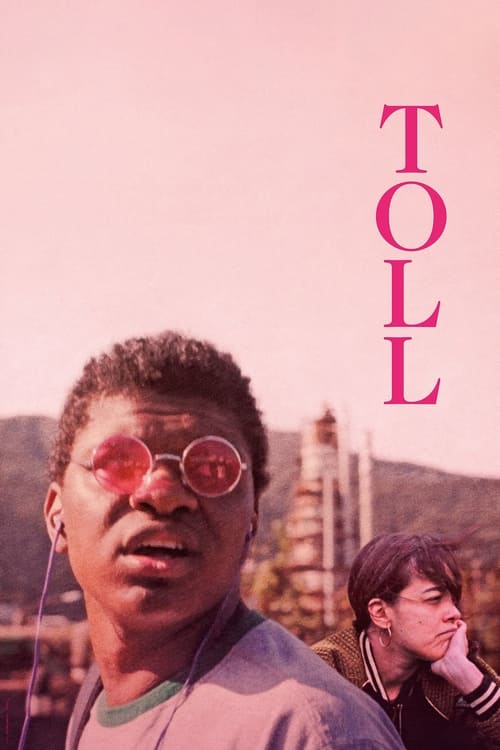
Suellen is a toll booth attendant who starts using her job to help a gang of thieves steal watches from people driving to the coast. But only for a noble cause: to send her son to an expensive gay conversion workshop.
The border between Brazil and Paraguay: living on opposite sides of a big river, Brazilian boy Joca falls in love with indigenous-Paraguayan girl Basano. A magical tale of impossible love and adventure in this land full of memories of colonial wars and indigenous genocide.
When humans become animals and animals become humans.
On the outskirts of the city of Nossa Senhora da Glória, in the hinterland of the state of Sergipe, Northeast Brazil, we will find an unexpected open-air sculpture park. This unusual “art gallery” is the result of the work of Cícero Alves dos Santos, known as Véio, a farmer, artisan and sculptor. In it, Véio installed his Nation, his family, made up of common and mythological beings, animals and extraterrestrials.
In an old mansion, an old lady and her young goddaughter prepare to receive a mysterious visitor who will fulfill an old wish.
Documentary about the trajectory of the Brazilian rock band Cachorro Grande, created in Porto Alegre, State of Rio Grande do Sul, in 1999 and imploded in São Paulo, the exact year they would have celebrated their 20th anniversary. As is the script of every self-respecting rock band, Cachorro Grande lived and survived amid contrasts and extremes. From being the greatest promise of Brazilian rock’n roll at the beginning of this century, opening shows for the Rolling Stones in Brazil, to going through open fights that shaped the band’s style and created fissures, culminating in the threat of its disbandment.
"Eletronica:Mentes" takes a look inside the mental world of the Brazilian legends in this field, examining the forces, the experience and the effects of synthetically created noises and their distillation into experimental music.
Gloria Polk is a decadent writer who decided to return to writing a fiction book after 17 years of absence. One day, she decides to open her home to Carol, a young journalist who lives in his building and is married to her former husband. Excited about the opportunity, Carol realizes that Gloria has an obscure facet which meant that she had great difficulty in relating to other people over the years.
The boy runs after the ball. The worker builds concrete dreams between buildings and soccer balls in a lowland field in Recife. The poet receives a word ball, gives a literal stroke and makes an imaginary goal in this film about football, passion and poetry. João Cabral's America goes beyond the four lines of the field or paper, it transcends time and the field; update the memory to the fact that the love of football will not be volatile or ephemeral, neither in defeat nor in victory.
No description available.
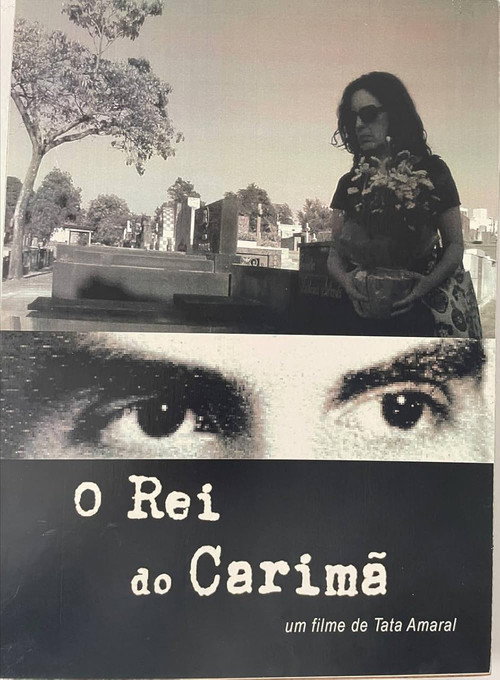
On the day of her mother's wake, filmmaker Tata Amaral's uncle tells her a surprising story: in his youth, her father, Joaquim, had been a wealthy man but ran into an unexplained problem and was forced to flee to Mato Grosso. The filmmaker sets out to explore this past—spanning the 1940s and 1950s—and uncovers a family secret. Beyond the technical revelations of the criminal case, there is a journey of emotional self-discovery that begins at her mother's wake and concludes at her father's grave. Through her camera, she seeks to clear Joaquim's name.