Camera
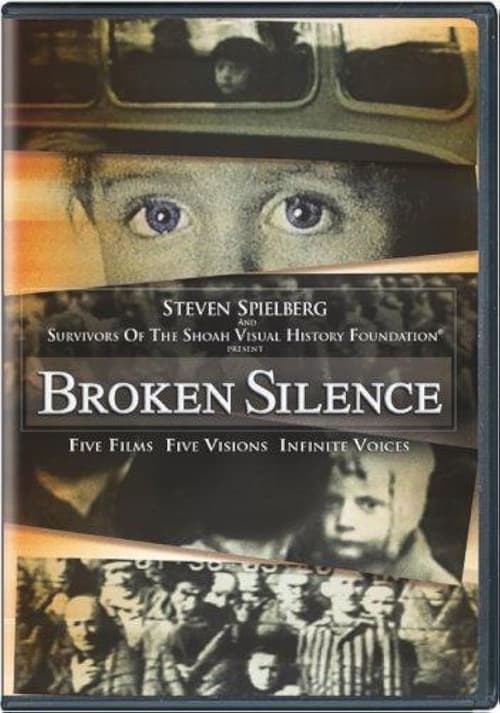
Weaves together the personal recollections of four Polish survivors of the Holocaust with original footage from the present day. The film focuses specifically on the relations between Jews and Poles in Nazi occupied Poland.
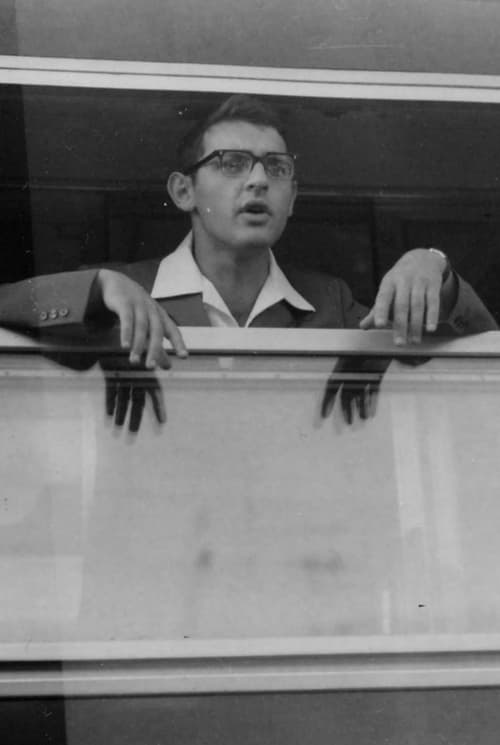
Polish Jews, who were forced to leave their country in 1968, meet every year in Ashkelon. After nearly 40 years, they share their memories of exile, loss and regret, and still consider themselves Polish.
In the 1970s, plaques commemorating four generals, commanders of the Home Army—Michał Tokarzewski, Stefan Grot Rowecki, Tadeusz Bór-Komorowski, and Leopold Okulicki—were placed in St. Hyacinth's Church in Warsaw's Old Town. The film presents little-known fragments of their biographies.
Did the 1989 revolution in Central Europe devour its children? This question is answered by representatives of the anti-communist opposition from Warsaw, Prague, Budapest and Berlin. The documentary shows images of the upheaval, with songs by Jacek Kaczmarski, Jaroslaw Hutka and Wolf Biermann as a backdrop.
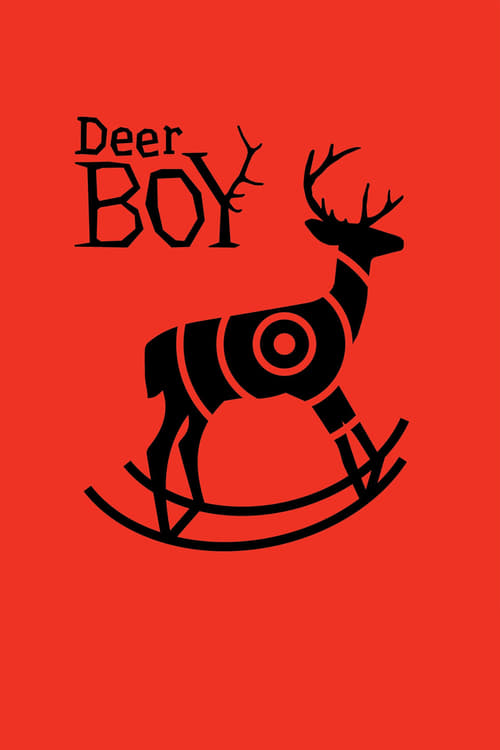
A story about a hunter's son, who was born with antlers, and about how each man kills the thing he loves.
A subjective look at the city through the eyes of its inhabitants: artists, intellectuals, but also so-called ordinary people. Each of the characters portrayed "his Warsaw," so the film includes a wide variety of places - both generally known and those known to a few, both beautiful and well-kept, as well as those that arouse dislike.
The story of a journalist, member of the Communist Party and Solidarity, who gave up his profession during martial law and started selling bread.
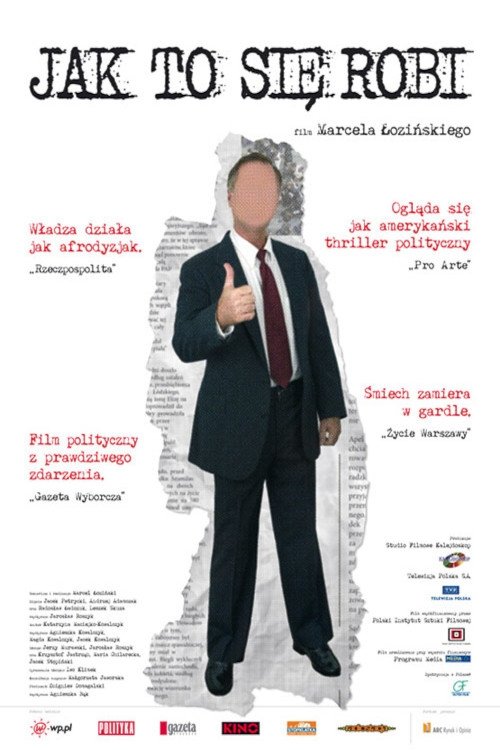
Piotr Tymochowicz, media advisor to some of Poland's top politicians, claims that anybody can be molded into a charismatic leader. To prove it he's looking for a greenhorn that can be turned into a candidate. A call is put out for would-be participants, and hundreds apply. A small group is selected and under go training. Polish master Marcel Lozinksi followed Tymochowicz and this project for three years, and this beautifully shot and edited work paints a compelling portrait of cynical (and quite familiar) demagogy and populism in action.
Krzysztof Jackowski, Poland's most famous clairvoyant, works in Poland and abroad. He lives in Człuchów in Pomerania with his wife and two children. He mainly searches for missing people based on their photographs and clothing. Hundreds of documents confirm the clairvoyant's achievements.
A film devoted to the difficult fate and dramatic choices of actors during the war – whether to continue practicing their profession, performing in theaters that were openly operating and opened with the consent of the occupying authorities, and thus agree to a kind of collaboration with the enemy, or to abandon the acting profession and change careers. The author of the film presents the attitudes of actors in the General Government, primarily Warsaw artists: how they reacted to the directives of the Underground State and the resolution of the ZASP - the Secret Theater Council prohibiting its members from cooperating with open theaters.
When, a dozen years ago, domestic music critics anxiously watched the conquest of the music market by songs of the italo disco genre, they did not expect that in just a few years a much worse mutant - disco-polo - would be born in Polish popular music. It all started at village weddings and parties, where local bands, having gotten their hands on a synthesizer, would serenade guests to dance.
On January 30, 1968, the staging of "Dziady", directed by Kazimierz Dejmek, was taken off the billboard of the capital's National Theater. Warsaw students protested against the decision of the highest party and state authorities - after all, it was not made independently and courageously by censors from the nomen omen Mysia Street - by convening a rally at the monument to Adam Mickiewicz.
A documentary film featuring the profiles of six young people living in Poland. They are united by their age. The protagonists of the film are a young farmer, an unemployed graduate of Foreign Trade, a feminist, a young politician active in the Green Party 2004. We also meet a writer writing anti-consumerist novels, a graphic designer working as a producer of photo shoots (known for her popular blog on the web). The authors of the film for several months accompanied them at work, moments of entertainment, meetings with friends, we see their joys and sorrows.
Such a film should be made. The phenomenon that is the All-Polish Youth in Poland needs to be analyzed and looked at carefully with the "patient eye" of a documentary filmmaker. Until now, we have only viewed the All-Polish Youth through hurried news or journalistic discussions. Who are the people who make up this organization? What are their motivations? The path of life? What caused them to get involved in social and political activities? These are just some of the questions this film asks to find out the answer to the question of why the idea of a pre-war youth organization has become important and carried in modern Poland. The heroes of the film are both the leaders of this organization and its ordinary members. We want to look at Poland through their eyes. What does it mean for them today to fight for Poland, what does it mean - to be a Pole? How do they want to instill their radical patriotism in others?
No description available.
The burner bursts with flame, hot air fills the shell, the aerostat soars. In the gondola of the balloon - Norman Davies. He is not looking for strong impressions, inspiration or beautiful views, but for the right perspective. For a historian, according to the film's protagonist, "should distance himself from his object of research. One must not be too close, too emotionally involved. That's why I will look at Wroclaw from a certain height..." Such a perception of Breslau has been sorely lacking in the distant and near past, especially in the past, the twentieth century - the century in which unleashed nationalisms resulted in the bloodiest spasms in the history of mankind.
Short by Traudl Kulikowsky
Refugees from the GDR in Warsaw, shortly before the fall of the Wall. Emotional fates, unfiltered. The interviews were forgotten and were only rediscovered 20 years later.
For years, on the evening of December 12, on the anniversary of the introduction of martial law in Poland, demonstrations have been held outside Wojciech Jaruzelski's house. On such an evening in 2000, Teresa Torańska and her film crew pay him a visit.
Polish film directed by Jacek Skalski. A young student, expelled from university for taking part in strikes, and a middle-aged married woman, whose husband is abroad, fall madly in love during the tumultuous times of 1980s martial law.